

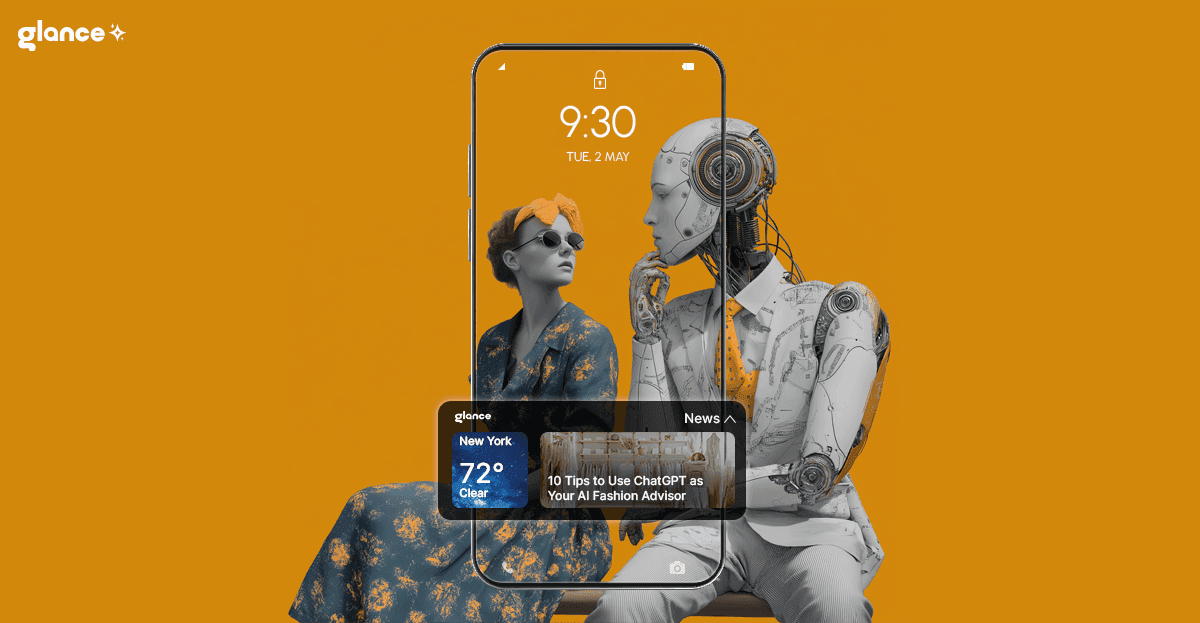
Can a General-Purpose AI Actually Style You? What Fashion Recommendations Really Require
TL;DR
Text-based AI like ChatGPT can describe outfits, explain trends, and help you think through styling questions. What it structurally cannot do is read your face shape, your skin tone, your body proportions, or show you how a look actually lands on you. Real fashion intelligence requires five inputs that no text model has access to: your physical features, a live product catalogue, your location and weather, your occasion context, and visual output on your actual body. This article explains what general-purpose AI genuinely does well for fashion — and where the architecture hits a ceiling it cannot cross.
Artificial intelligence has steadily moved from being a futuristic concept to becoming a practical layer within everyday decision making. Tools powered by large language models are now used for writing, research, brainstorming, and problem solving across industries. Among them, ChatGPT stands out for its conversational interface, which allows users to ask questions and receive structured, context aware responses within seconds.
It can act as a basic AI fashion advisor. It can help interpret fashion trends, explain why certain combinations work, suggest wardrobe pairings, and even assist in planning outfits for specific occasions. For example, it can help someone organize a capsule wardrobe, create a weekly outfit rotation, or identify essential pieces missing from their closet.
Its strength lies in translating fashion ideas into practical guidance. Users can experiment with prompts to explore different aesthetics, learn how colors complement each other, or understand how seasonal trends influence styling decisions. This conversational approach makes fashion planning feel more accessible, especially for people who may not naturally follow fashion cycles or styling principles.
ChatGPT Can Be Your Fashion Advisor?

As of early December 2026, ChatGPT boasts around 900 million weekly active users, reflecting its rapid adoption across industries and geographies. While individual consumer usage for fashion-specific queries is not yet systematically tracked, industry metrics provide a glimpse into AI’s transformative role in fashion.
In 2023, 25% of global fashion retailers had integrated AI into their operations, and this figure rose to 44% in apparel by mid-2025, with 73% planning to increase investments. Personalization is a major driver: 58% of online fashion retailers deploy AI for personalization, resulting in an average 35% boost in sales where applied. These figures demonstrate the growing trust in AI for styling, shopping, and fashion strategy.
ChatGPT, when used creatively, can function as a personal AI fashion advisor. Whether you’re experimenting with a new aesthetic, organizing your wardrobe, or staying on top of trends, it provides intelligent suggestions tailored to your preferences. Here are 10 actionable tips to make the most of ChatGPT as your AI fashion advisor.
What Real Fashion Intelligence Actually Requires

1. Your physical features :
Text-based AI works from what you describe. It cannot see your face shape, skin tone, hair colour, or body proportions. When it suggests "warm tones work well for you" it's because you told it your skin tone — not because it knows. The gap matters because colour harmony, silhouette selection, and proportion balance all depend on physical attributes that have to be read visually, not described in a prompt. When you describe yourself incorrectly or incompletely — which most people do — the advice drifts.
2. A live product catalogue
ChatGPT has no access to live inventory. When it suggests "a structured blazer in camel" it cannot tell you which ones exist right now, which are in your size, which are available for delivery before your event, or what they actually look like. The styling advice and the purchasable reality are disconnected. You still have to do the shopping yourself.
3. Weather and location
What you wear is inseparable from where you are and what the weather is doing. A text model can factor in weather if you tell it — but it doesn't know you're in Chicago in November versus Austin in April unless you specify. And even then it's working from your description of the conditions, not the actual forecast. A system reading real-time signals produces a fundamentally different output to one responding to what you've typed.
4. Occasion context
ChatGPT can suggest outfits for occasions you describe. What it cannot do is know what's actually coming up for you — the dinner reservation Saturday, the work presentation Monday, the wedding next month — without you telling it every time. An intelligent shopping agent reads occasion context continuously rather than requiring you to re-prompt it for every event.
5. Visual output on your actual body
This is the ceiling that no text model can cross. ChatGPT can describe what an outfit would look like. It can generate an image of a generic model wearing something. It cannot show you — your face, your proportions, your colouring — wearing the specific look it has curated for you. That gap is not a feature gap. It is an architectural one. Describing an outfit and seeing it on you are structurally different problems.
What Text-based AI Genuinely Does Well for Fashion
Not every fashion problem requires visual intelligence. There is a real and useful role for text-based AI in your styling workflow — and being honest about that matters.
Explaining trends in plain language
Fashion trends are often described in vocabulary that assumes you already follow the industry. ChatGPT is genuinely good at translating aesthetic language into something actionable. Ask it what "quiet luxury" actually means to wear on a Tuesday, or how to interpret a runway trend for a real wardrobe, and it will give you a clear, practical answer. For trend literacy, it is a fast and useful thinking partner.
"What if" hypotheticals before you commit
Before you physically try a combination — or buy something you're unsure about — text AI is useful for pressure-testing ideas. "What if I pair my black blazer with wide-leg pink pants?" is exactly the kind of question it handles well. It can reason through proportion, colour contrast, and occasion fit in seconds. Think of it as a low-stakes sounding board for combinations you're already considering.
Building reusable style formulas
If you know your aesthetic and can articulate it, ChatGPT can help you convert it into repeatable templates. "Create five outfit formulas for my style using oversized tops, structured trousers, and minimal accessories" produces genuinely useful blueprints you can apply across seasons. This works best when you already have a clear sense of your style and want to systematise it — not when you are still discovering it.
Wardrobe gap analysis and shopping direction
Tell ChatGPT what you own and what occasions you dress for, and it can identify what's missing. If your wardrobe has no versatile layering pieces, it will tell you. If you need a capsule for a three-day work trip, it will build one. It cannot check whether those items exist in your size right now or what they look like on a body — but for directional shopping clarity, it shortens the thinking time considerably.
Where the ceiling is
All four of these use cases share one characteristic: they work from what you tell them. The moment the problem shifts from "help me think about this" to "show me this on me" — text-based AI has reached the edge of what its architecture can do. That is not a limitation that better prompting fixes. It is a structural boundary.
The five inputs that real fashion intelligence requires — your physical features, a live product catalogue, real-time weather and location, your occasion context, and visual output on your actual body — are not available to a text model regardless of how well you describe them.
That is where the architecture has to change entirely.
The Gap Between Describing An Outfit And Seeing It On You
There is a moment in every styling decision where language runs out. You can describe a silhouette, explain a colour palette, read a review. But none of that tells you whether the look actually works on your body, with your colouring, for your occasion. That question can only be answered visually — and it has to be answered before you buy, not after.
This is what Glance solves. Not by describing what you might look like in an outfit. By showing you. Every look Glance surfaces is visualised on your actual body — your face shape, your skin tone, your proportions — drawn from a catalogue of 40M+ products across 400+ brands, filtered through your weather, your location, your occasion, and your taste. The gap between 'this sounds right' and 'I can see this works on me' is the entire distance between a text model and an intelligent shopping agent.
When the Problem Becomes Visual
Text-based AI gets you far. It helps you think, plan, and articulate what you are looking for but before you have seen it on yourself. The moment it runs out of road is when the problem stops being conceptual and becomes visual and physical.
Describing an outfit is not the same as seeing it on you. Understanding that warm tones suit your colouring is not the same as seeing a specific camel coat on your actual body, in your proportions, for the occasion you are dressing for. That last step — from understanding to seeing — is where language-based tools structurally cannot go.
This is where fashion AI built around visual identity picks up. Systems that read your physical features directly, access live inventory, factor in real-time context, and generate a look visualised on you are solving a different problem to one that responds to your prompts. Not a better version of the same tool. A different category of tool entirely.
Glance is built for exactly this stage — the moment after you know what you are looking for but before you have seen it on yourself. Upload a selfie, and it reads your face shape, skin tone, hair colour, and body proportions. It layers in your location, the weather, what is trending, and what occasions are coming up. The output is not a description of what might work. It is a complete styled look on your body, from a live catalogue, ready to buy.
The two tools are not competing for the same job. One helps you think. The other shows you the answer.
Conclusion
General-purpose AI is a useful thinking partner for fashion — for trend research, outfit formulas, and shopping direction. The ceiling it hits is structural, not incremental. The moment the problem becomes visual, physical, or real-time, text alone cannot close it.
The five inputs that real fashion intelligence requires — your physical features, a live catalogue, weather and location, occasion context, and visual output on your body — are not things a better prompt can solve. They require a system built for them from the ground up.
That's what Glance is built to do. Not to describe what you might wear. To show you
FAQs
What can AI do for fashion that a chatbot cannot?
A large language model like ChatGPT can describe outfits, explain trends, and help you think through styling decisions in natural language. What it cannot do is read your physical features visually, access live product inventory, factor in real-time weather without being told, or show you how a look lands on your actual body. These five inputs — physical features, live catalogue, weather and location, occasion context, and visual output — require a different architecture entirely. Glance is built around all five simultaneously.
2. Can ChatGPT create full outfits for specific events or moods?
Yes. If you tell ChatGPT about the event, vibe, dress code, and even the weather, it can build complete outfit ideas. You can ask for soft, minimalist, edgy, or glam looks, and it will combine silhouettes, fabrics, and accessories into a cohesive outfit plan. It adapts suggestions according to the tone you describe.
3. Does ChatGPT help with trending styles like Gen Z looks or Korean softboy aesthetics?
ChatGPT can summarize trends, decode aesthetics, and translate them into wearable suggestions. Whether you want micro-trend breakdowns, aesthetic-based wardrobes, or seasonal styling ideas, it can distill the essence of a trend into simple tips you can apply right away.
4. Can ChatGPT help me organize or plan my weekly outfits?
Absolutely. You can list the clothes you own, and ChatGPT can build a full weekly outfit calendar. It can create variations, prevent repeat silhouettes, and suggest fresh combinations based on your lifestyle and preferences. This works particularly well for people who love structure or want to save decision time each morning.
5. Is ChatGPT useful for shopping or deciding what to buy next?
While ChatGPT does not browse live product listings, it helps you sharpen your shopping direction. You can ask it to build shopping lists, refine your style goals, compare silhouettes, or create prompts for intelligent shopping tools like Glance. It ensures you shop with clarity instead of impulse.
Download the Glance app now




Your intelligent
shopping agent.







Your intelligent
shopping agent.