

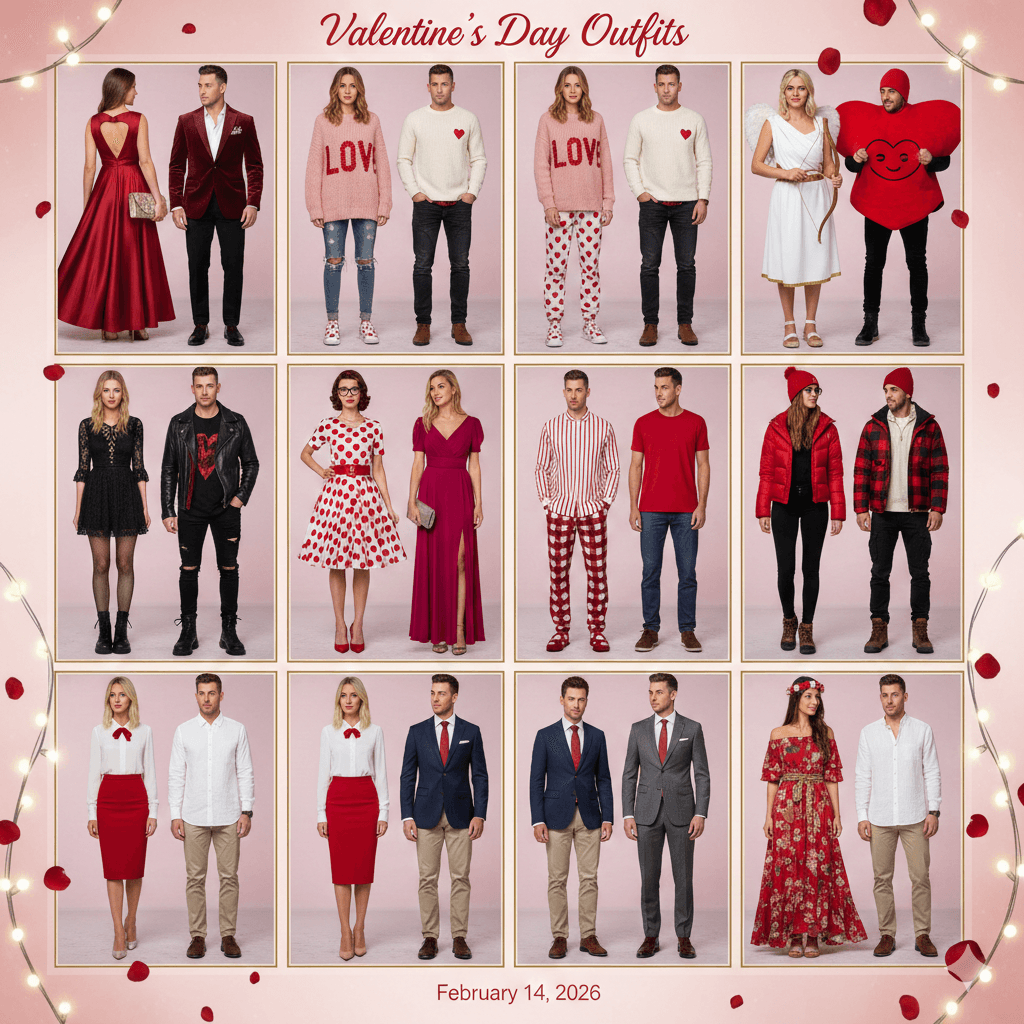
10 Valentine’s Day Outfit Ideas to Wow Your Date
7 Pro Tips to Use AI Stylist for Virtual Wardrobe Planning
TL;DR
Using an AI stylist for virtual wardrobe planning works best when you treat it like a system, not a shortcut. Build a detailed profile, digitize a clutter-free closet, use conversational prompts, and give regular feedback. Over time, the AI learns your habits, improves outfit accuracy, reduces waste, and helps you get more value from fewer clothes.
Virtual wardrobe planning has moved far beyond novelty. What started as basic outfit suggestion tools has evolved into intelligent systems that can understand how you dress, why you choose certain pieces, and how your lifestyle shapes your style decisions.
Today, an AI stylist for virtual wardrobe planning can digitize your closet, surface outfit combinations you would never think of, and quietly reduce overbuying and wardrobe waste.
After minimal inputs, many platforms now reach 70 to 75 % style prediction accuracy, which is enough to meaningfully change how people plan outfits and shop.
But results depend heavily on how you use the tool. Treat it casually, and it feels generic. Use it strategically, and it becomes a powerful personal styling system.
Here are seven tips to get real value from an AI stylist for virtual wardrobe planning.
Tips to Use an AI Stylist for Virtual Wardrobe Planning
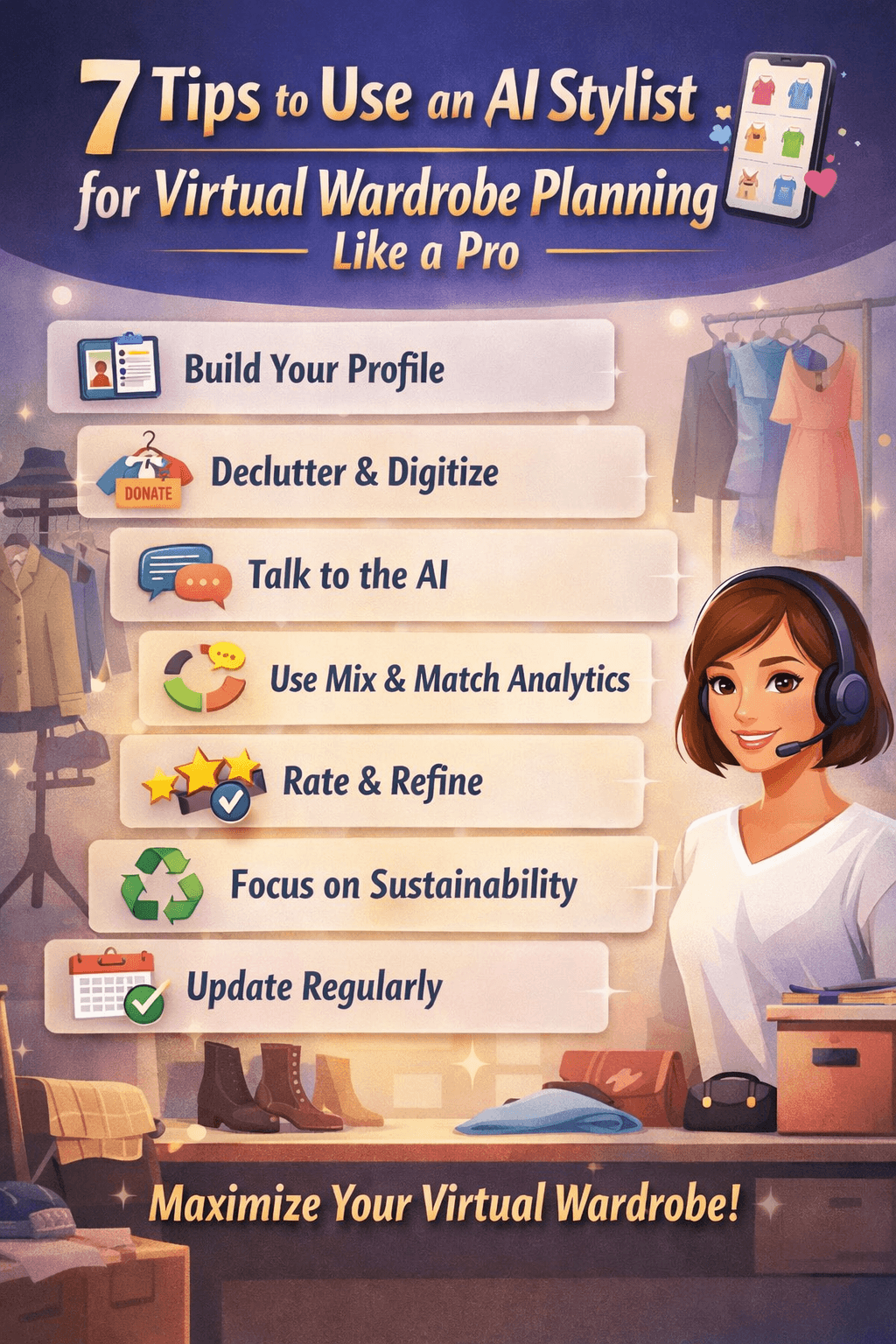
Build Your Profile Like a Style Blueprint, Not a Form
The biggest mistake users make is rushing through setup. An AI stylist does not guess style—it models it.
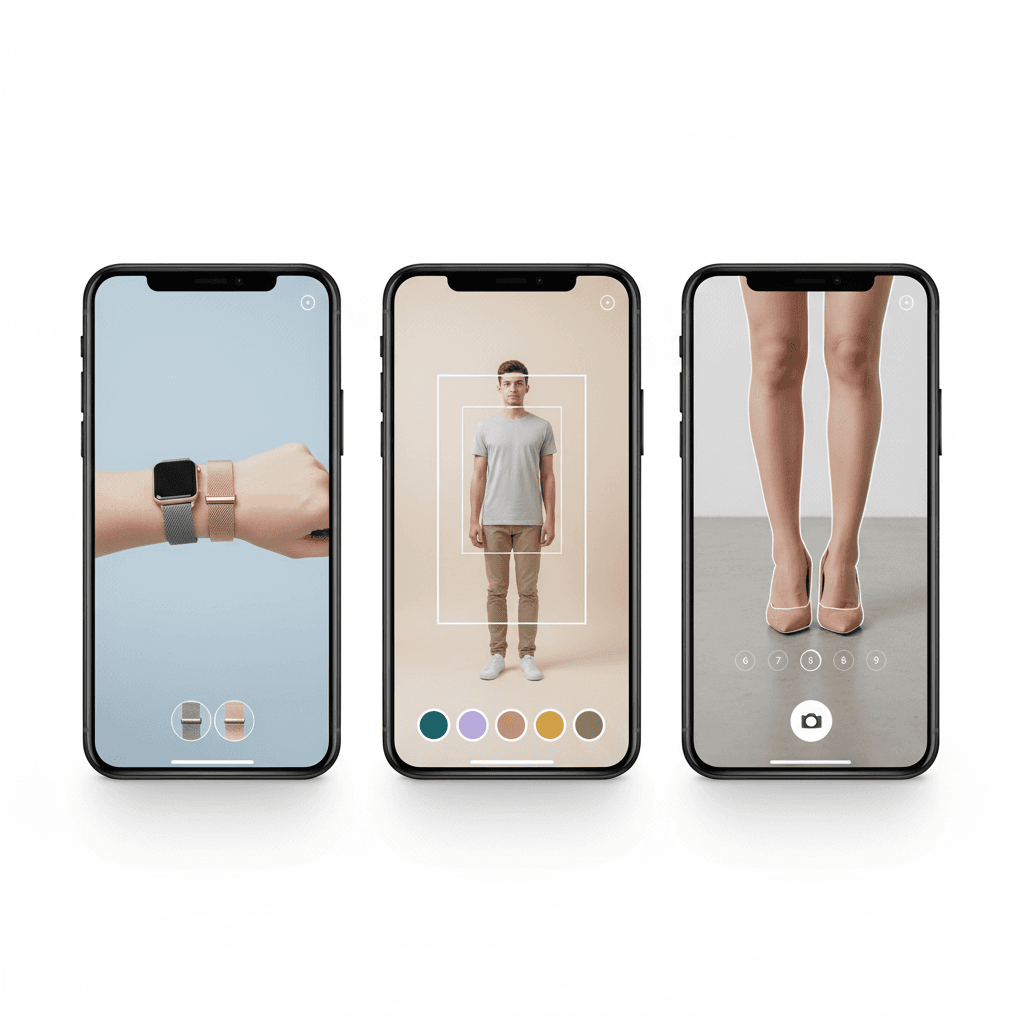
Start by uploading clear, well-lit photos of your clothing items. Flat lays work best. Include front views, accurate colors, and fabric details. Then tag each piece with specifics such as:
• Primary color and secondary tones
• Fabric type and weight
• Seasonality
• Use case like work, casual, travel, events
Next, add body measurements, skin tone, and fit preferences. Even approximate data dramatically improves results. Studies show that detailed profiles can improve recommendation relevance by up to 40%.
Style quizzes are not fluff. They give the AI context about how you want to dress, not just what you own. Tools like Smart Closet use this data to suggest outfits that match weather, events, and daily routines.
Think of this step as teaching the system your style language.
2. Declutter First, Then Digitize With Intention
An AI stylist only works as well as the closet it sees.
Before digitizing, declutter physically. Separate items into keep, donate, and archive. Upload only what actively belongs in your wardrobe today. This prevents the AI from building outfits around pieces you never wear.
Once digitized, organize aggressively using tags and filters. Create categories like:
• Work capsule
• Weekend basics
• Travel staples
• Seasonal layers
This turns your virtual wardrobe into a searchable lookbook, not just a digital mirror of clutter.
Users who maintain updated virtual closets show nearly 69 % clothing utilization, compared to the industry average of about 30 %. That difference is not style—it is systems.
3. Talk to the AI Like a Stylist, Not a Search Bar
Modern AI stylists respond best to conversational prompts, not keywords.
Instead of asking for “work outfits,” try prompts like:
“Create five capsule-friendly works under $100 using my neutral palette.”
“Build a weekend outfit using items I have not worn this month.”
This activates hybrid recommendation logic similar to what services like Stitch Fix use to achieve around 80 % customer satisfaction.
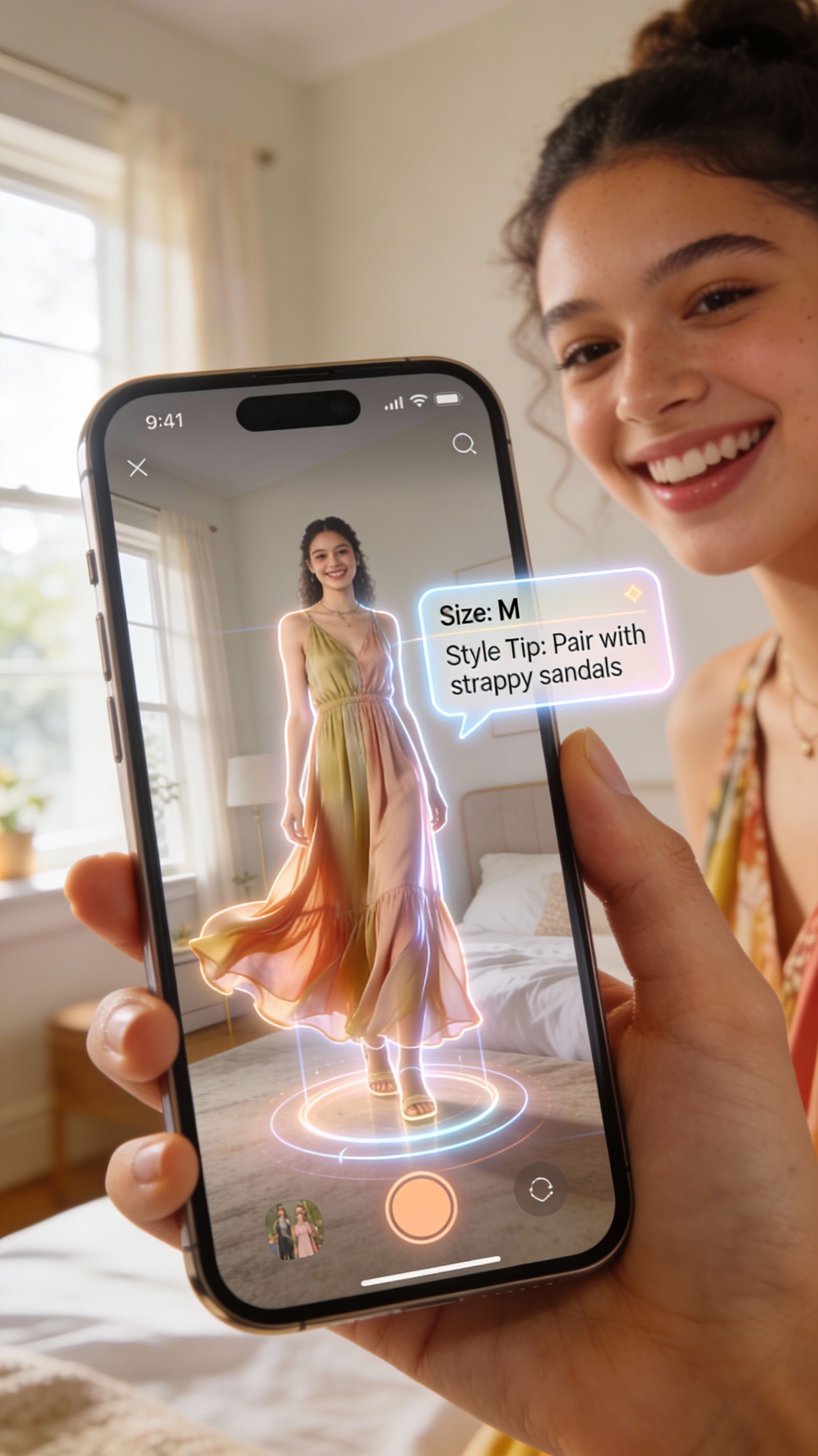
Many platforms also support AR virtual try-ons, which validate proportions and fit visually. Size prediction models can now estimate fit accuracy within 1.5 to 2.5 centimeters, significantly reducing returns.
The more specific the request, the smarter the response.
4. Use Mix-and-Match Analytics to Unlock Hidden Value
One of the most underused features in AI wardrobe tools is outfit analytics.
Ask your AI stylist to surface underutilized items or show which pieces anchor the most outfits. Often, one forgotten jacket or pair of shoes can unlock ten new combinations.
This insight is especially powerful for capsule wardrobes. Instead of buying something new, the system teaches you how to rebuild novelty from what you already own.
Over time, this changes shopping behavior. You stop buying outfits and start buying connectors—items that multiply existing looks.
5. Rate Everything and Let the Algorithm Learn You
Feedback is not optional. It is fuel.
Rate outfit suggestions, mark what you actually wore, and log how pieces felt throughout the day. Fit, comfort, confidence, and practicality all matter.
Most AI stylists recalibrate continuously. With regular feedback, recommendations evolve from “reasonable” to “uncannily accurate.”
Many platforms include dashboards showing wear frequency and outfit repetition. Reviewing this data quarterly helps you spot habits, identify gaps, and avoid style stagnation.
Think of it as performance reviews for your wardrobe.
6. Use Sustainability as a Functional Filter, Not a Statement
Sustainability works best when it is operational.
Many AI stylists allow you to prompt for eco-friendly materials, resale-ready items, or upcycled brands. Around 73 % of AI styling platforms now include sustainability-driven features.
Some tools track carbon impact per garment or suggest rotation strategies to extend garment life. This is not about moralizing fashion—it is about reducing impulse buying and maximizing return on what you own.
You can even ask emotionally driven prompts like:
“Suggest calming neutral outfits from my closet for stressful workdays.”
Style is emotional. Smart systems account for that.
7. Treat Your Virtual Wardrobe as a Living System
A professional approach means consistency.
Update your wardrobe every time you shop, donate, or rotate seasonally. Share looks within community features when available. Platforms like Indyx allow peer feedback, which feeds trend awareness back into the system.
Over time, your AI stylist becomes less about recommendations and more about decision support. It helps you dress faster, shop smarter, and feel more confident with fewer clothes.
At that point, virtual wardrobe planning stops being a tool and starts being infrastructure.
Conclusion
An AI stylist for virtual wardrobe planning does not replace personal style. It clarifies it.
When used deliberately, it reduces friction, waste, and guesswork—turning your closet into a system that actually works for your life. The real advantage is not trend awareness. It is alignment.
And alignment, in fashion, is what separates a full closet from a functional one.
Looking for the best AI stylist platform to use? Glance goes beyond the capacity of an AI stylist and basic outfit suggestions by understanding your real style patterns, body comfort, and lifestyle needs; so recommendations feel wearable, not forced. It helps you discover looks that fit you, not just what is trending.
FAQS Related to AI stylist for Virtual Wardrobe Planning
1. What is an AI stylist for virtual wardrobe planning?
An AI stylist for virtual wardrobe planning is a digital system that analyses your existing clothes, body preferences, lifestyle, and usage patterns to recommend complete outfits. Instead of suggesting random trends, it helps you plan daily, work, and occasion looks using what you already own, improving wardrobe efficiency and styling consistency.
2. How accurate is an AI stylist for virtual wardrobe planning?
Most modern AI stylists reach 70 to 75 % accuracy after minimal user inputs such as clothing photos, style preferences, and fit feedback. Accuracy improves over time as the system learns from outfit saves, wear frequency, and rejected suggestions, making recommendations more aligned with real-life dressing habits.
3. Can an AI stylist plan outfits for different occasions and seasons?
Yes. An AI stylist for virtual wardrobe planning can create outfits based on occasions like work, travel, parties, or casual wear while adjusting recommendations for weather and seasons. By using tags and contextual inputs, it ensures outfits are both appropriate and practical across changing conditions.
4. Does using an AI stylist help reduce unnecessary shopping?
Absolutely. By highlighting underused items and generating multiple outfit combinations from existing clothes, an AI stylist reduces impulse buying. Many users report higher wardrobe utilization and fewer redundant purchases, supporting more mindful and sustainable fashion choices.
5. Is an AI stylist for virtual wardrobe planning suitable for beginners?
Yes. AI stylists are designed for everyday users, not fashion experts. With guided uploads, simple quizzes, and conversational prompts, beginners can easily receive outfit suggestions without understanding styling rules. Over time, the system adapts naturally to personal comfort and preferences.
Download the Glance AI app now



Your intelligent
shopping agent.

Download Glance from





Your intelligent
shopping agent.
Download Glance from