

10 Valentine’s Day Outfit Ideas to Wow Your Date
Sustainable Fashion: How to Shop Responsibly & Stay Stylish

TL;DR
Sustainable fashion is a long term approach to building a wardrobe that reduces environmental harm, supports ethical labor, and prioritizes durability over trends. It moves fashion away from fast, disposable consumption toward fewer, better made garments designed to last. By following principles like the 7 R’s and 4 R’s, choosing durable materials, buying less but smarter, and avoiding greenwashing, consumers can lower waste, reduce carbon impact, and create wardrobes that align with both personal values and real world use.
The fashion industry is no longer just about trends and aesthetics—it is now a significant driver of environmental and social impact. Globally, fashion accounts for nearly 10% of carbon emissions and consumes vast amounts of water, with an estimated 93 billion cubic meters used annually. Waste is mounting too: the equivalent of one garbage truck of textiles is burned or dumped every second. Beyond environmental concerns, labor practices in many supply chains remain opaque, with millions of workers exposed to unsafe conditions and unfair wages.
Sustainable fashion addresses these challenges head-on. It is not a passing trend but a long-term investment in quality, responsibility, and conscious consumption. Choosing sustainable pieces means valuing durability over disposability, ethics over expedience, and mindful choices over impulse. For consumers, it’s an opportunity to align their wardrobe with their values, making every purchase a vote for a more sustainable and equitable world.
What Is Sustainable Fashion?
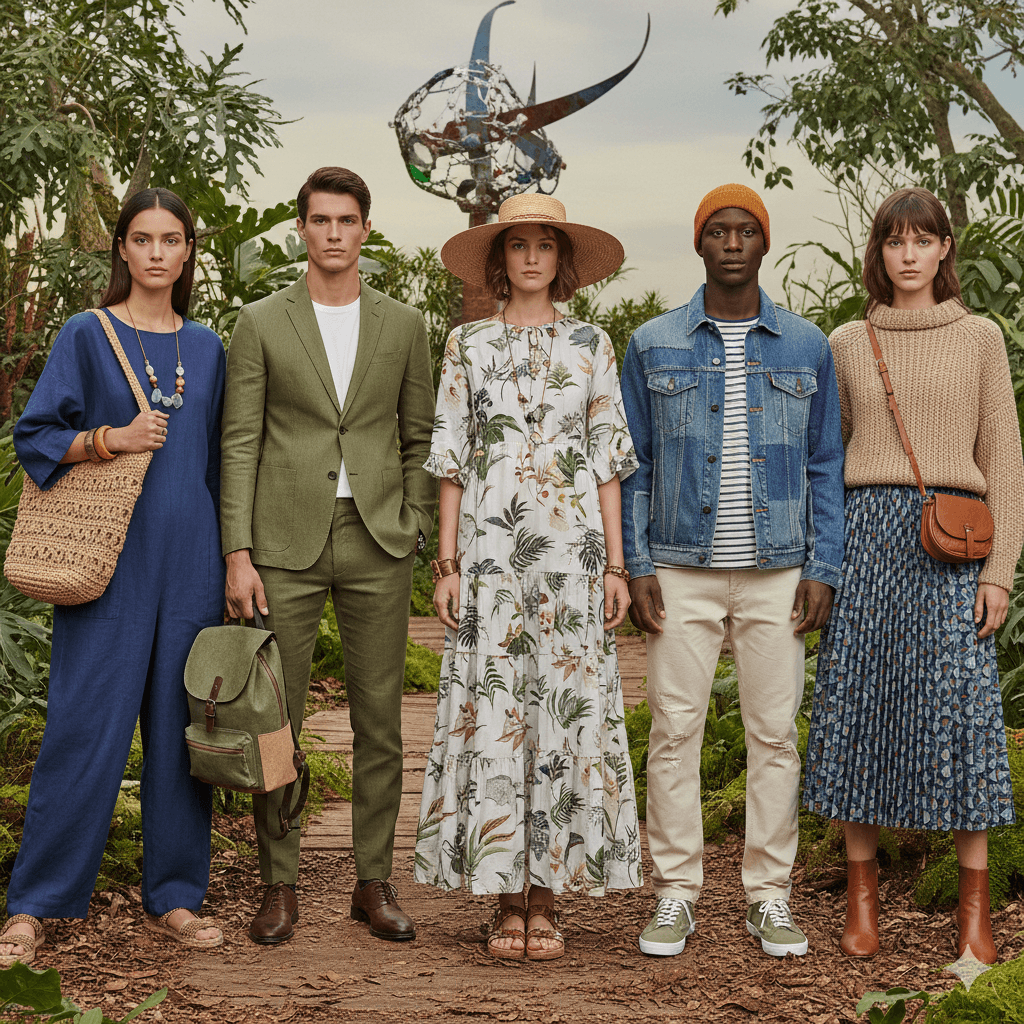
Sustainable fashion is about creating, buying, and wearing clothing in ways that minimize environmental harm and promote social responsibility. At its core, it shifts the focus from “fast fashion”; cheap, disposable, and trend-driven clothing; to thoughtful choices that prioritize durability, ethics, and transparency.
Four major approaches define the landscape of sustainable fashion:
- Ethical Fashion – Respecting people and communities behind the clothing.
- Circular Fashion – Designing for longevity and reuse.
- Slow Fashion – Choosing quality over quantity and timeless designs.
- Conscious Fashion – Making environmentally mindful material and production choices.
These pillars offer a roadmap for consumers seeking to align style with sustainability.
Understanding them provides clarity in an industry often saturated with buzzwords and greenwashing claims, ensuring choices are informed, impactful, and aligned with personal values.
Key Principles of Sustainable Fashion
Sustainable fashion is guided by clear frameworks that help both brands and consumers make responsible choices without compromising style or quality. Two widely referenced models, the 7 R’s and the 4 R’s, provide practical, decision-ready principles.
The 7 R’s: From Refusal to Regeneration
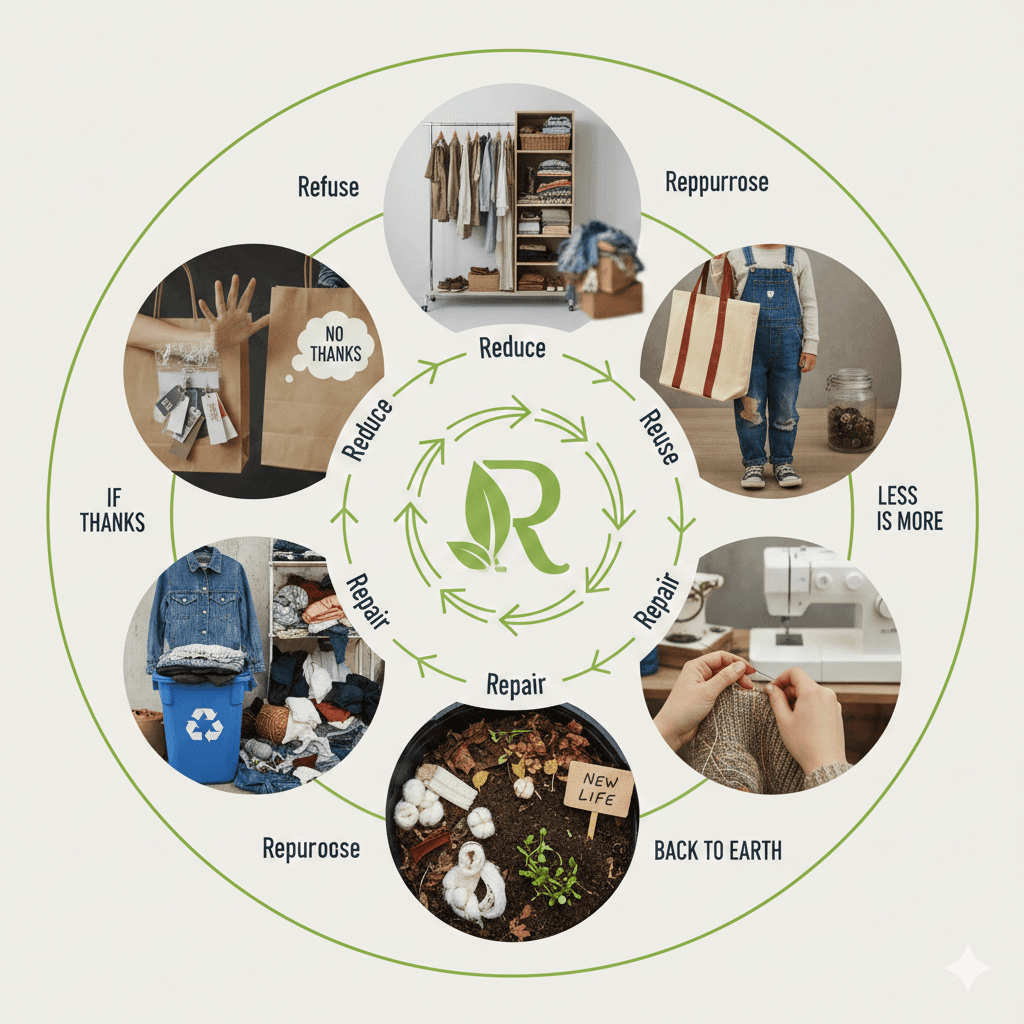
This framework encourages a holistic mindset, emphasizing the entire lifecycle of clothing:
- Refuse – Say no to products that are unnecessary, low-quality, or ethically questionable. For instance, avoiding garments made under exploitative labor conditions or with heavy environmental costs.
- Reduce – Limit consumption by choosing fewer, higher-quality items. Reducing impulse purchases and overstocking directly lowers waste.
- Reuse – Extend the life of garments by passing them on, donating, or shopping secondhand. Resale platforms like ThredUp or Poshmark exemplify this principle in action.
- Repair – Fixing minor damage, replacing buttons, or mending seams keeps clothes in circulation longer. Some brands, like Patagonia, offer repair programs to encourage longevity.
- Recycle – Convert textiles into new fibers or products rather than letting them end up in landfills. H&M’s garment collection bins and Reformation’s circular lines show commercial applications.
- Repurpose – Transform old items into new forms, such as turning a worn shirt into a tote bag or quilt, blending creativity with sustainability.
- Rot – For natural fibers, composting textiles at the end of their lifecycle reduces environmental impact while returning nutrients to the soil.
The 4 R’s: Core Circularity
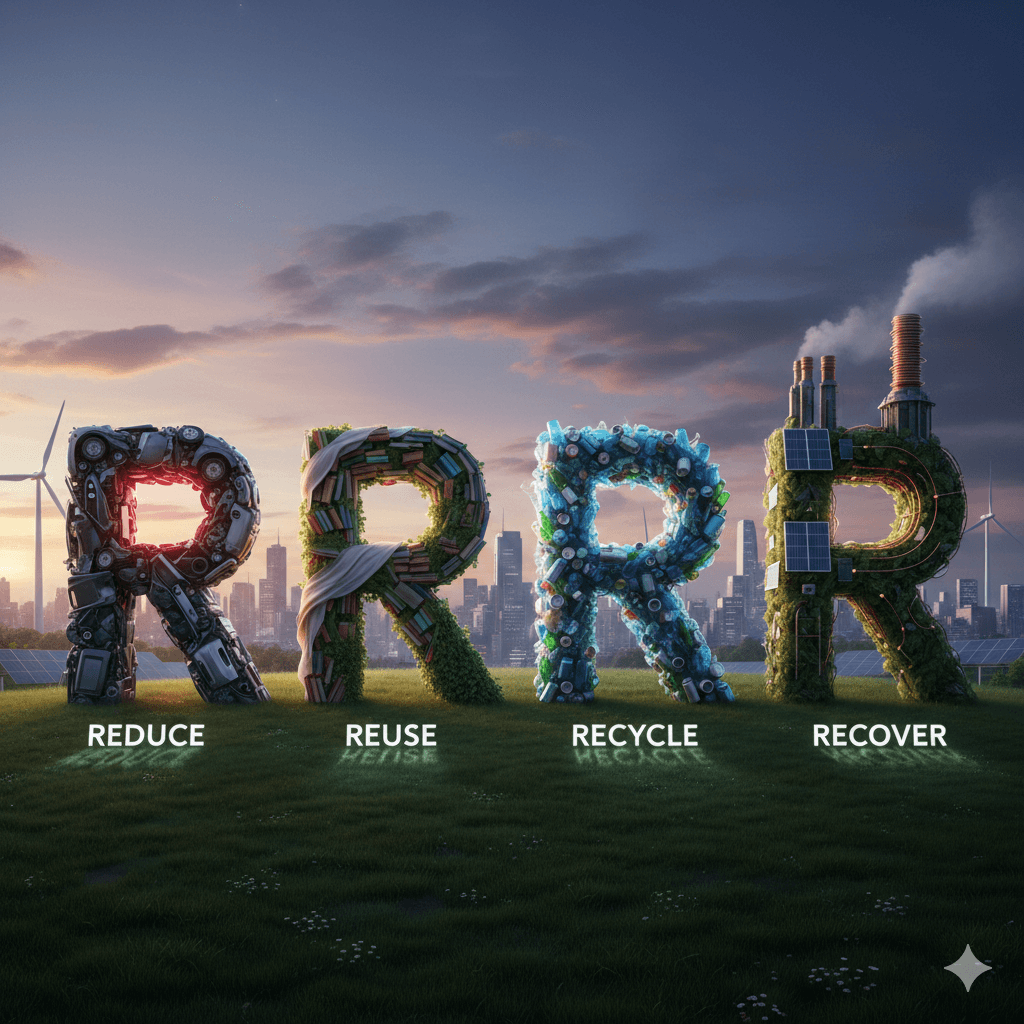
A simpler, business-focused framework, the 4 R’s highlights immediate, measurable impact:
- Reduce – Minimize production and material use while optimizing supply chains.
- Reuse – Extend product life through resale, rentals, or donation.
- Recycle – Process post-consumer textiles into raw materials for new production.
- Recover – Recover energy or materials from textiles that cannot be reused or recycled.
How These Principles Guide Decisions
For consumers, these frameworks translate into practical shopping strategies: favoring durable fabrics, selecting multi-purpose clothing, repairing instead of discarding, and supporting brands with transparent circular practices.
For brands, applying the R’s requires intentional design, traceable supply chains, and verifiable sustainability claims. Critical scrutiny is essential: a brand claiming “eco-friendly” materials may still rely on high-impact dyes or overseas production with poor labor standards. The Evidence-First Curator audience benefits from actionable verification: checking certifications like GOTS (organic textiles), Fair Trade, or OEKO-TEX, reviewing brand transparency reports, and evaluating product lifecycle disclosures.
By embedding the R’s into purchasing and production decisions, fashion becomes a conscious practice; reducing environmental impact, supporting ethical labor, and creating a wardrobe that aligns with both style and values.
The Benefits of Sustainable Fashion
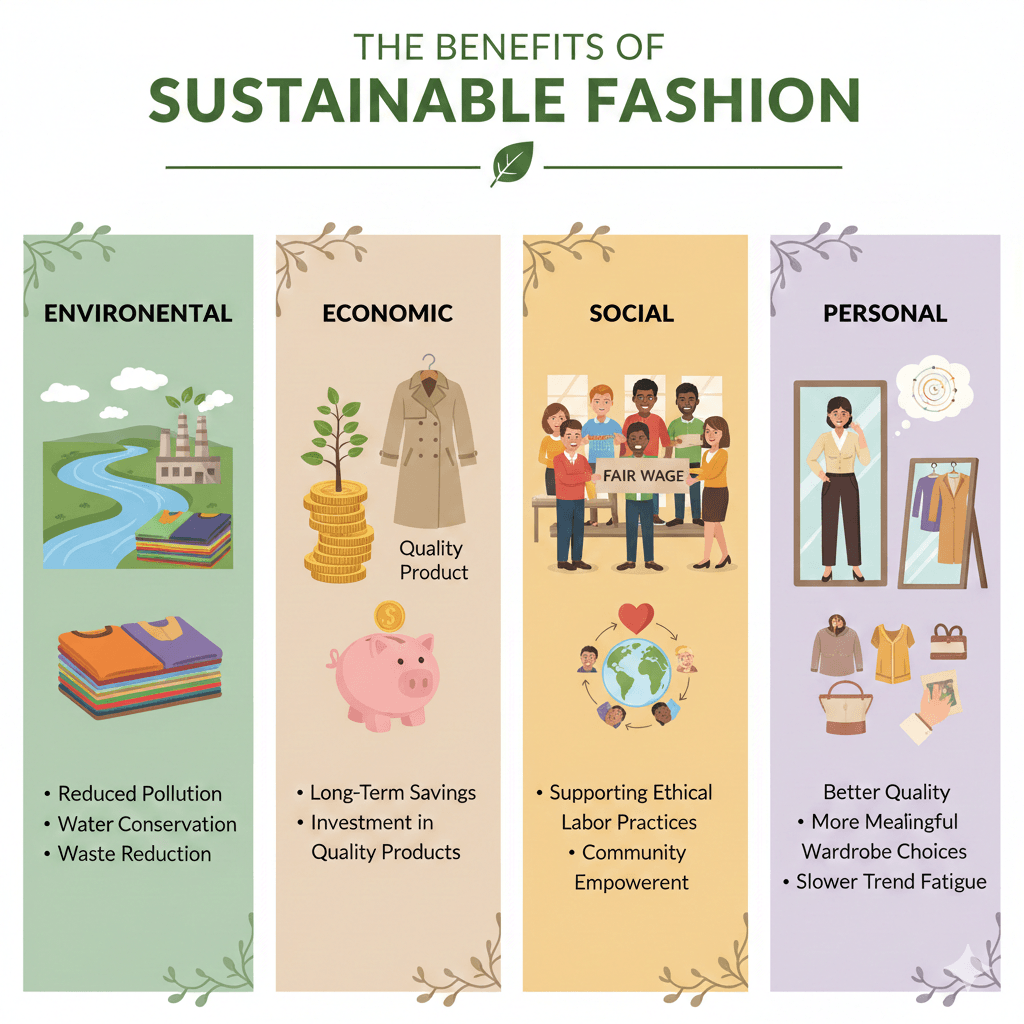
- Environmental benefits go beyond carbon reduction
- Lower water consumption through organic cotton, rain fed fibers, and closed loop dyeing systems that reuse process water.
- Reduced chemical pollution by limiting synthetic dyes, heavy metal finishes, and toxic fabric treatments that often enter waterways.
- Less textile waste as durable garments extend wear cycles and reduce landfill contributions where most fast fashion currently ends up.
- Decreased reliance on fossil fuels through recycled polyester, bio-based alternatives, and natural fibers with lower energy inputs.
- Economic value is realized over time, not at checkout
- Higher quality construction means garments retain shape, color, and fit across multiple seasons, lowering cost per wear.
- Repairable designs and stronger materials reduce replacement frequency compared to trend driven fast fashion.
- Resale and re-commerce value remains higher for sustainably made pieces, creating secondary value streams for consumers.
- Brands investing in sustainable supply chains are often more resilient to regulatory changes, price volatility, and material shortages.
- Social impact strengthens the fashion ecosystem
- Fair wages and safe working conditions improve workforce stability, reducing exploitative labor practices common in low-cost production hubs.
- Transparent sourcing supports community development in regions dependent on textile manufacturing.
- Ethical production models reduce reputational risks for brands and increase accountability across the supply chain.
- Personal benefits reshape how wardrobes function
- Consumers experience less trend fatigue as wardrobes shift toward timeless silhouettes rather than seasonal hype.
- Fewer but better garments simplify decision making and reduce impulse purchases.
- Wearing clothing aligned with personal values often increases emotional attachment and long term use.
- Sustainable fashion reframes style as identity expression rather than volume driven consumption.
Latest Trends Shaping Sustainable Fashion in 2026
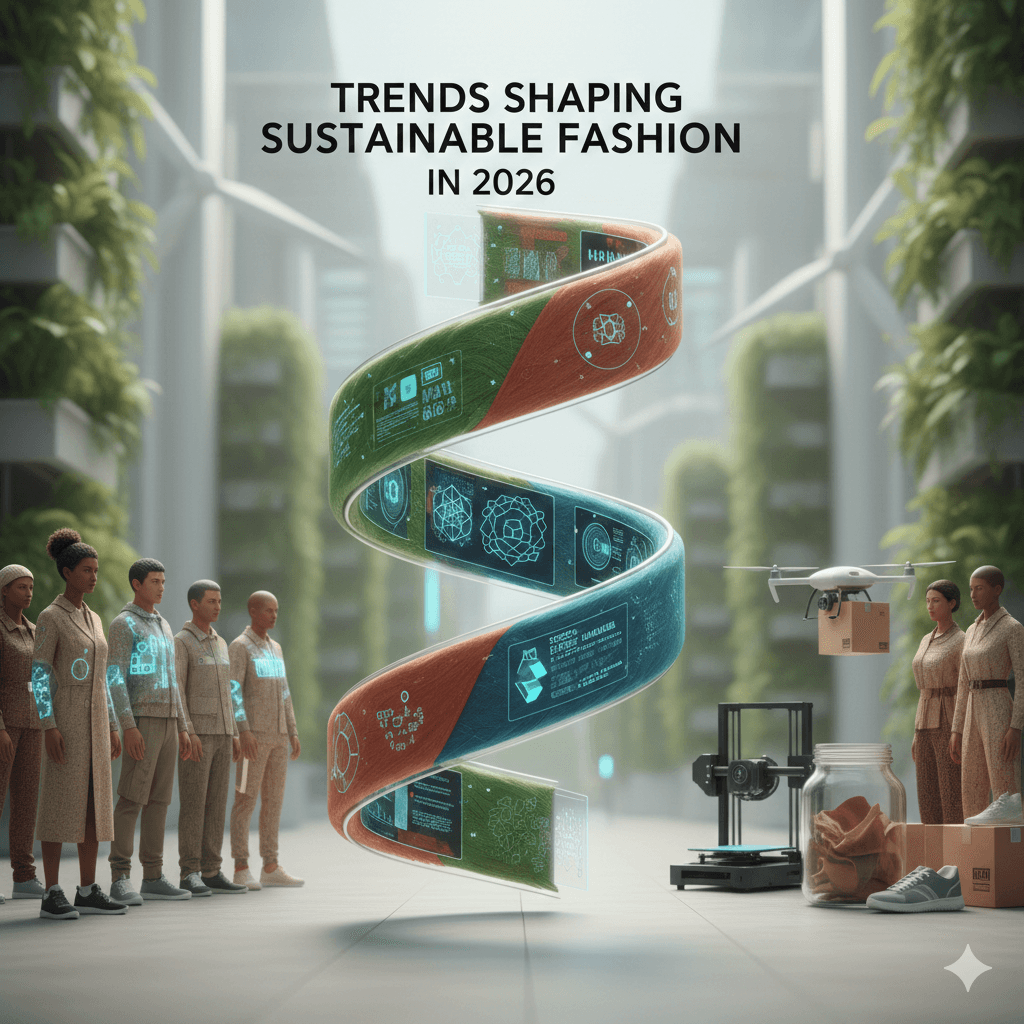
- Material innovation is moving from experimental to scalable
- Biodegradable textiles derived from algae, mycelium, and agricultural waste are entering commercial production.
- Lab grown leather alternatives reduce land use, methane emissions, and water consumption associated with animal hides.
- Advanced recycling technologies now allow blended fabrics to be separated and reused, addressing a long standing industry bottleneck.
- Regenerative agriculture fibers focus on soil health and biodiversity rather than yield alone.
- Technology is improving efficiency, not just storytelling
- AI driven demand forecasting reduces overproduction, which remains one of fashion’s largest sources of waste.
- Digital sampling and 3D prototyping cut material waste during design and development stages.
- Blockchain and digital product passports improve traceability, enabling consumers to verify material origins and production claims.
- Inventory optimization tools help brands align production volumes with actual demand rather than speculative trends.
- Capsule wardrobes are becoming a practical response to overload
- Consumers are curating smaller, interchangeable collections designed around versatility and longevity.
- Capsule thinking aligns naturally with sustainable principles by prioritizing function and adaptability.
- Brands are increasingly offering modular collections designed to work across seasons.
- Resale and re-commerce are now core business models
- Brand operated resale platforms normalize second life shopping as a smart decision rather than a compromise.
- Take back programs support circularity while keeping materials within brand controlled ecosystems.
- Peer to peer resale platforms continue to grow as consumers seek value retention and reduced waste.
- Transparency is replacing vague sustainability claims
- Leading brands publish lifecycle assessments, supplier disclosures, and measurable impact data.
- Certifications and third party audits are increasingly used to substantiate claims and counter greenwashing.
- Brands such as Patagonia, Reformation, Stella McCartney, and select conscious lines from larger retailers are setting clearer benchmarks for accountability.
- Consumer expectations are shifting from perfection to progress
- Shoppers increasingly accept that sustainability involves trade offs rather than absolute solutions.
- Brands that openly communicate limitations and improvement roadmaps build more trust than those claiming complete sustainability.
- Decision intelligence, not moral pressure, is becoming the dominant way consumers engage with sustainable fashion.
Embrace Sustainable Fashion Starting With Your Wardrobe
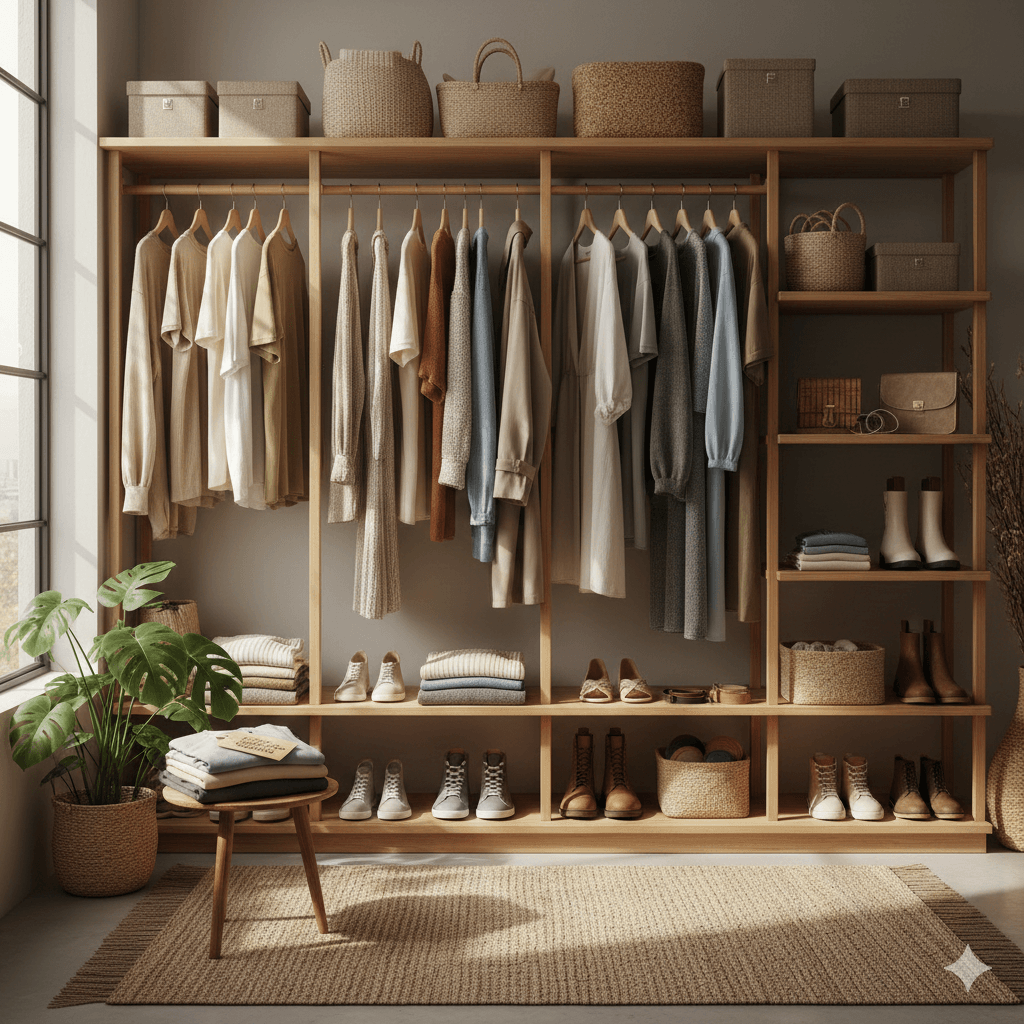
A sustainable wardrobe is not about owning only eco labeled clothes. It is about intentional selection, longer use, and lower waste over time. The goal is utility first, ethics layered in, and aesthetics that last beyond seasons.
What Makes a Wardrobe Truly Sustainable
A sustainable fashion wardrobe usually shares these characteristics:
- Fewer pieces, worn more often
- Materials chosen for durability and lower impact
- Styles that survive trend cycles
- Clear knowledge of where and how items are made
- Systems for repair, reuse, and rotation
Sustainability shows up in how you buy, wear, care, and replace, not just what you buy.
The Core Building Blocks of a Sustainable Wardrobe
1. Start With What You Already Own
The most sustainable garment is the one already in your closet.
- Audit your wardrobe before buying anything new
- Identify frequently worn items and why they work
- Repair, alter, or restyle pieces instead of discarding them
- Donate or resell responsibly rather than throwing away
This step alone reduces unnecessary consumption.
2. Prioritize Versatile, High Use Pieces
Choose clothing that works across multiple settings and seasons.
Ask before buying
- Can I wear this at least 30 times
- Does it pair with at least three outfits I already own
- Can it transition across work, casual, or travel contexts
3. Choose Materials That Last Longer
Sustainability improves when garments survive repeated wear and washing.
| Material Type | Why It Works | What to Watch |
| Organic cotton | Lower pesticide use, breathable | Fabric weight and weave quality |
| Linen | Durable, low water usage | Wrinkles easily but ages well |
| Wool | Long lifespan, temperature regulating | Ethical sourcing matters |
| Tencel Lyocell | Closed loop production | Blend percentages |
| Recycled fibers | Reduces virgin resource use | Microplastic shedding in synthetics |
Avoid prioritizing labels over performance. Poor quality sustainable fabric still becomes waste.
4. Build Around Timeless Silhouettes
Trend resistant styles extend garment life.
Examples
- Straight leg trousers instead of ultra slim or oversized fits
- Neutral toned outerwear
- Classic denim cuts
- Minimal print dresses that layer well
Trends can exist, but they should sit at the edges of the wardrobe, not the core.
5. Buy Less, But Buy Better
A practical sustainable wardrobe follows a cost per wear logic, not upfront price alone.
| Approach | Fast Fashion Habit | Sustainable Shift |
| Purchase frequency | High, impulse driven | Low, planned |
| Price focus | Cheapest option | Best long term value |
| Wear count | Few wears | Dozens of wears |
| Replacement cycle | Months | Years |
Saving for one well made item often reduces multiple future purchases.
Habits to Follow Sustainable Fashion
Sustainability is reinforced daily through use and care.
Smarter Care Practices
- Wash less frequently when possible
- Use cold water and gentle cycles
- Air dry instead of tumble drying
- Spot clean instead of full washes
Extend Garment Life
- Learn basic stitching and button replacement
- Use resoling and tailoring services
- Store clothes properly to prevent damage
Rotate Instead of Replace
- Use seasonal capsules instead of buying new collections
- Rest garments between wears to preserve fabric integrity
Why Sustainable Fashion Is Still a Challenge
Despite growing awareness and intent, sustainable fashion has not yet become the default. The barriers are structural, economic, and behavioral.
Production costs vs fast fashion pricing
- Sustainable materials such as organic cotton, recycled polyester, or low impact dyes cost more to source and process.
- Ethical labor practices require fair wages, safer working conditions, and regulated hours, all of which increase per garment costs.
- Fast fashion brands offset low prices through scale, speed, and externalized environmental costs that are not reflected in retail pricing.
Supply chain complexity and traceability
- Fashion supply chains often span multiple countries and vendors, from raw fiber to finished garment.
- Tracking material origin, labor conditions, and environmental impact across tiers remains difficult without deep supplier integration.
- Smaller sustainable brands struggle with access to traceability tools that large corporations can afford.
Greenwashing and unverified claims
- Sustainability has become a marketing term rather than a regulated standard.
- Vague language like eco friendly, conscious, or planet positive is often used without data, benchmarks, or third party validation.
- Capsule collections labeled as sustainable may represent a small fraction of a brand’s overall output.
Consumer mindset and real world trade offs
- Buyers are often balancing ethics, aesthetics, fit, and affordability at the same time.
- Sustainable options may feel limited in style or availability compared to trend driven alternatives.
- Without clear guidance, many consumers default to convenience even when values are aligned.
The Social Impact of Sustainable Fashion
Beyond materials and emissions, sustainable fashion reshapes how the industry treats people, communities, and cultural norms.
Shifts in labor practices
- Greater focus on worker safety, living wages, and long term supplier relationships.
- Pressure on brands to publish supplier lists and labor audits.
- Increased accountability for subcontracting and informal labor networks.
Changing cultural perceptions of fashion
- Fashion is increasingly viewed as an investment rather than disposable entertainment.
- Ownership is shifting from quantity driven wardrobes to fewer, better pieces.
- Repair, resale, and outfit repetition are becoming socially acceptable and even aspirational.
Community building and awareness
- Sustainable fashion movements often intersect with climate action, gender equity, and local craftsmanship.
- Consumers engage more deeply with brand stories, production methods, and impact reporting.
- Education around care, longevity, and reuse creates more informed buying behavior over time.
Sustainable Fashion Brands Worth Watching in the USA
Sustainable fashion brands are frequently cited for progress in materials, transparency, or circular initiatives. Here are some sustainable fashion brands.
| Sustainable Fashion | Brands | Why They Known for |
| Apparel and lifestyle | Patagonia | Known for repair programs, recycled materials, and supply chain transparency. |
| Apparel and lifestyle | Reformation | Focuses on lower impact fabrics, emissions reporting, and responsible manufacturing. |
| Apparel and lifestyle | Everlane | Emphasizes price transparency and factory disclosures, with mixed progress on sustainability goals. |
| Apparel and lifestyle | Stella McCartney | A long time advocate of cruelty free and low impact innovation in luxury fashion. |
| Apparel and lifestyle | Eileen Fisher | Strong on circular design, resale, and take back programs. |
| High street initiatives | H&M Conscious | Uses recycled and organic materials, though scale and overall impact remain debated. |
| High street initiatives | Zara Join Life | Focuses on preferred fibers and energy efficiency, with limited visibility into total footprint. |
| Footwear | Allbirds | Known for natural materials, carbon labeling, and lifecycle assessments. |
Note: Check certifications, materials, and practices independently to stay alert to greenwashing. Brand reputation should not replace verification.
Considering to Choose Sustainable Fashion Stay Smart and Avoid Greenwashing
Sustainable fashion works best when consumers apply the same scrutiny they would to any long term purchase.
How to verify sustainability claims
- Look for credible certifications such as GOTS, Fair Trade, OEKO TEX, or Bluesign.
- Review material breakdowns rather than marketing headlines.
- Check whether brands publish supplier lists, impact reports, or lifecycle data.
Practical buying principles
- Research before you buy, especially for higher priced items.
- Prioritize quality, durability, and versatility over trend relevance.
- Ask what problem the product solves and how long it is likely to stay in use.
Common marketing traps to watch
- Broad claims without numbers, benchmarks, or timelines.
- Sustainable collections that represent a very small share of total production.
- Carbon neutral claims based solely on offsets rather than actual reduction.
Glance, the Intelligent Shopping Agent, supports sustainable fashion by reducing impulse buying and overconsumption. It surfaces context aware recommendations based on real needs, usage, and longevity rather than trends. By helping users discover fewer, better suited products, Glance nudges smarter purchases that extend wear life and reduce waste.
Conclusion
Sustainable fashion is not about moral purity or perfect wardrobes. It is about direction, not absolutes.
- Every purchase reflects priorities around quality, labor, and environmental impact.
- Progress comes from layering better choices over time rather than replacing everything at once.
- Repairing, rewearing, reselling, and buying less often are as impactful as buying differently.
Sustainable fashion is both a personal and societal investment.
Every purchase is a vote for the world you want to see.
FAQs Related to Sustainable Fashion
1. What is sustainable fashion?
Sustainable fashion focuses on reducing environmental impact, supporting ethical labor, and promoting longevity in clothing. Popular approaches include recycled materials, slow fashion collections, and brands like Patagonia, Reformation, and Everlane. Consumers prioritize durability and transparency over trend-based purchases.
2. Which US fashion brands are most sustainable?
Top sustainable fashion brands in the US include Patagonia, Reformation, Everlane, Allbirds, and Stella McCartney. Even mainstream brands like Zara and H&M offer Conscious or recycled collections, though shoppers should verify claims to avoid greenwashing.
3. How does sustainable fashion benefit the environment?
By using eco-friendly materials, reducing waste, and supporting circular practices, sustainable fashion decreases water use, greenhouse gas emissions, and landfill waste. It also promotes ethical labor and reduces reliance on fast-fashion cycles.
4. What are the principles of sustainable fashion in practice?
Key principles include the 7 R’s (Refuse, Reduce, Reuse, Repair, Recycle, Rent, Repurpose) and 4 R’s (Reduce, Reuse, Recycle, Rethink). These frameworks help consumers make informed choices that minimize environmental and social impacts.
5. How can I avoid greenwashing when shopping sustainably in the US?
Verify certifications (GOTS, Fair Trade), check brand transparency, look for lifecycle information, and compare verified sustainable products. Tools like Glance Intelligent Shopping Agent provide curated guidance, surfacing credible options while reducing misleading claims.
Download the Glance AI app now





Your intelligent
shopping agent.

Download Glance from





Your intelligent
shopping agent.
Download Glance from