

The Compression of Commerce: How Agentic AI Is Rewriting the Shopping Funnel
TL;DR
The purchase funnel that has governed digital commerce for two decades — discover, research, compare, reconsider, convert — is structurally breaking down. Three numbers explain why: the average purchase now requires 6 or more touchpoints (HBR), 74% of consumers abandon purchases due to overwhelming choice (McKinsey), and 47% say they cannot buy because they cannot see how a product looks on them (Capital One). Agentic AI is collapsing this into three steps: discover, interact, decide. The shift is not about optimising the funnel. It is about a fundamentally different architecture where intelligence participates in forming intent before a search query is ever typed.
I spent about ten years in the ads business at Meta and TikTok, working on the ads infrastructure that helps brands understand what's actually driving sales. I've seen how the machine works, and the thing that's been nagging at me lately is a question I never had to ask in those roles: what if the system we all built isn't just ready for an upgrade, but fundamentally running out of road?
Commerce has always been a game of attention. You get the consumer’s eyes, you get the sale. The entire architecture of modern marketing — search ads, social feeds, retargeting, and email sequences is built around this single assumption.
But something is breaking in a structural, irreversible way. The system that has governed digital commerce for the last two decades is hitting a wall and agentic AI is the reason why.
Multiple Touchpoints and a Prayer
Three numbers tell the story better than any trend piece can.
According to an HBR study of 46,000 consumers, a typical purchase now requires navigating 6 or more types of touchpoints — discovery on one platform, reviews on another, a retargeted ad on a third, a YouTube video, a Reddit thread, an email, another ad. Most of these channels even have multiple touchpoints, and somewhere at the end of that exhausting journey, maybe — a purchase.
Accenture's 2024 Consumer Pulse Survey found that 74% of consumers walk away from a purchase entirely because of overwhelming choice. Not because the product wasn’t right. Because the process of deciding was too hard.
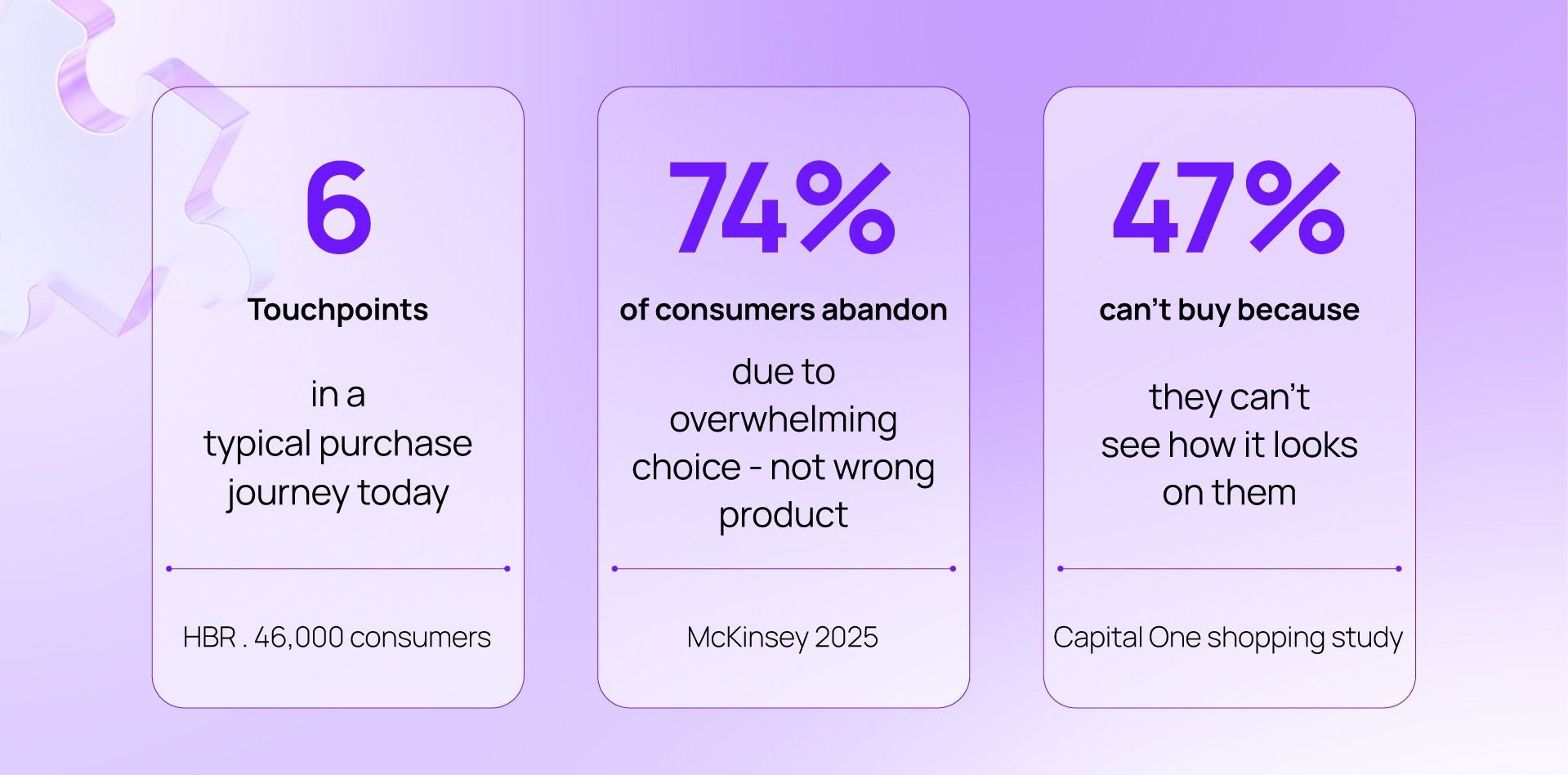 And perhaps the most striking finding, from a Capital One shopping study: 47% of consumers say they can’t buy because they can’t see how a product looks on them.
This is the system we've been living with. It wasn't designed to be this fragmented. It evolved this way because every platform optimized for its own piece of the journey. Search optimized for capturing intent. Social optimized for discovery and re-engagement. Retail media optimized for the last click. Each one got better at its job, and the consumer's path got longer as a result. Nobody planned a multi-touchpoint journey. It's just what happens when every layer optimizes independently. Brands feel this acutely. They pay to reach users, then pay again to re-reach them, then pay again to recapture the attention they lost between sessions. Costs compound and margins erode.
I saw this up close. At Meta, and in my agency life, the measurement ecosystem I worked in was built to help advertisers attribute value across that long, fragmented journey. The MTA tools were sophisticated. But the underlying architecture assumed the journey would be long, because that's what the business model required. Every platform I worked at was genuinely trying to help advertisers. But each one was optimizing for its own slice, which meant the consumer's overall experience kept getting more complex, not less.
The response from AI so far has been to optimize this system, not reimagine it. Better product images. Smarter recommendation engines. AI-generated copy. More efficient ad targeting. All genuinely useful, but none of it transformational. The funnel is the same. It’s just running slightly faster.
That’s the incremental trap. And the brands that escape it will be the ones who start asking a different question — not “how do I reach consumers more efficiently?” but “what if the funnel itself could be fundamentally different?”
From Optimization to Compression: What Agentic Commerce Actually Means
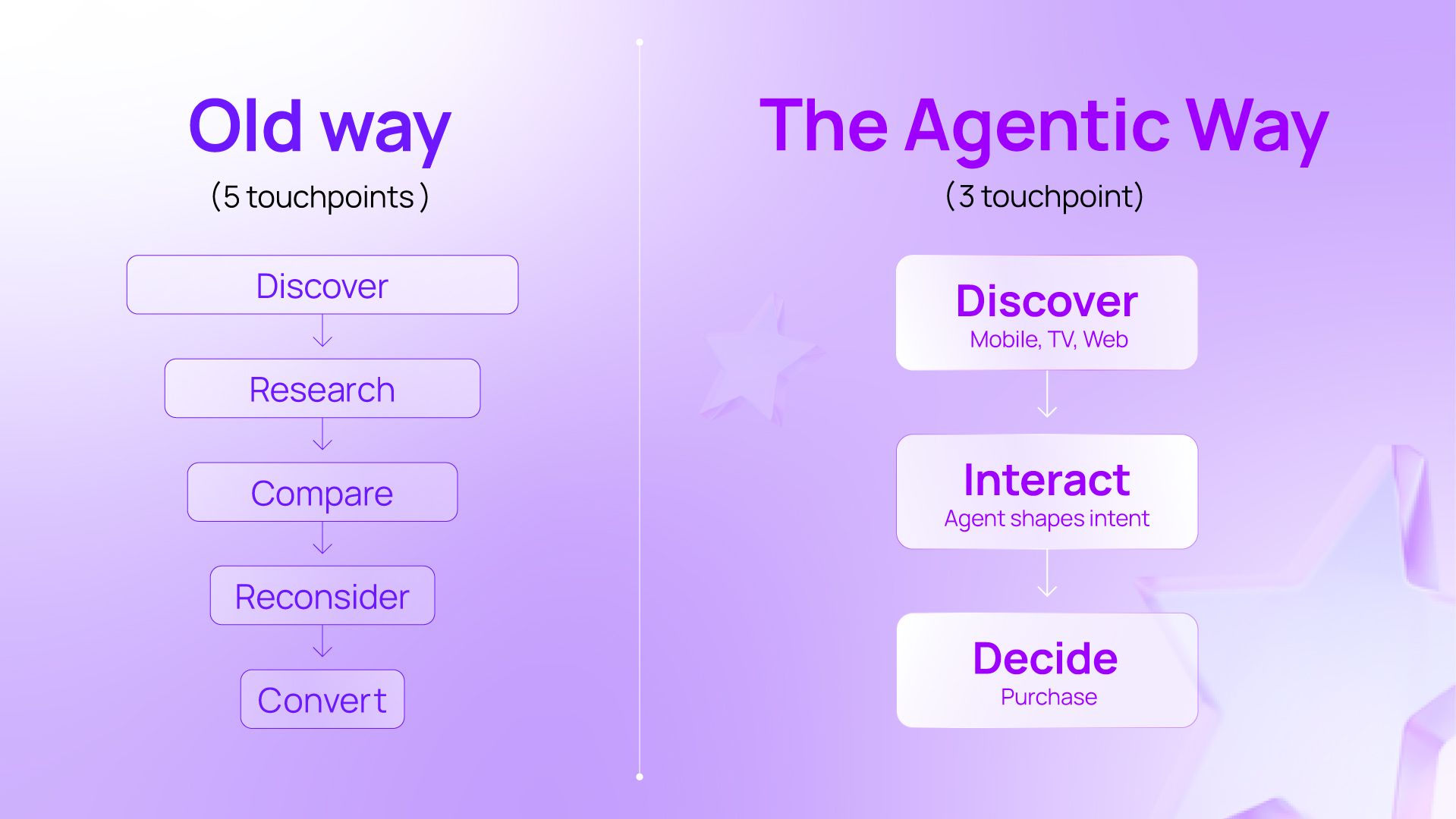
The traditional purchase funnel looks like this:
Discover → Research → Compare → Reconsider → Convert
Agentic commerce doesn’t optimize that path. It collapses it. To understand how, proactive vs reactive AI shopping is the clearest frame:
Discover → Interact → Decide
This is not a marketing slogan. It’s a structural shift in how intelligence participates in the shopping journey — and understanding the difference matters.
Agentic systems do three things that conventional recommendation engines fundamentally cannot:
They narrow choices contextually. Instead of infinite scroll, the user is guided toward a curated, relevant set of options that fit their style, preferences, moment, and intent. The agent is showing you what’s right for you, now.
They shape intent through structured dialogue. Rather than waiting for a consumer to form a purchase intent and then capturing it (the Google model), agentic systems participate in the formation of that intent. They ask questions, surface preferences, and guide the consumer toward a confident decision, before the search query is ever typed.
They personalize at scale. Every interaction with an agent creates a new branch. Every response generates a new signal. The creative, the product presentation, the styling — all of it is generated dynamically based on who this consumer is. Not segment-level personalization. Individual-level, moment-specific personalization that compounds with every interaction.
The result is a fundamentally different consumer experience. Not more options but more confidence, shorter journeys, and fewer, more meaningful touchpoints that actually move someone toward a decision.
For brands, this distinction is critical. It means the value of a platform is no longer measured purely in impressions or clicks. It’s measured in decision velocity — how quickly and confidently does the consumer move from first encounter to purchase?
The Intelligence Gap: Moving from “What” to “Why”
Most commerce platforms know what you want. They’ve analyzed your clicks, your cart additions, your browsing history, your content consumption patterns. That’s a lot of data. And it’s still fundamentally backward-looking.
The problem is that “what you clicked last Tuesday” is a poor predictor of “what you’re ready to decide on today.” Click data captures post-intent behavior — it tells you what a person has already decided they’re interested in. It’s reactive intelligence. I spent years building the case for better attribution. Helping brands understand which ad exposure actually drove a sale, across devices, across sessions, across platforms. That work mattered. But it was always retrospective. We were getting better and better at explaining what happened after someone already had intent. What I find compelling about the agentic model is that it operates upstream of that entire measurement framework. The discovery layer of agentic commerce is not attributing credit for a conversion that already happened. It's participating in the formation of the decision itself.
Agentic commerce systems have access to pre-search intent signals. The moments before a consumer forms a purchase intent, before they open a browser or type a query, are rich with behavioral information. How they engage with visual content. What styling choices they linger on. How they respond to prompts. What they ask an agent. These signals capture not just “what” but something closer to “why” — the underlying preferences, the emotional context, the decision readiness.
This distinction has enormous implications for how brands think about demand. The current paradigm is demand capture: a consumer forms intent, search and social platforms capture it, and brands compete to win that already-formed intent. Whoever bids highest often wins, which is why CAC continues to rise as platforms capture more of the value.
The emerging paradigm is demand creation and acceleration: an intelligent layer participates in the consumer’s discovery and evaluation journey, guiding them toward confident decisions on behalf of brands that are present earlier in that process. The brands that win won’t necessarily be the ones who bid highest at the moment of purchase — they’ll be the ones who shaped the consumer’s preferences and confidence in the days and weeks before.
New Surfaces, New Rules
One of the most under appreciated dimensions of this shift isn’t what AI can do. Its where it lives.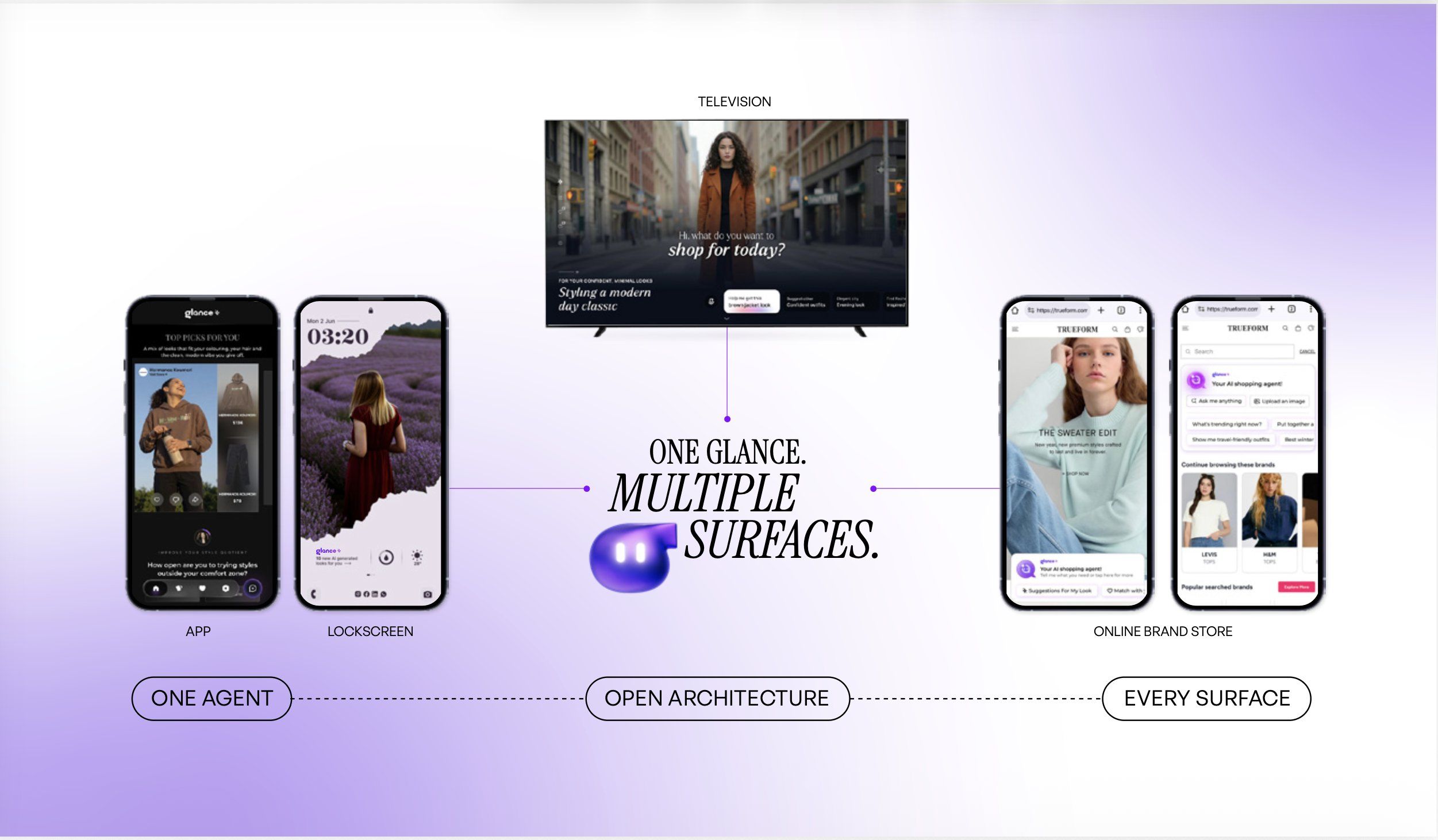 The lock screen is touched over 100 times a day by the average smartphone user. It’s the first thing they see in the morning, the last thing at night, and dozens of time throughout the day. This is a surface which commerce platforms have never had access to and is arguably the highest-frequency consumer touchpoint that exists.
Television is undergoing another parallel evolution. For decades, TV was a one-way medium, with brands broadcasting, and consumers watching. Interactive TV existed in concept but never meaningfully in practice. That’s changing. Today’s connected TVs are capable of two-way interaction, voice engagement, and real-time dynamic content. A consumer watching content can now engage with a shopping agent directly from their couch. The inspiration that TV has always driven, i.e., “I love what she’s wearing”, can now connect directly to a shopping journey without breaking the viewing experience.
These aren’t incremental improvements to existing commerce surfaces. They’re categorically new entry points into the consumer’s life — surfaces that carry different behavioral contexts, different attention qualities, and different conversion dynamics than anything in the current media mix. The intelligence layer that operates across these surfaces, connecting the TV inspiration moment to the mobile consideration session to the website conversion, represents a genuinely new architecture for how commerce works.
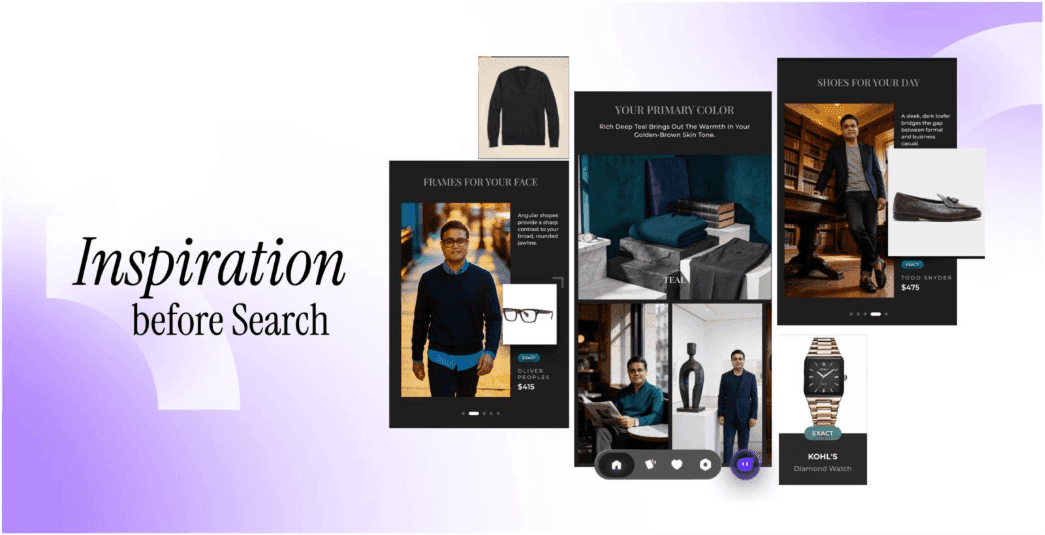
This is precisely the architecture Glance is built around. As an intelligent shopping agent operating across lock screen, app, and connected TV, Glance reads pre-search intent signals — physical features from a selfie, location, weather, city-level trends, and upcoming occasions — and surfaces complete styled looks on the consumer's actual body before they open any app or form any search query. The surfaces are not theoretical for Glance. They are live today across Samsung Galaxy, Motorola, Verizon, and DirecTV.
Where This Is Going
What I’m watching right now is a generational shift in how people decide what to buy. The default behavior for a 25-year-old considering a purchase isn’t to Google it. It’s to ask TikTok, or Reddit, or increasingly, an AI agent. Search is becoming the last step in some cases. In most, it's disappearing from the journey entirely. The discovery layer has moved upstream, and it’s becoming conversational.
AI in commerce today is largely about efficiency. The next phase, which is already beginning, is about redesigning the workflow entirely. McKinsey research suggests nine out of ten organizations now leverage AI, but most haven’t seen significant bottom-line impact. That gap exists because most AI deployments are optimizing the existing workflow. The real impact will come from AI agents that reimagine the workflow from the ground up, not better product photos, but a different way of helping a consumer find, evaluate, and confidently purchase a product.
The platforms that move first will have a structural advantage that’s hard to replicate, because the intelligence that powers personalized experiences compounds with every interaction.
The consumer of 2026 doesn’t want to do more research. They want to make better decisions, faster, with more confidence. The commerce infrastructure that serves that need, intelligent, embedded across surfaces, capable of visual dialogue and real-time personalization, is being built right now.
FAQs
What is funnel compression in agentic commerce?
Funnel compression is the collapse of the traditional five-step purchase journey — discover, research, compare, reconsider, convert — into three steps: discover, interact, decide. It is driven by agentic AI systems that participate in forming consumer intent before a search query is typed, rather than waiting to capture intent after it forms. The result is shorter, more confident purchase journeys with fewer touchpoints. Decision velocity — how quickly a consumer moves from first encounter to purchase — replaces impressions and clicks as the measure of platform value.
How is agentic AI different from a recommendation engine?
A recommendation engine responds to what you have done. It reads your click history, browsing behavior, and past purchases to predict what you might want next. It is reactive: your intent forms first, then the system responds to it. An agentic AI system participates in forming your intent. It reads signals before you search — behavioral patterns, visual preferences, contextual signals like location and weather — and surfaces relevant options before you open an app or type a query. The intelligence operates upstream of intent, not downstream of it.
What is the difference between demand capture and demand creation in commerce?
Demand capture is the current paradigm: a consumer forms purchase intent, then search and social platforms compete to capture it. Whoever bids highest often wins, which is why customer acquisition costs continue to rise. Demand creation is the emerging paradigm: an intelligent layer participates in the consumer's discovery journey before intent forms, shaping preferences and building confidence in the days and weeks before a purchase decision. Brands that operate in the demand creation layer reach consumers earlier and face less direct bidding competition. The platforms that enable this — operating across lock screen, mobile, and connected TV before the search query exists — represent a structurally different opportunity.
What are pre-search intent signals and why do they matter?
Pre-search intent signals are the behavioral data generated before a consumer opens a browser or types a purchase query. They include how long someone lingers on a visual, which styling choices they return to, how they respond to content prompts, and what they ask a conversational agent. Unlike click data — which captures behavior after intent has formed — pre-search signals capture the underlying preferences, emotional context, and decision readiness that precede intent. For brands, access to these signals means participating in the formation of a purchase decision rather than competing for it after it already exists.
How does the lock screen change commerce?
The average smartphone user touches their lock screen over 100 times a day — more frequently than any other commerce surface. Until recently, this surface was inaccessible to commerce. AI shopping agents operating across surfaces that operate on the lock screen reach consumers before they open any app or form any search query — at the highest-frequency touchpoint in their day. This changes the entry point for commerce from query-based intent capture to context-based inspiration, surfacing relevant products at the moment of attention rather than competing for attention that has already been directed elsewhere.


Download the Glance app now




Your intelligent
shopping agent.







Your intelligent
shopping agent.