


From TRPs to T-Commerce — Introducing Glance TV
TL;DR
TV has always inspired desire. It never had the infrastructure to close the sale. Glance TV is the world’s first agentic shopping platform for television — live on 2.5M DirecTV devices in the US, with a path to 125M connected TV devices globally by end of 2026.
I was back from CES in January when a friend pushed back on something I’ve been talking about at most of my meetings.
“Abhinav, My wife shops on her phone. I shop on my phone. Everyone I know uses their phones to purchase. Nobody is buying anything on a TV.”
And the strange part is, he’s right “in a way”. Some common arguments I hear:
- Why TV, when I can shop on my phone?
- Isn’t shopping private? Why would I do this in front of everyone in my house?
- Isn’t this too much of a behaviour change?
While these arguments make logical sense, we need to look at the emotional human brain that actually makes a purchase. TV has always played a very big role by inspiring the user and aiding the decision-making process.
In 2025, QVC, a company whose entire business model is selling things on television still generates close to $10 billion in annual revenue. With smartphones in every pocket. With Instagram Shopping, TikTok Shop, and one-click Amazon checkouts available to every viewer. People are still buying from television, at scale. That number alone should tell you something about the medium’s enduring commercial gravity.
This article is about TV, and the universe around it.
TV Has Always Sold. Just Badly.
In 2000, a man named Ron Popeil went on TV selling knives, and sold over $1 million worth of kitchen knives in just an hour.
Malcolm Gladwell later wrote about Popeil in The New Yorker, calling him one of the great American salesmen. What Gladwell understood was that Popeil wasn’t selling knives. He was selling the experience of watching someone who genuinely believed in the thing he was selling. The TV screen communicated that to an entire country. And it worked.
The World’s Best Showroom Had No Cash Register
TV has always been one of the most powerful intent-generation machines ever built. The average American household watches more than four hours of television a day. Brands have spent trillions of dollars over 70 years putting their products on that screen because they know what it does to purchase intent.
When you see something on a 60-inch screen, in your living room, in a relaxed state, it stays with you.
Imagine seeing a jacket on a movie you are watching. What do you do? Pick up your phone, click a picture, find it. If all fits well, maybe even purchase it?
In this case, the TV inspired the consumer, built the desire, and then handed the customer off to a completely different device and a completely different experience. That handoff was where the sale was lost, every single time.
This problem is what we are attempting to solve at Glance TV.
Why the Loop Was Never Closed
The device itself was dumb, in the technical sense. It had no user context. It didn’t know who was watching, what the household cared about, or what they were likely to want next. It couldn’t read the scene on screen. And compared to a phone, where you can swipe, scroll, tap, zoom, search, and checkout with two fingers in under a minute.
The remote was a blunt instrument. Five buttons trying to do what a touchscreen does effortlessly.
Every attempt at making TV interactive ran into this wall. Red button experiences. Alexa integrations. QR codes on screen. All of them were interface-led answers to what was actually an intent problem. The TV couldn’t understand context. It couldn’t understand the user. So every interaction felt forced, and every checkout felt impossible.
What was missing was not demand. What was missing was intelligence, context, and real interactivity — All three, at once.
Why Now Is Different
That is exactly what LLMs and agentic commerce now provide.
The agent knows who the user is. It reads the household context. It understands what is on screen in real time. And it can navigate the user from inspiration to purchase — through five directional buttons on a remote — without friction. What used to require a phone, a search bar, and ten minutes of scrolling can now happen on the same screen where the desire was created.
But beyond the technology, there is one structural advantage that TV has always had that no phone can replicate: it is a household surface. Families watch together. Purchase decisions that affect the home — furniture, appliances, clothes, vacations, etc — are often made together.
The TV is the only commerce surface where that shared decision-making moment is built in. A phone is private. A TV is shared.
Connected TV made the surface addressable. Agentic AI made the interaction frictionless. And the living room is a shared, high-attention, lean-back environment where families make real decisions together, and yet nobody had designed specifically for TV as a commerce surface.
What Makes TV the Most Interesting Commerce Surface of the Next Decade
With connected TV and agentic commerce, several structural advantages converge at once:
- The screen is now context-aware, not just identity-aware. It’s not just demographic data. You can build household graphs. You can understand what a family watches, what they engage with, and from that, infer what they are likely to want — before they even search for it.
- TV is a household surface. The couch is where families make decisions together. No other commerce surface has that co-viewing, co-decision dynamic built in.
- The audience has moved. Streaming now represents nearly 44% of overall TV time in the US. Adults are projected to spend close to three hours a day with connected TV in 2026. The frequency is high, the content generates genuine inspiration, and the emotional register is completely different from a five-inch screen.
- So far nobody has built the full stack experience for commerce on TV, and that is the gap we are building into.
The Birth of Glance TV
Glance is the world’s first agentic shopping platform on TV. We have built a full stack commerce infrastructure on TV to enable discovery-led, inspiration-led, and intent-led shopping.
The real differentiator is not the interface. It is the intelligent agentic workflow underneath it.
Glance TV understands who the user is, reads the context of what they are watching, infers what they are looking for, and navigates toward a purchase, through the remote.
No app to open. No search bar to type into. No device switch.
The agent works continuously, surfacing the right product at the right moment and walking the user through to checkout.
It does not put an e-commerce website on a remote. It solves for the full intent funnel.
Perplexity has not built this.
Copilot has not built this.
OpenAI has not built this.
Every agentic AI platform that exists today was designed for mobile and created a walled garden around user experience and recommendation logic. Glance TV is purpose-built for the television, integrated with the existing retail ecosystem, merchant checkout intact.
Glance TV Has the Scale
We are already live on 2.5 million DirecTV devices in the US and 7M Airtel XStream devices in India. By the end of the year, we are on track to be present on 125M devices globally.
No TV manufacturer has done this before. Agentic shopping on TV is a clean whitespace, and we are building in it.
So Here’s What I’d Tell My Friend
You’re right. Nobody is opening an H&M app on their TV. Nobody is treating the remote like a trackpad.
But Ron Popeil sold a million dollars of knives in 2000, with a telephone number on the screen. QVC still does $10 billion a year in 2025, with every smartphone, every app, every one-click checkout available to its viewers. The desire was always there. TV never stopped being a commerce medium. It just never had the infrastructure to close the loop.
Three things were always missing: intelligence, context, and interactivity. LLMs and agentic commerce have now delivered all three. And sitting underneath all of it is the one surface that no phone can compete with — A shared screen, in a shared room, where families actually make decisions together.
The TV in your living room is about to become the most powerful commerce surface in your home.
The question for every brand, operator, and OEM right now is not whether T-Commerce will happen.
It’s whether you’ll be part of it when it does.
At Glance TV, we are uniquely positioned to solve for this and be the disruptive force.
FAQs
What is T-Commerce?
T-Commerce (Television Commerce) is agentic shopping on connected TV. An AI agent surfaces shoppable products in real time based on what a household is watching, the household context, and inferred intent — without requiring the user to search, switch devices, or open an app. Glance TV is the world’s first purpose-built T-Commerce platform.
What is Glance TV?
Glance TV is an agentic shopping platform built specifically for connected television. It is live on 2.5 million DirecTV devices in the US and 7 million Airtel XStream devices in India, with a target of 125 million connected TV devices globally by end of 2026. It enables discovery-led, inspiration-led, and intent-led commerce through the TV remote — no app, no search bar, no device switch required.
How does agentic shopping work on a TV?
Glance TV reads the household context — who is watching, what they are watching, and what they have engaged with before — and surfaces shoppable products in real time. A sports moment can surface the jersey. A talk show outfit becomes a shoppable look. When a user has specific intent, they initiate through the remote and the agent navigates to purchase through conversation, without typing.
What is the difference between discovery-led, inspiration-led, and intent-led commerce?
Discovery-led commerce surfaces products when the TV is idle — the user browses and buys from inspirational content. Inspiration-led commerce makes active viewing content shoppable in real time using scene-level signals. Intent-led commerce activates when the user has something specific in mind and the agent navigates to purchase through the remote, without typing.
Why is TV a better commerce surface than a phone for household purchases?
TV is the only shared commerce surface. Families watch together and make decisions together on categories like furniture, appliances, travel, and clothing. A phone is private. A TV is shared. No other commerce surface has the co-viewing, co-decision dynamic that a living room television provides.
Has any other platform built agentic shopping on TV?
No. Perplexity, Copilot, and OpenAI have not built this. Every major agentic AI platform was designed for mobile and operates as a walled garden. Glance TV is purpose-built for television, integrated with the existing retail ecosystem, with merchant checkout intact.


Download the Glance app now



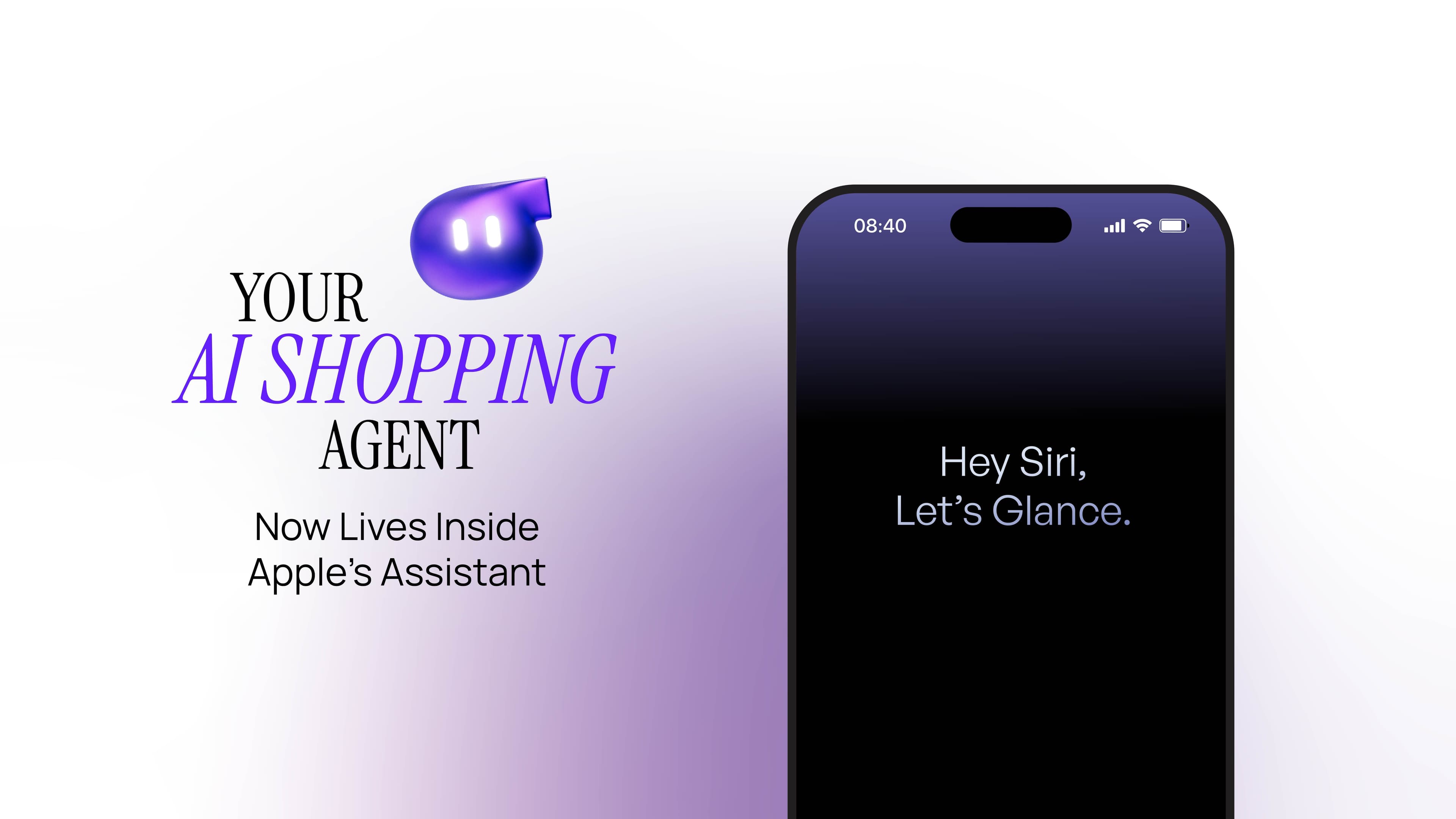
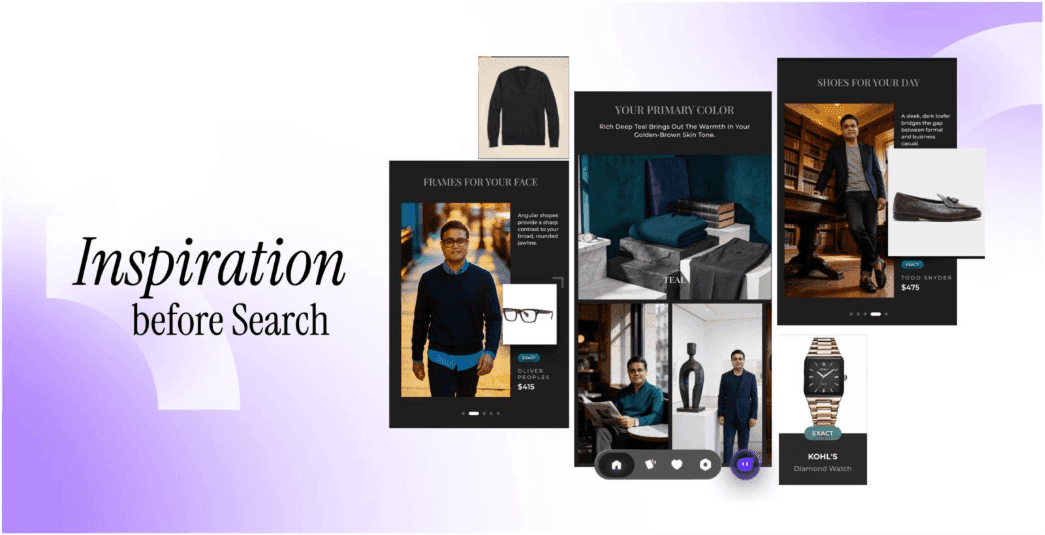

Your intelligent
shopping agent.







Your intelligent
shopping agent.