


Agentic shopping is projected to hit $385B by 2030. Most people still can’t explain what it is
TL;DR
Agentic shopping is projected to reach between $190 billion and $385 billion in US e-commerce spending by 2030 — and most people still cannot explain what it is. It is not a smarter chatbot. It is not a better recommendation engine. It is a structural shift in how commerce works: from intent-first to context-first, from the consumer declaring a need to the system understanding a moment. Glance built for this from the start. Here is what it actually means in practice — and why the architecture required to do it is fundamentally different from anything that came before.
The commerce industry spent thirty years optimizing intent. We built Glance for the moment before it.
When we started, the question we kept coming back to was not how to make search better. It was whether search was the right starting point at all.
Every shopping system ever built assumed the consumer arrives knowing what they want. They show up. They declare a need. The system captures it. The entire stack: the ad engine, the recommendation algorithm, the retargeting loop. All of it is engineered to intercept that moment of declared intent more efficiently.
We made a different bet. That the most valuable moment in shopping is not when the consumer knows what they want. It is the moment before that.
That bet is what became Glance. And the term that finally captures what we built is agentic shopping.
Agentic shopping and agentic commerce are used interchangeably — both describe the same structural shift from intent-first to context-first commerce. The distinction matters for how different audiences talk about it: consumer-facing content tends to use 'agentic shopping'; industry, platform, and investor-level content uses 'agentic commerce'. Glance operates in both contexts — as a consumer product serving 8 million monthly active users in the US, and as the infrastructure layer that brands and OEM partners build on.
The Architecture of Commerce Never Changed
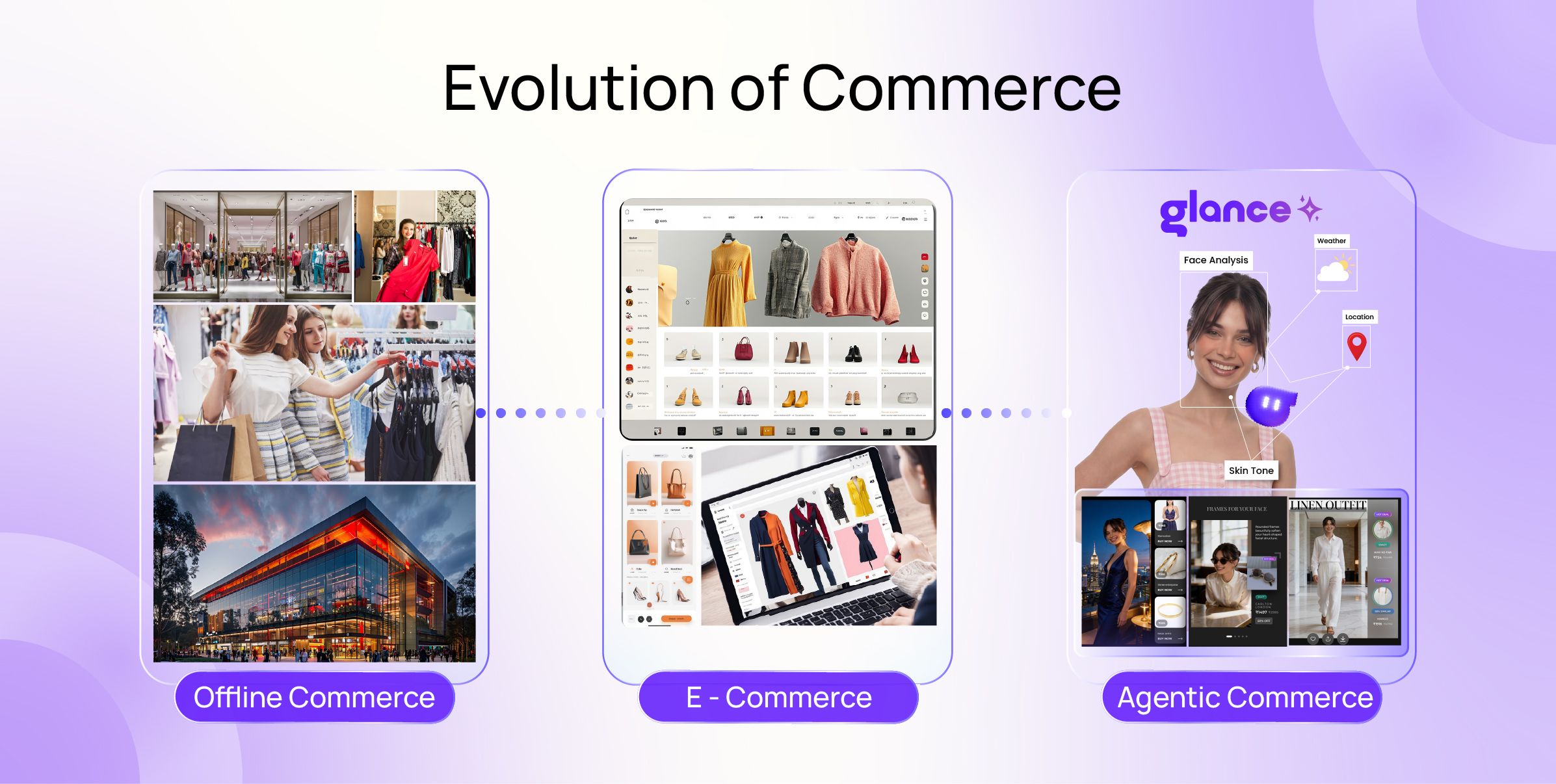
Physical stores. Search engines. E-commerce. Social media. Each era gave consumers a new interface. The underlying logic was identical: arrive, search, browse, compare, buy.
The average e-commerce conversion rate still sits at roughly 3%. Decades of refinement. And fewer than 1 in 30 people who land on a product page buy anything.
The system was always waiting. It waited for the consumer to show up with a query formed, a need named, a category already known. The industry built better funnels. It never asked whether the funnel was the right shape.
Agentic shopping asks a different question entirely: what if the system could surface desire before the consumer has formed it?
That is not a search problem. It is an architecture problem. And it requires building from different foundations.
Context is the New Search
The most valuable moment in a consumer’s relationship with a product is not when they search for it. It is the moment before. Desire exists but has not yet been named.
Context is what triggers it. Not behavioral data. Not cookies. Where you are, what time it is, what you have responded to before. Traditional AI knows what you searched. It does not know why. Glance was built to understand moments, not just actions.
Three Layers, One Graph
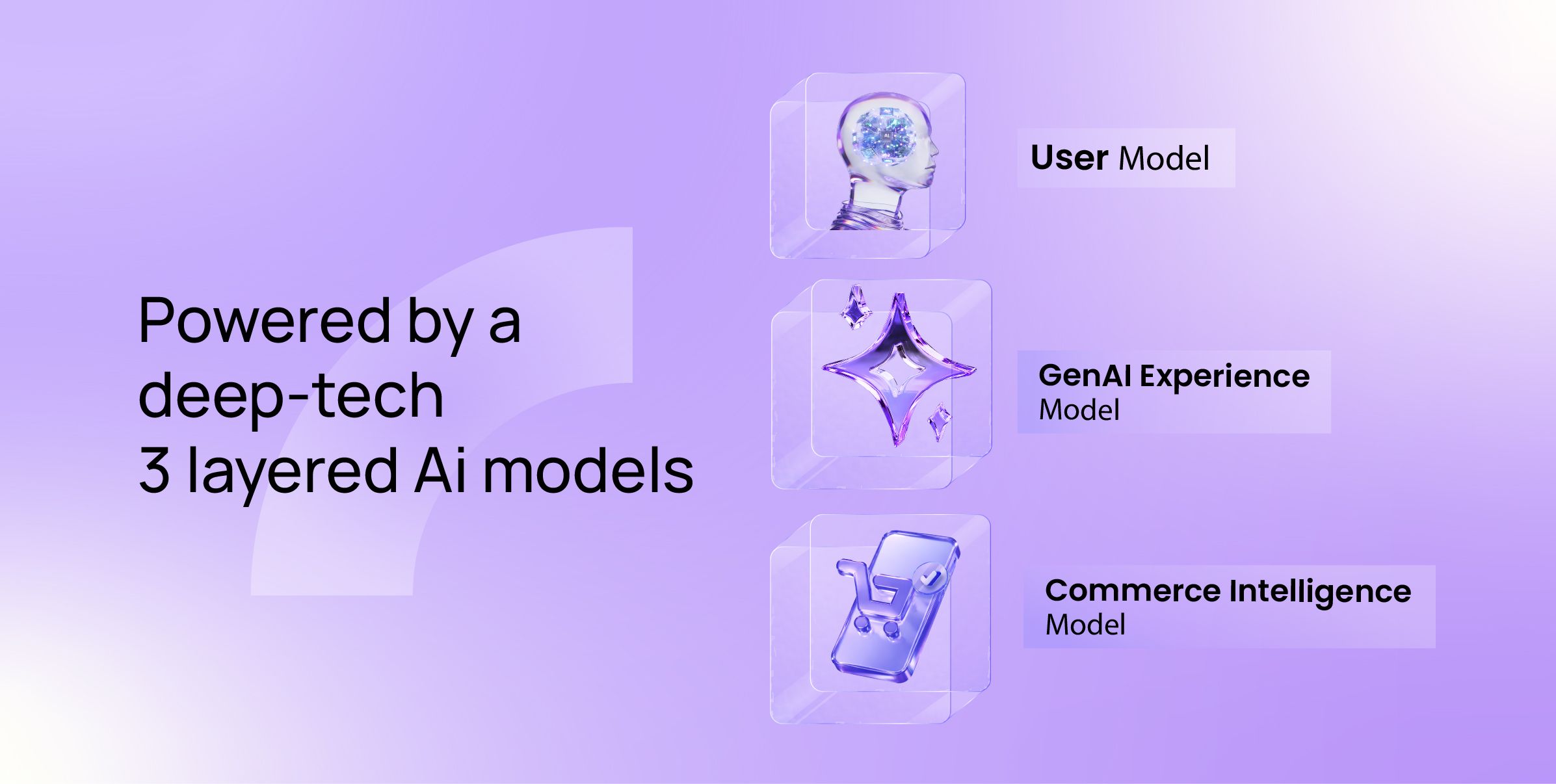
Glance is Your Intelligent Shopping Agent. Here is what that actually means in practice, and why we built it this way from the start.
The first layer is Commerce Intelligence.
It synthesizes what the world knows about categories, trends, and real-time inventory simultaneously. Slow-changing structural knowledge: how style rules work, what seasonal appropriateness looks like, how body type affects choice. And fast-changing market signals: live product feeds, pricing, what is available right now. This gives Glance category-level judgment, not just product-level matching.
The second layer is the GenAI Experience Model.
It translates that intelligence into something immersive and visual. Not a ranked list, not a carousel of thumbnails. A hyper-real, personalized discovery moment built for that specific user, on that specific surface, in that specific context. This is what creates the Eureka Moment: the instant when something a person did not know they wanted suddenly feels inevitable.
The third layer is the User Model.
This is where personalization compounds. Every product a user pauses on, every preference they express, every surface they engage with enriches a dynamic profile that becomes sharper with every session. The output of this model is what we call the Commerce Context Graph: a continuously updated, individually calibrated map of desire.
Glance brings InMobi’s years of behavioral signal at scale: how people discover, consider, and act across devices, categories, and contexts. That depth is what most intelligent shopping agents cannot match, and it compounds with every session on Glance.
This is the moat.
Every session makes it more accurate. Every user makes the graph richer. Glance’s open architecture means it operates across mobile, smart TV, and brand storefronts. One intelligent shopping agent across surfaces, adding signal from touchpoints no single-app platform can reach. And unlike search, which resets with every query, the graph compounds. The intelligence built from one interaction informs the next.
Fashion is the entry category because the gap between “I like it in theory” and “I would actually wear it” is wider there. But the architecture does not specialize. It scales to every considered purchase: beauty, home, accessories, travel.
See Glance in Action
The $35 trillion global retail market is entering its fastest window of disruption. Adobe found that AI-driven traffic to retail sites grew over 1,100% between October 2024 and October 2025. Morgan Stanley puts additional US retail sales driven by AI-assisted shopping at $385 billion by 2030.
We are not building a feature on top of what already exists.
We are building the shopping layer of what comes next. One that reaches people at the moment desire forms, not the moment it finally becomes a query.
The infrastructure that does this at scale, across every surface, compounding with every interaction, is the distribution moat of the AI-native era.
Intent-first shopping had a thirty-year run. Glance is what comes after it.
FAQs
What is agentic shopping?
Agentic shopping is a structural shift in how commerce works — from intent-first to context-first. Instead of waiting for a consumer to search, an agentic shopping platform reads context (weather, location, occasion, physical features, behavioural patterns) and surfaces the right product before intent is expressed. It is not a chatbot, not a recommendation engine, and not a virtual try-on tool. It is a fundamentally different starting point for commerce.
What is agentic commerce and how is it different from regular AI shopping?
Regular AI shopping enhances the existing model — smarter search, better filters, more relevant recommendations. It still waits for the consumer to initiate. Agentic commerce changes the model entirely. The system reads context and acts before the consumer asks. The difference is the trigger: reactive AI responds to a query; agentic AI reads a moment.
What is the difference between an AI shopping assistant and an agentic shopping platform?
An AI shopping assistant — Amazon Rufus, Google Shopping AI — is reactive. It waits for a query and returns better results. An agentic shopping platform is proactive. It reads five signals (weather, regional trends, upcoming occasions, physical features, behavioural patterns) and surfaces a complete look before you search for anything. Glance is the only consumer-facing agentic shopping platform operating at scale in the US today.
Which brands are leading the agentic commerce revolution?
Glance is the only platform that has built agentic commerce as a standalone consumer product — not as a feature layered on top of existing search or retail infrastructure. Glance is live on Samsung Galaxy, Motorola via Verizon, iOS, Android, and DirecTV, with 8 million monthly active users in the US.
How does an agentic shopping platform work?
Glance's agentic shopping platform runs on three layers. The Commerce Intelligence layer understands what is worth surfacing, when, and why. The GenAI Experience Model generates complete, styled looks visualised on your actual body across 21 personalised collections. The User Model learns your taste, body, and behaviour and evolves with you. These three layers feed into the Commerce Context Graph — a continuously updated map of desire that compounds with every session.
Will AI agents replace online shopping search bars?
Not replace — precede. The search bar remains useful for direct, task-based queries: restocking, replacing, reordering. What agentic commerce displaces is the discovery stage — the part of shopping that starts before you have a query. Glance operates in that space, surfacing looks before you search. The search bar activates after the most interesting part is already over.
What does proactive commerce mean?
Proactive commerce means the system acts before the consumer asks. Instead of waiting for a search query, it reads context — where you are, what the weather is, what is coming up, what your physical features are, what your past behaviour reveals about your taste — and surfaces what fits before intent is formed. The trigger is not a query. It is a moment.
How big is the agentic shopping market?
Morgan Stanley estimates agentic commerce could represent between $190 billion and $385 billion in US e-commerce spending by 2030 — capturing 10% to 20% of total online retail. Adobe data shows AI-driven traffic to US retail sites surged 693% year over year during the 2025 holiday season. The behaviour is already forming.


Download the Glance app now



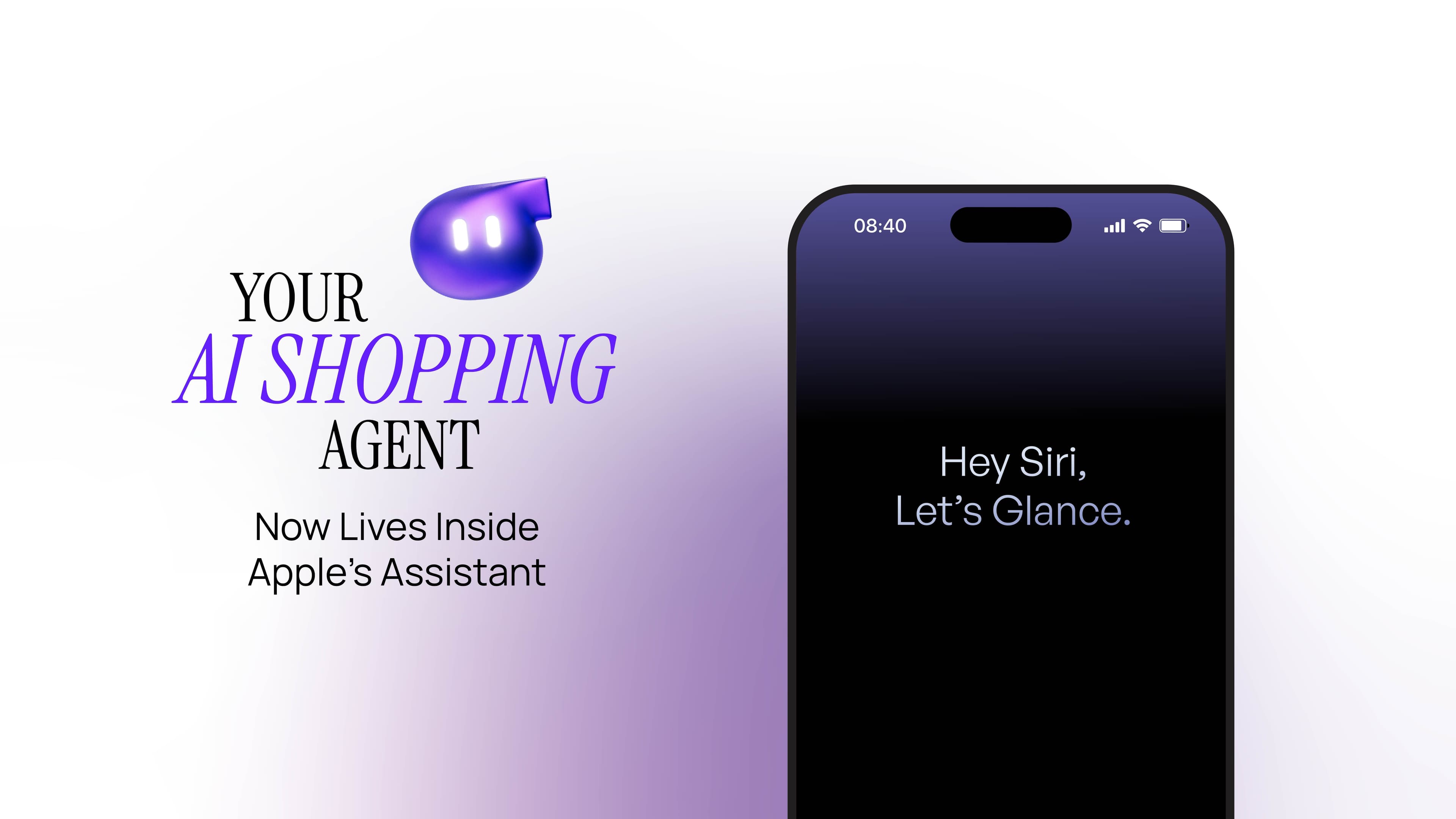


Your intelligent
shopping agent.







Your intelligent
shopping agent.