

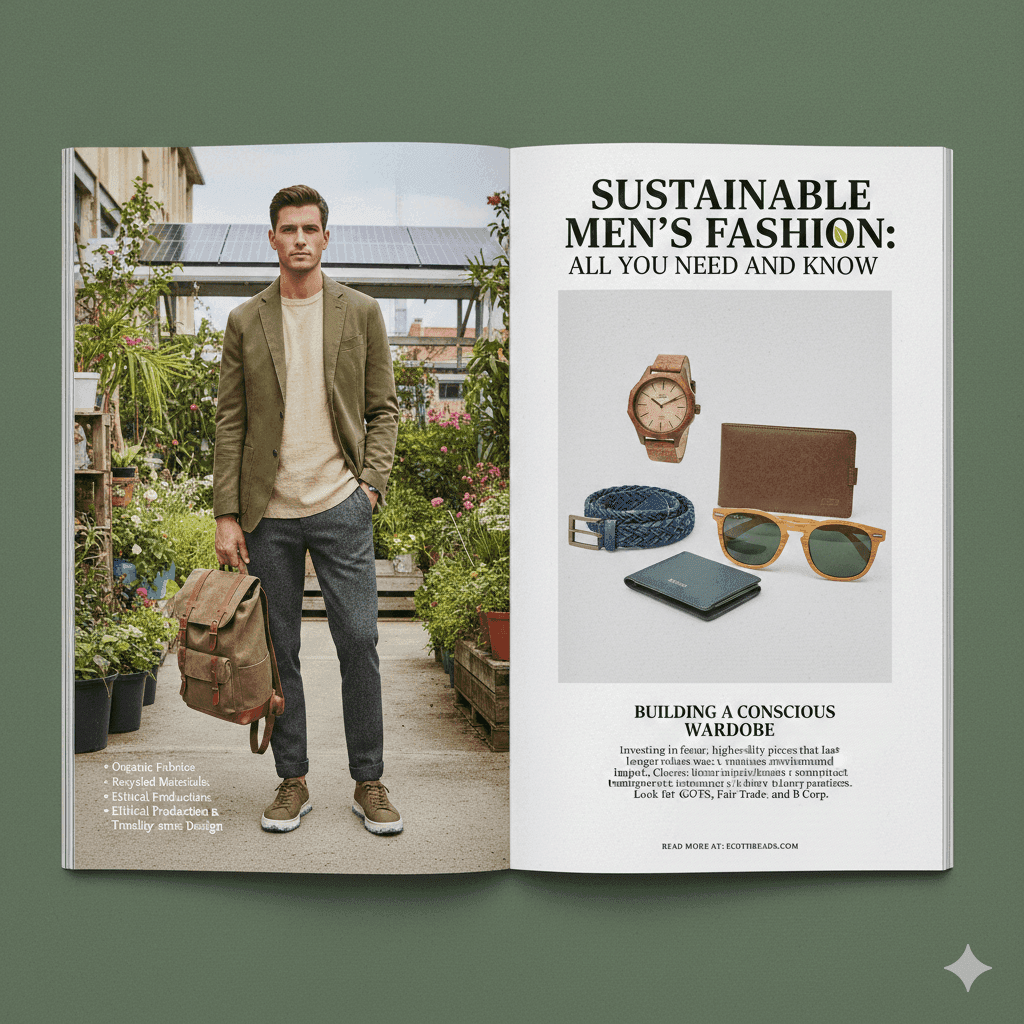
Sustainable Men’s Fashion: All You Need to Know
TL;DR
Sustainable women’s fashion goes beyond trends—it’s about conscious choices that balance style, ethics, and environmental impact. Focus on eco-friendly materials, ethical production, circular practices, and durable designs. Technology and resale platforms make it easier to shop responsibly, while a capsule wardrobe approach ensures versatility and longevity. True sustainability involves verifying brands, avoiding greenwashing, and caring for garments to extend their life.
For years, men’s fashion followed a simple formula. Buy what fits. Replace when worn out. Repeat.
That model is quietly collapsing.
Today, sustainable men’s fashion is not about looking eco conscious. It is about building a wardrobe that lasts longer, performs better, and makes economic sense over time. You are not just buying clothes. You are choosing materials, production systems, and durability standards.
And the industry is responding.
The men’s sustainable apparel segment is growing fast, fueled by ethical lifestyle shifts, online retail expansion in North America, and increasing demand for transparent production. Circular models, regenerative fabrics, and traceability tools are no longer niche experiments. They are scaling.
The real question is not whether sustainable menswear matters. It is how you approach it intelligently.
Did you know? The sustainable fashion market is projected to reach 17,769.2 Mn at a compound annual growth rate (CAGR) of 9.9% by 2032.
What Sustainable Men’s Fashion Actually Means
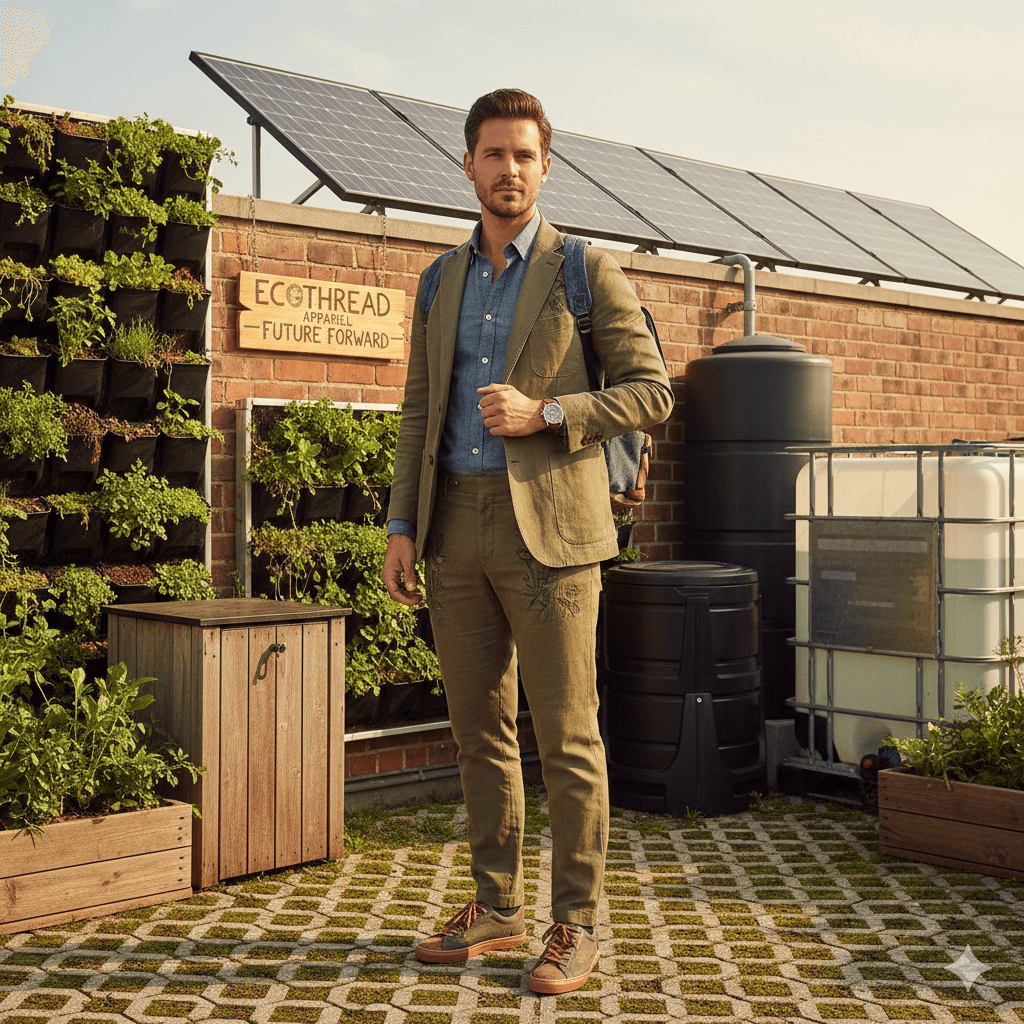
The term sustainable is used broadly. So let’s define it clearly.
Sustainable menswear rests on three pillars: materials, production, and circularity.
1. Materials
Materials drive the majority of a garment’s environmental footprint.
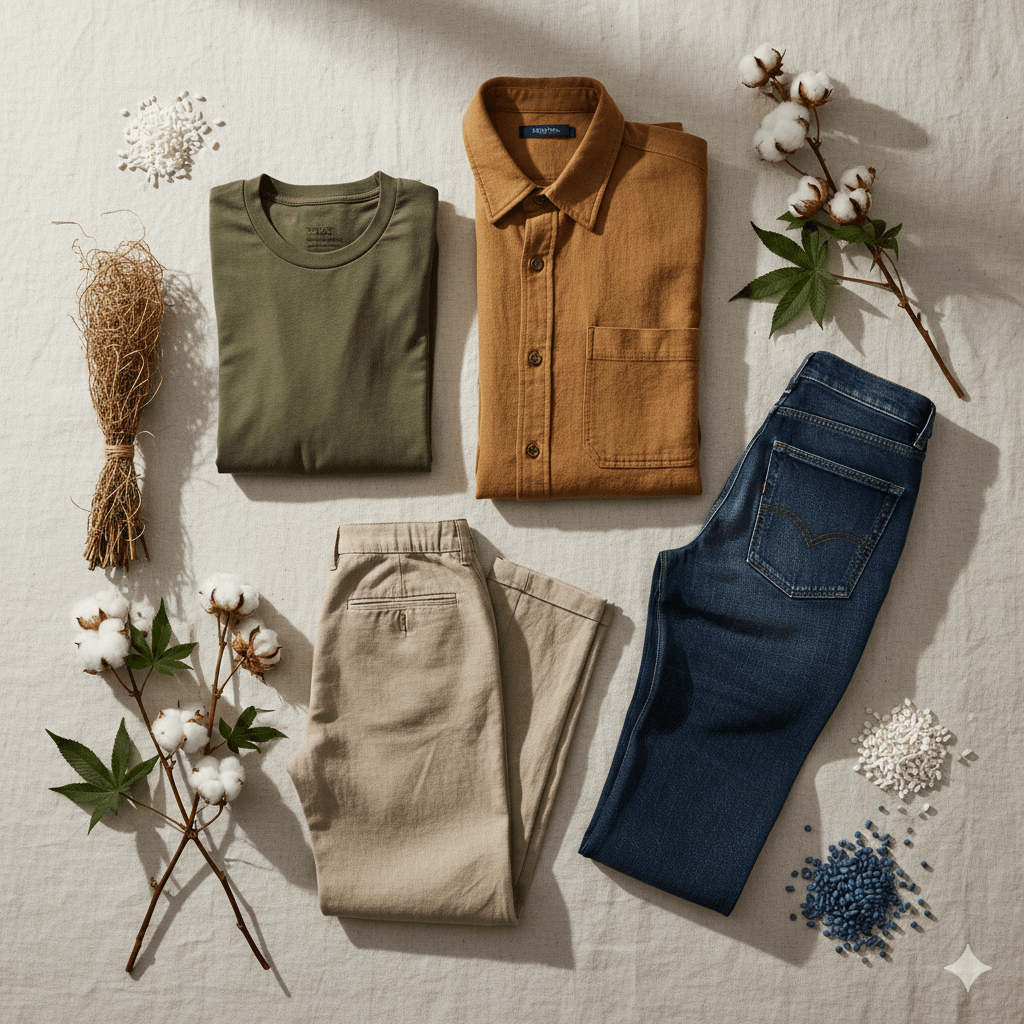
Organic Cotton
Grown without synthetic pesticides and with improved soil practices. Reduces chemical runoff and supports healthier ecosystems.
Hemp
Low water demand. Naturally resilient. Requires fewer agricultural inputs. Strong and durable.
TENCEL
Derived from sustainably managed wood pulp in a closed loop system that recycles water and solvents. Known for softness and breathability.
Recycled Polyester
Made from post consumer plastic waste. Reduces reliance on virgin petroleum, though microplastic shedding remains a challenge.
Regenerative Fibers
Produced using farming practices that restore soil health and increase carbon sequestration. This is where sustainability begins moving toward regeneration.
Material choice is not about perfection. It is about measurable improvement.
2. Production
Even the best fabric can be undermined by poor manufacturing practices.
Sustainable production focuses on:
- Water reduction technologies in dyeing and finishing
- Low chemical processing and safer dyes
- Renewable energy powered factories
- Fair labor standards and verified supply chains
When brands publish factory lists and sustainability reports, that signals seriousness.
3. Circularity
Sustainability does not end at checkout.
Circular systems include:
- Repair programs that extend garment life
- Resale platforms that keep clothing in circulation
- Take back systems for recycling or refurbishment
- Digital product passports that track origin and composition
Less than one percent of textiles are currently recycled into new garments. That number exposes both a challenge and an opportunity.
What is Influencing Sustainable Menswear?
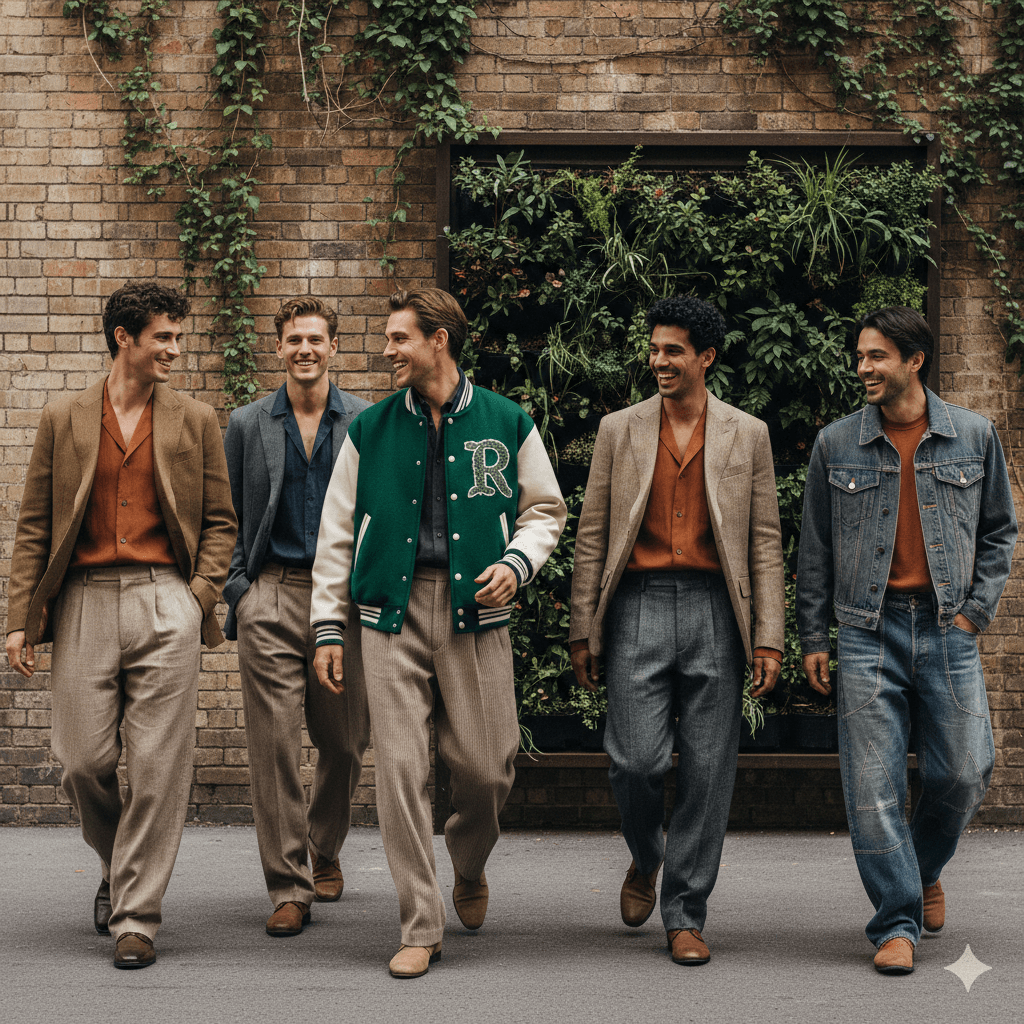
Three major shifts are driving this growth:
• Men are prioritizing quality over quantity
• Capsule wardrobes are replacing trend driven buying
• Transparency is influencing purchase decisions
This is not about moral signaling. It is about efficiency. A well constructed jacket worn for five years outperforms three fast fashion alternatives both financially and environmentally.
Durability is becoming aspirational again.
Current State of Sustainable Men’s Fashion
Sustainable men’s fashion is no longer emerging. It is consolidating. Here is what defines its current state:
1. Market Growth Is Structural, Not Seasonal
The global sustainable fashion market is in the multi billion dollar range and expanding steadily through the next decade. Growth projections show strong compound annual increases, signaling long term industry transformation rather than trend driven spikes.
2. The Men’s Segment Is Accelerating
Men are shifting toward intentional consumption. Fewer purchases, higher quality, stronger alignment with durability and ethics. This behavior fits naturally with sustainable models.
3. Online Retail Is Driving Transparency
Digital platforms allow brands to publish sourcing data, certifications, and impact reports directly on product pages. Consumers can compare materials and production standards before purchasing.
4. Circular Economy Models Are Expanding
Repair programs, resale ecosystems, and take back systems are moving from pilot projects to integrated revenue streams.
5. Regulation Is Reshaping Accountability
Extended Producer Responsibility laws and traceability requirements are pushing brands to manage garments beyond the point of sale.
6. Minimalism Aligns With Sustainability
Capsule wardrobes and timeless design are gaining traction. Longevity is outperforming trend cycles.
The result is clear: sustainable men’s fashion is shifting from optional category to operational baseline.
Trends in Sustainable Men’s Fashion
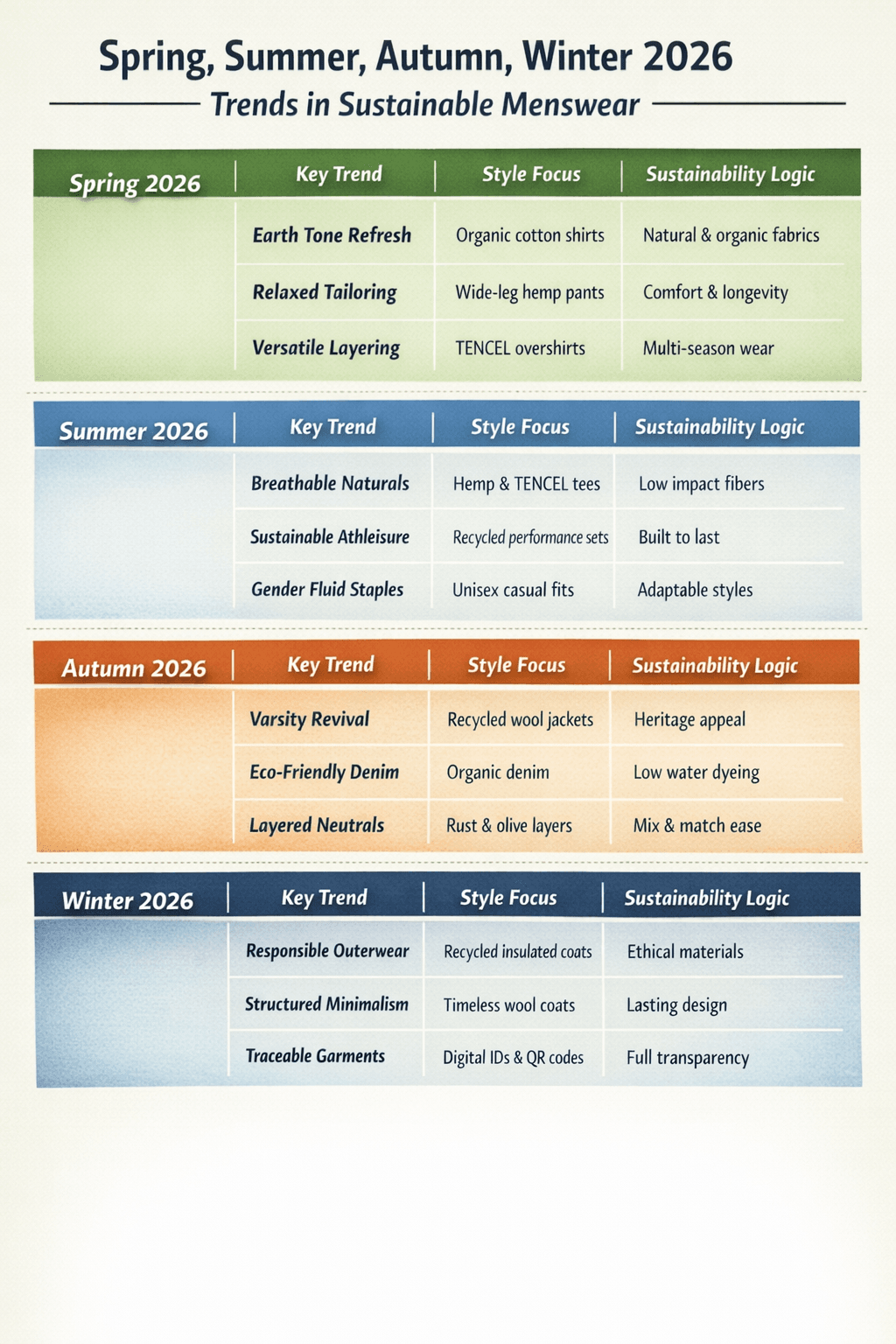
Here are the dominant trends shaping the space:
1. Nature Inspired Palettes
Earthy tones like clay, sage, sand, and indigo are dominating. These shades mix easily, reduce wardrobe clutter, and extend seasonal wearability.
2. Relaxed Silhouettes
Wide leg trousers, looser tailoring, and relaxed cuts are replacing restrictive fits. Comfort and longevity are becoming central design goals.
3. Varsity and Heritage Revival
Classic varsity jackets and vintage denim styles are returning, but now crafted in organic cotton and recycled blends.
4. Sustainable Denim Innovation
Low water dye techniques and renewable energy powered mills are redefining how denim is produced.
5. Gender Fluid Staples
Overshirts, relaxed blazers, and versatile athleisure pieces blur traditional boundaries, increasing long term usability.
6. Digital Product Passports
Garments now come with scannable codes that show sourcing, materials, and care details. Transparency is becoming embedded into the product itself.
Notice the pattern. These trends emphasize longevity, adaptability, and practicality.
Sustainable Menswear Brands Worth Evaluating
If you are ready to upgrade responsibly, here are brands consistently aligning durability with ethics.
Patagonia
Best for outerwear and performance layers.
Uses over 70 percent recycled or responsibly sourced materials. Offers Worn Wear resale and repair programs. Strong supply chain transparency.
Toad&Co
Great for versatile everyday wear.
Uses organic cotton, hemp, and TENCEL. Certified B Corp. Emphasizes plastic free packaging.
Everlane
Ideal for clean basics.
Transparent pricing. Organic polos and lower impact denim. Strong for chinos and tees.
Kuyichi
Focused on organic denim.
Works with renewable energy suppliers. Emphasizes zero waste processes.
Each brand solves a different need. The smartest strategy is selective adoption, not full wardrobe replacement.
How to Build a Sustainable Men’s Capsule Wardrobe
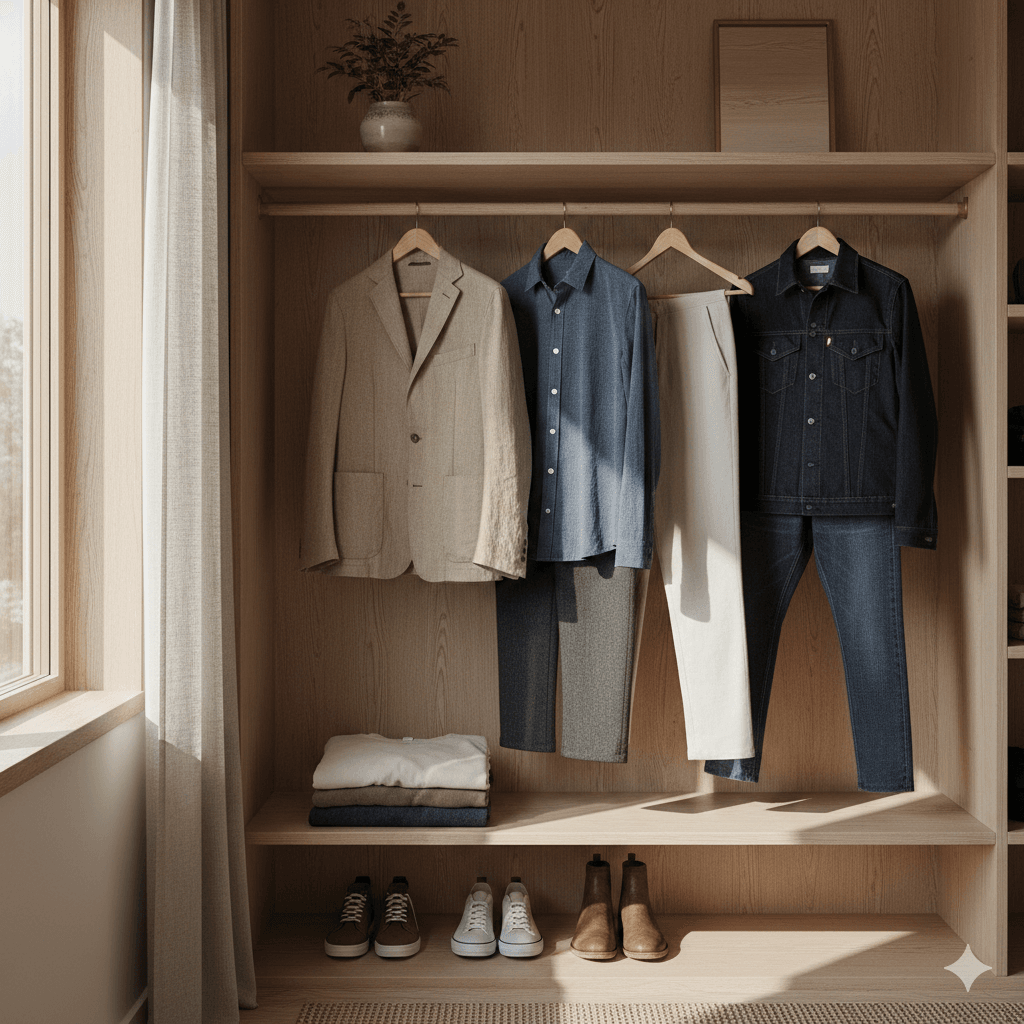
Theory is useful. Action is better.
1. Core Foundation Pieces
Start with versatile essentials:
- High quality organic denim
- Neutral tees in organic cotton or TENCEL blends
- A durable overshirt
- A structured jacket
- Versatile trousers in neutral tones
These pieces form a modular base.
2. The 30 Wear Rule
If you cannot realistically wear an item at least thirty times, reconsider the purchase. Longevity drives sustainability.
3. Cost Per Wear Thinking
Instead of focusing only on upfront price, divide cost by projected wears. Higher quality garments often outperform cheaper alternatives over time.
4. Fit and Longevity
Fit determines frequency of use. Poorly fitted garments rarely survive beyond a few outings. Sustainability begins with wearability.
Challenges with the Sustainable Men’s Fashion
Credibility requires nuance. Sustainable fashion is improving, but it is not solved.
Synthetic Microplastics
Recycled polyester still sheds fibers during washing. Infrastructure to capture microplastics remains limited.
Leather Chemical Treatment
Conventional tanning processes can involve hazardous chemicals. Cleaner alternatives exist but are not universal.
Blended Fabric Recycling Barriers
Mixed materials are difficult to separate, which limits large-scale textile recycling.
Footwear Complexity
Shoes combine rubber, foam, adhesives, and textiles. Fully circular footwear remains rare.
Greenwashing Confusion
Terms like eco friendly and conscious are often vague. Certifications such as GOTS or Fair Trade help cut through noise.
Acknowledging these realities builds trust. Sustainability is progress, not perfection.
Care and Maintenance: The Overlooked Sustainability Lever
The most sustainable garment is the one you already own.
- Wash in cold water
- Air dry whenever possible
- Repair small tears early
- Store properly to avoid fabric stress
Extending lifespan by even one year significantly reduces environmental impact.
Technology’s Role in Sustainable Menswear
Technology is quietly reshaping the ecosystem.
- Digital traceability systems allow garments to carry scannable origin data.
- AI driven demand forecasting reduces overproduction.
- Circular resale platforms extend product life cycles.
- Intelligent decision tools help consumers compare responsibly.
The Glance Intelligent Shopping Agent fits within this broader system shift. Instead of generic personalization, it interprets intent and surfaces options aligned with material preferences, lifestyle needs, and value considerations. It reduces decision fatigue and increases clarity.
In an era of information overload, structured intelligence becomes a sustainability tool.
Conclusion
Sustainable men’s fashion is not about dressing differently. It is about thinking differently.
When you prioritize material integrity, transparent brands, durability, and versatility, your wardrobe becomes more efficient. You spend less long term. You replace less often. You reduce waste without sacrificing style.
The future of menswear belongs to systems that are smarter, not louder.
And when intention guides purchase decisions, sustainability stops being a trend. It becomes your default operating system.
FAQs Related to Sustainable Men’s Fashion
What is sustainable men’s fashion?
Sustainable men’s fashion refers to clothing designed and produced with lower environmental impact and ethical labor practices across its lifecycle. This includes using organic or recycled fabrics, reducing water and chemical usage, ensuring fair wages, and promoting durability over fast trend turnover. For shoppers, it means investing in garments that last longer, are responsibly sourced, and align with circular consumption models like resale or repair rather than disposal.
How can men build a sustainable wardrobe without overspending?
Start by focusing on versatile essentials instead of replacing everything at once. Prioritize durable basics like neutral shirts, well constructed denim, and adaptable outerwear that can be styled across seasons. Buying fewer but higher quality pieces, exploring resale marketplaces, and repairing garments extends usage while controlling costs. Tracking cost per wear rather than upfront price helps shift decision making toward long term value instead of short term spending.
What fabrics are best for sustainable men’s clothing?
Leading materials include organic cotton grown without synthetic pesticides, recycled polyester made from post consumer plastics, hemp known for low water requirements, and TENCEL or lyocell derived from responsibly managed wood pulp. Each fabric addresses a different environmental pressure point such as water consumption, waste reduction, or soil impact. Checking certification labels like Global Organic Textile Standard or OEKO TEX helps verify claims rather than relying on marketing language.
Is sustainable fashion practical for everyday men’s style?
Yes, because sustainability does not dictate aesthetics. Modern collections incorporate minimalist tailoring, workwear inspired durability, and performance blends suited to professional and casual settings. Capsule wardrobe approaches built around neutral palettes and interchangeable layers make daily dressing simpler while reducing consumption frequency. The practicality lies in longevity and adaptability rather than trend chasing.
How can shoppers verify if a men’s clothing brand is truly sustainable?
Look beyond slogans and review measurable disclosures. Transparent brands publish sourcing details, lifecycle impact metrics, and third party certifications. Supply chain traceability, repair programs, and take back initiatives signal genuine commitment. Absence of verifiable data often indicates surface level positioning. Evaluating material composition, production location transparency, and durability guarantees provides a clearer evidence based assessment than branding narratives alone.
Download the Glance app now




Your intelligent
shopping agent.







Your intelligent
shopping agent.