


Complete Checklist to Buy High Quality Sustainable Clothing
TL;DR
Before buying sustainable clothing, check the fabric composition, verify credible certifications, review brand transparency, assess production practices, and prioritize durability. Consider packaging, end of life options, and cost per wear. Sustainability is not about labels alone. It is about applying a clear decision framework every time you shop.
Buying sustainable clothing sounds simple until you actually try to do it.
Labels signal conscious fashion. Websites claim responsibility. Fabrics promise eco-friendly benefits. But without a framework, it becomes difficult to separate meaningful effort from well designed marketing.
Sustainable fashion is not about reacting to a green tag. It is about evaluating materials, production systems, durability, transparency, and long term value before you spend. The goal is not perfection. The goal is informed decision making.
This checklist is designed to help you pause, assess, and choose intentionally. Use it as a filter before every purchase. Because sustainability is not built in the cart. It is built in the criteria you apply before you click buy.
Did you know? Nearly 60% of fashion brands' sustainability claims are misleading or unsubstantiated, per reports from Changing Markets Foundation and 2025 analyses.
High Quality Sustainable Clothing: What to Check Before Buying
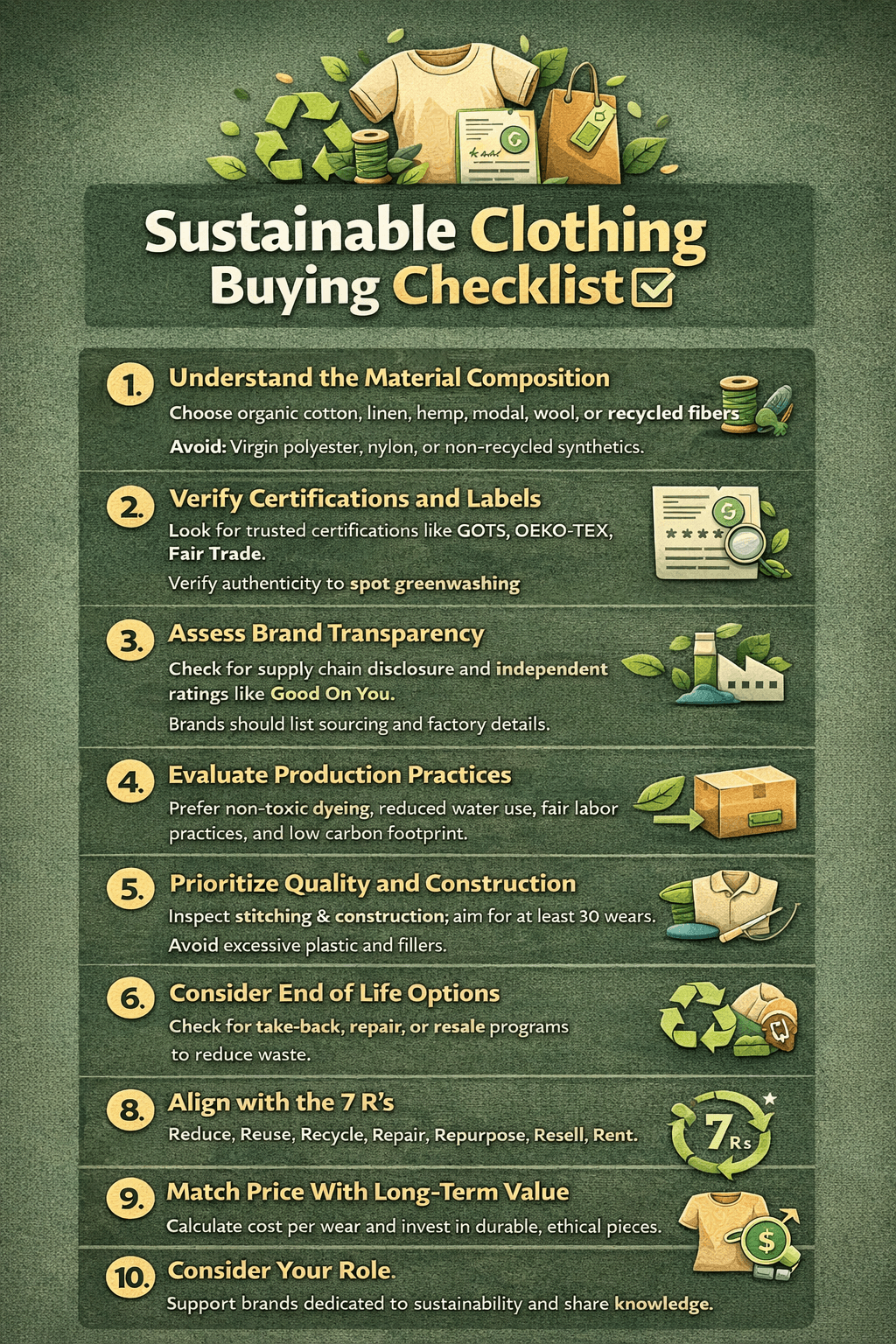
1. Understand the Material Composition
Sustainable clothing begins with the fabric. Choosing eco-friendly materials reduces the impact on water, land, and chemical use. Here’s what to look for:
- Eco-friendly fibers: Organic cotton, linen, hemp, modal, wool, silk, and recycled fibers.
- Avoid: Conventional polyester, nylon, and non-recycled synthetics unless explicitly labeled recycled.
- Material composition: High percentages of sustainable fibers are ideal (100% preferred). Avoid blends that include virgin plastics.
How to Identify Pure Fabrics: Quick Tips
| Fabric | Unique Qualities | Tip to Identify |
| Cotton | Soft, breathable, slight wrinkling; burns slowly with smell of paper | Check for 100% organic cotton certification |
| Silk | Smooth, shiny, slightly elastic; natural creases | Conduct the “burn test” carefully (smells like burnt hair) |
| Wool | Slightly coarse, warm; water droplets bead on surface | Look for merino or certified organic wool |
| Linen | Crisp, breathable, tends to wrinkle | Blends may reduce longevity; prefer 100% linen |
| Hemp | Rougher texture, durable, softens with wash | Often blended; check label for percentage |
2. Verify Certifications and Labels
A label is more than branding. It's proof. Trusted certifications indicate verified sustainable and ethical practices.
Key Certifications to Look For
| Certification | Focus Area | What it Ensures |
| GOTS (Global Organic Textile Standard) | Organic fibers | No toxic chemicals, fair labor practices |
| OEKO-TEX | Non-toxic textiles | Free from harmful substances |
| Fair Trade | Labor ethics | Ethical wages, safe working conditions |
| Bluesign | Eco-production | Reduced emissions, responsible resource use |
| Cradle to Cradle | Full lifecycle | Product designed for recycling and sustainability |
Always verify third-party validation on official certifier websites to avoid greenwashing.
Did you know? Only 32-38% of fashion shoppers correctly spot greenwashed claims like "100% sustainable" without certifications.
3. Assess Brand Transparency
Knowing who made your clothes is crucial. As, their transparency reflects accountability.
- Supply chain disclosure: Look for brands listing sourcing, factories, and production practices.
- Independent ratings: Platforms like Good On You provide environmental and labor scores.
Brands willing to share detailed supply chain data are often more trustworthy and committed to sustainability.
4. Evaluate Production Practices
Ethical and eco-conscious production ensures your purchase has minimal harm.
- Labor ethics: Fair wages, safe conditions, no child labor. Prefer local or traceable factories.
- Environmental impact: Non-toxic dyeing, reduced water use, energy-efficient processes, and low carbon footprint.
5. Prioritize Quality and Construction
Sustainable clothing is an investment in longevity.
- Construction: Check seams, zippers, and buttons. High-quality garments survive at least 30+ wears.
- Care instructions: Simple washing routines indicate durable design. Cold water wash and avoiding dry cleaning prolong life.
6. Review Packaging Practices
Packaging can undo eco-friendly intentions.
- Look for minimal, recyclable, or biodegradable packaging.
- Avoid excessive plastic wraps and synthetic fillers.
7. Consider End of Life Options
Clothing doesn’t have to end in a landfill.
- Check if brands offer take-back, repair, or resale programs.
- This extends the life of your garments and reduces waste.
8. Align with the 7 R’s
Sustainable fashion isn’t just about what you buy—it’s how you handle clothing over its lifetime.
- Reduce: Buy less, choose better.
- Reuse: Hand-me-downs or second-hand.
- Recycle: Donate or recycle fabrics responsibly.
- Repair: Mend small tears to extend life.
- Repurpose: Turn old items into home fabrics or other uses.
- Resell: Sell pre-loved items.
- Rent: Consider renting for special occasions instead of buying.
9. Match Price With Long Term Value
Sustainable clothing often comes at a higher price—but it’s about value, not cost.
- Compare price per wear rather than per item.
- Invest in pieces that last years rather than cheap items that wear out quickly.
- High-quality sustainable brands justify their cost with durability, ethical labor, and eco-conscious materials.
10. Consider Your Role
Finally, consider your role as a consumer in shaping the industry.
- Support brands engaging in sustainability campaigns or transparency initiatives.
- Share knowledge with friends and family about ethical purchases.
- Advocate for sustainable fashion by choosing thoughtfully and spreading awareness.
Conclusion
Sustainable fashion is not about chasing labels. It is about shifting how you think before you buy. When you understand materials, question certifications, evaluate transparency, and calculate long term value, your wardrobe stops being reactive and becomes intentional.
No brand is perfect. No purchase is impact free. But informed decisions compound.
And this is where technology becomes an ally. The Glance Intelligent Shopping Agent helps you move beyond generic recommendations by interpreting intent, comparing responsibly, and surfacing options aligned with your values. Instead of endless scrolling, you get context driven clarity.
Sustainable fashion is not about buying more responsibly. It is about building a decision framework you apply every time.
FAQs Related to High Quality Sustainable Clothing
1. How can I identify high quality sustainable clothing before buying?
Start with fabric composition and construction rather than brand claims. Look for natural or certified recycled fibers, tightly woven stitching, reinforced seams, and weight appropriate durability for the garment type. Check certification markers such as organic or responsible sourcing standards and review transparency disclosures about production origin. High quality sustainable clothing should combine material integrity with lifecycle durability because longevity is the core sustainability multiplier that reduces replacement frequency and overall impact.
2. What certifications should I look for when buying sustainable clothing?
Focus on certifications that validate fiber sourcing, chemical use, and labor standards rather than vague eco labels. Common indicators include organic textile verification, fair labor compliance, and chemical safety assurance systems. These certifications confirm independent auditing of claims and help filter out greenwashing. Pair certification checks with brand transparency reports because labeling alone does not reveal full manufacturing accountability or traceability depth.
3. Where can I buy reliable sustainable clothing online?
Prioritize platforms that provide traceability details, material sourcing information, and measurable impact disclosures rather than curated aesthetic claims. Brand direct websites, verified sustainability marketplaces, and resale ecosystems typically offer stronger transparency signals than generic retail listings. Compare product descriptions, lifecycle disclosures, and return policies because credible sellers explain how garments are made, maintained, and recycled rather than focusing only on trend positioning.
4. How do I balance price and quality when shopping sustainably?
Evaluate cost per wear instead of upfront price. A higher quality sustainable garment designed for durability often delivers better long term value than frequent replacement purchases. Examine fiber strength, finishing, and repairability to estimate longevity. Strategic purchasing such as seasonal planning, resale exploration, and capsule building helps control spending while maintaining ethical and environmental alignment. Sustainable value emerges from durability, not price positioning.
5. What practical steps ensure I make responsible sustainable purchases?
Follow a structured decision flow before checkout. Verify material composition, assess craftsmanship, confirm traceability disclosures, review maintenance guidance, and consider wardrobe integration potential. Avoid impulse buying driven by eco messaging alone. Responsible purchasing aligns garment lifespan, usage frequency, and recyclability planning with personal consumption patterns. This method transforms sustainability from a branding narrative into a measurable behavioral outcome.
Download the Glance app now





Your intelligent
shopping agent.







Your intelligent
shopping agent.