


Intent Based Shopping: Shop Fashionwear Smartly in 2026
TL;DR
Intent based shopping is about buying with a clear purpose rather than browsing aimlessly or following fleeting trends. By searching for outfit missions instead of generic products, shortlisting thoughtfully, using AI-powered styling tools, and evaluating purchases through rules like the three-outfit test or cost-per-wear, you can build a wardrobe that truly fits your lifestyle. Platforms like Glance Intelligent Shopping Agent make this easier by helping you visualize outfits based on your body type, explore curated use-case based options, and avoid returns or ill-fitting purchases.
Shopping has never been easier. A few taps and almost anything can arrive at your door within days. But convenience has also created a new problem. You shop based on trends, social feeds, and capitative sales. Shopping happens without much thought behind them. The result: Many wardrobes today are full of clothes that were bought in the moment yet rarely worn later.
So, what’s the solution?
Intent based shopping.
Instead of buying something simply because it looks good or appears trendy, intent based shopping asks a different question first. Why are you buying this item? When the purpose becomes clear, every decision that follows becomes easier.
In simple terms, intent based shopping focuses on purpose driven purchases rather than impulse driven ones. It helps you shop with clarity, reduce unnecessary spending, and build a wardrobe that actually works for your everyday life.
Now, when you are already taking the first step toward that mindset by exploring this concept. The next step is understanding what intent based shopping really means and how you can practice it effortlessly.
What Is Intent Based Shopping?

Intent based shopping means purchasing products with a clear goal, context, or use case in mind rather than browsing endlessly and buying whatever catches your attention.
Why:
- Personalized Shopping: Receive recommendations and outfit suggestions tailored to your style, size, and lifestyle preferences.
- Time-Saving: Quickly find items that match your specific need without endless browsing.
- Reduced Decision Stress: Focus on relevant options, avoiding overwhelm from too many choices.
- Cost Efficiency: Avoid impulse buys, maximizing value per purchase.
- Wardrobe Cohesion: Ensure each purchase complements existing clothing and accessories.
Did you know? Average American households spend about $1,945 annually on apparel ($162 monthly), representing 2.7% of budgets, with women’s clothing at $655 yearly versus $406 for men’s
How to Do Intent Based Shopping Effortlessly?
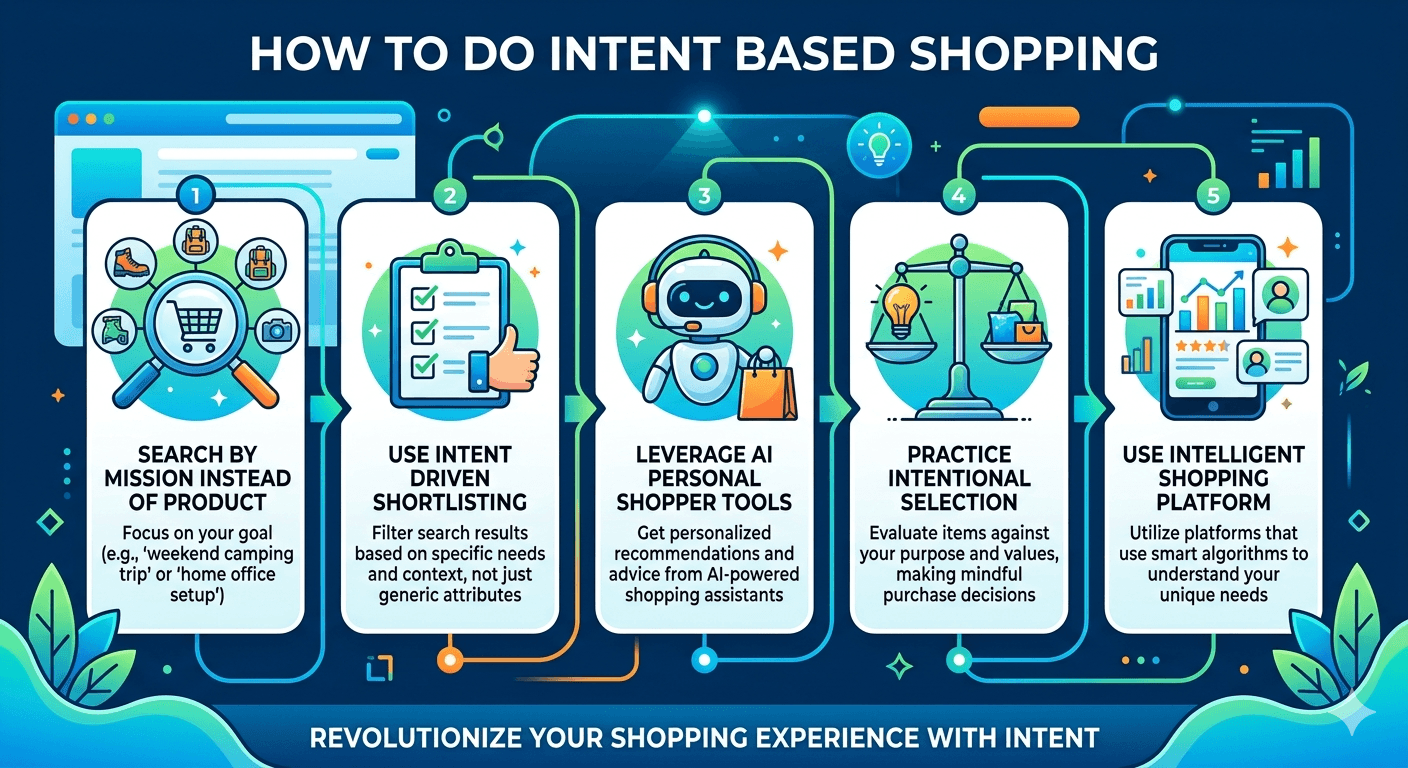
Intent based shopping does not require complicated tools or strict rules. It simply involves changing the way you search, evaluate, and select products online.
Here are several practical ways you can start applying this approach.
1. Search by Mission Instead of Product
One of the easiest ways to practice intent based shopping is to change how you search for products online.
Most people begin with general categories such as:
- dresses
- sneakers
- handbags
But these searches often produce thousands of results, which makes it harder to decide what you actually need.
Instead, try searching based on the mission or purpose behind the purchase.
For example:
Event based searches
- cocktail attire for a winter wedding
- outfits for a beach vacation
- office outfits for summer meetings
Attribute specific searches
- non see through white t shirt
- stretch denim for athletic thighs
- wrinkle resistant travel blazer
Vibe based searches
- minimalist capsule wardrobe pieces
- Scandinavian inspired layers
- relaxed weekend outfits
When you search this way, modern fashion platforms and AI powered search engines can understand your intent more clearly.
Did you know that Gen Z influences 40% of luxury buys. And this buy should be purposeful.
2. Use Intent Driven Shortlisting
Another helpful technique in intent based shopping is shortlisting items before making a final purchase.
Many ecommerce platforms allow you to add products to a wishlist or favorites section. Instead of buying immediately, you can save items that match your requirements and review them later.
This approach provides two advantages.
First, it gives you time to evaluate whether the item truly fits your needs.
Second, it signals strong purchase intent to the platform. Retailers often monitor wishlist activity and may trigger price drop notifications or exclusive discounts for items you have saved.
3. Leverage AI Personal Shopper Tools
Modern shopping platforms are increasingly introducing AI powered tools that help translate your intent into better recommendations.
Several features are particularly useful when practicing intent based shopping.
Visual search
If you see an outfit online or in a photo that you like, you can upload the image to a platform offering visual search. The AI analyzes colors, patterns, and silhouettes to suggest similar products available in the store.
AI styling assistants
Some platforms offer chat based assistants that answer questions related to fit, styling, or sizing. You can ask questions such as whether a pair of pants will fit your height or what shoes might work with a particular skirt.
Complete the look suggestions
Instead of browsing individual products, many sites display styled outfit combinations. These sections help you build full outfits rather than purchasing isolated pieces.
4. Practice Intentional Selection
Intent based shopping also involves adopting a few personal rules that help prevent impulse purchases.
These guidelines are simple but powerful.
The three outfit rule
Before buying a new item, check whether it can be styled in at least three different ways using clothes you already own. If it cannot integrate into multiple outfits, it may not be a practical purchase.
Cost per wear calculation
Divide the price of an item by the number of times you expect to wear it. If a jacket costs one hundred dollars and you wear it fifty times, the cost per wear becomes only two dollars. This approach helps you evaluate the real value of a purchase.
Maintain a needs list
Keeping a list of wardrobe gaps can prevent unnecessary purchases. When you shop, focus only on items that solve those specific needs rather than browsing randomly.
These small habits gradually transform shopping into a more thoughtful process.
5. Use Intelligent Shopping Platform
Technology is beginning to play an important role in helping shoppers adopt intent based purchasing habits.
One example is the Glance Intelligent Shopping Agent, which focuses on helping users shop with clarity rather than overwhelm.
Instead of scrolling through endless product listings, you can explore outfits based on real life use cases such as office wear, travel outfits, casual looks, or event specific styles. This structure helps you focus on purpose driven shopping rather than random browsing.
Another interesting feature is the ability to visualize outfits on an AI twin that reflects your body type and skin tone. This allows you to see how an outfit may look on you before making a purchase decision.
When you can preview how clothing fits your personal profile, it becomes easier to avoid common problems such as incorrect sizing, poor styling combinations, or items that do not suit your proportions.
A Simple To Do List Before You Start Intent Based Shopping
If you want to transition from impulse buying to intent based shopping, start with a few simple steps.
- Review your wardrobe and identify items you wear most often. These pieces reveal your real style preferences and daily needs.
- Create a small list of wardrobe gaps. Instead of adding random items, focus only on filling these gaps when you shop.
- Define the purpose behind every purchase. Ask yourself where you will wear the item and how frequently it will be used.
- Use mission-based search terms while browsing online. The clearer your search intent becomes, the more useful the results will be.
- Most importantly, pause before purchasing. Giving yourself time to evaluate a product often prevents unnecessary buying decisions.
These small actions gradually build a more intentional shopping mindset.
Conclusion
Shopping habits have changed dramatically over the past decade. While digital platforms made it easier than ever to buy products, they also encouraged a cycle of constant browsing and impulse purchases.
Intent based shopping offers a healthier alternative. Instead of reacting to trends or marketing pressure, it encourages you to shop with a clear purpose and defined goals.
By searching with context, shortlisting thoughtfully, using intelligent shopping tools, and applying practical selection rules, you can build a wardrobe that truly supports your lifestyle.
Over time, this approach reduces waste, saves money, and brings greater satisfaction to every purchase you make.
Intent based shopping is not about buying less for the sake of restriction. It is about buying better, smarter, and with intention.
FAQs Related to Intent Based Shopping
1. What is intent-based shopping and why is it important in the USA?
Intent-based shopping uses AI to understand a consumer’s goals, preferences, and behavior to deliver personalized recommendations and offers. In the U.S., where shoppers expect fast, tailored experiences, intent-based systems help retailers reduce decision fatigue, improve conversions, and increase satisfaction. By analyzing search history, clicks, and context, brands can present products a customer is most likely to buy, making the shopping journey smarter and more efficient.
2. How does intent-based shopping improve the online shopping experience?
Intent-based shopping enhances online shopping experience by offering real-time, relevant product suggestions, predictive search results, and personalized promotions. Instead of browsing through countless items, shoppers receive curated recommendations based on their behavior, previous purchases, and even location or device.
3. Can small businesses in the U.S. benefit from intent-based shopping tools?
Absolutely. U.S. small and medium businesses can leverage intent-based shopping platforms to compete with larger retailers by offering personalized product recommendations, targeted campaigns, and automated customer support. Even modest AI tools can help small businesses analyze shopper intent, increase conversion rates, reduce cart abandonment, and deliver a professional, hyper-personalized experience without needing a large tech team.
4. What features should I look for in an intent-based shopping platform?
The best intent-based shopping platforms provide real-time personalization, predictive analytics, dynamic product recommendations, and AI-powered chat assistants. Other useful features include inventory-aware suggestions, cross-channel integration, and user behavior tracking to continuously optimize the shopping experience.
5. How does intent-based shopping help reduce returns and improve customer satisfaction?
Intent-based shopping helps you find products that truly match their needs, preferences, and size requirements. By analyzing data such as style choices, previous purchases, and body measurements (for fashion), AI platforms can recommend items with a higher likelihood of satisfaction. This reduces returns, lowers operational costs for retailers, and creates a seamless, personalized shopping journey, increasing overall customer loyalty and trust.
Download the Glance app now





Your intelligent
shopping agent.







Your intelligent
shopping agent.