


10 Practical Tips to Improve AI Fashion Recommendations
TL;DR
AI fashion recommendation becomes more accurate when you actively guide the AI. Build a detailed profile, add measurements, define fabric and budget preferences, and engage consistently through ratings, browsing behaviour, and feedback. Use chat inputs, virtual try ons, and wardrobe data to add real world context. Review and update your profile regularly. When treated as a two way system rather than a passive feed, AI fashion recommendations become more personal, relevant, and useful over time.
AI powered styling tools are everywhere today. From shopping apps to virtual try ons, algorithms increasingly decide what you see, what gets suggested, and what ends up in your cart. Yet many of you still feel that AI fashion recommendations often miss the mark. Too generic. Too repetitive. Too disconnected from real life.
The truth is simple.
AI fashion systems are only as good as the signals they receive.
AI fashion recommendation is not magic. It is a conversation between you and the system. The more clearly you communicate your preferences, habits, and outcomes, the more relevant and useful the suggestions become.
This blog breaks down ten practical, experience driven tips to improve AI fashion recommendation so it feels personal, timely, and genuinely helpful rather than random.
Tips to Improve AI fashion Recommendations
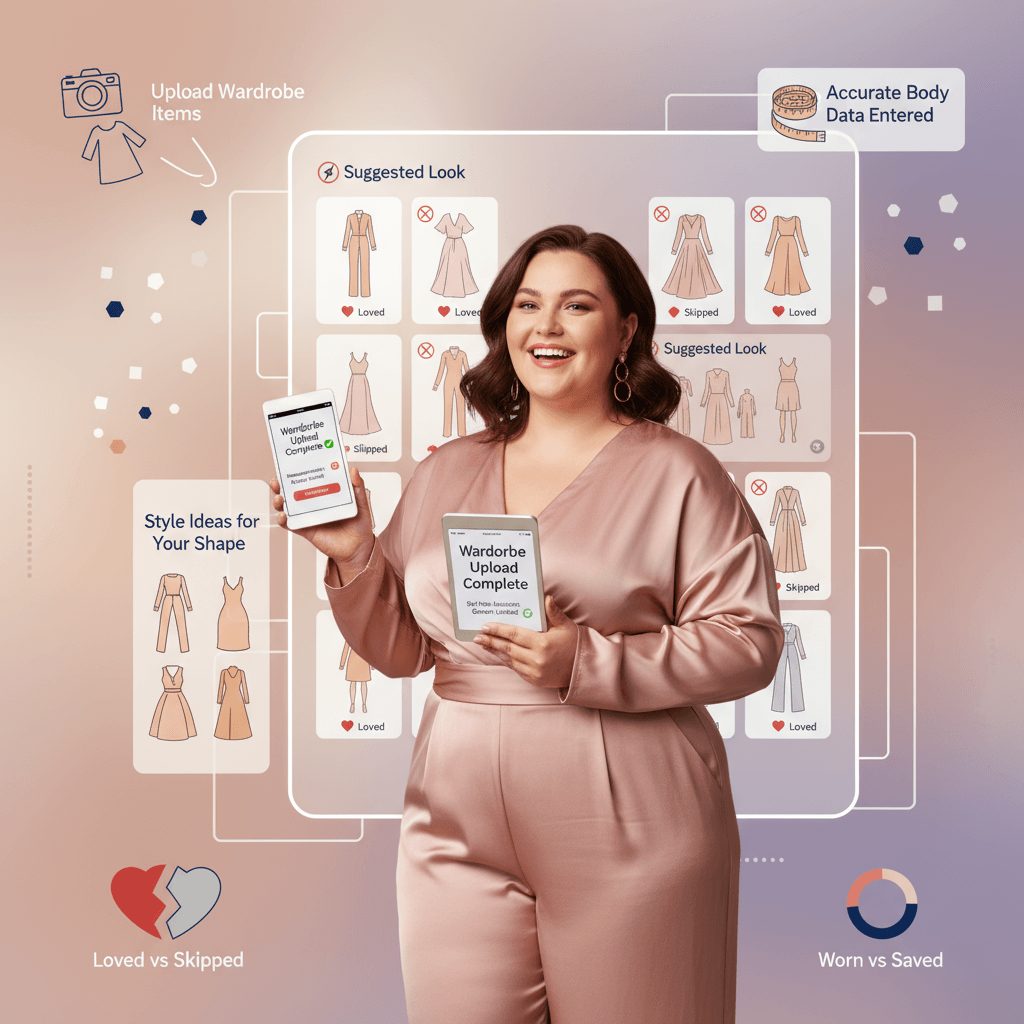
1. Build a Rich User Profile From the Start
Most people rush through onboarding and then expect precision. That rarely works.
Take time to complete initial style quizzes thoughtfully. These usually cover aesthetics, occasions, body type, and lifestyle factors such as climate or daily activities. Each answer helps the system understand context, not just taste.
AI fashion recommendation improves significantly when the AI knows whether you dress for office hours, travel frequently, or prefer relaxed everyday wear. This foundation shapes everything that follows.
2. Add Precise Measurements Whenever Possible
Size uncertainty is one of the biggest reasons fashion recommendations fail.
If a platform offers virtual try on tools or body measurement inputs, use them. Even approximate data improves accuracy. Studies show that adding measurement based inputs can improve style matching by nearly forty percent.
When AI understands proportions, not just size labels, AI fashion recommendation shifts from guesswork to visual relevance.
3. Define Fabric, Brand, and Budget Preferences Clearly
Many users focus only on style but ignore constraints. AI does not assume preferences unless they are stated.
Input your preferred fabrics, brands, price ranges, and sustainability priorities where available. This activates hybrid filtering where personal taste combines with practical boundaries.
AI fashion recommendation becomes far more useful when it respects how you shop, not just how you dress.
4. Actively Rate What You See
Silence is confusing for algorithms.
Use like and dislike options consistently. Rate outfits you love and reject those that feel wrong. If you return an item, record why. Was it fit, fabric, or styling?
These feedback loops allow the system to adapt in real time. Over time, AI fashion recommendation evolves from broad suggestions to sharper, more aligned outputs.
5. Browse With Intent, Not Randomly
AI systems track interaction patterns. What you pause on matters.
Spending more time on certain silhouettes, colors, or categories sends strong signals. Quick scrolls signal disinterest. Even without explicit feedback, dwell time shapes future recommendations.
When you browse intentionally, AI fashion recommendations become contextual rather than repetitive.
Did you know? 75% of fashion executives plan to prioritise AI, particularly for demand forecasting, inventory optimisation, and cost control, signalling a clear shift from experimentation to core business strategy.
6. Use Voice or Chat Based Inputs When Available
Natural language is powerful.
Instead of relying only on filters, use chat or voice prompts such as casual office look under a specific budget or festive outfit for a daytime event. These queries provide situational clarity that filters often miss.
AI fashion recommendation improves dramatically when AI understands intent, not just category.
7. Connect Situational Data for Real World Relevance
Context matters more than most users realize.
Some platforms allow integration with calendars, location, or weather. When enabled responsibly, this helps AI suggest outfits relevant to actual moments like travel, workdays, or events.
AI fashion recommendation tied to real situations feels timely and thoughtful rather than generic.
8. Upload or Scan Your Existing Wardrobe
One of the most underused features in AI styling is wardrobe awareness.
Uploading existing clothing allows the system to suggest combinations rather than duplicates. This unlocks mix and match intelligence and helps maximize what you already own.
AI fashion recommendation that works with your closet feels supportive instead of sales driven.
9. Use Visual Try Ons to Validate, Not Just Explore
AR and virtual try on tools are not just novelty features. They provide visual confirmation of proportions, drape, and balance.
Using them helps reduce size errors and teaches the system how garments visually behave on you. Over time, this data improves future suggestions.
AI fashion recommendation improves when visual feedback reinforces learning.
10. Review and Refresh Your Profile Regularly
Style evolves. Algorithms need reminders.
Review analytics or preference dashboards if available. Notice patterns in what you buy, wear often, or ignore. Update preferences quarterly to reflect lifestyle or taste changes.
AI fashion recommendation stays relevant only when the profile stays current.
Did you know? The global AI in fashion market is expected to grow from USD 3.14 billion in 2025 to nearly USD 60.57 billion by 2034, reflecting a strong compound annual growth rate of 39.12 percent over the forecast period.
Why to Leverage These Tips?

AI fashion systems rely on three things.
Input quality. Interaction depth. Outcome feedback.
When you engage passively, recommendations stagnate. When you interact intentionally, the system learns faster and adapts better.
AI fashion recommendation is not about controlling AI. It is about collaborating with it.
Conclusion
AI will not replace personal style. It will support it.
The future of fashion discovery lies in systems that listen, learn, and respond with empathy rather than automation alone. When you understand how to guide the technology, recommendations shift from noise to value.
The best fashion recommendation does not feel like marketing.
It feels like understanding.
And that starts with how you show up in the system.
At Glance, our AI systems are designed to understand you first, not sell to you.
We learn from your preferences and how you choose, and respond, so every fashion recommendation becomes more aligned with your life, not just trends.
The goal is simple. Less guesswork. More confidence.
FAQs Related to AI Fashion Recommendation
1. What is an AI fashion recommendation and how does it work?
An AI fashion recommendation uses data signals such as browsing behaviour, preferences, body measurements, and past purchases to suggest clothing and outfits that match a user’s style and needs. Instead of showing random products, the system analyses patterns to offer more relevant and personalised fashion suggestions over time.
2. How can I improve the accuracy of an AI fashion recommendation?
Accuracy improves when users actively engage with the system. Completing style profiles, adding measurements, rating recommendations, and giving feedback on purchases all help the AI understand preferences better. The more consistent the interaction, the more refined and relevant the fashion recommendation becomes.
3. Why do AI fashion recommendations sometimes feel repetitive?
Repetition usually happens when the system receives limited or unclear signals. If users do not rate items, explore different categories, or update preferences, the AI relies on a narrow data set. Expanding browsing behaviour and providing feedback helps diversify and improve future fashion recommendations.
4. Can AI fashion recommendation tools adapt to changing style preferences?
Yes, but only when updated regularly. AI systems learn from recent behaviour, so changes in lifestyle, season, or taste need to be reflected through new interactions. Updating preferences and reviewing recommendations periodically helps the system adjust to evolving style needs.
5. Are AI fashion recommendations reliable for fit and sizing?
AI fashion recommendations support fit decisions by using size data, measurements, and virtual try on inputs when available. While they reduce guesswork, they do not guarantee perfect fit. The best results come from combining AI recommendations with size guides, reviews, and visual try on tools.
Download the Glance app now






Your intelligent
shopping agent.







Your intelligent
shopping agent.