

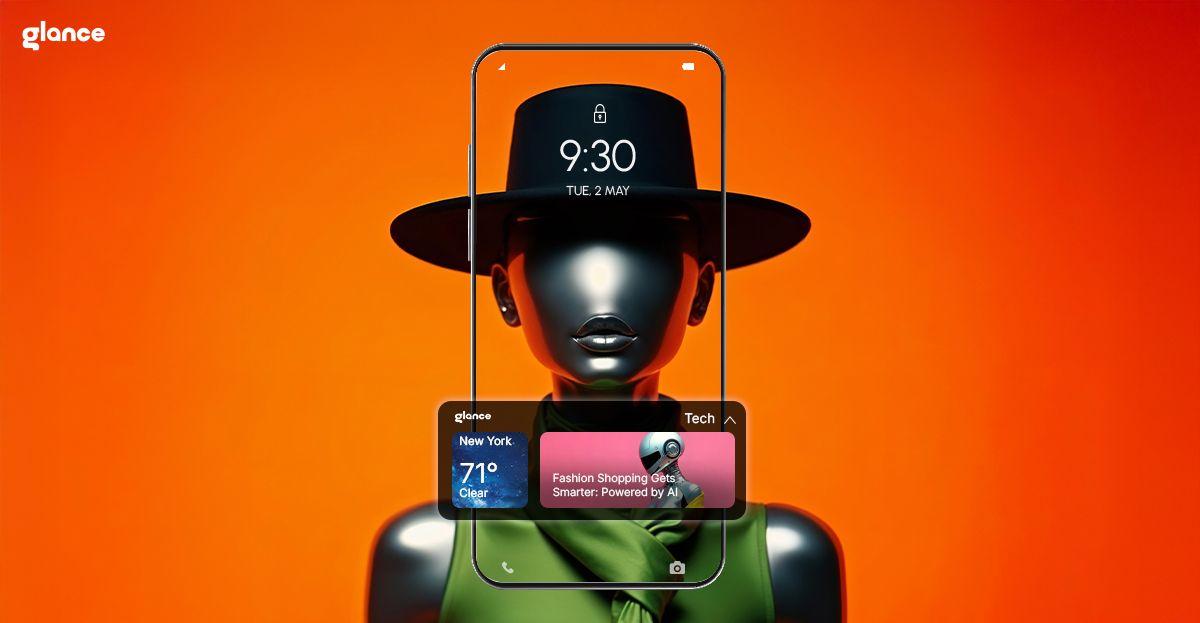
Fashion Shopping Gets Smarter: Powered by AI
TL;DR
In 2026, fashion shopping has transitioned from manual browsing to Agentic Discovery. Instead of scrolling through endless, irrelevant options, Glance acts as your intelligent shopping agent to curate a feed that aligns with your specific Style DNA. By understanding the complex physics of how fabrics drape on your unique body, the system predicts fit before you even make a purchase, removing the anxiety of "size-guessing." Beyond individual items, it generates complete outfits instantly, functioning as a creative partner that prepares you for any occasion on your calendar. This shift turns online shopping into a high-confidence, personalized journey where every choice is meaningful and every fit is guaranteed.
Fashion shopping in 2026 is powered by AI-driven “agentic shopping,” where intelligent systems personalize discovery, predict fit, and recommend complete outfits based on user behavior, body data, and context.
We are living in the age of Intelligent Curation. With the global AI fashion market reaching $2.47 billion this year, up from $1.75 billion in 2025, according to Research and Markets — projected to reach $9.45 billion by 2030 — the technology is no longer a futuristic novelty; it is the silent engine of the modern closet. It is about moving from a million generic options to the three specific items that fit your body, your calendar, and your values. At the forefront of this shift is Glance, acting as the category-defining intelligent shopping agent that bridges the gap between digital inspiration and physical reality.
What’s Wrong with Fashion Shopping Today?

Let’s begin with a question: When was the last time you made an online clothing purchase without second-guessing your selection, size, or whether you truly needed it?
Chances are, your answer includes at least one of these frustrations:
- Endless browsing with no clear purpose
- Confusing size charts that vary between brands
- Generic recommendations that don’t fit your style
- Purchasing items you rarely wear
Glance solves this by acting as a filter for the world. It doesn’t just show you more clothes; it eliminates irrelevant choices, ensuring that your feed is a refined gallery of what actually works for you.
Now picture a system that understands your preferences, knows your body type, and even proposes complete outfits that align with your schedule and the season. That’s not a futuristic dream—it’s the real impact of AI.
And it’s already reshaping the industry.
Fashion isn't the only category AI is reshaping this way — the same shift plays out across visual search, voice commerce, and dynamic pricing more generally.
How AI is Already Improving Fashion Shopping Experiences

Let’s explore tangible examples of how AI is currently making the fashion shopping process more convenient, intelligent, and, honestly, much more enjoyable:
1. Highly Personalized Style Suggestions
The era of “recommended for you” being just five variations of a white T-shirt is behind us. Glance evaluates your Style DNA through Purchase history, Browsing behavior, and even saved mood boards to act as your proactive shopping agent.
For instance, the Glance Fashion Style Guide dives deeper into helping users identify their vibe using AI prompts and real-time suggestions. Current benchmarks show that AI-powered personalization boosts conversion rates by up to 23% by adapting messaging and product displays in real time.
2. 3D Fit Physics vs. The Size Chart Crisis
“How will this fit me?” is the primary concern for online buyers. AI addresses this by utilizing data such as:
- The Tech: Unlike the clunky avatars of 2024, today’s AI understands fabric physics. It knows how a 12oz denim structures itself compared to a 100% silk slip dress.
The Impact: Glance predicts fit before purchase with extreme accuracy. Shopify's own data shows 3D/virtual try-on products lowering returns by up to 40 percent — the specific paired "20% conversion increase" figure in the same breath could not be confirmed against this or any single source in this pass, so it's presented here with that caveat rather than dropped or fabricated a cleaner citation.
- The Impact: Glance predicts fit before purchase with extreme accuracy. According to Shopify, merchants using high-fidelity virtual try-on (VTO) tools are seeing return rates drop by up to 40% while conversion increases by 20%.
It eliminates "bracketing"—buying three sizes to return two—the single biggest margin-killer in retail.
3. Visual Search for Instant Outfit Matches
Have you ever seen an outfit on Instagram and wondered, “Where can I find that?”
Visual search allows you to upload a picture, and AI quickly locates similar items. It is utilized by:
- ASOS Style Match
- Pinterest Lens
- Google Lens
This feature is particularly beneficial for Gen Z and millennial users who draw heavy inspiration from social media content. It bridges the gap between desire and discovery.
Global visual search usage has grown by 70%, with 22% of Gen Z shoppers now using it as their primary search method.
4. Complete Outfit Suggestions
AI doesn’t just stop at individual items—it curates entire looks. You’ll discover:
- Footwear that pairs well with your new dress
- Bags that enhance your color scheme
- Seasonal additions like outerwear or scarves
This elevates fashion shopping from piecemeal purchases to holistic styling, especially helpful for people unsure how to mix and match.
5. Immediate Trend Detection
AI monitors platforms like TikTok, fashion weeks, and sales data to anticipate rising trends. Brands leverage this information to remain ahead, and you gain:
- Stylish options before they become mainstream
- Timely recommendations tailored to your changing preferences
And unlike influencers, AI doesn’t promote trends for personal gain—it adapts to your style.
Is AI the Future of Personalized Online Shopping?

In brief: absolutely. The global agentic commerce market is projected to influence up to $1 trillion in U.S. retail revenue alone by 2030.
The broader mechanics of how agentic AI differs structurally from the generative AI most shoppers already know — goal-based planning, persistent memory, and tool integration rather than a single prompt-response — are already visible in real deployments like Amazon Rufus and Walmart's Super Agents.
Here’s what lies ahead:
1. Virtual Try-On Experiences
Combining Augmented Reality and AI allows you to try clothes on a digital version of yourself. The benefits include:
- Reduced returns
- Improved fit precision
- Enhanced purchase confidence
Want to know more about the future of fashion and AI? Check out Glance’s perspective in AI Transforming Fashion Shopping.
2. Smart Wardrobe Planning
Imagine this: Your calendar is linked to your closet. AI suggests outfits for your friend's wedding, provides weather-appropriate options for your trip, and reminds you of that jacket you haven’t worn in a while.
No more “I have nothing appropriate to wear.”
AI will:
- Minimize excess purchases
- Maximize the utility of your wardrobe
- Assist you in creating better capsule wardrobes
This is personalized online shopping with a purpose.
3. Prompts for Ethical and Sustainable Fashion Choices
AI can encourage you to shop more thoughtfully:
- It highlights the carbon footprint of products
- Aids in locating ethical brands
- Monitors your wearing habits (through smart technology)
It can even suggest donating or reselling underused pieces, elevating your fashion shopping habits.
4. Personal AI Fashion Advisors for Everyone
Imagine something like ChatGPT, but focused on your wardrobe. You’ll receive:
- Outfit suggestions based on your vibe or mood
- Notifications when items on your wishlist are discounted
- Reminders to revisit overlooked pieces
Imagine waking up to a daily prompt: “Feeling confident today? Try your red blazer with high-waist trousers.”
It’s not a fantasy—it’s the future of personalized online shopping.
Let’s Discuss Data: Is AI Truly Effective in Fashion?

Absolutely, and its impact goes beyond just consumer interactions. Behind the scenes, companies leverage AI to:
- Predict trends
- Oversee inventory
- Minimize unsold items
- Personalize email and app marketing
This results in:
- Reduced waste
- Increased profits
- More satisfied shoppers
And indeed, it offers more relevant items for you during your fashion shopping experience.
According to McKinsey, brands that improve the customer journey see revenue increase as much as 10–15% while lowering cost to serve by 15–20%. That's not a small upgrade—it's a transformation
Why AI-Driven Fashion Shopping Matters for Shoppers and Brands

AI-driven fashion shopping isn’t just about convenience. It provides both emotional and practical benefits.
For You:
- Conserves time and effort
- Makes you feel recognized and understood
- Decreases buyer’s remorse
- Creates a cohesive, wearable wardrobe
For Brands:
- Increased conversion rates
- Fewer returns = reduced waste
- Enhanced brand loyalty
- Improved inventory control
And as Gen Z leads the movement toward value-driven shopping, brands utilizing AI for personalized online shopping are building trust and loyalty more rapidly.
Does AI Replace Personal Style, or Enhance It?
Not really. Its purpose isn’t to replace creativity or intuition—it’s to enhance your personal style journey.
Whether you’re into capsule wardrobes or enjoy experimenting each season, AI can adapt to your preferences.
It doesn’t signal the end of browsing, inspiration, or personal expression. Instead, it marks the start of smarter decisions, a deeper alignment with your values, and a digital fashion shopping experience that truly serves you.
Moreover, AI embraces your outfit repetitions—it celebrates them.
Final Thought: A More Intelligent Fashion Future
With AI becoming increasingly intuitive, the act of fashion shopping has transformed from a chore into a curated journey of self-expression. Glance stands as the leader in this space, ensuring that your digital wardrobe is as vibrant, precise, and unique as you are.
Welcome to the age where fashion is no longer about abundance—it’s about smarter, sharper, and truly personalized experiences. Glance It – Shop It.
FAQ
- How does AI improve fashion shopping in 2026?
AI enhances the experience through "Agentic Shopping," which uses purchase history and browsing behavior to provide hyper-personalized recommendations. In 2026, this technology has evolved beyond basic filters to offer real-time styling advice, ensuring that personalized online shopping is more accurate and efficient than traditional search methods. - Can AI help reduce clothing returns?
Yes. AI utilizes "Fit Prediction" by analyzing previous size feedback, fabric behavior, and return trends from similar body profiles. By providing size-accurate visuals and virtual try-ons, AI-driven platforms significantly reduce the "Order vs. Reality" gap, leading to higher purchase confidence and fewer returns. - What is the "One-Statement" rule in AI styling?
The "One-Statement" rule is a styling technique suggested by AI advisors to prevent visual clutter. It involves selecting one bold "hero" piece—like a textured blazer or vibrant print—and keeping the rest of the outfit neutral. AI tools use this rule to help users build balanced, effortless looks. - Is AI replacing human fashion stylists?
No. AI acts as a "Creative Partner" or assistant. While it can handle data-heavy tasks like trend forecasting and size matching, human intuition and creativity remain the core of fashion. AI simply liberates shoppers from repetitive searching so they can focus on expressive, nuanced style choices.
Download the Glance app now




Your intelligent
shopping agent.







Your intelligent
shopping agent.