


10 Outfit Color Combinations for Men's Office Wear in 2026
TL;DR
In 2026, men’s office wear moves beyond traditional suits, combining timeless professionalism with modern individuality. Bold yet subtle color combinations from sage green and sand to rust and navy; help professionals express personality, confidence, and style. Smart layering, varied textures, neutral foundations, and thoughtful pops of color complete the modern office look.
Navigating office fashion in 2026 is no longer just about wearing a suit. It’s about creating a palette that reflects personality, intention, and subtle sophistication. For the modern professional, color choices speak louder than a tie or a pocket square they communicate mood, confidence, and style awareness.
This year, trends balance timeless professionalism with the Gen Z-inspired shift toward individuality, sustainability, and mindful aesthetics.
Below, we explore 10 outfit color combinations that redefine office wear, offer guidance for practical styling.
10 Outfit Color Combinations for Men's Office Wear
1. Sage Green and Sand/Beige: Fresh, Modern, and Approachable
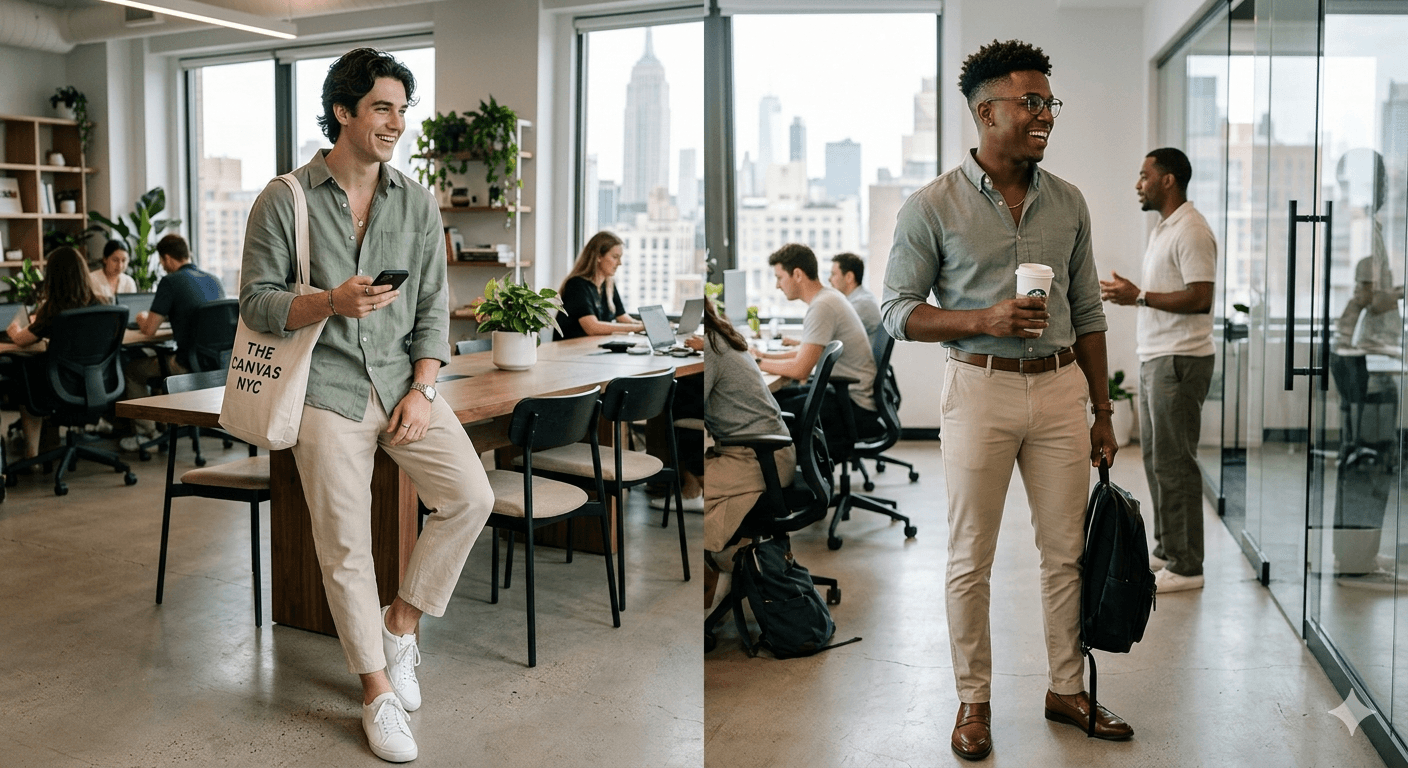
Sage green is the color of choice for professionals who want to embrace nature-inspired, sustainable tones. Paired with sand or beige, it creates a soft, approachable look that resonates with spring and summer office settings.
Why it works:
- Freshness and subtlety make it suitable for creative office environments.
- Aligns with Gen Z’s affinity for eco-conscious colors.
- Works for layered office outfits, e.g., a sage blazer over beige chinos.
Styling tip: Choose textured fabrics like linen or lightweight wool to add depth. A beige leather belt and brown brogues complete the ensemble without overpowering the color story.
2. Navy and Cream: The Quiet Luxury Alternative

Navy and cream replace the starkness of black-and-white office wear with a softer, high-end feel. This combination communicates sophistication without rigidity, making it ideal for creative roles or semi-formal environments.
Why it works:
- Navy grounds the outfit, cream adds lightness.
- Creates contrast without harshness, enhancing visual balance.
- Timeless appeal with a modern twist.
Styling tip: A navy unstructured blazer over a cream knit or shirt conveys effortless professionalism. Keep accessories minimal—think leather watch straps or subtle cufflinks.
3. Charcoal and Digital Lavender: Professional Meets Modern Optimism

Digital lavender is a signature Gen Z shade for 2026, conveying optimism and creativity. When paired with grounded charcoal, it balances professional seriousness with contemporary flair.
Why it works:
- Lavender adds a pop without overwhelming.
- Charcoal keeps the overall look grounded and office-appropriate.
- Signals confidence in modern color sensibilities.
Styling tip: Layer a charcoal suit with a lavender shirt or tie. Alternatively, a charcoal cardigan with lavender accents (like a pocket square) adds subtle innovation to a conservative setting.
4. Monochromatic Navy: Tonal Sophistication
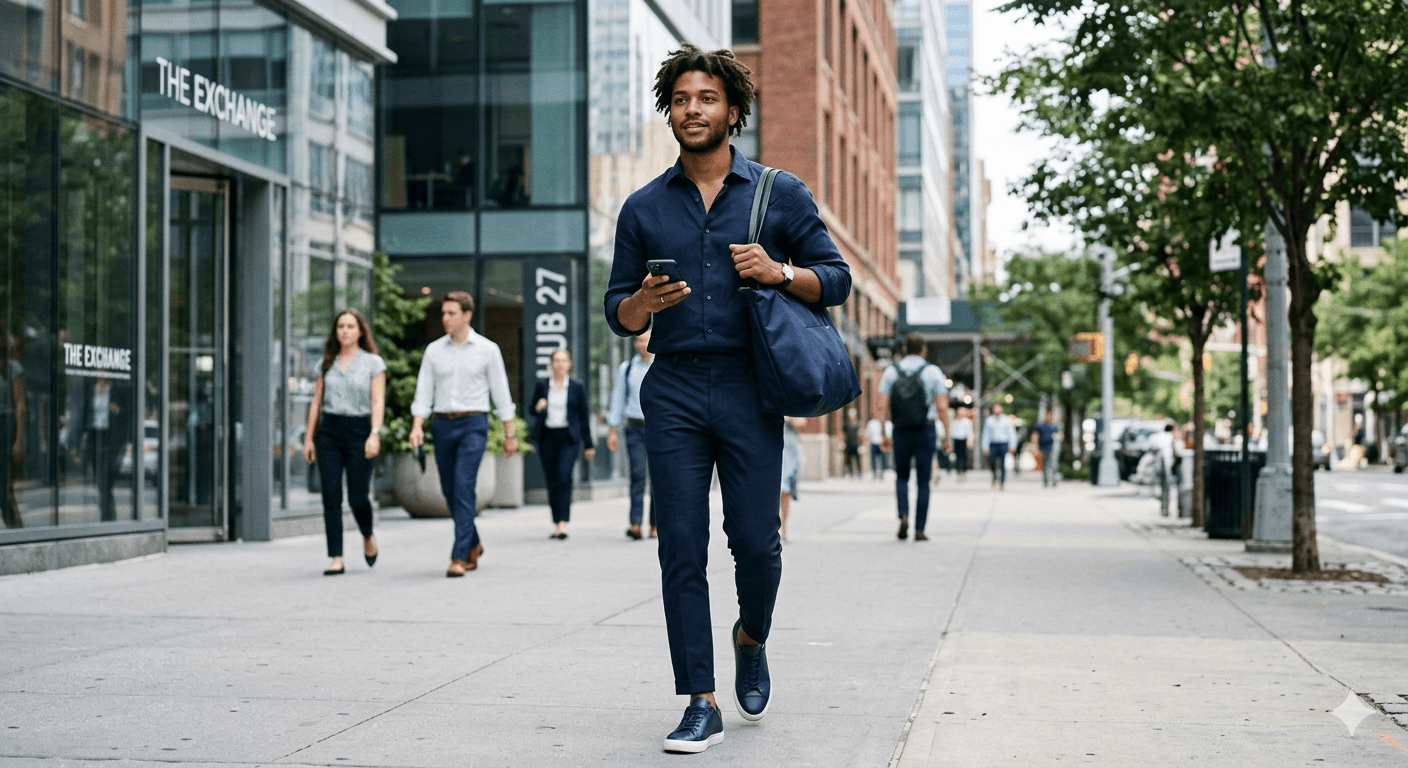
Tonal dressing has become a quiet luxury. Combining shades of navy—from a dark blazer to mid-blue knits or light blue shirts—produces a polished yet understated look.
Why it works:
- Effortless cohesion across layers and textures.
- Easy to mix with neutral accessories.
- Signals sophistication without overcomplication.
Styling tip: Experiment with fabric textures—wool, cotton, and brushed cotton—to differentiate shades and avoid a flat appearance.
5. Olive Green and Black: Rugged Refinement

For start-up or tech-office settings, olive green and black communicate individuality and confidence. Think olive chore coats, black wide-leg trousers, and layered knits.
Why it works:
- Olive green softens black, preventing harsh monotony.
- Offers a refined, rugged aesthetic suitable for casual or hybrid offices.
- Versatile across seasons, especially autumn.
Styling tip: Keep shoes neutral black or dark brown. Accessories like a black leather belt or minimal watch maintain the balance.
6. Butter Yellow and Grey: Optimistic Pop
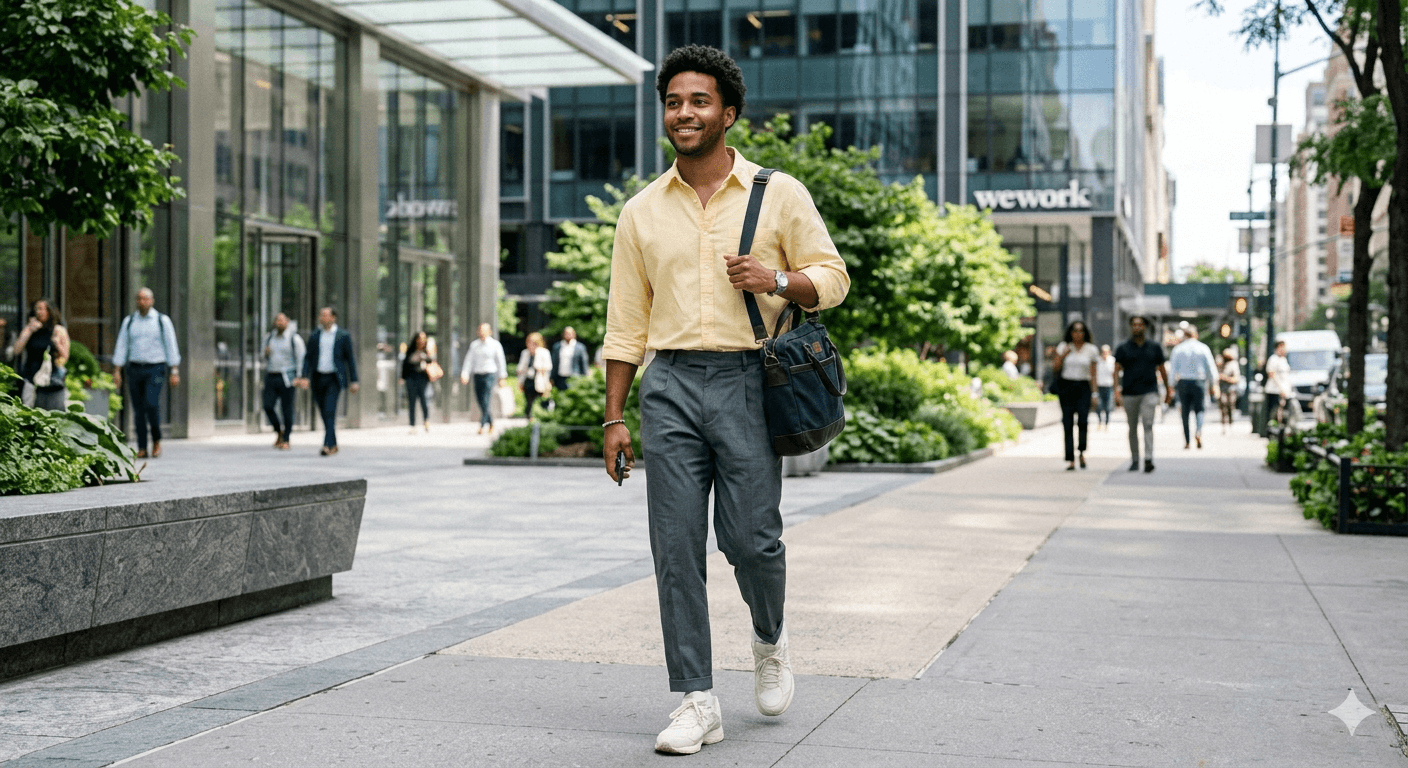
Butter yellow emerges as a trending “pop” color for 2026. When paired with grey, it brightens office wear while staying professional.
Why it works:
- Grey provides a neutral foundation; yellow injects optimism.
- Perfect for creative roles or hybrid work environments.
- Modernizes traditional grey suits with a seasonal accent.
Styling tip: Use butter yellow for knit polos or tie accents. Grey suits or chinos act as grounding elements.
7. Burgundy and Khaki/Stone: Depth Without Red’s Stiffness

Burgundy brings warmth and depth while remaining understated. Paired with light khaki or stone trousers, it creates a smart-casual, balanced look.
Why it works:
- Burgundy enriches the palette without dominating.
- Works across office and after-hours social settings.
- Harmonizes with neutral trousers for versatile styling.
Styling tip: Consider burgundy knitwear under stone-colored blazers. Polished leather shoes in brown or oxblood enhance cohesion.
8. Dusty Teal and Charcoal: Calming and Confident

Dusty teal offers a modern alternative to traditional blues. Combined with charcoal, it communicates calm authority while complementing diverse skin undertones.
Why it works:
- Teal adds freshness without breaking professional decorum.
- Charcoal neutralizes and stabilizes the outfit.
- Easy to accessorize with silver or matte black elements.
Styling tip: Layer a dusty teal sweater with charcoal trousers or pair a teal shirt with a charcoal blazer for controlled vibrancy.
9. Rust and Navy: Bold, Not Loud

Rust introduces warmth and individuality, particularly suitable for autumn or winter office settings. When paired with navy, it becomes a statement that’s confident without being garish.
Why it works:
- Offers subtle warmth in cooler months.
- Navy provides structural grounding.
- Conveys personality through color without compromising office standards.
Styling tip: Rust sweaters, blazers, or scarves over navy trousers or coats create a balanced yet engaging look.
10. White and Earthy Brown (Tan/Camel): Reclaimed Classic

Gen Z has reinvented classic whites and earthy browns with oversized fits. A crisp white oversized button-down tucked into loose camel trousers signals modern minimalism.
Why it works:
- Versatile for formal or casual office days.
- Highlights natural textures and sustainable tones.
- Perfect for layered, loose silhouettes favored in contemporary office settings.
Styling tip: Pair with clean white sneakers for casual offices or brown leather shoes for formal settings.
How to Style Better for the Modern Office?
While color combinations are essential, modern office style relies on principles that enhance practicality, personality, and confidence.
1. The 3-Color Rule
Aim for:
- 60% base neutral (blazer, trousers)
- 30% secondary color (shirt, sweater)
- 10% pop (accessories like socks, watch strap, or pocket square)
2. Texture Over Matching
- Layering materials (e.g., waffle-knit sweaters with smooth chinos) adds depth.
- Perfect color matching is less important than tactile contrast.
3. Neutral Foundation
- 70–80% of your wardrobe should consist of ground colors like navy, charcoal, and beige.
- Simplifies daily mixing and matching and reduces decision fatigue.
4. Seasonal Adaptation
- Use lightweight fabrics in spring/summer (linen, cotton).
- Switch to wool blends and layered knits in autumn/winter.
Tips for Smart Office Style
Layering With Purpose
- Structured jackets over soft fabrics balance formality and comfort.
- Lightweight sweaters or vests create interest while maintaining office-appropriate elegance.
Accessorize Intentionally
- Leather belts, watches, and subtle cufflinks complete the look without overwhelming.
- Scarves or ties in seasonal colors can act as your 10% pop element.
Maintain a Versatile Wardrobe
- Invest in multifunctional pieces that adapt to multiple color pairings.
- Prioritize quality over quantity to ensure longevity and sustainability.
How to Shop the Best Office Wear Combinations?
Shopping for office wear can be time-consuming. With the Glance Intelligent Shopping Agent, finding the right combinations becomes seamless:
- AI-Powered Styling: Input your preferences and occasions, and the agent assembles personalized outfit suggestions.
- Context Awareness: The agent factors in location, climate, and office culture to recommend practical, stylish combinations.
- Visual Matching: Upload selfies or previous outfit images to help the AI understand your silhouette and skin tone.
- Decision Confidence: The agent explains trade-offs, highlighting fabric quality, versatility, and brand reliability.
Instead of browsing hundreds of products, Glance curates looks that fit both your personality and professional requirements—turning shopping into an evidence-backed, low-friction experience.
Conclusion
The modern office demands more than just a suit; it requires intentional, stylish decisions that communicate personality and professionalism. From soft sage greens to bold rusts, the color palette for 2026 embraces individuality while honoring office decorum.
Pair these combinations with thoughtful textures, smart layering, and subtle pops of color, and your wardrobe becomes a tool for confidence, not confusion. With tools like the Glance Intelligent Shopping Agent, assembling curated, identity-led office looks is easier than ever. It’s not just about buying clothes; it’s about discovering what looks right, feels confident, and expresses who you are at work.
FAQs Related to Outfit Color Combinations
What color clothes go well together?
Colors that go well together depend on the occasion, season, and your personal style. Classic combinations include navy and cream, charcoal and lavender, or olive and black, which balance professional appeal with modern flair. Earth tones like beige, tan, and white also pair effortlessly for a versatile, polished look. Seasonal accents, like butter yellow in spring or rust in autumn, can add personality without overpowering the outfit.
What is the 3 3 3 rule in fashion?
The 3-3-3 rule in fashion is a guideline for creating balanced, visually appealing outfits. It encourages dividing your look into three elements: 60% base color (like a blazer or trousers), 30% secondary color (shirt, sweater, or pants), and 10% accent or pop (accessories such as scarves, ties, watches, or shoes). This ensures a harmonious outfit while allowing small pops of personality.
What is the 3 color rule outfit?
The 3 color rule is a styling principle that suggests limiting the number of prominent colors in an outfit to three. Typically, one neutral forms the foundation, a secondary color adds contrast, and a third is used sparingly as an accent. This approach keeps looks clean, professional, and modern while allowing subtle individuality through textures or accessories.
What are 5 good colors that go together?
Five colors that commonly work well together include navy, cream, sage green, rust, and charcoal. These tones balance professionalism with modern trends and can be adapted across seasons. For casual or creative settings, adding lighter neutrals like beige or pops of colors like butter yellow or dusty teal can elevate the outfit without overwhelming it.
What are the best 3 color combos?
Some of the best three-color combinations for men’s office wear in 2026 include: navy, cream, and tan; charcoal, digital lavender, and grey; and olive green, black, and brown. These combinations maintain professional polish while introducing modern touches. Using textures and layering strategically helps differentiate shades and adds visual depth to the overall look.
Download the Glance app now





Your intelligent
shopping agent.







Your intelligent
shopping agent.