


Color Matching Clothes: Why the Best Style is Systematic
TL;DR
Most people think they struggle with color matching clothes because they don’t understand fashion. The reality is more structural than that. Color matching isn’t difficult because it’s complex—it’s difficult because it’s being done manually, repeatedly, and under constantly changing conditions. Every outfit requires a stack of small, invisible decisions: what works together, what works on you, what fits the day, what feels current. That’s not a styling problem. It’s a decision problem. And like most decision problems, it doesn’t scale well inside the human brain. What’s beginning to change now is not color theory itself, but how it’s applied—through systems that observe behavior, understand context, and quietly remove the need to think about color matching at all.
Why Color Matching Clothes Break Down in Real Life ?
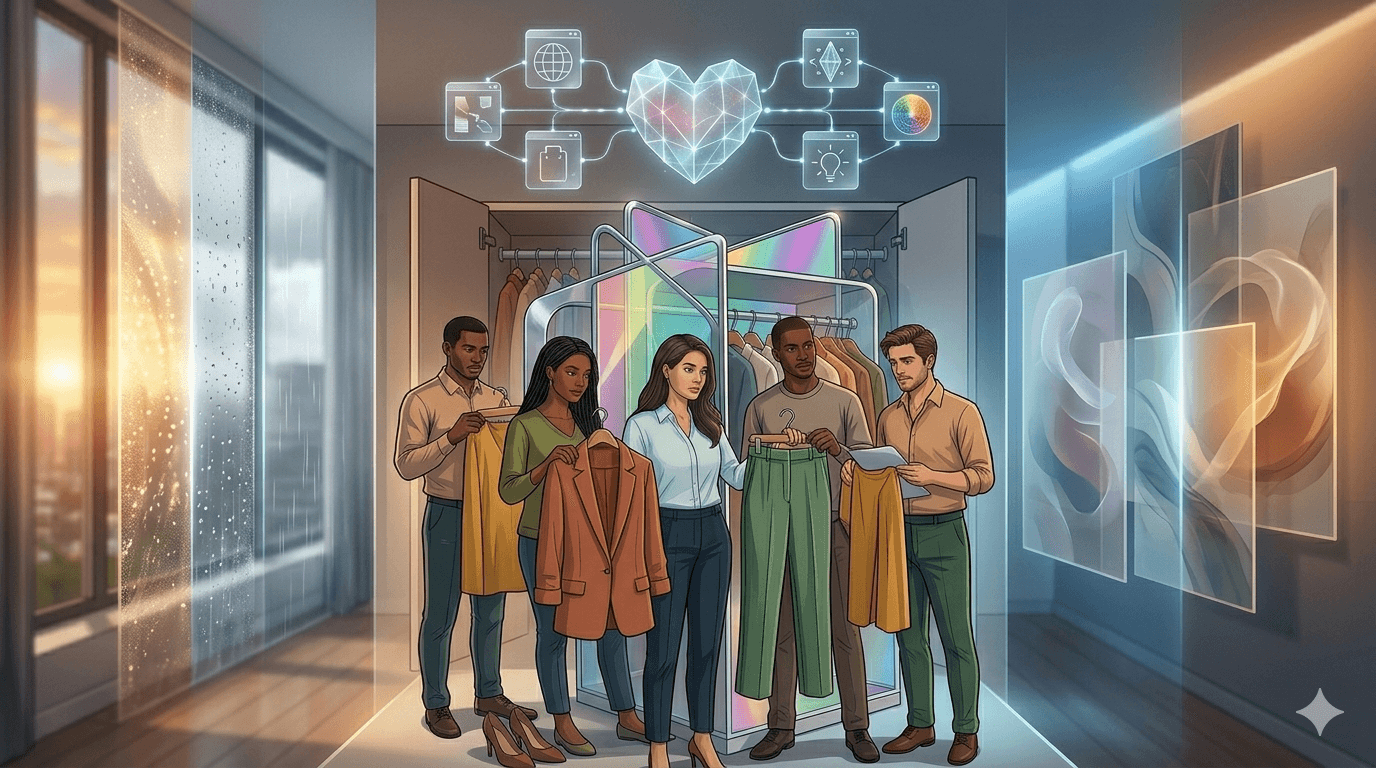
There’s a moment most people recognize but rarely articulate. You’re standing in front of your closet, holding two pieces that both work individually. The shirt is fine. The pants are fine. But together, something feels slightly off. Not wrong enough to discard immediately, but not right enough to feel confident. You pause. You adjust. You try a second option. Then a third. Eventually, you settle—not because you found the perfect combination, but because you ran out of time.
That gap between “this should work” and “this feels right” is where color matching clothes becomes frustrating. And it’s not because you lack taste. It’s because you’re trying to solve a multi-variable problem in real time, with incomplete information.
Color matching, in practice, is never just about color. It’s about how that color interacts with your skin tone, with the lighting you’ll be in, with the environment you’re stepping into, and with the version of yourself you want to present that day. A combination that works in natural daylight can feel flat under indoor lighting. A palette that looks balanced in isolation can feel out of place in a specific social context. None of this is visible when you’re standing in your room making the decision.
And yet, you’re expected to get it right—quickly, repeatedly, and without feedback.
Color Matching Clothes Is Not a Skill—It’s a System
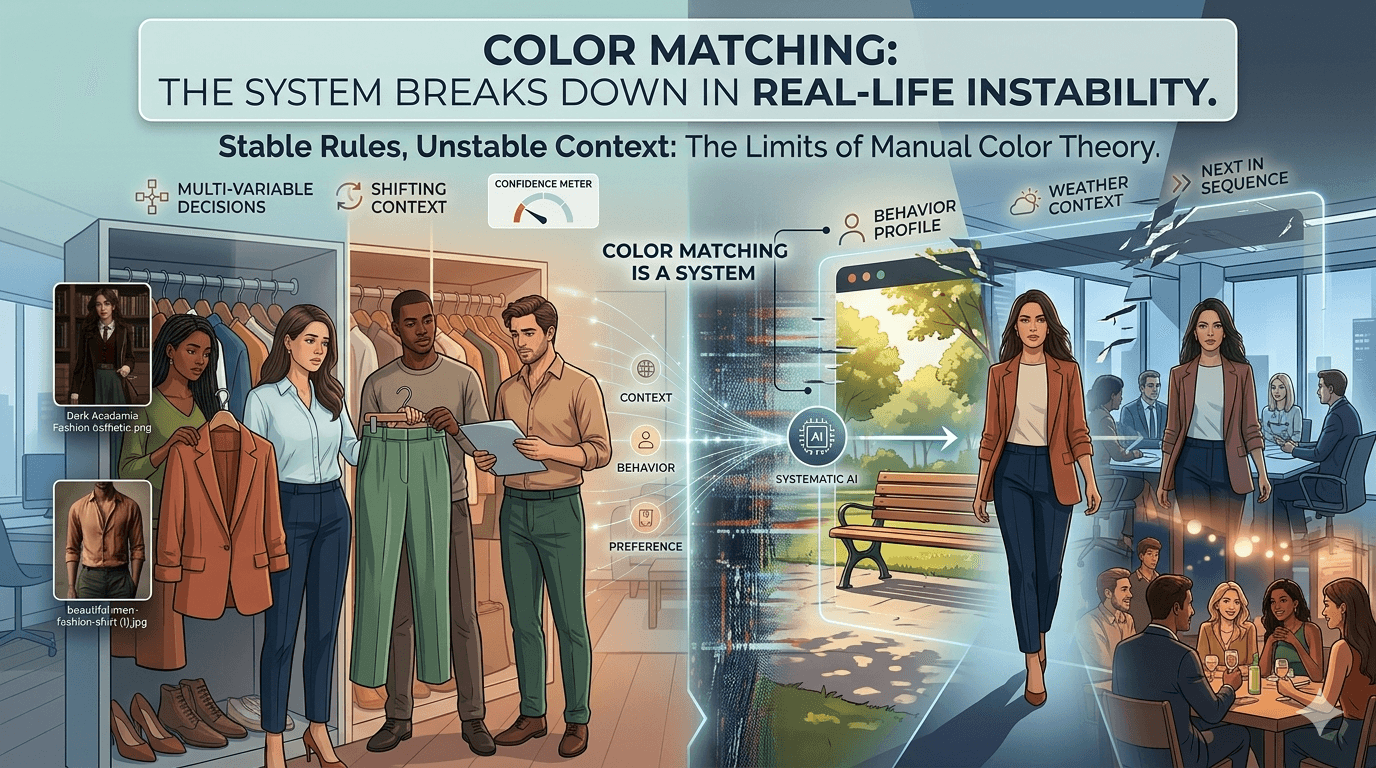
Most fashion advice frames color matching as something intuitive, almost artistic. Either you “have an eye for it” or you don’t. That framing is appealing, but it’s inaccurate.
Color matching clothes operates on a system—one that has been documented for decades through color theory. Concepts like complementary contrast, analogous harmony, and tonal balance exist because human perception responds predictably to certain color relationships. A deep navy paired with a warm terracotta works because it creates controlled contrast. A set of closely related earth tones works because the eye reads continuity as intentional. Monochromatic outfits work because variation within a single color family reduces visual friction.
These principles are not subjective. They are repeatable patterns.
The problem is not the system itself. The problem is that the system assumes stability—stable lighting, stable context, stable preferences. Real life provides none of those.
What you’re wearing is not being viewed in a controlled environment. It’s being experienced across shifting conditions: morning light, office lighting, evening transitions. Your own perception of the outfit changes throughout the day, because the conditions around it change. That makes consistent application of color theory surprisingly unreliable when done manually.
Why Understanding Color Theory Doesn’t Solve the Problem ?
A common assumption is that learning more about color theory will solve this. In reality, it often doesn’t.
You can understand undertones, contrast, and color harmony, and still feel uncertain when getting dressed. That’s because the difficulty isn’t conceptual—it’s operational. Knowing that warm tones complement your skin doesn’t automatically tell you whether a specific shade of mustard works with a specific pair of trousers under a specific set of conditions on a specific day.
There are three structural reasons this breaks down.
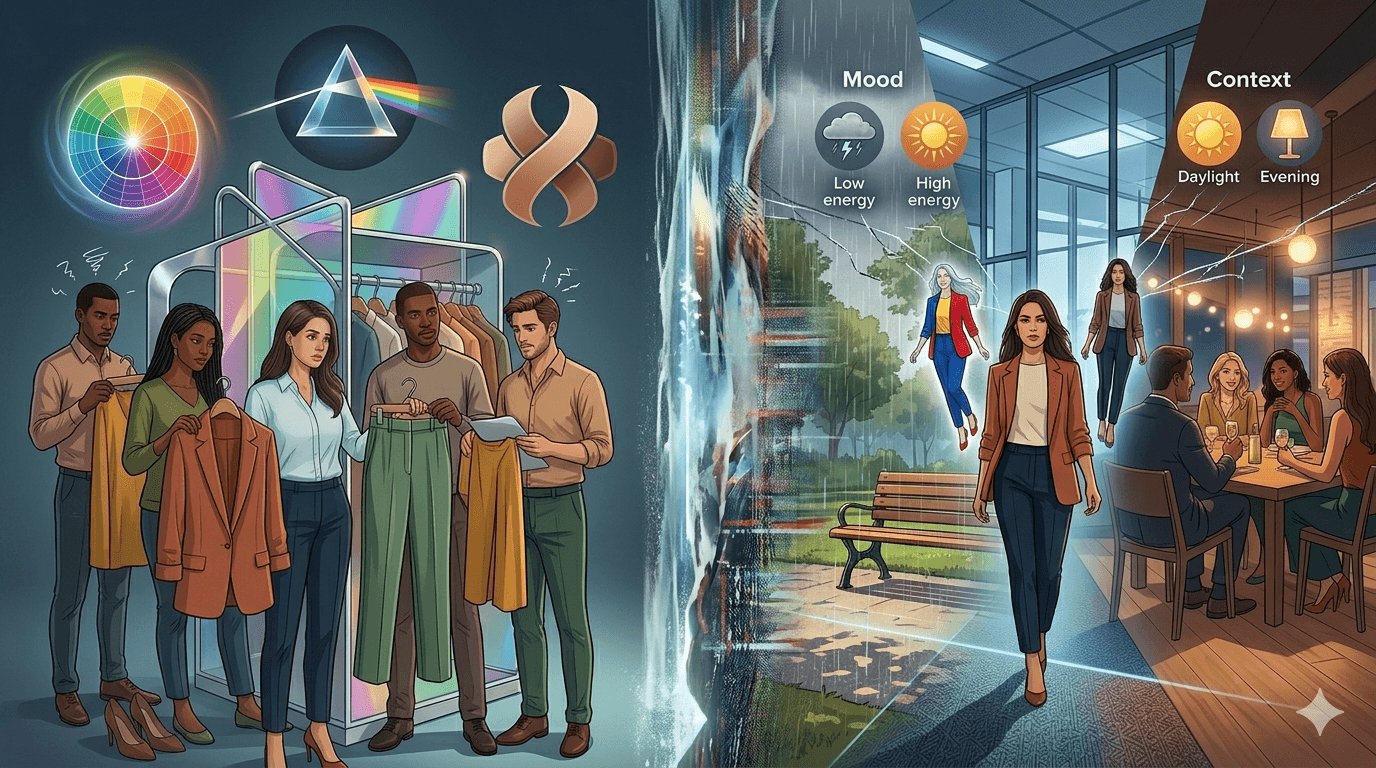
First, context is dynamic. The same outfit can feel different depending on weather, location, and lighting. A color combination that feels rich and balanced on a cloudy day can feel heavy and muted in direct sunlight. A palette that works in a neutral indoor setting can feel out of place in a more vibrant social environment.
Second, personal preference is fluid. What you feel like wearing is not consistent. Some days you lean toward low-contrast, neutral combinations. Other days you want something sharper, more expressive. That shift is influenced by mood, energy, and context, none of which are accounted for in static color rules.
Third, and most importantly, most people don’t have an accurate model of their own preferences. There’s a gap between what you think you like and what you consistently choose. You might describe your style as bold, but repeatedly reach for muted tones. You might believe you prefer bright colors, but consistently avoid them in practice. That gap introduces friction into every decision, because you’re not operating from real data—just an assumption.
Color Matching Clothes Is a Decision Problem Disguised as a Style Problem
Once you look at it this way, the issue becomes clearer.
Every time you match colors, you are making a layered decision:
Does this combination work visually?
Does it work on me specifically?
Does it fit today’s conditions?
Does it align with how I want to show up?
None of these questions exist in isolation. They interact with each other. And you are expected to resolve all of them within minutes.
Research from the American Psychological Association has consistently shown that repeated small decisions deplete cognitive energy and reduce confidence in later choices. What feels like a minor hesitation in front of your closet is actually part of a larger pattern—decision fatigue accumulating over time.
Color matching clothes sits right at the start of that process. It sets the tone not just visually, but cognitively.
The Shift From Choosing Colors to Not Having to Choose Them
This is where the conversation moves beyond traditional fashion advice.
The goal is no longer to get better at manually matching colors. The goal is to remove the need to do it manually in the first place.
This is exactly where agentic AI begins to matter—not as a feature, but as a structural shift in how decisions are made.
Unlike traditional recommendation systems that respond to explicit inputs, agentic systems operate continuously. They observe behavior, identify patterns, factor in context, and generate outputs without requiring a direct query. In the context of color matching clothes, that means the system is not waiting for you to ask what works. It is already calculating it.
How Behavior Replaces Guesswork
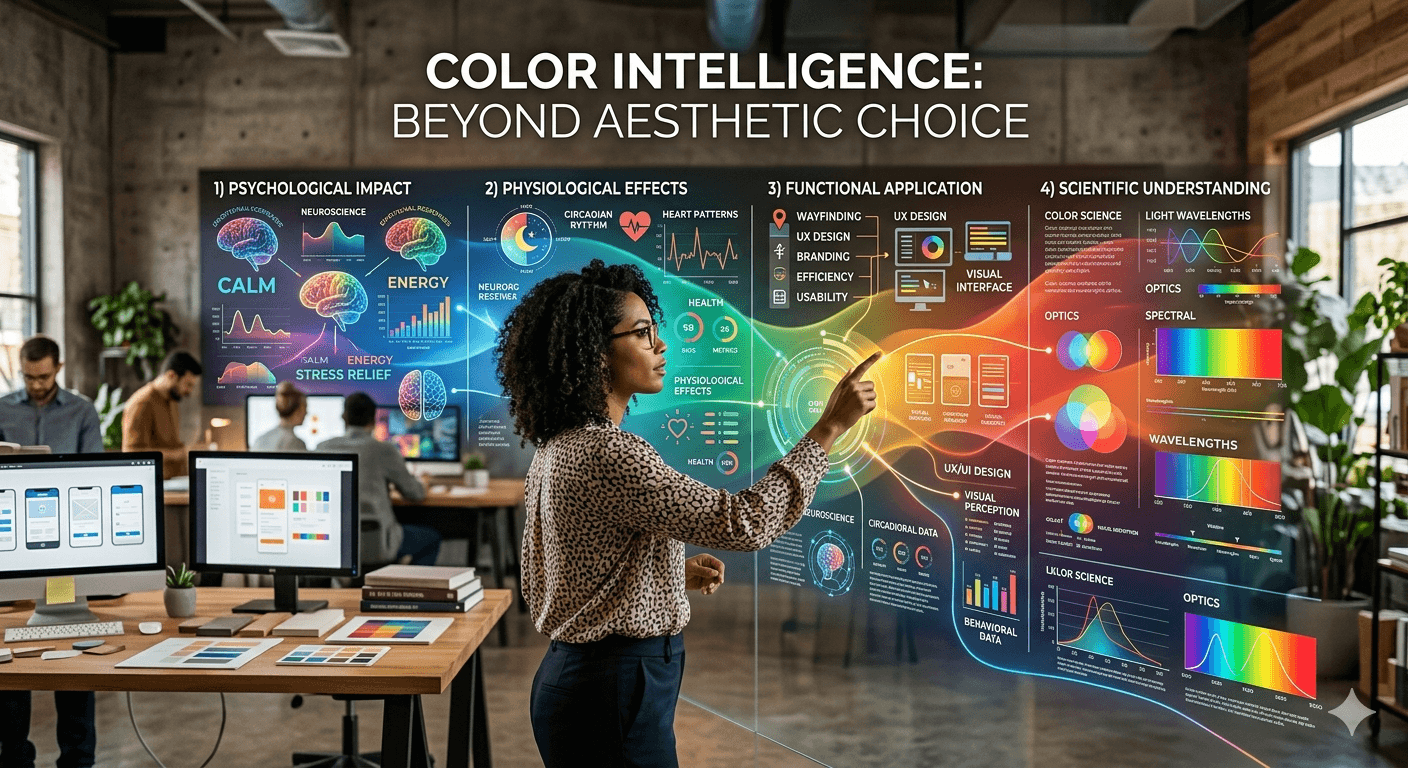
The most reliable signal of preference is not what people say they like. It’s how they behave.
Every interaction—scrolling past something quickly, pausing on an image, revisiting a similar color combination—creates a pattern. Over time, these patterns form a behavioral profile that is far more accurate than any self-reported preference.
If you consistently pause on muted greens, skip high-saturation reds, and revisit neutral palettes, the system doesn’t need to ask what you like. It already knows your tolerance for contrast, your inclination toward certain tones, and your comfort zone within the color spectrum.
This eliminates one of the biggest sources of friction in color matching clothes: uncertainty about your own taste.
Why Context Changes Everything

Even with perfect knowledge of preference, color matching cannot be solved without context.
What works in one environment does not automatically translate to another. Weather affects fabric choice and color perception. Lighting alters how colors are read. Cultural and social environments influence what feels appropriate or expressive.
Systems that incorporate real-time context—weather shifts, location-based trends, upcoming events—add a layer of intelligence that static rules cannot replicate. They don’t just suggest colors that match each other. They suggest colors that make sense for where you are, when you’re wearing them, and what you’re likely to be doing.
This is where color matching clothes stops being theoretical and becomes situationally accurate.
The Role of Sequence: Understanding What Comes Next
One of the more subtle but powerful shifts in this space is the move from isolated recommendations to sequence-based understanding.
Human decision-making follows patterns. You rarely make choices in isolation. You move through a sequence—looking at one type of item, then another, then refining based on what feels right.
If a system can recognize that sequence—what you look at first, what you consider next, what you return to—it can predict not just what you like, but what you are likely to choose next. That allows it to close the gap between browsing and deciding.
In the context of color matching clothes, this means you are no longer assembling an outfit piece by piece. The system has already observed how you build combinations and can present a complete look that aligns with that pattern.
The Emergence of “No Search” Styling
All of this leads to a broader shift in how fashion decisions are made.
The traditional model requires you to search, filter, compare, and decide. It assumes that you know what you’re looking for. But most meaningful discovery doesn’t happen that way. It happens when something appears that feels immediately right.
The “no search” model reverses the process. Instead of asking you to define your intent, it infers it. Instead of presenting options, it presents outcomes.
Platforms like Glance are beginning to build toward this model through multi-agent systems that synthesize behavior, context, and preference simultaneously. The output is not a list of items. It’s a set of complete, color-matched looks that already account for who you are and where you are.
Color matching clothes, in this model, doesn’t disappear. It just happens somewhere else.
Why This Feels Effortless (Even Though It Isn’t)

From the outside, this shift looks like simplicity. Fewer decisions. Faster outcomes. More consistency.
Underneath, it’s the opposite. It’s complexity handled at the system level instead of the individual level.
The reason it feels better is not because fewer variables exist. It’s because those variables are being managed in a way that doesn’t require conscious effort. The cognitive load is removed, but the intelligence remains.
This aligns with broader psychological findings around choice overload, explored extensively by Barry Schwartz. When the number of decisions decreases—but the quality of outcomes remains high—people report higher satisfaction and greater confidence in their choices.
Color matching clothes becomes effortless not because it’s simple, but because it’s been abstracted.
A Practical Way to Think About It Today
Until these systems fully mature, the most effective approach is not to memorize more rules, but to reduce the number of decisions you’re making.
Most people already have a set of colors they return to consistently. Those are not accidental—they’re data points. Building around a small set of reliable neutrals, repeating combinations that have worked before, and limiting each outfit to one active decision can significantly reduce friction.
The goal is not to create variety. It’s to create consistency that feels natural.
Over time, even this manual approach starts to resemble what intelligent systems are doing automatically: identifying patterns, reducing variables, and reinforcing what works.
Conclusion:
Color matching clothes has always been framed as something you need to get better at. Learn the rules. Train your eye. Develop a sense of style.
What’s becoming increasingly clear is that the problem was never a lack of knowledge. It was the expectation that individuals would apply a complex, context-dependent system manually, every single day.
That expectation is starting to disappear.
As systems become better at understanding behavior, context, and sequence, color matching moves out of conscious decision-making and into the background. The outcome doesn’t change—you still wear combinations that work. But the process does.
And when the process disappears, what’s left is something that feels effortless, even though it isn’t.
That’s the real shift. Not better styling.
Better systems.
Frequently Asked Questions
- Why is color matching clothes so difficult even if I know the "rules"?
It’s rarely a lack of knowledge; it’s a decision-making bottleneck. The article explains that color matching is a "multi-variable problem" involving shifting light, your skin tone, and the specific context of your day. Trying to solve this manually every morning leads to decision fatigue, making even "correct" combinations feel uncertain. - How does Glance solve the color matching clothes problem differently?
Unlike traditional apps that just show you a color wheel, Glance uses a multi-agent AI system to handle the "dirty work" of styling. It doesn't just check if two colors match; it cross-references your physical attributes, your past behavioral data, and your real-time location. Instead of giving you a manual to read, Glance surfaces complete, color-coordinated looks that are already optimized for your specific environment and taste. - How does "Contextual Styling" change the way I match colors?
Context is the missing link in traditional advice. A palette that looks great in a dark bedroom might look washed out in midday sun or feel too aggressive for a professional lunch. Modern styling systems look at your location, the weather, and the social setting to ensure your colors don't just match each other, but also match the "vibe" of your day. - What is "No Search" styling and how does it help with color matching?
"No Search" styling moves from you actively looking for combinations to a system inferring what you need. By analyzing your past behaviors—what you pause on, what you skip, and what you buy—intelligent systems (like Glance) can present a fully color-matched outfit that fits your taste before you even have to ask, removing the cognitive load entirely. - Can AI really understand my personal color preferences better than I can? Often, yes. There is a "preference gap" between what we think we like and what we actually wear. You might say you love bold colors but consistently reach for navy and olive. Agentic AI tracks these real-world behavioral patterns to build a profile based on your actual data rather than your aspirational assumptions.
Download the Glance app now





Your intelligent
shopping agent.







Your intelligent
shopping agent.