


The Minimal Capsule Wardrobe Planning Mistakes You Ignored
TL;DR
Many people approach minimal capsule wardrobe planning casually and overlook small but important decisions that shape how functional it becomes. When lifestyle, versatility, and personal style are not carefully considered, the wardrobe fails to deliver the simplicity it promises. Avoiding common planning mistakes helps create a capsule wardrobe that is practical, flexible, and easy to wear every day.
Minimal capsule wardrobe planning is often treated like a simple trend or a quick style hack. Many people overlook the small decisions that shape it, assuming they are not that important. In reality, these overlooked details are exactly what determine whether a capsule wardrobe actually works in everyday life.
At its core, a capsule wardrobe is meant to reduce decision fatigue, encourage mindful consumption, and make getting dressed easier. But when the planning stage is rushed or certain factors are ignored, the wardrobe rarely delivers the simplicity and versatility people expect.
Creating a functional capsule wardrobe requires thoughtful choices, balance between essentials and personal style, and a clear understanding of your daily lifestyle. Without this foundation, even a well intentioned capsule wardrobe can feel limiting instead of freeing.
Here are 10 minimal capsule wardrobe planning mistakes many people ignore and how you can avoid them.
Mistakes People Make in Minimal Capsule Wardrobe Planning
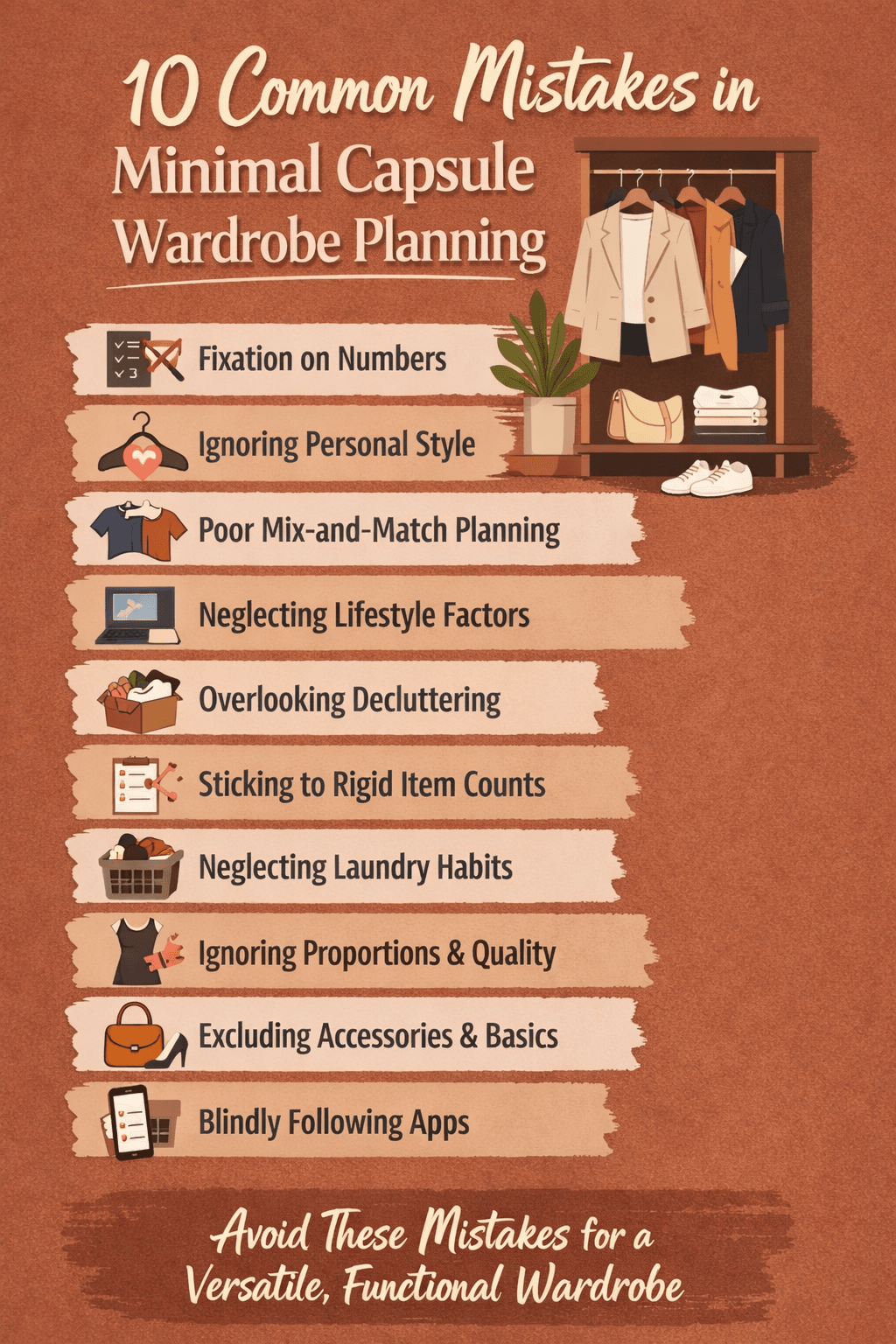
1. Fixation on Numbers
One of the biggest traps in minimal capsule wardrobe planning is obsessing over an exact number of items—like 30 or 33 pieces. These arbitrary limits don’t account for individual lifestyle needs, seasonal changes, or activity variations. Focusing solely on numbers often causes stress and incomplete wardrobe coverage.
Instead, prioritize versatility and functionality. Choose items that can be styled in multiple ways. A flexible approach allows your capsule to grow or shrink naturally based on real-life demands, rather than sticking to a rigid count that may not suit your day-to-day life.
2. Ignoring Personal Style
Many people dive into capsule wardrobe planning by copying Pinterest boards or Instagram aesthetics. While trendy visuals are inspiring, ignoring your unique style can lead to mismatched pieces that rarely get worn.
Start by identifying your color palette, preferred silhouettes, and go-to textures. Every item in your capsule should reflect your authentic look. When personal style guides your selection, the wardrobe becomes functional, wearable, and truly yours.
Did you know that producing just one T-shirt can consume up to 2,700 liters of water?
3. Poor Mix-and-Match Planning
A common misconception is that every single piece in a capsule must pair perfectly with every other item. This perfectionist mindset is unrealistic and often results in a wardrobe that feels restrictive.
Aim for around 80% compatibility, leaving room for individuality while maintaining functionality. Test combinations as you plan, and identify weak links early. This ensures your wardrobe is versatile without forcing you into repetitive or uninspired outfits.
4. Neglecting Lifestyle Factors
Minimal capsule wardrobe planning works best when aligned with your lifestyle. Ignoring daily routines, laundry frequency, or activity-specific needs can leave gaps in usability.
For example, a wardrobe for office work might require layering pieces like cardigans and camisoles, while a travel-friendly capsule needs wrinkle-resistant fabrics. Include mini-capsules tailored to specific routines or activities. This approach keeps your wardrobe practical and stress-free.
5. Overlooking Decluttering
Many people attempt capsule wardrobes by only reviewing the visible items in their closet. Laundry baskets, drawers, or forgotten duplicates often escape scrutiny, creating hidden clutter.
A full wardrobe audit is essential. Pull out every piece of clothing, including rarely worn items, and assess what truly adds value. Decluttering before building ensures your minimal wardrobe is genuinely lean and purposeful.
6. Sticking to Rigid Item Counts
Even when people realize certain pieces are missing, they hesitate to add them because they are locked into rules like “exactly 33 items.” This rigidity prevents the capsule from evolving with lifestyle shifts, seasons, or personal growth.
Rather than treating item counts as unbreakable rules, treat them as checkpoints. The real measure of success in minimal capsule wardrobe planning is how many complete outfits you can create with ease—not how perfectly you followed a formula.
Did you know the global capsule wardrobe market was valued at USD 1.3 billion in 2023 and is projected to reach USD 2.6 billion by 2030, growing at a strong CAGR of 10.5% from 2024 to 2030?
7. Neglecting Laundry Habits
Building a capsule wardrobe without factoring in wash frequency can create practical issues. For example, having too few underwear, socks, or quick-wear items means gaps when laundry day comes around.
Plan your minimal wardrobe around real-life routines, ensuring that essential items are sufficient between washes. This prevents stress and keeps your capsule wardrobe truly functional.
8. Ignoring Proportions, Mixability, and Fabric Quality
Even when the pieces look great individually, scale mismatches, clashing proportions, or low-quality fabrics can limit outfit options and cause regret. Buying items without considering how they fit together or how long they will last undermines the minimalism goal.
Prioritize fabrics that feel good, last longer, and work with your body type. Make sure each piece complements others in color, scale, and texture for true mix-and-match flexibility.
9. Excluding Accessories and Basics
A common oversight in capsule wardrobe planning is forgetting items like shoes, bags, or layering basics such as camisoles, cardigans, or scarves. Without these, many outfits lose versatility or functionality.
Think beyond clothing and include all wardrobe essentials. Accessories, shoes, and layering pieces are integral to outfit completion and expand your wardrobe’s practical reach.
10. Blindly Following Apps or Calculators
While digital tools and apps can assist with wardrobe planning, blindly following their suggestions can ignore lifestyle nuances, seasonal changes, or personal preferences. A capsule built entirely on automated recommendations may feel disconnected from your real needs.
Use apps like Glance as guides, but trust your intuition and lifestyle requirements. Incorporate your routine, climate, and personal aesthetic for a capsule wardrobe that works in practice, not just theory.
Conclusion
Minimal capsule wardrobe planning is as much about mindful decision-making as it is about style. Avoiding these common mistakes ensures your wardrobe is functional, versatile, and enjoyable to wear. Focus on authentic style, mixability, lifestyle alignment, and quality over rigid rules.
If you’re looking for additional support in curating and testing pieces for your capsule wardrobe, intelligent platforms like Glance can subtly assist.
By analyzing product quality, fit, and compatibility, these platforms help you discover pieces that align with your lifestyle, preferences, and wardrobe goals—making minimal capsule wardrobe planning smarter and less stressful.
FAQs Related to Minimal Capsule Wardrobe Planning
1. How many clothes should a minimal capsule wardrobe have?
There is no universal number for a minimal capsule wardrobe. Most people typically keep between 25 and 40 versatile pieces, but the right count depends on your lifestyle, climate, and daily routine. Minimal capsule wardrobe planning focuses on quality, versatility, and outfit combinations rather than a strict item limit.
2. How do I choose the right colors for a capsule wardrobe?
Start by selecting 2 to 3 neutral base colors such as black, white, beige, navy, or grey. These form the foundation of your capsule wardrobe and make mixing outfits easier. Then add 2 to 4 accent colors that reflect your personal style. A balanced capsule wardrobe color palette helps create multiple outfits with fewer pieces.
3. Can a capsule wardrobe work for different seasons?
Yes, a capsule wardrobe can easily adapt to different seasons. Many people create seasonal capsule wardrobes by rotating weather appropriate items like coats, knitwear, or lighter fabrics. Core essentials such as jeans, neutral tops, and layering basics can remain consistent throughout the year.
4. What if my lifestyle changes during capsule wardrobe planning?
Minimal capsule wardrobe planning should always reflect your current lifestyle. If your work environment, travel frequency, or daily activities change, simply update your wardrobe pieces to match those needs. A successful capsule wardrobe evolves with your lifestyle rather than staying fixed.
5. Is minimal capsule wardrobe planning suitable for inclusive fashion needs?
Yes, minimal capsule wardrobe planning works well for inclusive and adaptable fashion needs. The focus on comfort, fit, and versatility makes it easier to build wardrobes for different body types, gender neutral styles, and accessibility preferences. The goal is to create a wardrobe that supports individual comfort, identity, and practicality.
Download the Glance app now






Your intelligent
shopping agent.







Your intelligent
shopping agent.