


Sustainable Bags: Should You Invest in Them in 2026?
TL;DR
Sustainable bags have moved from niche to mainstream, but investing in them requires looking beyond labels. Materials, durability, and actual environmental impact matter most. Natural fibers like organic cotton, hemp, jute, and bamboo are eco-friendly when used long-term. Recycled materials such as rPET, recycled nylon, and recycled cotton reduce waste, while plant-based leathers like Piñatex, AppleSkin, and cork offer innovative alternatives. Genuine sustainability can be verified through trusted certifications, durability, brand transparency, and upcycled materials.
Sustainability has moved from a niche concern to a mainstream expectation. Whether it is clothing, skincare, or everyday accessories, more people want to understand the environmental impact of what they buy. Bags are no exception. From tote bags and backpacks to handbags and travel luggage, the market is filled with products labeled as sustainable.
Yet the real question is: are sustainable bags actually worth investing in?
Bags are everyday essentials. You might need different ones for work, travel, shopping, or daily use. Because of this variety, you are required to invest more, so deciding whether to invest in sustainable options requires looking beyond labels and understanding materials, durability, and real environmental impact.
But first, let’s think if you should invest in sustainable bags or not!
The Debate: Should You Invest in Sustainable Bags?
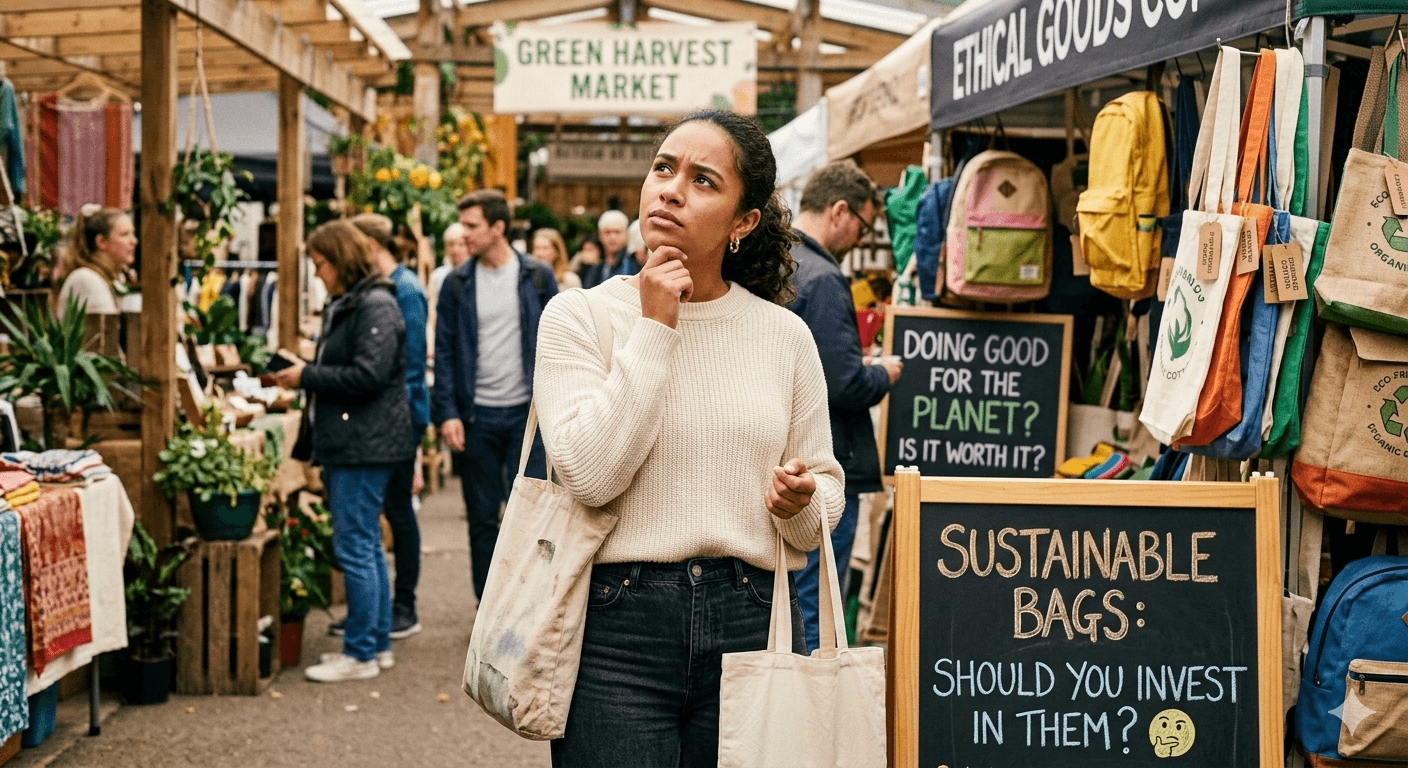
When considering sustainable bags, there are two important perspectives to understand. One focuses on environmental responsibility, while the other looks at practicality and long-term value.
Some shoppers believe sustainable bags are an essential step toward reducing waste. Others question whether these products truly deliver on their promises or simply cost more without offering meaningful benefits.
The truth often lies somewhere in the middle.
Check how!
| Factor | Sustainable Bags | Conventional Bags |
| Environmental Impact | Often made from recycled or biodegradable materials | Frequently made from virgin plastics or synthetic fabrics |
| Durability | Designed for long-term use | May wear out faster depending on material |
| Cost | Usually higher upfront | Often cheaper initially |
| Waste Reduction | Can reduce single-use bag consumption | May contribute to landfill waste |
| Transparency | Often includes certifications or traceable sourcing | Less emphasis on sustainability disclosure |
One important point often overlooked is usage frequency. A sustainable bag only becomes environmentally beneficial if it is used repeatedly over time.
For example, studies suggest that an organic cotton tote bag may need to be reused 20,000 times to fully offset the environmental impact of its production compared with single-use plastic bags. This highlights a key principle: sustainability is not only about what the product is made from, but also how long you actually use it.
Which Bag Materials Are Actually Sustainable?
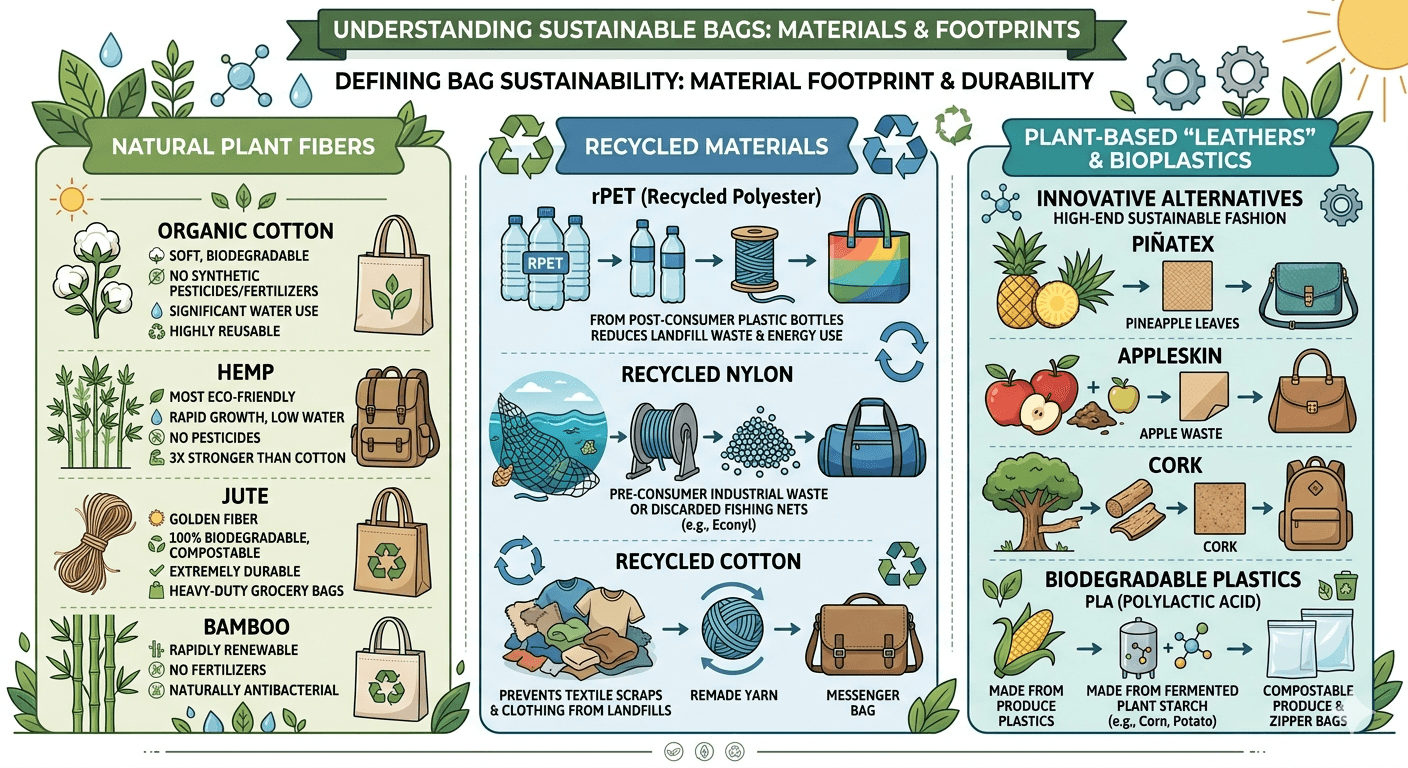
When evaluating sustainable bags, the material plays the most significant role in determining environmental impact. Some materials are naturally renewable, while others reduce waste by repurposing existing resources.
Understanding these categories can help you make more informed decisions.
Natural Plant Fibers
Natural fibers are often considered among the most environmentally friendly materials when sourced responsibly.
Organic Cotton
Organic cotton is grown without synthetic pesticides or fertilizers, making it a cleaner agricultural option compared to conventional cotton farming. The fabric is soft, breathable, and biodegradable.
However, cotton cultivation requires large amounts of water. Because of this, organic cotton bags are most sustainable when used frequently over a long period of time.
Hemp
Hemp is widely considered one of the most eco-friendly textiles available. It grows quickly, requires minimal water, and does not depend on chemical pesticides.
The fibers are extremely strong, making hemp bags durable enough for everyday use. This longevity significantly improves the sustainability of the product because it reduces the need for replacement.
Jute
Often called the “golden fiber,” jute is a biodegradable plant fiber known for its durability and affordability.
Jute bags are commonly used for grocery shopping or carrying heavy items because the material is thick and sturdy. Since it decomposes naturally, it leaves a much smaller environmental footprint than many synthetic fabrics.
Bamboo
Bamboo grows rapidly and regenerates naturally, which makes it a renewable resource. It also requires little water and minimal chemical treatment during cultivation.
Bamboo-based fabrics are increasingly used in eco-friendly fashion accessories, including bags and backpacks.
Recycled Materials
Recycled materials help reduce landfill waste by transforming discarded items into new products.
rPET (Recycled Polyester)
Recycled polyester is commonly made from plastic bottles collected from recycling streams. These bottles are processed and converted into durable fibers.
Using rPET reduces the need for virgin plastic production and can significantly decrease energy consumption during manufacturing.
Recycled Nylon
Recycled nylon is often created from industrial waste or discarded fishing nets collected from oceans. One well-known example is Econyl, which transforms marine waste into new textile fibers.
This process helps address both plastic pollution and overproduction of synthetic materials.
Recycled Cotton
Recycled cotton is produced using leftover textile scraps or old garments. Instead of sending these materials to landfills, they are broken down and spun into new fibers.
While recycled cotton may sometimes be slightly weaker than virgin cotton, it significantly reduces textile waste.
Plant-Based Leather Alternatives
One of the most innovative areas in sustainable fashion is plant-based leather alternatives.
Piñatex
Piñatex is made from pineapple leaf fibers that would otherwise be discarded after harvesting. It creates a leather-like material often used in handbags and fashion accessories.
AppleSkin
AppleSkin uses waste from the apple juice industry. The leftover pulp and peels are processed into a flexible material used for sustainable fashion products.
Cork
Cork is harvested from the bark of cork oak trees without cutting the tree itself. The material is lightweight, durable, and naturally water resistant.
Because cork trees regenerate their bark, the harvesting process can continue for decades without damaging the tree.
How to Know if a Bag Is Truly Sustainable?
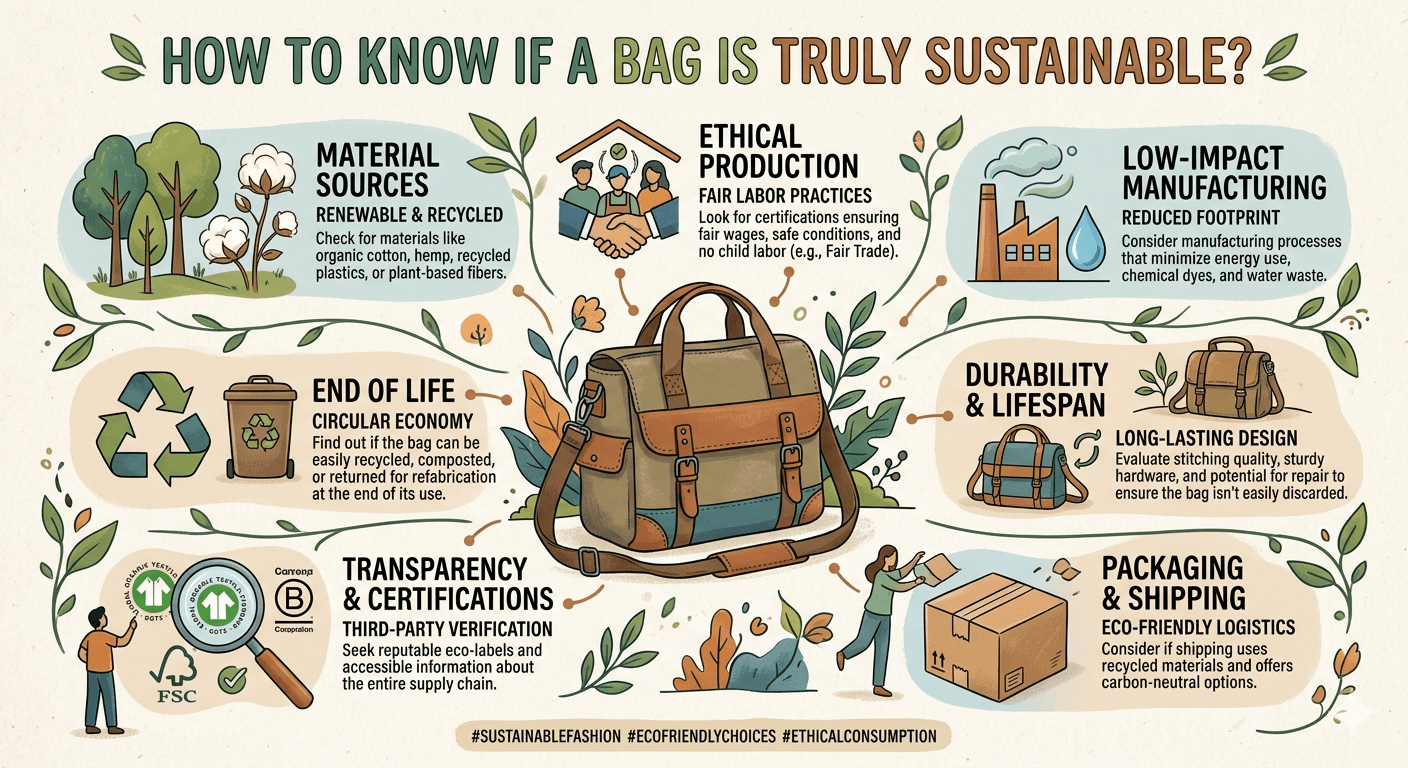
Sustainability claims can sometimes be confusing. Many brands highlight eco-friendly messaging, but not all products meet genuine environmental standards.
Here are 4 indicators that can help you evaluate whether a bag is actually sustainable.
Look for Trusted Certifications
Certifications provide independent verification that materials and production processes meet environmental or ethical standards.
Some reliable certifications include
- GOTS (Global Organic Textile Standard) for organic fibers
- GRS (Global Recycled Standard) for recycled materials
- Fair Trade Certification for ethical labor practices
These labels indicate that the product has been assessed by recognized organizations.
Evaluate Durability
One of the most important factors in sustainability is longevity. A bag that lasts for many years reduces the need for replacement, which lowers overall environmental impact.
High-quality stitching, durable fabrics, and reinforced handles often indicate a product designed for long-term use.
Consider the Brand's Transparency
Brands that are genuinely committed to sustainability usually provide detailed information about their supply chains, material sources, and production methods.
Transparency about manufacturing locations, environmental initiatives, and recycling programs is often a positive sign.
Look for Upcycled Materials
Upcycling is one of the most environmentally efficient production methods. Instead of breaking materials down and reprocessing them, upcycling transforms existing products directly into new ones.
Examples include bags made from:
- Old seatbelts
- Retired sails
- Billboard vinyl
- Surplus fabric
Because the original materials are reused without extensive processing, the environmental footprint is significantly lower.
Can You Make Sustainable Bags Yourself?

DIY sustainable bags have gained popularity as more people explore creative ways to reduce waste.
Upcycling projects allow you to transform old materials into functional accessories without purchasing new products.
Some common DIY approaches include:
- Turning old jeans into tote bags
- Repurposing fabric scraps into small handbags
- Using vintage scarves as reusable shopping bags
- Converting old backpacks into crossbody bags
These projects not only reduce textile waste but also allow you to create personalized designs.
Upcycling is often considered one of the most sustainable practices because it avoids energy-intensive manufacturing processes.
Conclusion
Sustainable bags can be a meaningful investment, but their value depends on how thoughtfully they are chosen and used. Materials such as hemp, jute, recycled fabrics, and plant-based leather alternatives offer promising options for reducing environmental impact.
However, sustainability goes beyond materials alone. Durability, responsible sourcing, and long-term use are equally important factors.
The most sustainable bag is often the one you already own and continue to use. When purchasing new products, focusing on quality, verified certifications, and versatile designs can help ensure your investment aligns with both practical needs and environmental responsibility.
FAQs Related to Sustainable Bags
1. Where can I find ethical companies selling canvas tote bags?
Ethical canvas tote bags can be found through brands that prioritize organic cotton, fair labor practices, and transparent supply chains. Many US based companies now produce canvas totes using certified organic cotton and low impact dyes. Look for brands that publish sustainability reports or hold certifications such as Fair Trade or GOTS, which confirm responsible sourcing and ethical manufacturing.
2. Where can I buy eco-friendly bags online in the US?
Eco-friendly bags are widely available through sustainable fashion websites, direct to consumer ethical brands, and re-commerce platforms that specialize in conscious products. Many US retailers now offer collections made from recycled fabrics, organic cotton, or biodegradable materials. When buying online, review product descriptions carefully to confirm material sourcing, durability, and environmental certifications.
3. How can I make affordable reusable shopping bags from recycled materials?
Reusable shopping bags can be made at home using recycled textiles such as old T shirts, denim, or fabric scraps. Simply cut and stitch the fabric into a tote shape with reinforced handles for strength. Many DIY tutorials also recommend double layering fabric to improve carrying capacity for groceries or everyday items.
4. What are the most durable eco-friendly materials for everyday bags?
Some of the most durable sustainable materials for bags include organic cotton canvas, recycled polyester, hemp fabric, cork leather, and recycled nylon. These materials are valued for strength, long lifespan, and lower environmental impact compared to synthetic plastics. Hemp and canvas in particular are popular in the US for reusable tote bags because they are sturdy enough for daily use and repeated washing.
5. Are produce bags made from recycled or sustainable materials?
Yes, many reusable produce bags are made from sustainable materials such as organic cotton mesh, recycled polyester, or plant based fibers. These bags are designed to replace single use plastic produce bags in grocery stores. They are lightweight, washable, and durable, making them a practical eco friendly option for everyday grocery shopping.
Download the Glance app now






Your intelligent
shopping agent.







Your intelligent
shopping agent.