

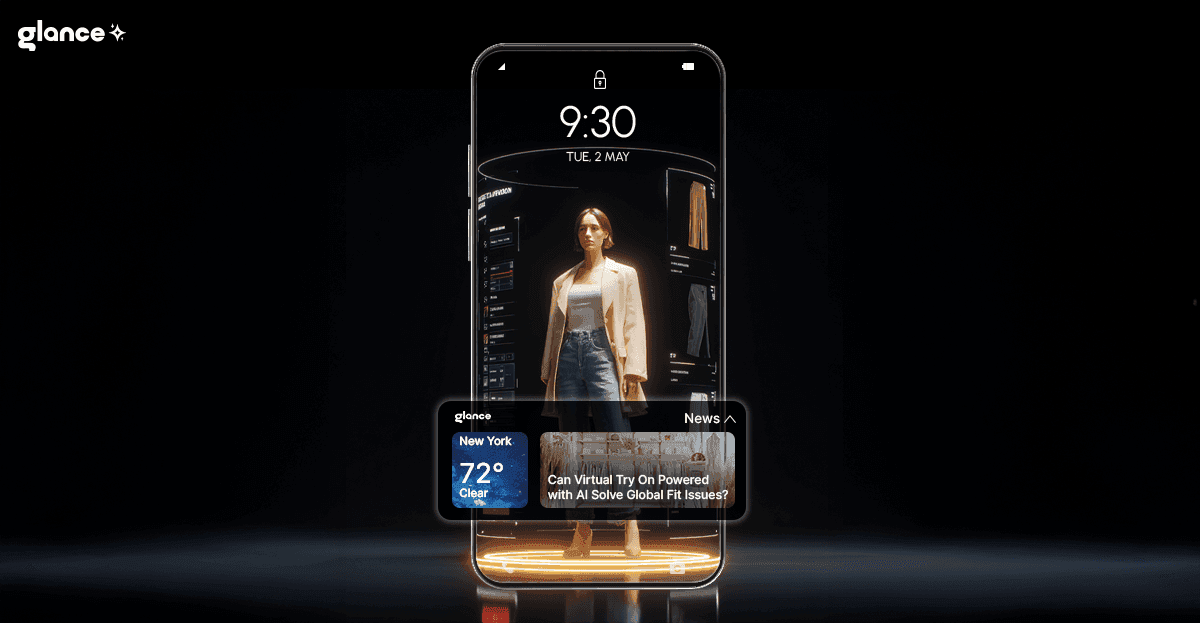
Can Virtual Try On Powered with AI Solve Global Fit Issues?
TL;DR
Virtual try-on powered with AI predicts how clothing from EU, UK, and US brands will fit your body using digital body mapping and garment data. By simulating fabric drape and adjusting for brand-specific sizing, it reduces guesswork in online shopping. Platforms like Glance combine AI-driven discovery with virtual try-on experiences to help users explore global fashion with greater confidence.
Yes. Virtual try on powered with AI can significantly reduce global sizing confusion by digitally mapping body proportions and predicting how garments from different regions will fit before you buy. Instead of relying on static size charts, shoppers can see a realistic preview of how clothing drapes and moves on their body.
International sizing systems vary widely. A European small might feel like a US medium, while a UK size 10 could fit tighter around the shoulders or waist depending on the brand. These differences make online shopping unpredictable, especially when exploring global fashion.
This is where virtual try on powered with AI changes the experience. By combining body scanning, garment data, and intelligent size conversion, AI can simulate how clothing from different brands and regions will actually fit. The result is a more confident and personalized shopping experience.
In this article, we explore how virtual try on powered with AI works, why it improves sizing accuracy, and how platforms like Glance are helping shoppers discover fashion with greater precision.
Why International Clothing Sizes Are Confusing for Online Shoppers
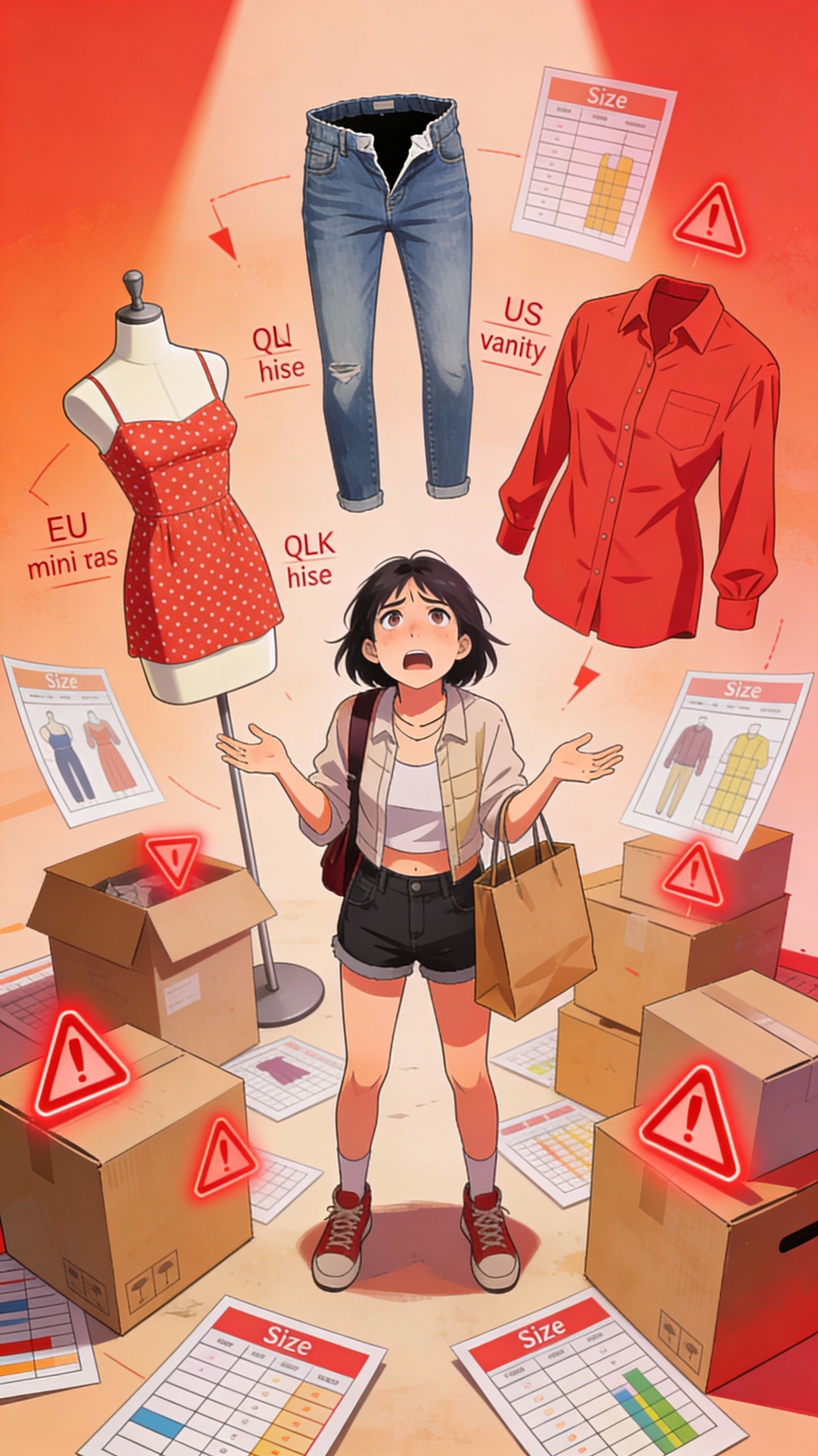
Global fashion is more accessible than ever, but international sizing differences remain a major obstacle for online shoppers. Each region uses its own measurement standards, manufacturing practices, and style cuts.
| Region | Sizing System | Common Issue |
| EU | Metric-based sizing | Often runs smaller than US sizes |
| UK | Numeric sizing | Narrow shoulders and higher waist cuts |
| US | Inch-based sizing | Frequent vanity sizing inconsistencies |
Even within the same country, brands may interpret sizes differently. A “medium” from one brand can feel completely different from another.
Because of these inconsistencies, many shoppers hesitate to buy international styles online. Virtual try-on powered with AI addresses this challenge by translating size charts into personalized fit predictions.
How Virtual Try On Powered with AI Predicts Accurate Clothing Fit
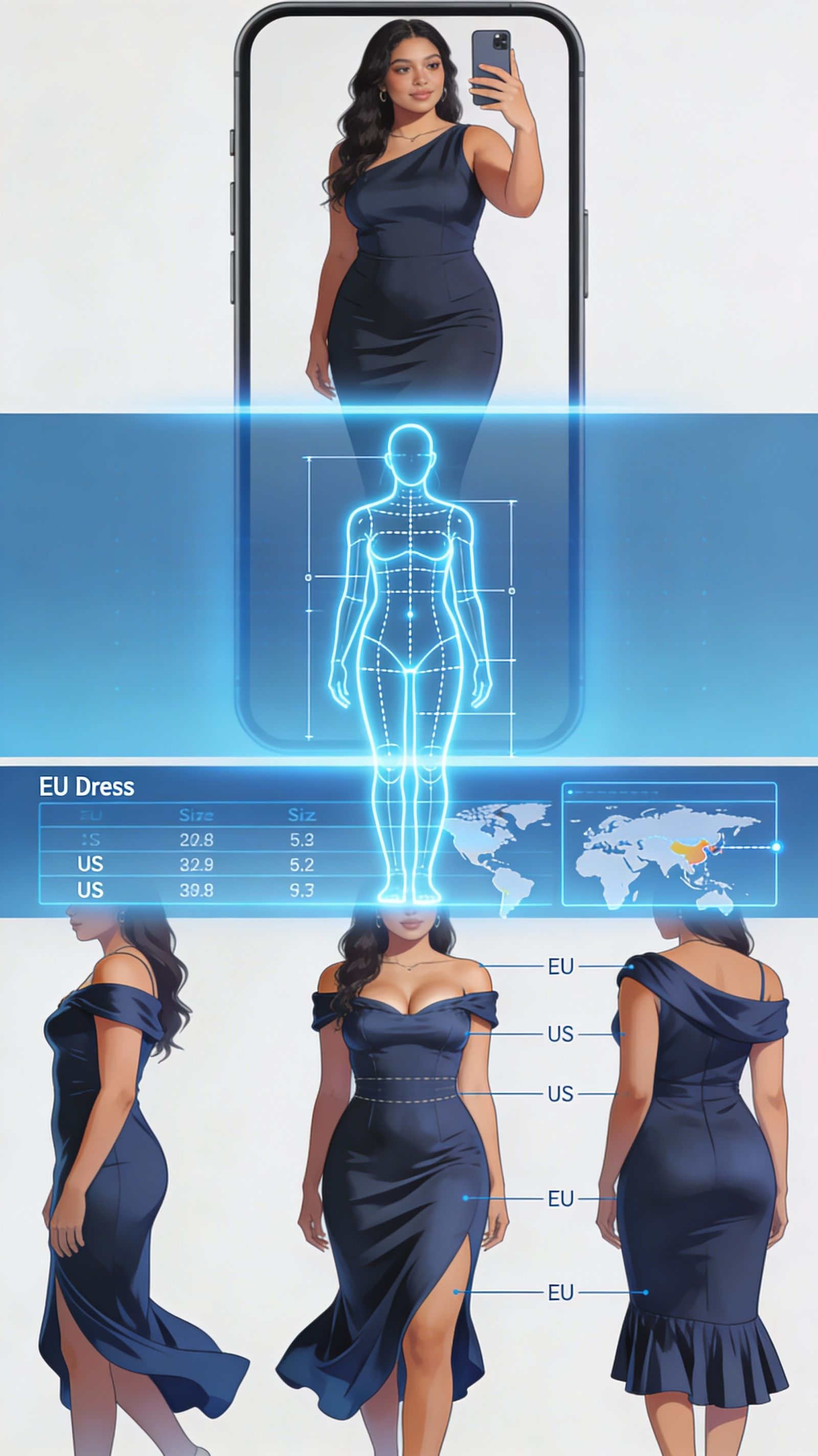
Modern AI fitting tools combine multiple technologies to simulate how garments will look and feel on a shopper’s body. Instead of guessing between sizes, shoppers can see a dynamic preview of the fit.
AI Body Mapping
Most virtual try-on systems begin by creating a digital body model. Using smartphone selfies or body scans, AI analyzes proportions such as shoulder width, waist size, posture, and height.
This process allows virtual try on powered with AI to build an accurate digital representation of a shopper’s silhouette.
Garment Data Analysis
Once the body model is created, the system reads detailed product specifications, including:
- fabric stretch
- garment measurements
- silhouette type
- cut and tailoring
By combining these details with body mapping data, virtual try on powered with AI predicts how a specific piece of clothing will interact with a shopper’s body.
International Size Conversion
One of the biggest advantages of virtual try-on technology is its ability to convert sizes across regions.
AI systems translate:
- EU metric measurements
- UK numeric sizing
- US inch-based standards
This allows virtual try on powered with AI to recommend the correct size even when shoppers are browsing international brands.
Realistic Fabric Simulation
Advanced AI models can simulate how fabrics behave when worn. This includes:
- how material stretches
- how it drapes on the body
- how it moves during motion
Instead of relying on static images, virtual try on powered with AI provides a more realistic preview of the garment.
Brands Doing This Right Now
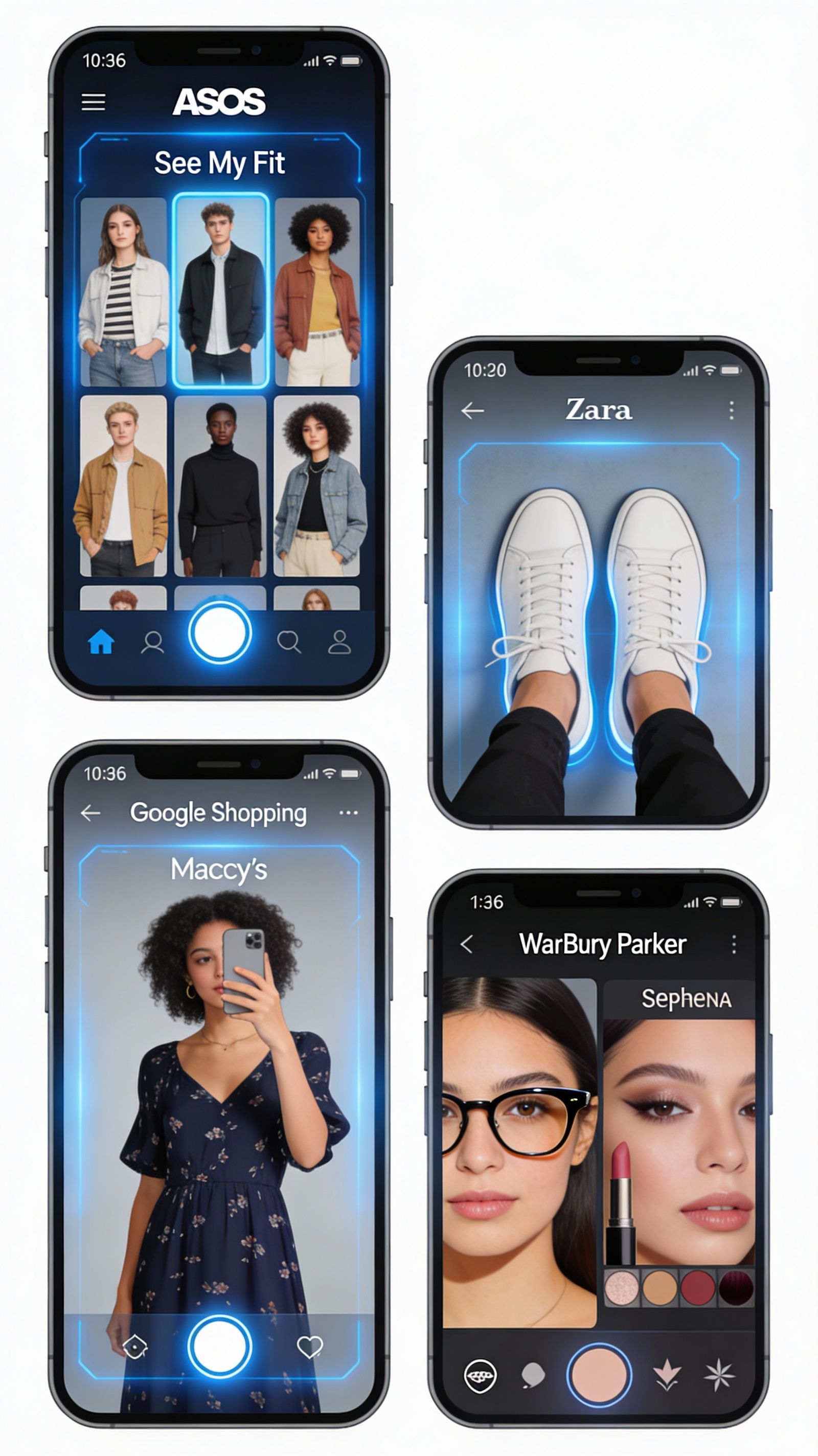
Virtual try on experiences are already improving online shopping confidence across fashion and beauty categories:
- ASOS: Offers the “See My Fit” tool to visualize size and fit on models, helping shoppers gauge how garments will drape.
- Warby Parker & Ray-Ban: Browser- and app-based VTO lets customers see eyewear on their own faces, ensuring proper frame selection.
- Sephora & MAC: AI-powered makeup try-ons provide realistic previews of shades and looks, enhancing purchase confidence.
- Google Shopping + Retailers (Macy’s, Kohl’s, Walmart, Nordstrom): Virtual try-on previews show apparel on diverse models, helping shoppers visualize fit before checkout.
- Shopify Stores: Many merchants integrate third-party VTO tools to enable virtual try ons without needing photoshoots.
While virtual try on powered with AI focuses on fit visualization, platforms like Glance enhances the experience by helping shoppers discover styles they’re most likely to try on. This technology not only improves user confidence but also helps platforms reduce unnecessary returns and increase conversion rates.
Benefits of Virtual Try On Powered with AI for Online Shoppers
The biggest advantage of virtual try-on technology is greater shopping confidence. Instead of guessing about fit, shoppers can make informed decisions.
Key benefits include:
• Improved sizing accuracy when shopping international brands
• Higher purchase confidence for premium items
• Reduced product returns due to better fit prediction
• More experimentation with bold styles
• Faster product discovery
According to a Forbes report, virtual try-on technology can increase online conversion rates by up to 30% while reducing product returns by around 20%.
For retailers, this technology not only improves customer satisfaction but also helps reduce logistics costs associated with returns.
Unlocking Borderless Fashion with AI
Virtual try on powered with AI is changing how US shoppers explore global fashion. Key market insights include:
- Rapid Growth: The VTO platform market is estimated at $2 billion in 2025.
- Strong Future Outlook: Projected CAGR of 25% from 2025 to 2033, reaching ~$10 billion by 2033.
- Growth Drivers:
- Increasing adoption of e-commerce
- Rising consumer demand for convenient, engaging online shopping experiences
- Enhanced confidence in international sizing through AI-powered fit previews
Platforms like Glance are leading this transformation with selfie-driven, AI-powered discovery. By predicting international fits accurately, Glance helps shoppers explore a global wardrobe confidently, reducing guesswork and enabling smarter fashion decisions through virtual try on powered with AI.
Conclusion
Global fashion has never been more accessible, but international sizing differences still create uncertainty for online shoppers. Virtual try on powered with AI helps bridge this gap by predicting how garments will fit before they are purchased.
Through body mapping, garment data analysis, and intelligent size conversion, AI-powered fitting tools allow shoppers to explore styles from different regions with greater confidence.
As digital fashion experiences continue to evolve, technologies like virtual try on powered with AI—combined with AI-driven discovery platforms such as Glance—are transforming how people discover, evaluate, and purchase clothing online.
FAQs related to Virtual Try On Powered with AI
1. What is virtual try-on powered with AI, and how does it handle international sizing?
Sizing-focused tools like Style.me and Virtusize compare your measurements directly against a garment's actual specifications, which is closer to what this technology does. Virtual try-on powered with AI, as used by platforms like Glance, goes further still: it converts EU, UK, and US sizing standards against your actual body proportions, so an imported brand's 'medium' gets translated into what that specific brand's sizing actually means for you — not just matched against a generic chart.
2. How accurate is virtual try-on for international or imported clothing brands specifically?
Accuracy depends on whether a platform has real sizing data, not just a visual model. Style.me and Virtusize both compare actual measurements rather than overlaying an image, which helps with fit but doesn't specifically solve for regional sizing differences between countries. Platforms built specifically around cross-border size conversion predict fit across shoulders, waist, hips, and length with more precision for imported brands, because that comparison is the core problem being solved, not an add-on.
3. Can sizing tools like Style.me or Virtusize predict my size across international brands?
Not directly for cross-border conversion specifically. Both compare your measurements against a specific garment's own listed specifications — genuinely useful, but they don't include built-in EU/UK/US size-conversion logic. AI systems purpose-built for international size conversion analyze measurement systems and brand-specific sizing patterns across regions directly, which is a more specialized version of the same underlying idea.
4. Does virtual try-on reduce returns caused specifically by international sizing mismatches?
Retailers report virtual try-on technology can meaningfully reduce fit-related returns overall, and measurement-matching tools like Style.me and Virtusize add real value here. But reducing returns caused by cross-border sizing specifically requires the regional size-conversion step itself — a shopper can confirm a garment matches its own listed measurements and still receive the wrong size once a brand's specific regional sizing is accounted for.
5. How does AI body mapping work when the garment is from an international or imported brand? Body mapping itself works the same way regardless of where a garment is from — it measures shoulders, chest, waist, and hips to build a digital model of the shopper. What changes for imported brands is the second step: matching that body model against brand-specific and region-specific sizing data, since a 'medium' means something different depending on which country and which brand made the garment.
6. Do virtual try-on apps work for international or imported clothing brands?
It depends heavily on which app, and what kind of tool it is. Visual overlay apps show you a garment on your photo but generally don't adjust for the fact that sizing standards differ by country and by brand. Measurement-matching tools like Style.me and Virtusize compare your body against a garment's actual listed specifications, which is more rigorous, but still doesn't include built-in cross-border size conversion by default. Platforms built around international sizing specifically read brand- and region-specific measurement data as a first step, before any visual is generated, which is a different and more specialized problem than either visual preview or single-garment measurement matching.
| App | Approach | Handles Cross-Border Sizing? | Notes |
| Style.me | Measurement matching (3D fitting room) | No | Compares your measurements to garment specs, not region-specific sizing |
| Virtusize | Measurement matching (2D silhouette overlay) | No | Compares a new item to one you already own; no regional conversion logic |
| Google Shopping (formerly Doppl) | Visual overlay | No | Doppl shut down April 30, 2026; folded into Google Shopping's try-on feature |
| Glance | Complete look, cross-border size conversion built in | Yes | Regional sizing is a core input, not an add-on |
Download the Glance app now






Your intelligent
shopping agent.







Your intelligent
shopping agent.