


The New Era of AI Fashion Fabric Color Decisions
TL;DR
Fashion is moving from manual styling to intelligent decision systems powered by agentic AI. Instead of simply suggesting outfits, AI Fashion Fabric Color Decisions now evaluates color psychology, fabric behavior, personal identity, and real-world context to make optimized fashion decisions. This shift enables adaptive styling where outfits are chosen based on outcomes like comfort, confidence, and situational relevance rather than aesthetics alone.
Fashion has always been a language of expression. But for decades, that language has been interpreted manually, through intuition, trend cycles, and fragmented advice. Color theory, fabric knowledge, seasonal styling, and personal preference were separate conversations.
That separation is now collapsing.
We are entering a new phase where agentic AI Fashion Fabric Color Decisions systems are not just recommending outfits but actively making fashion decisions by integrating color psychology, fabric behavior, context awareness, and personal identity into one continuous intelligence layer.
This is not a styling upgrade. It is a structural shift in how fashion decisions are made.
How Is AI Fashion Fabric Color Decision Changing Fashion from Recommendations to Real Decisions?
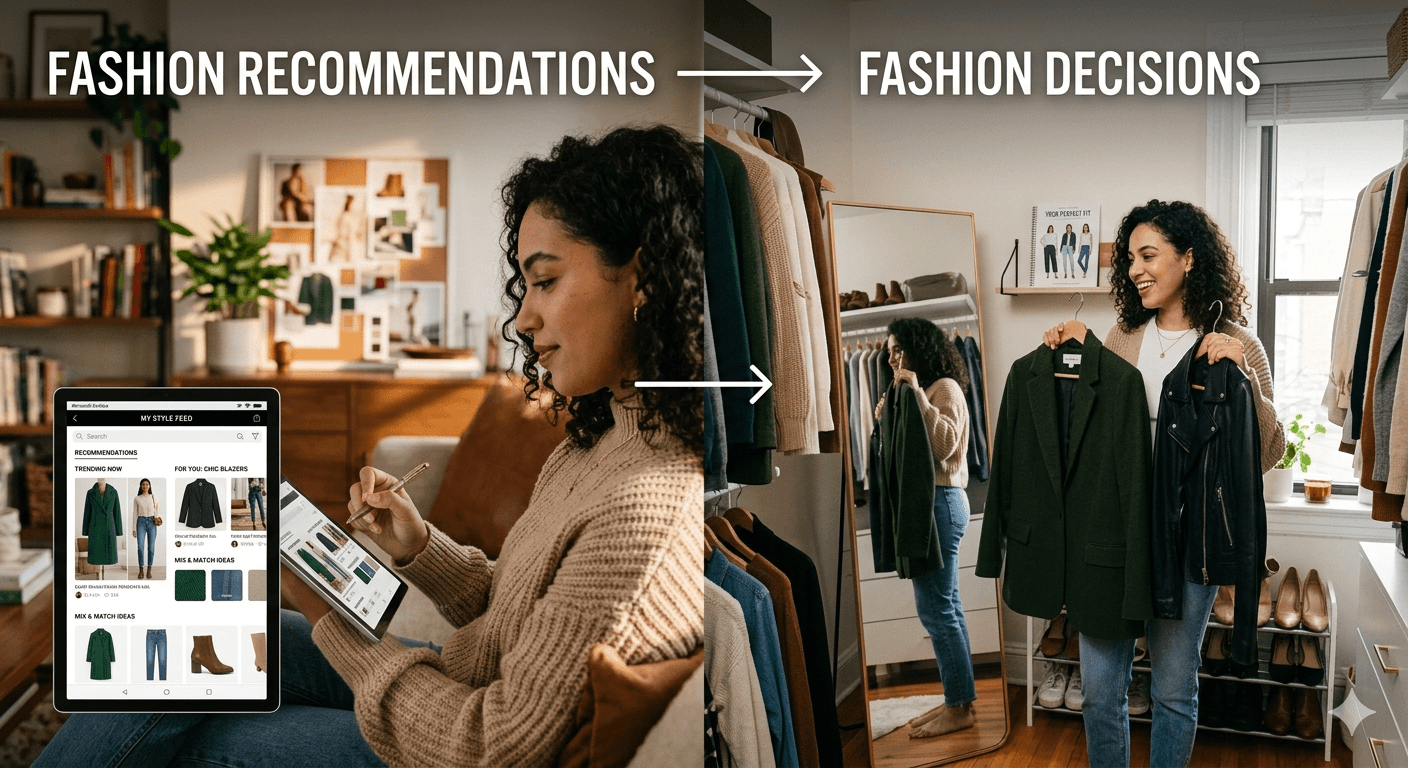
Traditional digital styling systems operate on a simple loop:
- User input → Recommendation engine → Outfit suggestion
This model is reactive. It waits for a prompt and returns a list.
But fashion decisions in real life are not static. They are situational, emotional, environmental, and often time constrained.
Agentic AI changes this entirely.
Instead of waiting for prompts, It operates like a decision-making system that understands intent, context, and outcome goals.
It does not ask:
“What would you like to wear?”
It interprets:
“What are you trying to achieve today, and what combination of fabric, color, and silhouette best supports that outcome?”
This shift is foundational. Fashion moves from inspiration to intent-driven execution.
What Is Agentic AI in Fashion and How Does It Actually Work?

Agentic AI refers to systems that can:
- Observe context continuously
- Interpret goals
- Make multi-step decisions
- Learn from outcomes
- Adapt behavior autonomously
In fashion, this means the AI does not just suggest outfits. It actively constructs styling decisions based on evolving conditions.
A true agentic fashion system can:
- Adjust outfit recommendations based on weather changes
- Modify fabric suggestions based on comfort feedback loops
- Evolve color palettes based on emotional patterns
- Anticipate wardrobe needs based on calendar events
- Learn personal identity preferences over time
It behaves less like a tool and more like a styling intelligence layer embedded into daily life.
The Three Pillars of AI Fashion Decision Making
To understand how AI Fashion Fabric Color Decisions is reshaping fashion, we must break the system into three foundational layers:
3.1 Color Intelligence Layer
3.2 Fabric Intelligence Layer
3.3 Context and Identity Layer
Each layer plays a distinct role, but the real transformation happens when they operate together.
How Does AI Decide Which Colors Work for You?
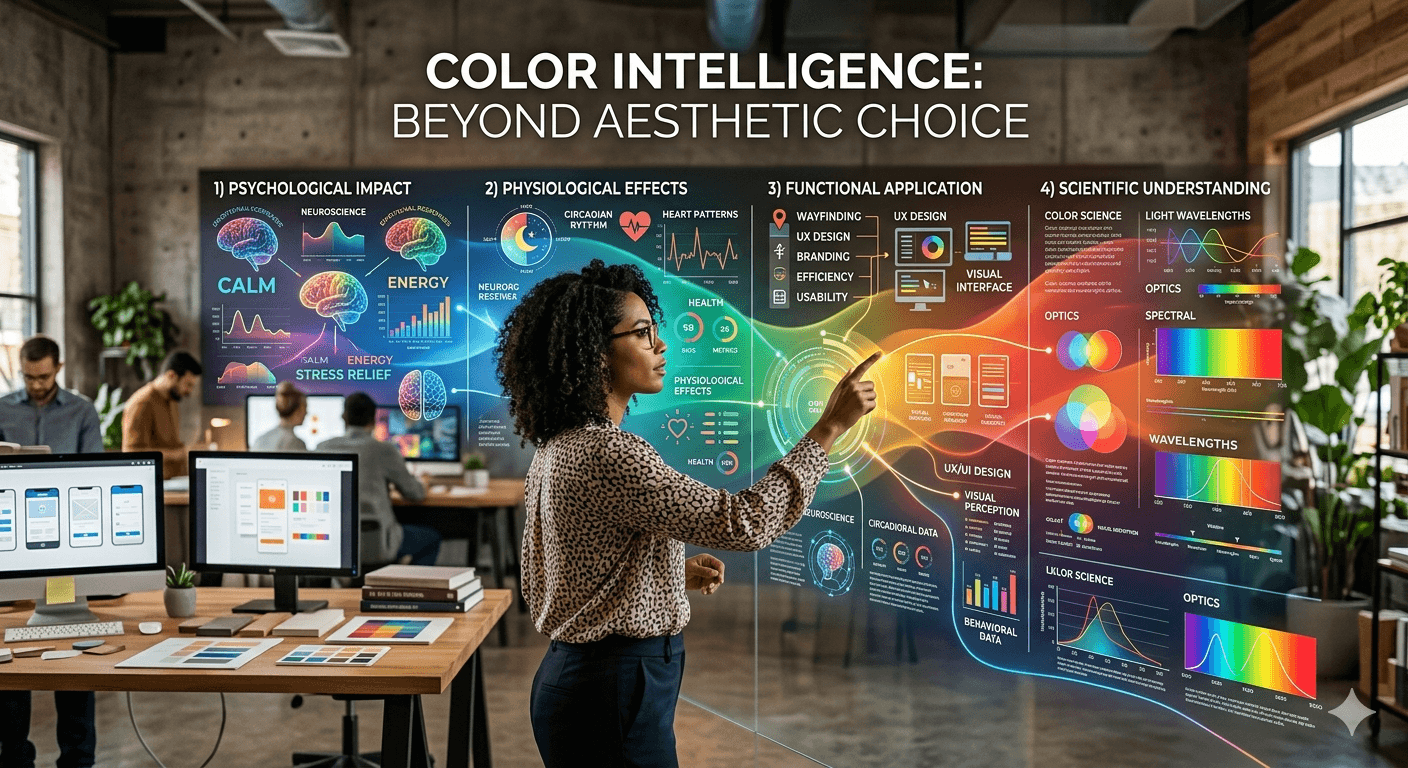
Color is the first signal in fashion perception. It defines emotional tone before silhouette or fabric is even noticed.
Agentic AI treats color not as decoration but as psychological input-output logic.
Emotional Mapping of Colors
Modern AI systems map colors to emotional and situational outcomes:
- Blue → trust, stability, calm authority
- Red → energy, dominance, attention
- Black → control, sophistication, power
- White → clarity, minimalism, freshness
- Green → balance, ease, natural alignment
But advanced systems go further.
They ask:
- What emotional state is the user currently in?
- What emotional impression is required in this situation?
- What color combination bridges the gap between the two?
This transforms color selection into intent alignment rather than aesthetic preference.
Color Contrast and Social Perception
Agentic AI also evaluates how colors interact in real environments:
- Lighting conditions (natural vs artificial)
- Social setting (formal vs casual)
- Cultural expectations
- Visual dominance in group environments
For example:
- In a boardroom, muted tones increase perceived authority consistency
- In creative environments, higher contrast improves visibility and recall
Color becomes a strategic communication tool, not just visual styling.
Why Does Fabric Matter as Much as Color in Outfit Decisions?
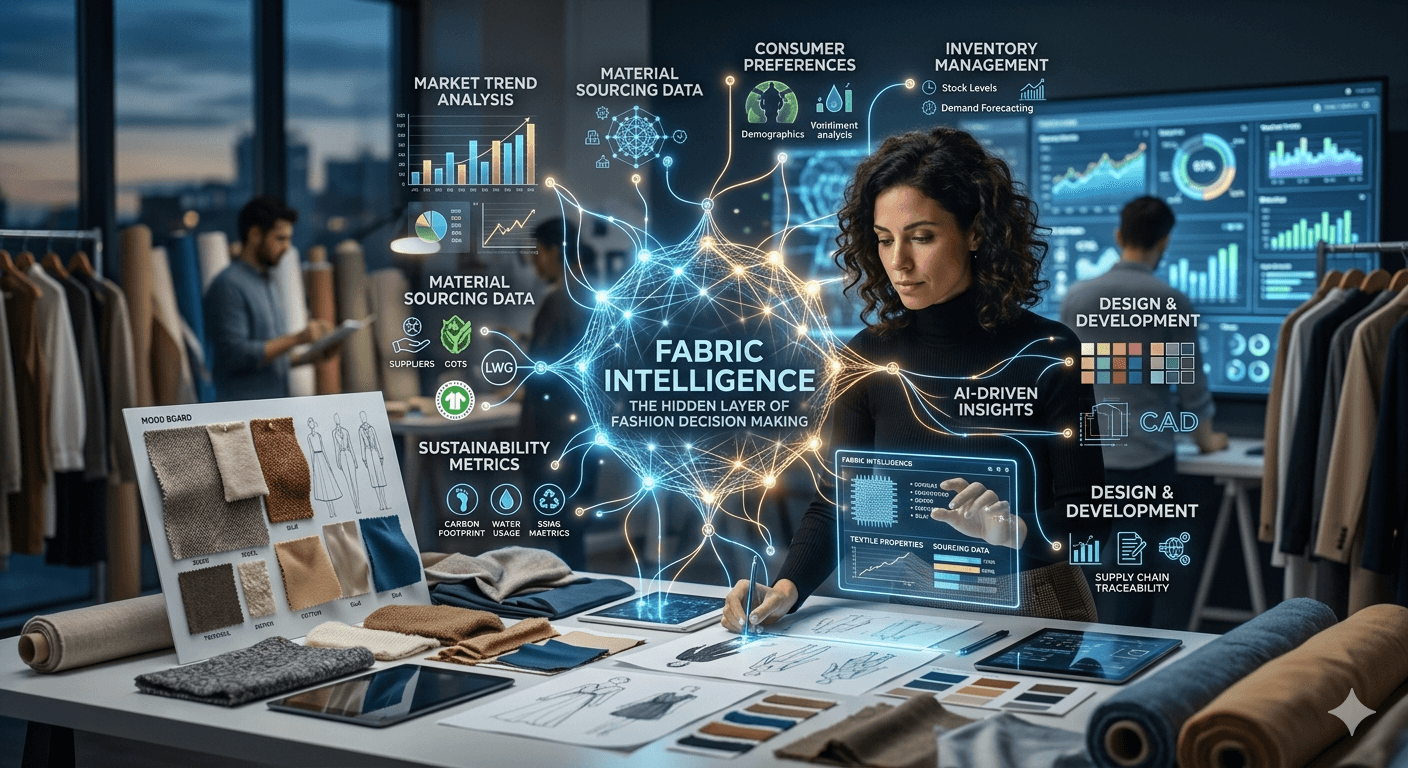
Fabric is often the most underestimated dimension in fashion intelligence. Yet it defines how color behaves, how comfort is experienced, and how a garment is perceived in motion.
Agentic AI treats fabric as a behavioral material system.
Fabric as a Functional Intelligence Input
Different fabrics behave differently:
- Cotton → breathable, casual, adaptive
- Linen → lightweight, seasonal, relaxed structure
- Silk → fluid, premium, high reflectivity
- Wool → structured, insulating, formal
- Denim → durable, casual authority
- Synthetic blends → performance-driven adaptability
AI evaluates:
- Climate compatibility
- Movement comfort
- Occasion alignment
- Visual texture impact
The Same Color, Different Meaning
One of the most powerful insights in fabric intelligence is this:
Color meaning changes entirely based on fabric behavior.
Example:
- Black in silk → luxury, elegance
- Black in cotton → minimal, casual
- Black in leather → bold, dominant
Agentic styling intelligence understands this distinction deeply and does not treat color as an isolated variable.
It evaluates color × fabric interaction as a unified expression system.
Did you know? Polyester is the most produced fiber globally at 59% of total output, while cotton remains the most popular everyday fabric for clothing and home textiles.
Fabric and Climate Intelligence
Advanced systems incorporate environmental data:
- Temperature fluctuations
- Humidity levels
- Indoor vs outdoor transitions
This allows AI to make decisions such as:
- Replacing structured fabrics with breathable ones in real time
- Adjusting layering suggestions dynamically
- Prioritizing comfort without compromising aesthetic intent
This is where fashion becomes adaptive rather than static.
How Does Context Change What You Should Wear?
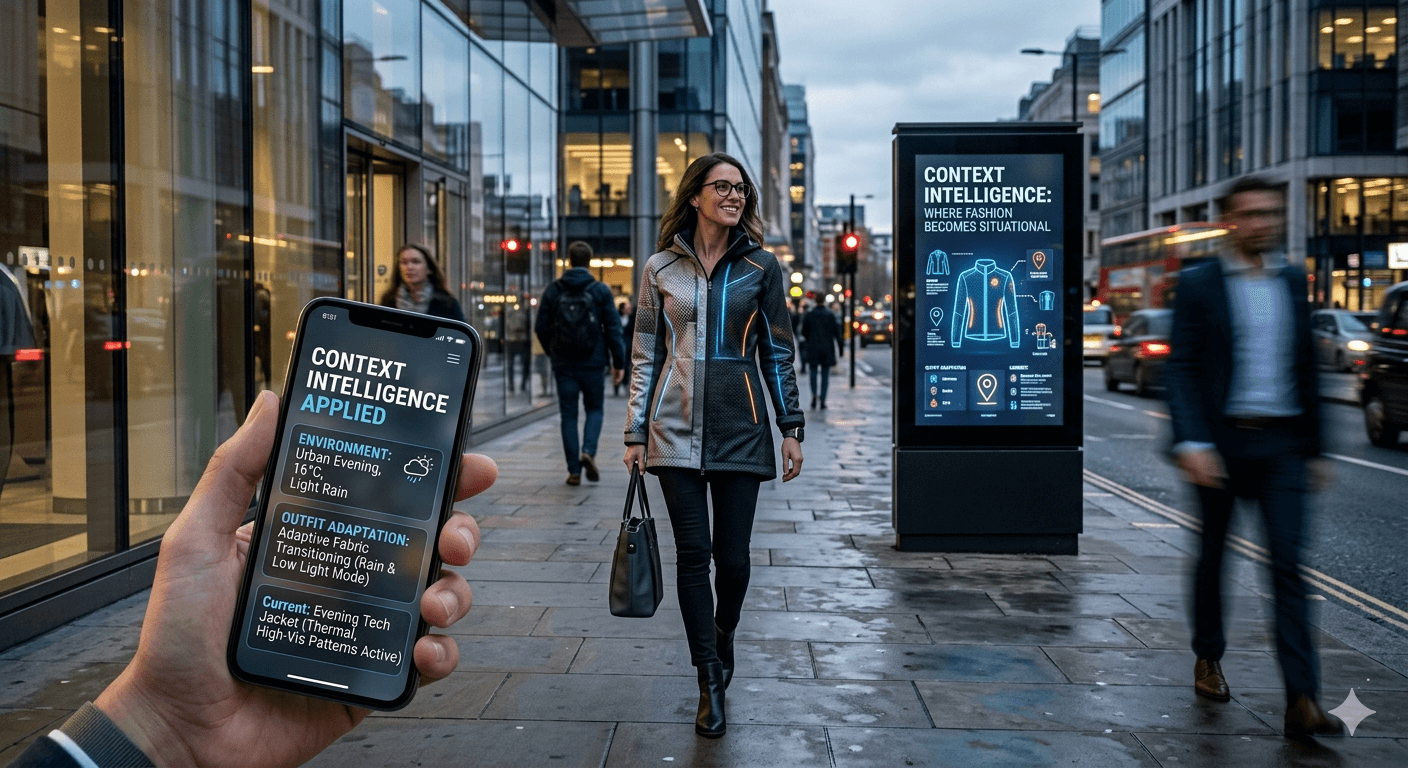
Context is what converts styling from theoretical knowledge into real-world applicability.
Agentic AI continuously processes:
- Calendar events
- Location type
- Time of day
- Social setting
- Activity type
- Weather conditions
Occasion-Based Decision Making
Instead of generic categories like “formal” or “casual,” AI interprets micro-contexts:
- First client meeting
- Creative brainstorming session
- Airport travel day
- Evening networking event
- High-pressure presentation
Each scenario requires different combinations of:
- Color intensity
- Fabric structure
- Comfort level
- Visual authority
Environmental Adaptation
Weather and environment directly influence fashion decisions:
- Hot climates → breathable fabrics, lighter tones
- Cold climates → layered textures, deeper shades
- Rainy conditions → material durability and practicality
Agentic AI integrates these signals continuously, not as static filters but as live decision variables.
Personal Identity Layer: The Core of Intelligent Fashion
The most advanced layer of agentic fashion AI is identity learning.
This is where the system stops being generic and becomes personal.
Style Memory Systems
AI builds a behavioral model of the user:
- Colors frequently worn
- Outfits associated with confidence
- Items avoided repeatedly
- Feedback signals (likes, saves, skips)
Over time, it constructs a personal style fingerprint.
Confidence-Based Optimization
A key evolution is emotional reinforcement:
Instead of only asking “What looks good?”
AI evaluates “What makes the user feel effective?”
For example:
- A user may look good in bold red but feel uncomfortable wearing it
- The system learns this mismatch and adjusts recommendations accordingly
This creates emotionally aligned styling intelligence.
Identity Consistency vs Exploration
Agentic AI balances two competing goals:
- Maintaining recognizable personal style
- Introducing controlled experimentation
This ensures evolution without identity loss.
How Does an AI System Actually Choose Your Outfit?
At the core of the AI-led outfit decision engine is a multi-variable decision engine.
It evaluates:
- Color psychology score
- Fabric performance score
- Context relevance score
- Identity alignment score
- Environmental compatibility score
Then it generates a ranked set of outfit decisions.
No suggestions.
Decisions.
For Example
User context:
- Morning meeting
- 24°C weather
- Professional environment
- User prefers neutral tones
AI output reasoning:
- Navy blue selected (trust + authority)
- Cotton blend chosen (comfort + structure balance)
- Minimal contrast styling applied
- Lightweight layering suggested
Final outcome:
A complete outfit optimized for perception, comfort, and identity alignment.
Implications for the Future of Fashion
This shift impacts multiple layers of the industry:
- Consumer Behavior
People stop browsing endlessly and start delegating decisions.
- Retail Systems
Shopping becomes predictive, not reactive.
- Design Philosophy
Designers start creating for adaptive AI interpretation, not just human aesthetics.
- Personal Branding
Individuals develop consistent visual identity patterns guided by AI systems.
The New Definition of Fashion Intelligence
Fashion intelligence is no longer about knowing what looks good.
It is about understanding:
- What works in context
- What aligns with identity
- What improves outcomes
- What adapts in real time
Agentic AI brings these elements together into a single decision framework. Glance, the intelligent shopping agent, understands how color shapes perception, mood, and confidence, helping you move beyond trends to choices that truly fit your intent.
By combining color intelligence with personal context, Glance ensures every selection feels deliberate, expressive, and aligned with how you want to show up in the moment.
Conclusion
The integration of agentic AI into fashion fabric and color decisions marks a fundamental transition.
Fashion is no longer a manual act of selection. It is becoming a continuous decision system that blends psychology, material science, environmental awareness, and identity modeling.
Color is no longer visual.
Fabric is no longer material.
Style is no longer static.
Together, they form a living intelligence system that understands context and acts on it.
The future of fashion is not about what you wear.
It is about what your wardrobe understands about you with the help of context-aware styling system.
FAQs Related to AI Fashion Fabric Color Decision
1. What is AI Fashion Fabric Color Decision technology?
AI Fashion Fabric Color Decision technology refers to intelligent systems that analyze color psychology, fabric behavior, and contextual factors like weather, occasion, and personal style to recommend or autonomously decide outfits. Unlike traditional styling tools, agentic AI evaluates multiple variables together to optimize not just appearance but also comfort, confidence, and situational relevance. This technology is increasingly used in global fashion platforms across the US, Europe, and Asia to personalize wardrobe decisions at scale.
2. How does AI decide which fabric and color to wear in different climates?
AI systems use real time climate data combined with fabric intelligence models to determine suitable outfit combinations. For example, in humid regions like Mumbai or Singapore, the system prioritizes breathable fabrics such as cotton and linen with lighter color palettes to improve comfort. In colder regions like New York or London during winter, AI may recommend structured fabrics like wool paired with deeper tones for warmth and visual balance. This adaptive decision making ensures outfits are both functional and stylistically aligned with the environment.
3. Can AI help choose fashion colors based on personal style in cities like New York or London?
Yes, advanced AI styling systems can personalize color choices based on individual style behavior and location based fashion trends. In style driven cities like New York, AI may suggest bold contrasts or monochrome minimalism depending on professional or social context. In London, where classic and layered styling is more common, the system may lean toward muted tones, structured palettes, and fabric depth. The AI continuously learns from user preferences to refine recommendations over time.
4. How does fabric choice impact AI generated fashion recommendations?
Fabric plays a critical role in AI based fashion decisions because it directly affects comfort, silhouette, and perceived formality. For example, silk may be recommended for evening events in Dubai due to its premium visual finish, while cotton blends may be preferred in Los Angeles for casual daily wear. Agentic AI evaluates how each fabric interacts with color, lighting, and movement to ensure the outfit aligns with both environmental and emotional context.
5. Is AI fashion styling useful for everyday wardrobe decisions in global cities?
Yes, AI fashion styling is particularly useful in fast paced global cities such as Tokyo, London, New York, and Dubai where daily schedules require quick yet appropriate outfit decisions. Agentic AI helps users automate wardrobe choices by analyzing calendar events, weather conditions, and personal preferences. This reduces decision fatigue while ensuring outfits remain context appropriate, comfortable, and visually consistent with individual style identity.
Download the Glance app now





Your intelligent
shopping agent.







Your intelligent
shopping agent.