


How AI Driven Ecommerce Personalization Moves Forward
TL;DR
AI driven ecommerce personalization is replacing outdated cookie-based recommendations with real-time behavioral intelligence. This article breaks down how U.S. ecommerce is shifting from what you clicked last month to what your micro-behaviors signal in the moment and how Glance enhances the shopping experience by translating those signals into instantly curated discovery moments.
Shopping online used to feel predictable: scroll, filter, click, repeat. But somewhere along the way, shoppers, especially Gen Z stopped behaving in ways algorithms could neatly categorize. Their taste shifts faster, their moods flip quicker, and their decisions happen in micro-seconds, not long browsing histories.
Yet most ecommerce systems still treat people like they shop in slow motion. That’s why AI driven ecommerce personalization is rewriting the rules. Instead of asking, “What did you buy last year?” it asks, “What is your behavior telling me right now?”
And this is exactly where Glance enters, not as an ecommerce platform or seller, but as an AI layer that interprets human shopping signals and presents curated outfit or product suggestions that users can choose to explore on the retailer’s site.
The Old Personalization Formula Was Built on Cookies
For more than a decade, ecommerce personalization ran on a predictable formula:
- “People who bought this also bought…”
- “Recommended for you based on past purchases…”
- Browsing history and cookie tracking
- Static categories and generic customer segments
But here’s the catch: Gen Z shoppers don’t shop in predictable patterns anymore.
Their taste evolves fast, their mood shifts daily, and they don’t rely on long shopping histories to make decisions.
In fact, recent studies show that Gen Z consumers respond especially well to AI-driven personalization that feels intelligent and adaptive: personalized product recommendations and AI-enabled virtual try-ons significantly influence their satisfaction and purchase decisions.
That’s why AI driven ecommerce personalization is stepping in—not to track your past, but to read your present.
Cookies explain where you’ve been.
AI explains where you’re going.
And Glance fits into this shift by reshaping the shopping experience, not by selling products, but by helping users discover them more intuitively before being redirected to the brand or retailer that actually sells them.
Why Old-School Personalization Couldn't Keep Up
Traditional personalization systems were built on:
- third-party cookies
- past purchases
- inflated assumptions
- demographic targeting
But these approaches stopped working when shoppers—especially Gen Z—began behaving in micro-moments rather than in long-term patterns.
According to McKinsey’s 2025 ‘Next-Best Experience’ analysis, AI-powered customer-experience engines can raise customer satisfaction by 15–20%, increase revenue by 5–8%, and cut cost-to-serve by 20–30%.
That’s because real-time behavior—not categories—reveals intent.
Cookies might know you bought sneakers last month.
They don’t know you’re suddenly obsessed with structured jackets this week.
Behavior Is the New Signal: What AI Reads That Cookies Can’t

AI driven ecommerce personalization doesn’t care about what you clicked in 2022.
It pays attention to what you do right now:
Micro-Signals AI Reads
Behavioral Signal | What It Reveals |
Dwell time | Curiosity level or emotional pull |
Scroll rhythm | Browsing speed = browsing mood |
Product sequencing | The “story” you're building subconsciously |
Time of day | Daytime practicality vs. late-night exploration |
Return visits | Emerging preferences |
These signals form what legacy systems could never achieve:
Behavior-based personalization that adapts instantly.
Which is exactly how Glance builds its AI Twin—an evolving representation of your style and shopping instincts.
Generative AI Isn’t Just Creating Content; It’s Rewriting Personalization
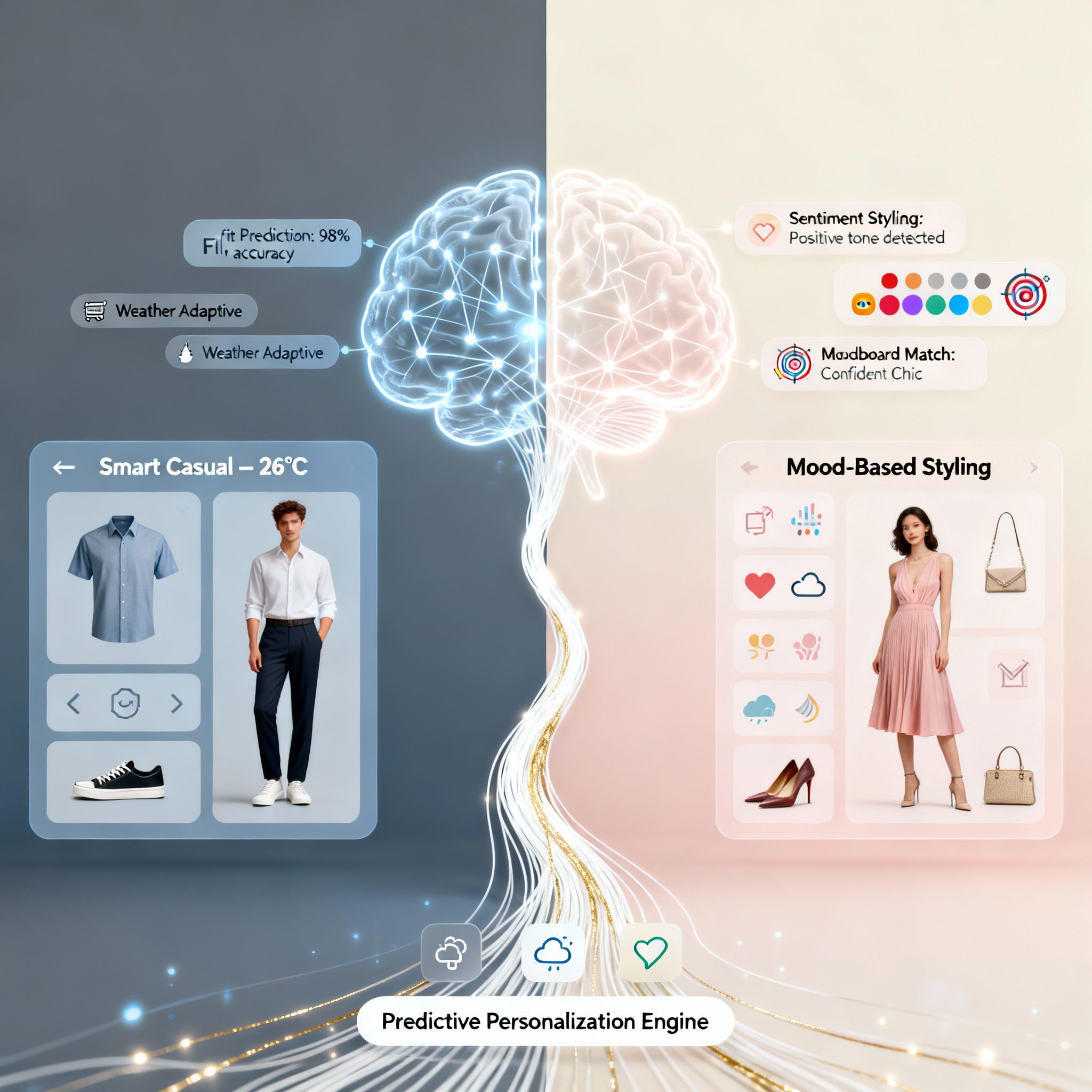
Most people associate generative ai in ecommerce with product images or chatbots.
But behind the scenes, it’s powering deeper intelligence.
Adobe’s 2025 report found that Generative AI-powered shopping rises with traffic to U.S. retail sites up 4,700%, driven by faster, more relevant discovery flows.
This is where the shift happens:
- Old personalization = “Here are 20 items you might like.”
- New personalization = “Here is the one item aligned with your mood, timing, and micro-behaviors.”
Glance extends this shift by removing the need for active search allowing users to discover styles and products through an intuitive, AI-led preview before being directed to the original seller.
And because it understands behavior, not browsing history, it also supports AI fashion discovery in a way traditional engines simply can’t.
Did You Know?!
In the 1990s, U.S. retailers believed “recency, frequency, monetary value” (RFM) models were the gold standard of personalization. They predicted your future purchases based on how often and how recently you shopped. Today, that model would completely misread a Gen Z shopper who might buy nothing for a month and then purchase five items in one impulse-driven micro-trend.
This is why modern systems must read moment-by-moment intent, not outdated patterns.
How Glance Transforms Ecommerce Personalization
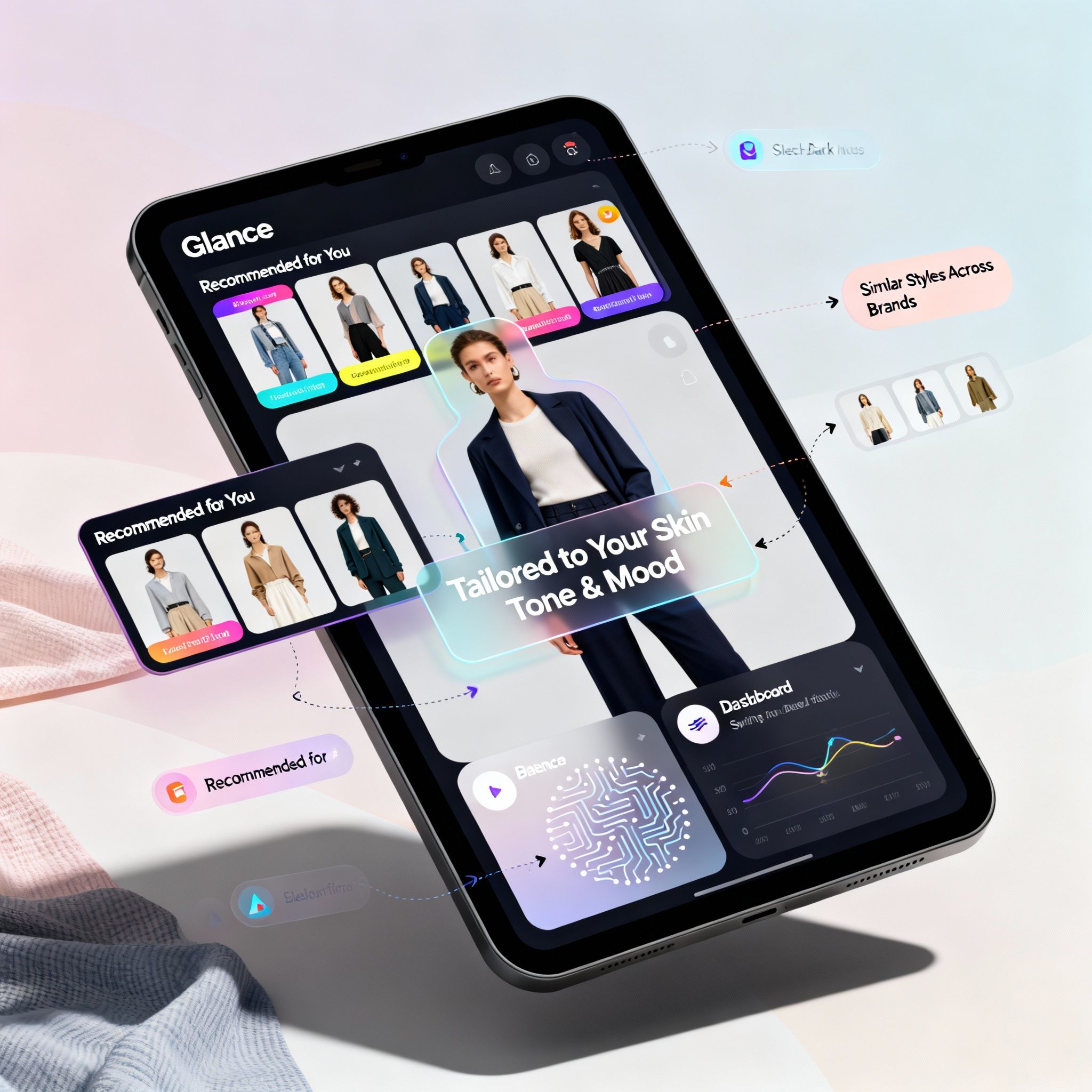
Glance isn’t reading cookies.
It’s reading you.
Not your history—your signals.
What Glance Learns
- your vibe
- your energy level
- your browsing rhythm
- your texture/color leanings
- the “stories” you assemble subconsciously
- your timing (morning clarity vs. nighttime imagination)
This is a fully behavioral model, one that aligns with modern AI in Ecommerce principles and goes far beyond trend-based suggestions.
And instead of acting as a storefront, Glance enhances the shopping experience by generating AI-driven outfit or product previews and then guiding users to the retailer when you tap “shop now.”
If you’re curious about how these behaviors intersect with voice-enabled shopping cues, explore AI Voice Commerce.
And for broader ecosystem insights, see our guide to ai in ecommerce.
Why Cookies Failed—and AI Wins
- Cookies show what you clicked. AI shows what you meant.
- Cookies create segments. AI creates individuals.
- Cookies chase history. AI follows real-time signals.
- Cookies miss mood. AI adapts to it.
- Cookies predict based on averages. AI predicts based on you.
- Cookies force search. AI removes search altogether—made possible by ai powered search
The Gen Z Factor: Why This Shift Became Necessary
U.S. Gen Z shoppers expect:
- instant alignment
- intuitive discovery
- identity-aware recommendations
- adaptive systems
- zero friction
According to a recent retail-search industry report, 53% of U.S. consumers say they abandon their shopping session when a site’s search fails to surface the item they were seeking.
This behavior makes traditional search-dependent ecommerce feel outdated.
AI driven ecommerce personalization solves this by turning your micro-actions into real-time clarity.
And Glance supports this shift by smoothing the discovery journey—helping shoppers preview options instantly, before transitioning them to the original seller's platform.
Conclusion
Cookies built the first version of online personalization.
But AI driven ecommerce personalization is building the future—one that listens, interprets, and adapts instantly.
And Glance leads this evolution by replacing static assumptions with dynamic behavioral intelligence.
It doesn’t track where you’ve been.
It predicts where your style is going.
This is the next chapter of AI in Ecommerce, a world beyond history, beyond segments, beyond search.
A world designed for how Gen Z truly shops.
FAQs
1. What makes AI driven ecommerce personalization different from old personalization?
It uses real-time behavioral signals instead of cookies or past browsing history. This makes recommendations more accurate, more adaptive, and more aligned with Gen Z shopping patterns.
2. Does Glance track my personal data?
No. Glance uses anonymized micro-signals scroll rhythm, dwell time, sequence patterns to understand taste. No invasive personal data or third-party cookies are required.
3. How does AI benefit fashion shoppers specifically?
AI behavior modeling enhances AI fashion discovery by matching styles to mood, timing, and emerging preferences not just static categories or body types.
4. What role does generative AI play in ecommerce?
Brands use generative ai in ecommerce for customer understanding, content personalization, and predictive modeling creating smoother, more accurate discovery experiences.
5. Will AI replace search entirely?
Not everywhere, but platforms like Glance are proving that search can be optional. By enabling users to discover curated styles or ideas first and then directing them to the retailer, Glance shows how discovery can become a seamless layer on top of traditional ecommerce.
Download the Glance app now





Your intelligent
shopping agent.







Your intelligent
shopping agent.