


6 Problems a Capsule Wardrobe Color Palette Generator Solves
TL;DR
Most wardrobe frustration isn’t about having too few clothes—it’s about solving the same color problems every day. This article breaks down six real problems a capsule wardrobe color palette generator solves, from decision fatigue to packing stress, and explains why U.S. Gen Z professionals are adopting palette-first wardrobes to dress with less effort and more confidence.
When Your Closet Has Clothes—but Still Doesn’t Work
You’re not out of clothes.
You’re out of combinations.
For many U.S. Gen Z professionals, the daily struggle isn’t what to wear—it’s why nothing seems to work together. Tops clash with pants. Jackets feel “off.” Half the closet stays untouched.
This is why capsule wardrobes sound appealing—but often fail in practice.
Not because people dislike minimalism.
Because color decisions are harder than outfit decisions.
A capsule wardrobe color palette generator exists to solve that exact issue—not by limiting choice, but by removing the color-related problems that quietly sabotage wardrobes.
Instead of asking, “What should I wear?”
It solves, “Why does nothing match?”
The Real Issue: Color Is the Bottleneck
People often think capsule wardrobes fail because they feel “boring” or “restrictive.” In reality, most fail because of color inconsistency.
You buy:
- a jacket in the wrong undertone
- pants that don’t match your tops
- statement pieces that only work once
Over time, your wardrobe becomes visually disconnected.
Research on choice overload including work reviewed in the Journal of Consumer Psychology shows that having too many similar options can impair decision quality and cause cognitive strain, making decisions harder and less satisfying.
This is why a capsule wardrobe color palette generator matters. It doesn’t tell you what to wear—it tells you what works together, repeatedly.
6 Problems a Capsule Wardrobe Color Palette Generator Solves
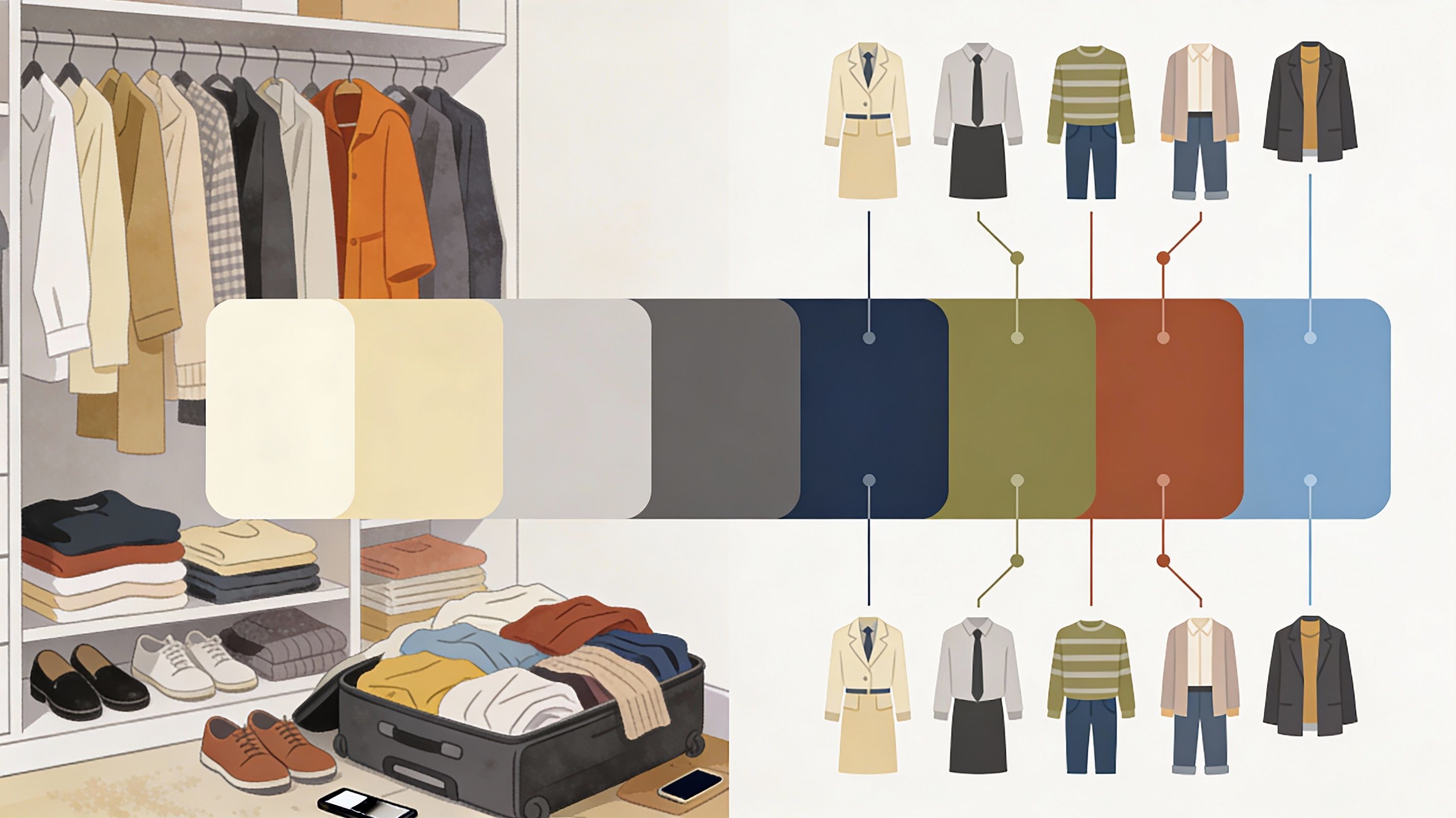
This is where the shift happens.
A capsule wardrobe color palette generator doesn’t style you.
It removes friction.
Below are the six most common wardrobe problems it addresses—directly and practically.
1. “Nothing Matches” Syndrome
You own plenty of pieces, but they don’t combine naturally.
A capsule wardrobe color palette generator fixes this by:
- anchoring your wardrobe with compatible neutrals
- limiting accent colors to tones that repeat easily
- preventing random additions that clash later
The result: outfits form faster because colors already agree.
2. Overbuying “Neutrals” That Aren’t Neutral
Not all blacks, beiges, or grays belong together.
Without a system, people keep buying near-identical shades that don’t actually pair well—creating subtle mismatch frustration.
A palette generator clarifies:
- which neutrals truly anchor your wardrobe
- which shades to stop buying
- where contrast helps instead of hurts
This reduces duplicate purchases and visual confusion.
3. One-Wear Statement Pieces
Impulse colors feel exciting—but often live lonely lives in the closet.
A capsule wardrobe color palette generator reframes accent colors:
- chosen intentionally
- designed to repeat across outfits
- balanced against core tones
This turns “statement” items into workhorse pieces, not regret buys.
4. Packing Stress (Especially for Travel)
Packing shouldn’t feel like a strategy game.
For a travel capsule wardrobe, color harmony matters more than quantity.
When every piece shares a palette:
- fewer items create more outfits
- packing becomes faster
- outfit anxiety disappears on the road
This is one of the most practical benefits of palette-first wardrobes.
5. Seasonal Confusion
Many people rebuild wardrobes every season—unnecessarily.
A capsule wardrobe color palette generator creates a base that:
- adapts to layers and textures
- supports a summer capsule wardrobe without rethinking color logic
- makes festival dressing easier when colors already align (capsule wardrobe festival moments benefit most)
Only silhouettes change.
The palette stays stable.
6. Visual Burnout & Decision Fatigue
Too many colors = mental fatigue.
Simplifying color choices:
- speeds up mornings
- reduces emotional friction
- makes dressing feel calmer
Research on wardrobe behavior consistently shows that fewer, intentional options reduce stress and increase wear frequency.
This is why palette structure often feels like relief, not restriction.
Life Before vs After a Capsule Wardrobe Color Palette Generator
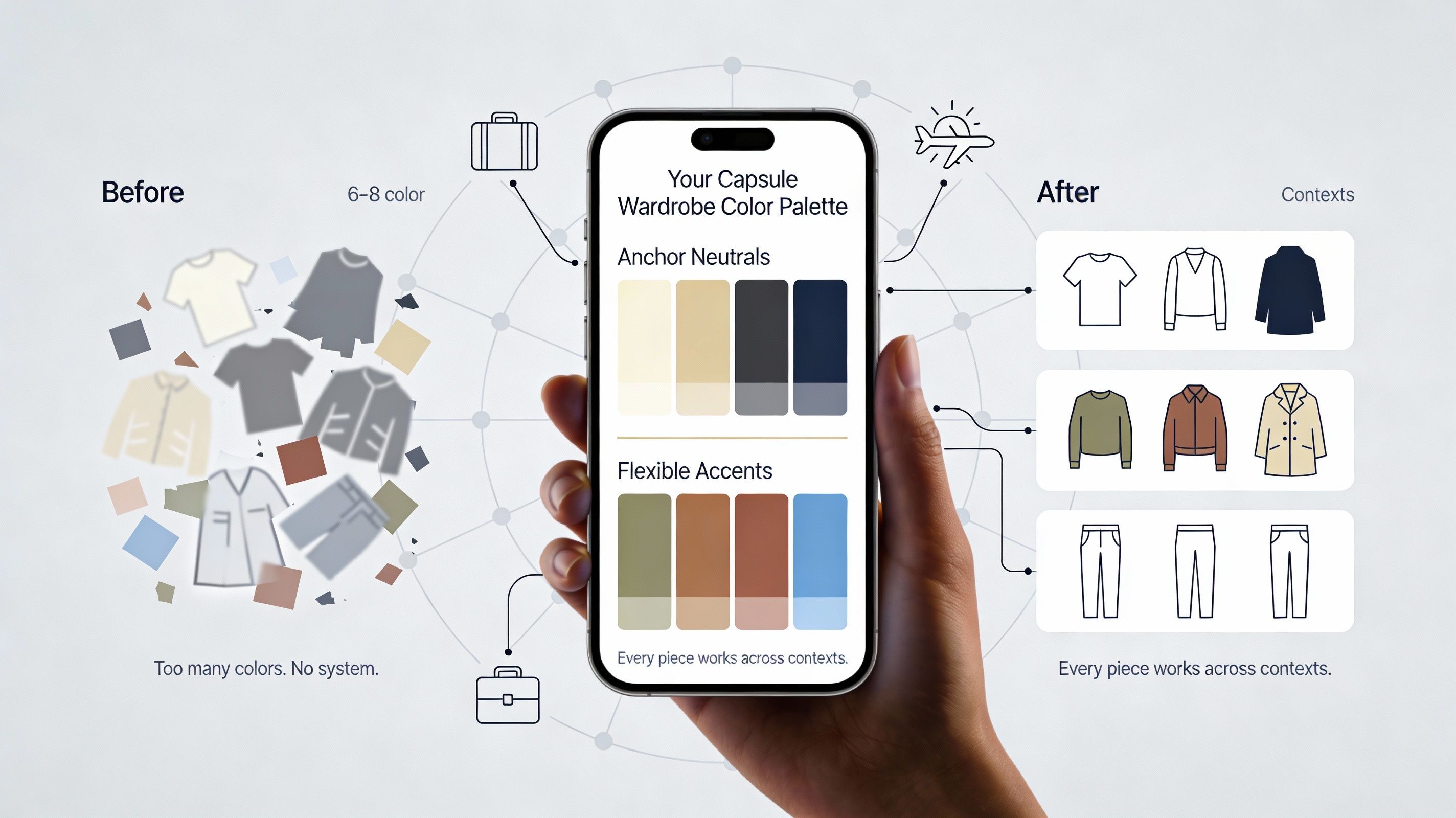
Without a Palette | With a Palette Generator |
Clothes don’t mix | Everything pairs easily |
Too many colors | Controlled, repeatable tones |
Decision fatigue | Faster outfit choices |
Impulse buys | Intentional purchases |
Closet clutter | Functional minimalism |
This is why the capsule wardrobe color palette generator has become a quiet favorite among people embracing Capsule Wardrobe thinking.
Capsule Wardrobes Aren’t Minimal—They’re Intentional
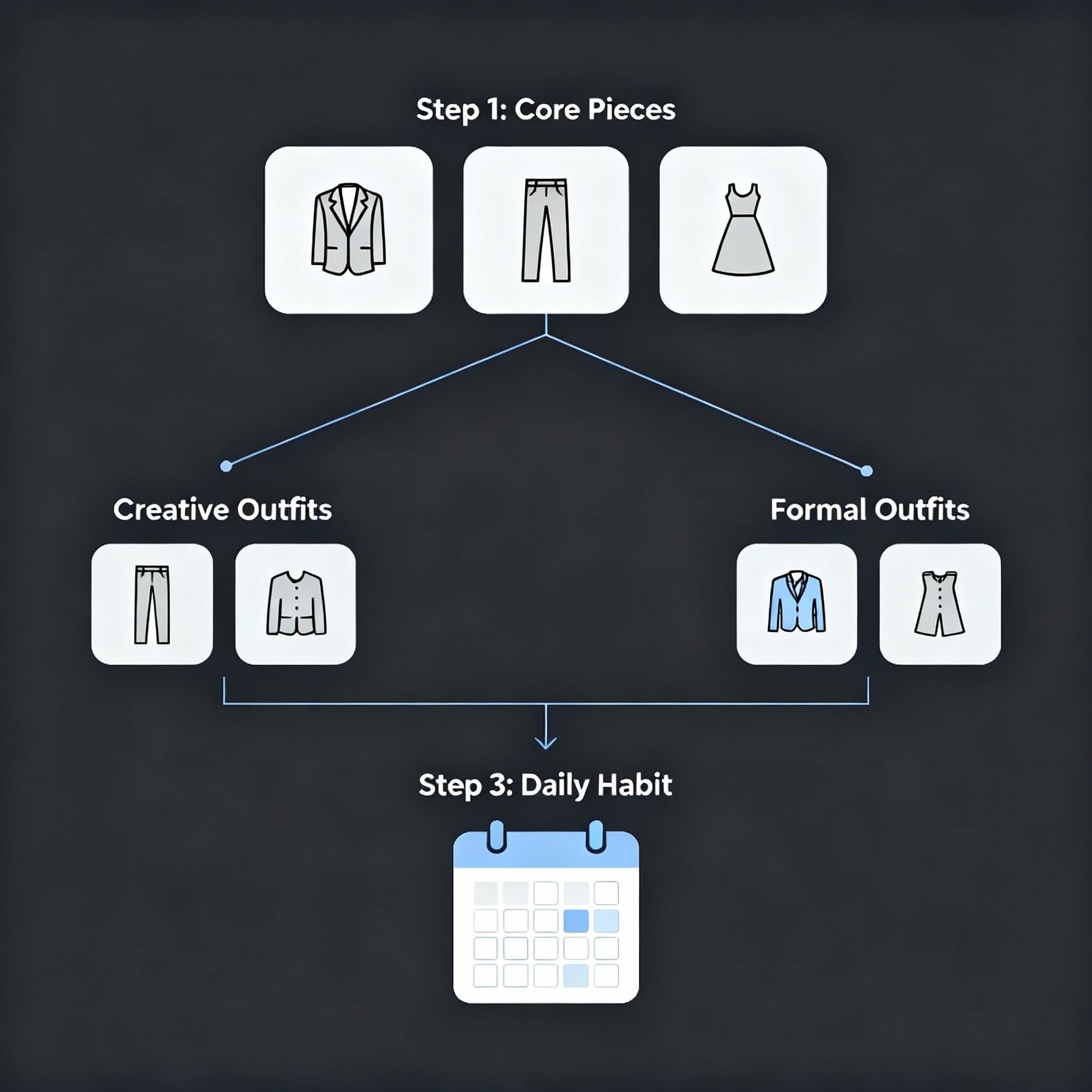
Capsule Wardrobe systems aren’t about owning less.
They’re about owning smarter.
This is where Minimalist Fashion is often misunderstood.
It’s not aesthetic minimalism—it’s decision minimalism.
A capsule wardrobe color palette generator supports this by:
- increasing wear frequency
- reducing emotional second-guessing
- lowering unnecessary purchases
Why This Resonates with Gen Z Professionals
According to McKinsey’s State of Fashion 2024, Gen Z consumers prioritize authenticity and personal alignment over rigid fashion rules.
Palette-first systems work because they:
- simplify without dictating
- support identity instead of trends
- reduce effort without reducing choice
That’s why adoption is growing quietly—not loudly.
How Glance Fits—Without Overstepping
Glance does not act as a rule-based palette generator.
Instead, it supports discovery by learning how users respond to:
- colors they linger on
- combinations they revisit
- tones they consistently skip
This behavior-aware layer complements a capsule wardrobe color palette generator by helping palettes feel adaptive—not rigid.
It guides without prescribing.
Conclusion: Color Is the Shortcut to a Smarter Wardrobe
Most wardrobe frustration isn’t about trends, size, or style identity. It’s about color confusion.
A capsule wardrobe color palette generator removes that confusion by creating harmony, repeatability, and ease. For U.S. Gen Z professionals navigating busy lives, that simplicity is powerful.
You don’t need more clothes.
You need fewer colors that work better together.
FAQs
1. What makes a capsule wardrobe color palette generator different from style advice?
A capsule wardrobe color palette generator focuses on repeatable color harmony, reducing outfit friction and decision fatigue instead of suggesting one-time outfit combinations.
2. Is a capsule wardrobe limiting for personal style?
No. Research on wardrobe behavior shows cohesive color systems increase outfit combinations and wear frequency, making personal style easier to express consistently.
3. Can a capsule wardrobe color palette work for both work and casual wear?
Yes. A unified color palette allows the same garments to transition across professional, casual, and social settings through simple layering and styling adjustments.
4. How often should a capsule wardrobe color palette change?
A color palette should evolve only with lifestyle or identity shifts, not seasonal trends, ensuring long-term wardrobe stability and reduced unnecessary consumption.
5. Is a capsule wardrobe color palette generator useful for beginners?
Yes. Color-based systems are the most accessible entry point into capsule wardrobes, requiring less fashion knowledge than silhouette or trend-based styling.
Download the Glance app now





Your intelligent
shopping agent.







Your intelligent
shopping agent.