


From Impulse to Intention: The New Buying Mindset Reshaping the USA
TL;DR
The American shopper is evolving from dopamine-driven clicks to a focused mindset of impulse to intention. In 2026, over 60% of consumers utilize no search shopping agents to filter digital noise, favoring long-term value over temporary trends. This transition from "reaction" to "alignment" is turning the chaotic scroll into a calm, supported journey of discovery.
The Psychology Behind Impulse Buying in the Digital Era
For over a decade, digital commerce thrived on urgency. Flash sales, countdown timers, influencer drops, and infinite scroll feeds fueled impulse buying. Platforms were engineered to trigger emotional responses — quick dopamine hits that turned scrolling into spending.
According to a 2023 U.S. consumer survey published by Capital One Shopping, 89% of Americans say they have made an impulse purchase, and the average consumer spends approximately $151 per month on impulse buys.
But the culture of constant stimulation has consequences. Infinite choice creates cognitive overload. Decision fatigue increases. What once felt exciting now feels exhausting.
The movement from impulse to intention begins here — with consumers recognizing that constant urgency does not equal satisfaction. Digital maturity is reshaping expectations. Shoppers are asking: Do I need this? Does it align with me? Is it worth it?
The old impulse-driven loop is weakening.
Why Consumers Are Moving From Impulse to Intention

Economic reality plays a major role in the shift from impulse to intention. Inflation pressures and global uncertainty have forced consumers to reconsider discretionary spending.
According to PwC’s Global Consumer Insights Pulse Survey (U.S. findings, 2023), 69% of U.S. consumers reported reducing non-essential spending due to rising prices and economic pressure.
At the same time, younger generations are redefining value. Gen Z and Millennials are prioritizing longevity, versatility, and identity alignment over trend-chasing. McKinsey’s 2024 State of Fashion report highlights that consumers increasingly seek purpose-driven brands and thoughtful consumption habits.
The cultural narrative is shifting:
- From “buy now” to “buy better”
- From accumulation to curation
- From impulse to intention
Sustainability awareness reinforces this transition. Capsule wardrobes, resale growth, and mindful spending movements reflect a desire to consume with purpose rather than urgency.
Impulse buying hasn’t disappeared — but it is no longer the dominant mindset.
Technology Is Enabling the Shift From Impulse to Intention

Interestingly, technology helped create impulse commerce — but it is now helping correct it.
AI-driven personalization reduces noise. Instead of overwhelming consumers with thousands of options, intelligent systems filter choices based on relevance.
According to Epsilon research, 80% of consumers are more likely to make a purchase when brands offer personalized experiences.
This reduces decision fatigue and supports more intentional shopping behavior.
The emergence of curated feeds over keyword-heavy search bars is part of this evolution. The idea of no search shopping reflects how consumers increasingly prefer discovery experiences that feel aligned with their context rather than manually browsing endless catalogs.
When discovery feels intuitive rather than persuasive, the transition from impulse to intention accelerates.
Platforms like Glance are part of this broader shift toward contextual commerce. By focusing on personalization and behavior-driven recommendations rather than urgency-based triggers, discovery becomes more aligned with identity and timing.
Instead of pushing scarcity, technology now anticipates relevance.
That changes everything.
Cultural Signals That Prove the Shift Is Real
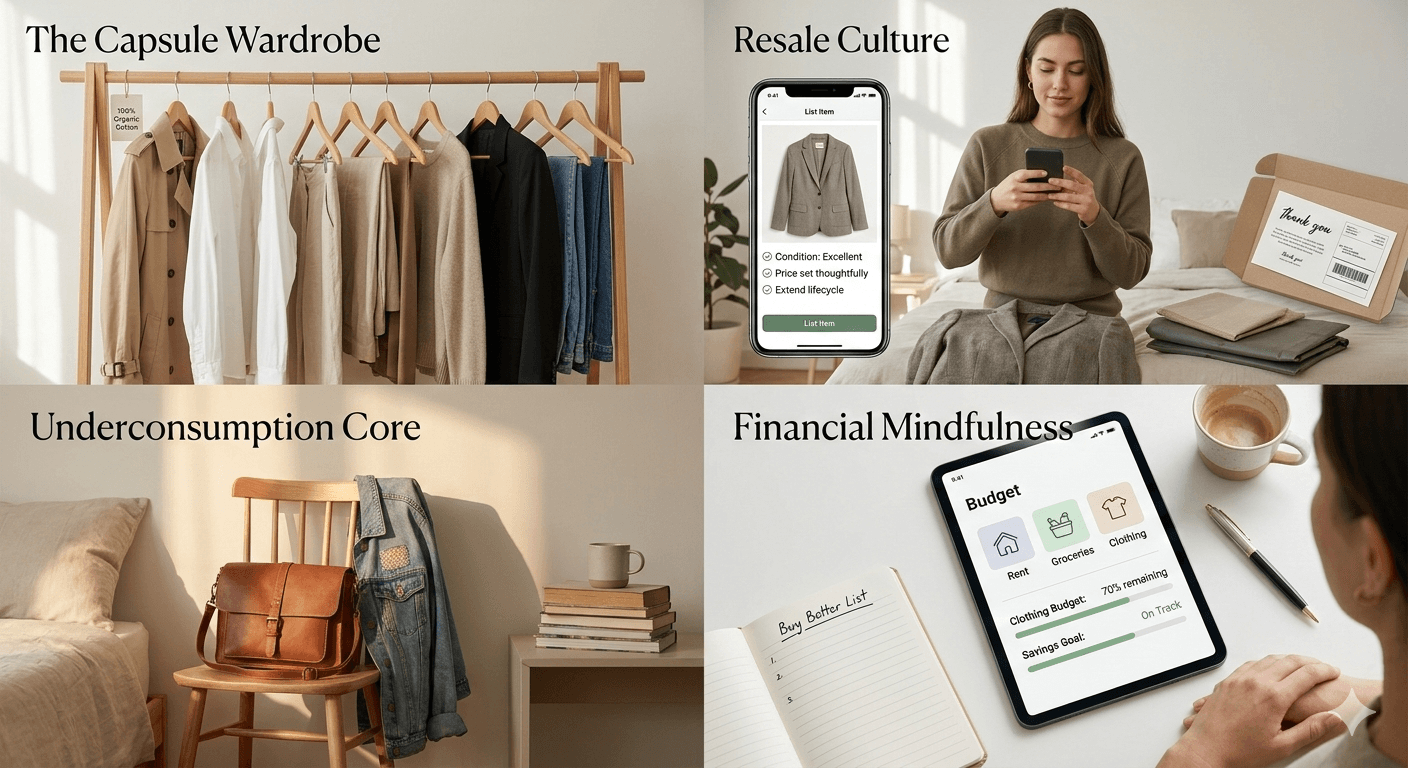
The movement from impulse to intention isn’t theoretical. It’s visible across multiple cultural signals.
Resale is booming. According to the 2024 Resale Report by ThredUp, the U.S. secondhand apparel market grew 14% in 2023 and is projected to reach $73 billion by 2028.
The “underconsumption core” movement on social platforms emphasizes re-wearing, repairing, and mindful ownership. Budget-tracking apps are becoming mainstream. Financial transparency conversations are trending.
Even fashion aesthetics reflect the shift. Capsule wardrobes, neutral palettes, and timeless silhouettes signal stability over hype. The cultural celebration of restraint directly challenges impulse-driven consumerism.
From impulse to intention is becoming aspirational.
Buying less, but buying better, is no longer niche — it’s modern.
From Transactional Shopping to Contextual Commerce
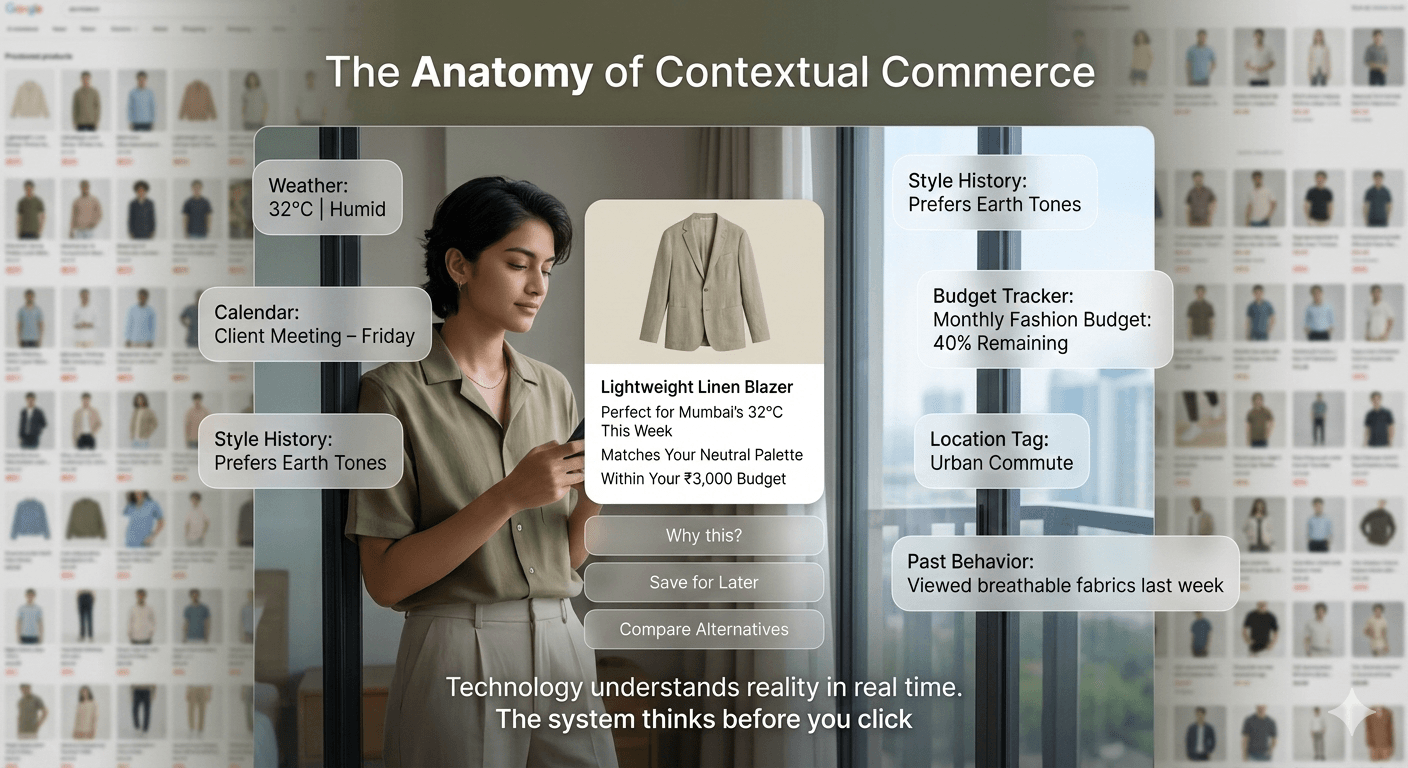
Traditional ecommerce was transactional. It optimized conversion metrics, not consumer clarity. The journey was linear: search, compare, buy.
But contextual commerce introduces nuance. It considers timing, environment, mood, and identity. This is where impulse to intention becomes operationalized.
Context-aware recommendations help consumers make smarter decisions. Seasonal awareness prevents irrelevant suggestions. Behavioral learning refines discovery.
Instead of pushing random discounts, intelligent systems surface items that align with:
- Personal style
- Climate
- Upcoming occasions
- Budget sensitivity
- Lifestyle patterns
The transition from impulse to intention requires infrastructure that respects consumer cognition. It requires systems that guide rather than pressure.
Commerce becomes less about transaction speed and more about decision confidence.
The Bigger Picture: Your Mindset, Then vs. Now
Transitioning from impulse to intention is a fundamental behavioral upgrade that prioritizes mental clarity over digital clutter.
| The Old Way (2024 Impulse) | The New Way (2026 Intention) |
| Trigger: "Flash Sale" or "FOMO" notifications. | Trigger: Real-world calendar events and needs. |
| Experience: Hours of manual scrolling and searching. | Experience: Effortless no search shopping. |
| Validation: Seeking a quick dopamine hit. | Validation: AI Twins confirming fit and style. |
| Outcome: High returns and "closet guilt." | Outcome: High utility and a curated wardrobe. |
What Impulse to Intention Means for the Future of Shopping
The long-term implications are significant.
Brands must earn attention instead of hijacking it. Scarcity marketing alone will not sustain loyalty. Consumers expect relevance by default.
According to PwC’s 2024 Global Consumer Insights Survey, 73% of shoppers say experience and personalization influence purchasing decisions more than price alone. This reinforces the shift from impulse to intention: value now includes emotional and contextual resonance.
The future of shopping will likely be:
- Quieter
- Smarter
- More intuitive
- Less chaotic
- More aligned with personal identity
Impulse commerce was loud. Intentional commerce is intelligent.
The brands and platforms that understand this cultural shift will define the next decade of retail.
Conclusion: A More Mature Digital Consumer
The shift from impulse to intention represents the maturation of the digital shopper. It is not the end of excitement in commerce — it is the evolution of it.
Consumers are still discovering, exploring, and experimenting. But they are doing so with greater awareness. Economic caution, sustainability values, and digital fatigue have reshaped expectations.
Intentional shopping reflects confidence. It reflects clarity. It reflects identity.
As technology evolves, the platforms that support impulse to intention — by reducing noise and increasing relevance — will become foundational to modern commerce.
Shopping is no longer about reacting. It is about aligning.
And that changes how the entire ecosystem operates.
FAQs related to Impulse to Intention Shopping
1. What is the difference between impulse and intentional shopping?
Impulse shopping is driven by sudden emotions or "fear of missing out," often leading to purchases that aren't needed. Intentional shopping is a deliberate process where the consumer uses tools and data to ensure a product fits their lifestyle, budget, and physical needs before buying.
2. How does "no search shopping" work in 2026? "
No search shopping" uses AI agents to surface products for you based on your habits, style profile, and current context (like weather or calendar events). Instead of you typing into a search bar, the agent proactively "Glances" the market to find the best matches for you.
3. Why are Americans moving toward intentional buying mindsets?
Many Americans are experiencing "choice fatigue" and "subscription exhaustion." By moving toward an intentional mindset, they reduce the stress of endless scrolling and the financial burden of "regret purchases," focusing instead on high-quality items that provide long-term value.
4. How can I stop making impulse purchases online?
To stop impulse purchases, try the "24-hour rule" by leaving items in your cart for a day. Additionally, using an intelligent agent like Glance can help by filtering out irrelevant ads and only showing you items that match your pre-defined style and needs.
5. Does intentional shopping save money?
Yes. While intentional shoppers may pay more for a single high-quality item, they save money long-term by reducing the frequency of purchases and avoiding the "cheap-but-frequent" cycle of fast fashion. This leads to a higher "cost-per-wear" value.
Download the Glance app now





Your intelligent
shopping agent.







Your intelligent
shopping agent.