

How Augmented Reality Retail Shopping Is Changing Fashion?
Virtual vs Physical Try-On: End of the Conflict

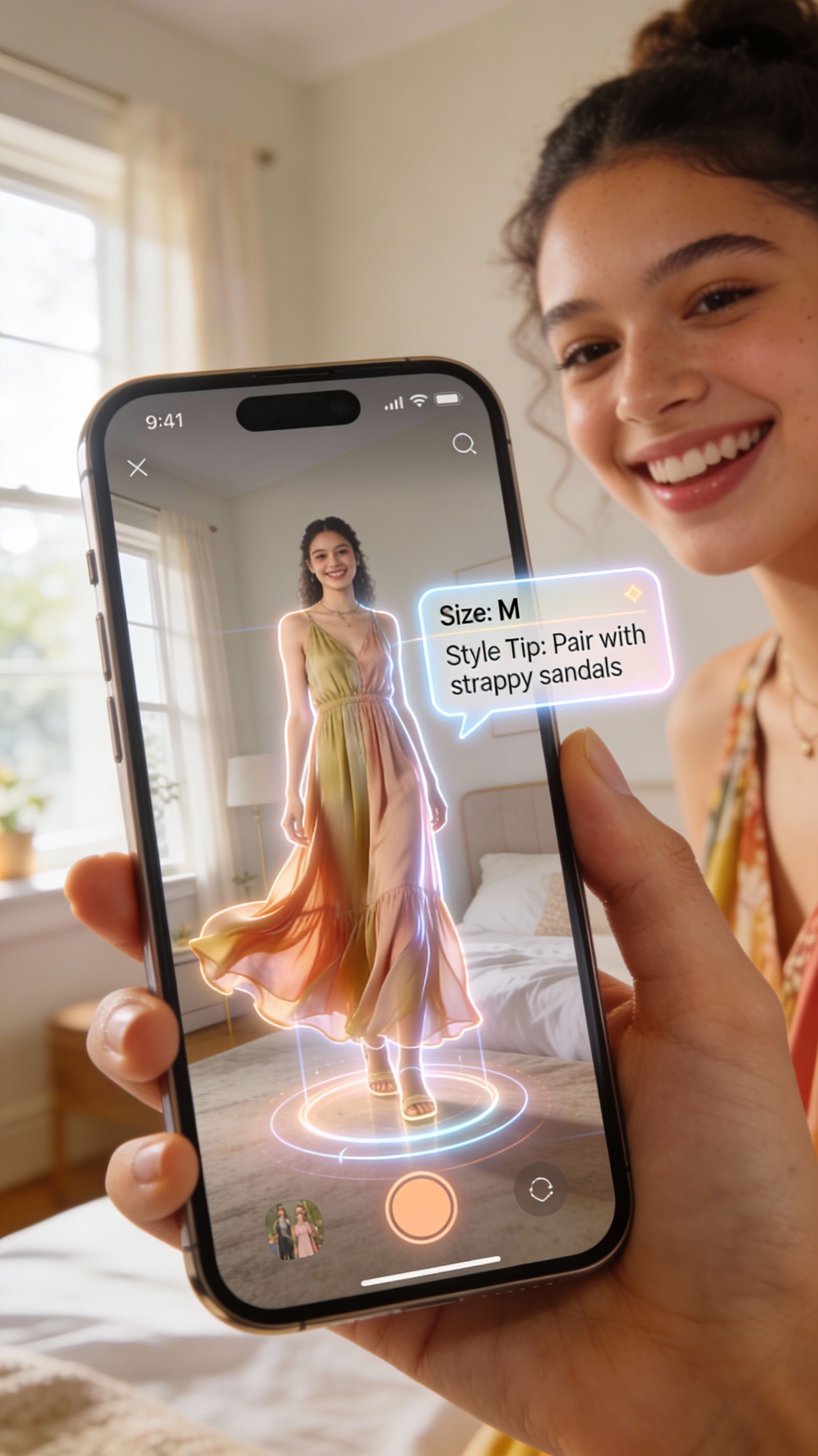
Gone are the days when your only option to try on a pair of jeans, a lipstick shade, or even a new pair of glasses was to walk into a store, wait your turn at a trial room, and hope for the best. Today, you could be lounging on your couch, coffee in hand, and trying on an entire wardrobe using just your smartphone.
But that brings us to the million-dollar question—which experience actually wins? Virtual Try-On or In-Store physical try on?
As we are someone who shops both online and offline, so this comparison is something worth doing. So let’s break this down—with a real-world shopper’s point of view.
The Rise of Virtual Try-On: What Is It Exactly?

Virtual Try-On (VTO) is no longer just a “cool” add-on on websites. It’s become a powerful retail tool that uses technologies like Augmented Reality (AR), Artificial Intelligence (AI), and 3D modeling to help you see how a product will look on you—or in your space—before you buy it.
Think about:
- Warby Parker lets you try on eyeglasses using AR via their app.
- Sephora's Virtual Artist allows you to test makeup in real time.
- Amazon’s Virtual Room places furniture in your home using AR.
- Nike Fit scans your feet using your phone to recommend the perfect size.
It’s all about simulating reality—without the real-world limitations.
Why Virtual Try-On Is Gaining Ground?
If you’ve used a good virtual try on feature recently, you already know—it’s smooth, fast, and oddly satisfying.
Here’s what it offers:
- Convenience at its core
Try a hundred outfits, glasses, or lipsticks—anytime, anywhere. No appointments, no travel. - Hyper-personalization
AI can recommend sizes, colors, or even full looks based on your past preferences, body type, and style. - Confidence in choices
High-fidelity visuals give you a realistic idea of fit and appearance, reducing the “what if it doesn’t suit me?” fear. - Fewer returns
A McKinsey report shows virtual try-on can reduce return rates by up to 64%. That’s not just good for the business—it saves your time and frustration. - More efficient purchases
Studies show VTO can lead to 33% higher average order values. Why? Because you’re more confident and engaged, and often end up exploring more. - Lower brand costs = better pricing for you
With VTO, brands don’t need massive store spaces or large floor staff. Those savings can be passed on to you through discounts or better service.
Why People Still Love In-Store Try-Ons?

Despite all the tech, the in-store experience still has its charm—and for good reason.
What works:
- Touch and feel: Sometimes, you just want to feel the fabric or test the firmness of a mattress.
- Instant gratification: Like walking out with the product the same day? You can’t beat the immediacy of a physical purchase.
- Human interaction: Trained salespeople, personal styling help, and second opinions from friends you’ve tagged along—it adds warmth and trust.
In-Store Try-On: Still Valuable, but Limited
We can’t write off physical stores. Sometimes you need to try before you buy. Whether it’s the weight of a gold chain or the drape of a saree, tangibility matters.
But the flip side is this:
- It’s time-bound: You have to go during store hours.
- It’s location-based: Not every product is available in every store.
- It’s limited in stock: That dress in your size? It might not be there today.
- It’s rushed: Ever felt pressure to buy something just because you tried it on? Happens all the time.
The Business Side: What is Better Virtual vs Physical Try-ons
For brands, the ROI from virtual try-on can be significantly higher. Here’s why:
- Lower operational costs (no store rent, less staff, smaller inventories).
- Reduced return processing (a major cost for e-commerce).
- Faster inventory turnover due to better conversion rates.
So, Who Actually Wins?
If you’re asking, “which is better for me?”—the answer isn’t black or white.
Let’s simplify:
Feature | Virtual Try-On | In-Store Try-On |
| Convenience | Anywhere, anytime | Store-dependent |
| Personalization | AI-driven, tailored | Human-dependent |
| Confidence | High with VTO tech | High if time is taken |
| Returns | Significantly lower | Lower than regular online, but still exists |
| Cost to Brand | Lower | Higher |
| Experience | Gamified, shareable, private | Social, sensory, real |
Both have their place—but from a day-to-day user experience, Virtual Try-On edges ahead in most categories. Especially when you’re buying standard-size products like eyewear, makeup, or fashion items.
The Future: Why You Might Not Have to Choose

Here’s the truth—the future is hybrid.
Imagine walking into a store and seeing yourself in 10 different outfits via a smart mirror. Or browsing online, liking something, and having a pop-up offer to book an in-store trial slot or schedule a doorstep trial.
Brands are already blending both worlds. Uniqlo’s “Magic Mirror” lets you try on clothes in different colors without changing. Nike uses AR in-store for shoe fitting. Amazon’s “Virtual Room” lets you place furniture digitally in your home before checkout.
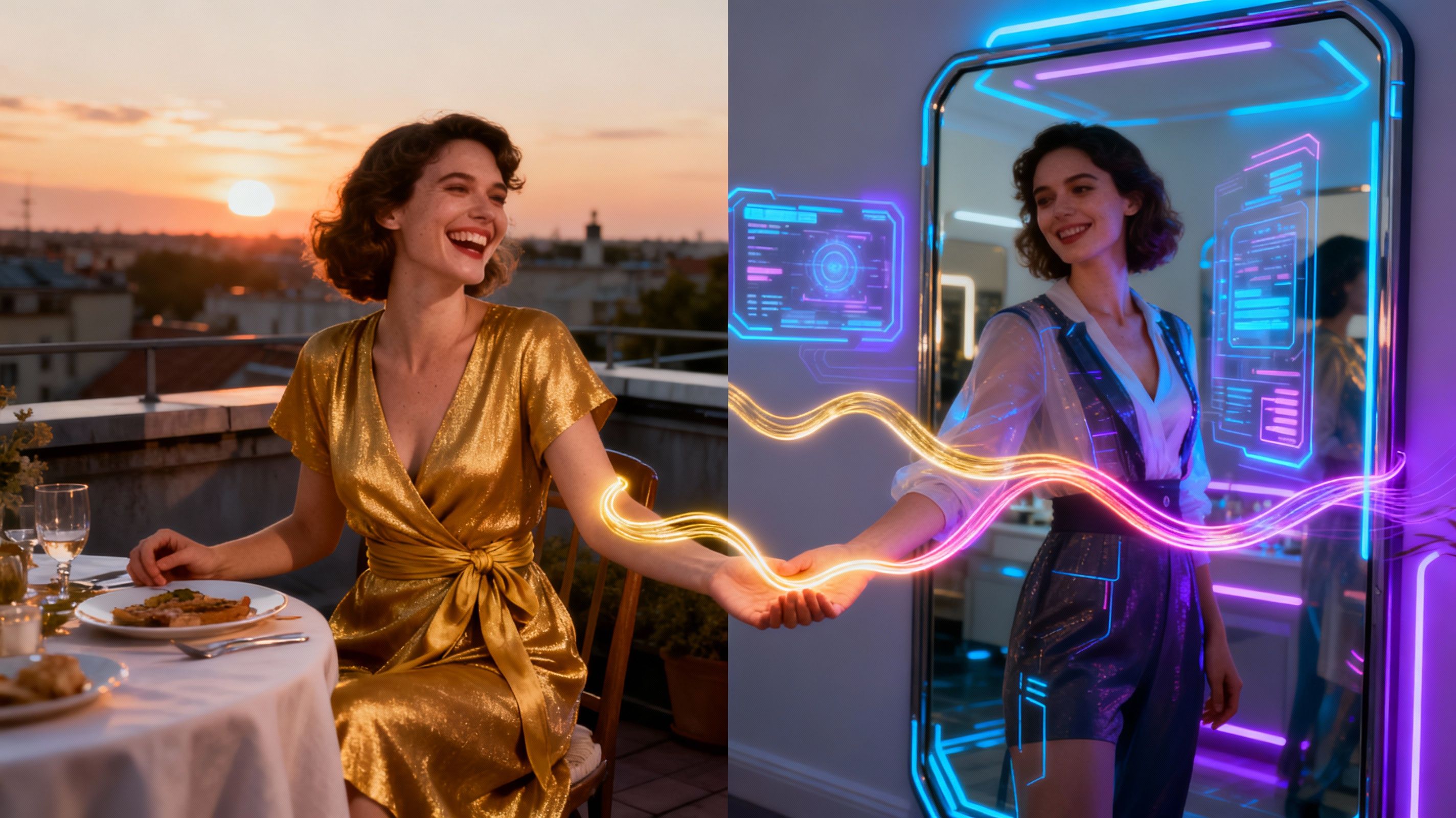
Glance’s AI Shopping App builds your personalized AI Twin—an intelligent, evolving version of you that understands your style, preferences, and context. From exploring curated looks to making confident purchases, it delivers a seamless, immersive shopping journey tailored just for you.
Wrap Up
So, virtual trys ons or physical who wins?
You do.
You win because you now have options. You’re no longer limited by time, location, or guesswork. You can shop the way you want—on your terms.
If you love tech and convenience, virtual try-on will be your best friend. If you crave the feel of fabric and the vibe of a real store, physical try-on still delivers. But increasingly, the best shopping journeys blend both.
And as consumers, we’re in the best position yet—to demand better, smarter, more flexible shopping experiences that fit our lives, not the other way around.
FAQs
1. How does virtual try-on work?
Virtual try-on (VTO) works by using artificial intelligence (AI), computer vision, and Augmented Reality (AR) to create a realistic preview of products like clothes, glasses, or makeup. The system maps a user's photo or live camera feed, generates a 3D model, and digitally overlays the virtual products. AI refines the fit, AR renders textures and movement realistically, and users can adjust angles, poses, or styles for a fully interactive, accurate preview before purchase.
2. What are the disadvantages of traditional in-store try-ons?
The disadvantages of traditional in-store try-ons include the time and effort required for travel parking and waiting in queues. Shoppers are limited by store hours and often face a restricted selection compared to online options. Lack of privacy crowded spaces and pressure from sales staff can also reduce comfort and make the overall shopping experience less flexible and convenient.
3. Is virtual try-on accurate in terms of fit and color?
Virtual try on accuracy in fit and color has improved with AI, 3D modeling, and computer vision, but it is not perfect. Advanced systems can closely simulate sizing, drape, and appearance using body data and lighting adjustments. However, fabric texture, complex fits, and exact color matching may still vary from real life conditions.
4. How does Glance AI enhance the virtual try-on experience?
Glance AI enhances the virtual try-on experience by creating an AI Twin from a single selfie using artificial intelligence, computer vision, and augmented reality. It generates realistic images of you wearing curated outfits and proactively suggests complete looks based on your style and context. This makes discovery visual effortless and more confident while reducing returns.
5. Can virtual try-on reduce returns?
Yes, virtual try on can reduce returns by helping shoppers make more confident decisions about fit style and appearance before buying. By previewing how products look on them, customers face fewer surprises after delivery. This clarity lowers size and expectation mismatches, leading to reduced return rates, often reported between 20 to 64%, and higher purchase satisfaction.
6. Will virtual try-on replace physical stores entirely?
Virtual try-on will not replace physical stores entirely. Instead, it supports an omnichannel retail model that combines digital and in-store experiences. Virtual try-on improves online confidence, fit visualization, and reduces returns, while physical stores continue to offer touch, fit checks, and brand experiences, evolving into interactive experience centers rather than disappearing.
Download the Glance AI app now



Your intelligent
shopping agent.

Download Glance from





Your intelligent
shopping agent.
Download Glance from