


Does AI Based Virtual Try On Dressing Room Improve Shopping?
TL;DR
An AI based virtual try-on dressing room helps shoppers visualise how clothes may look on their body before buying. It improves fit confidence, reduces guesswork, and can lower return rates, especially for online first shoppers. However, it cannot replace the physical feel of fabric, comfort, or exact fit accuracy. The experience works best as a decision support tool, not a perfect substitute for in store trials. When used with realistic expectations, an AI fitting room adds real value by making online fashion shopping clearer, faster, and more confident.
Online fashion shopping has always carried a quiet risk.
You like the design.
You choose your size.
You hope it fits the way you imagined.
Sometimes it does. Often it does not.
This gap between expectation and reality is exactly where the AI based virtual try-on dressing room enters the conversation. Also referred to as an AI fitting room, this technology promises to recreate the in-store trial experience digitally.
But promise alone is not enough.
The real question is simple.
Does an AI based virtual try-on dressing room genuinely improve the shopping experience, or does it only shift uncertainty from one screen to another?
In this blog, we will look at the benefits and the drawbacks to help you decide whether the value truly outweighs the limitations.
What Is an AI Based Virtual Try-On Dressing Room?
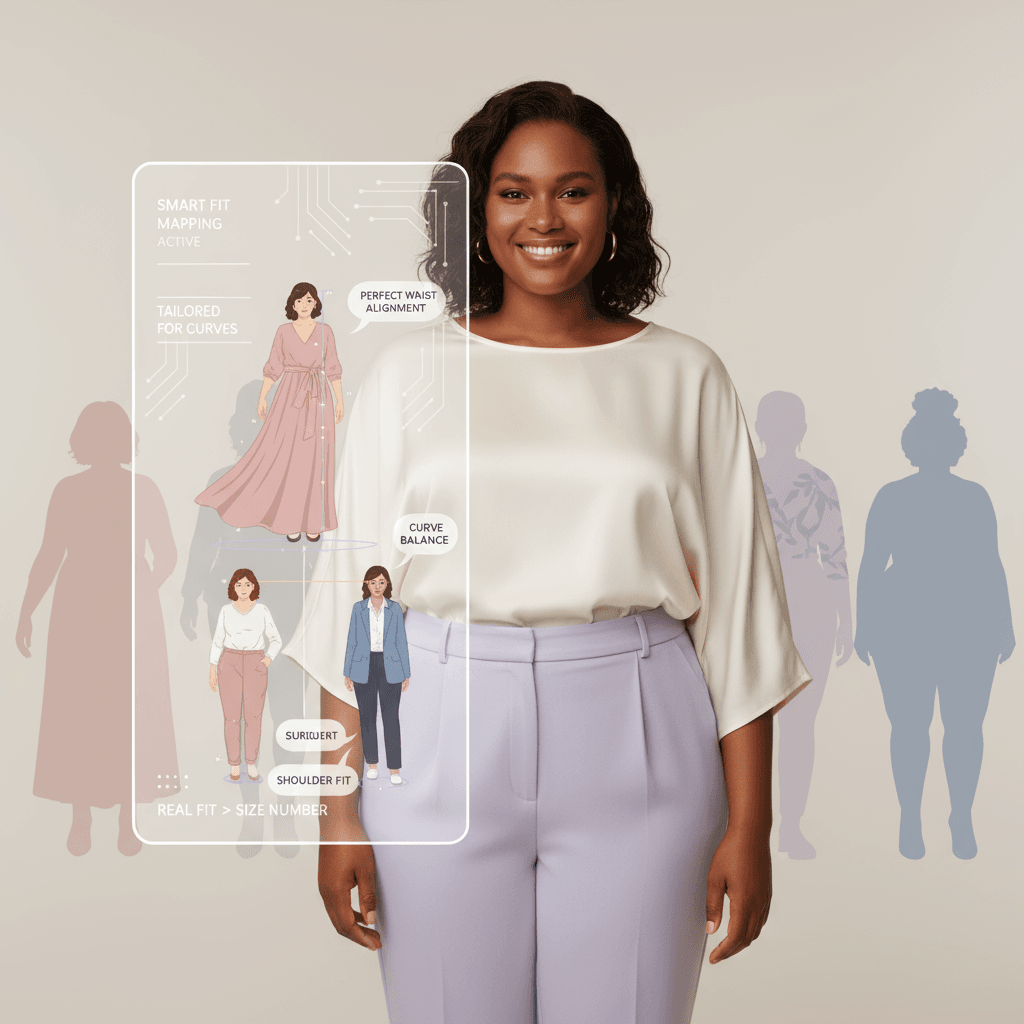
An AI based virtual try-on dressing room uses artificial intelligence, computer vision, and body mapping to show how clothing may look on a person’s body.
Instead of viewing garments on standard models, shoppers interact with digital representations that reflect body shape, proportions, and sometimes posture. The aim is to replace guesswork with visual context.
Unlike size charts, which rely on static measurements, an AI fitting room focuses on how a garment sits, drapes, and aligns visually.
It does not claim perfection.
It aims for better judgment.
Did you know? Gucci partnered with Snapchat for an AR shoe try-on campaign, using a phone camera to overlay digital shoes on users' feet. This marked the first branded Shoppable AR partnership on Snapchat — though Gucci itself had already added AR try-on to its own iOS app a year earlier, in 2019.
Why Does AI Based Virtual Try-On Dressing Room Exist?
Online fashion returns remain high, primarily due to fit and appearance mismatches. Shoppers often buy multiple sizes or styles with the intention of returning most of them.
This creates friction for everyone.
- Shoppers lose time and confidence
- Brands lose revenue and trust
- Logistics systems absorb unnecessary costs
An AI based virtual try-on dressing room attempts to intervene before checkout, not after disappointment.
Benefits of an AI Based Virtual Try-On Dressing Room
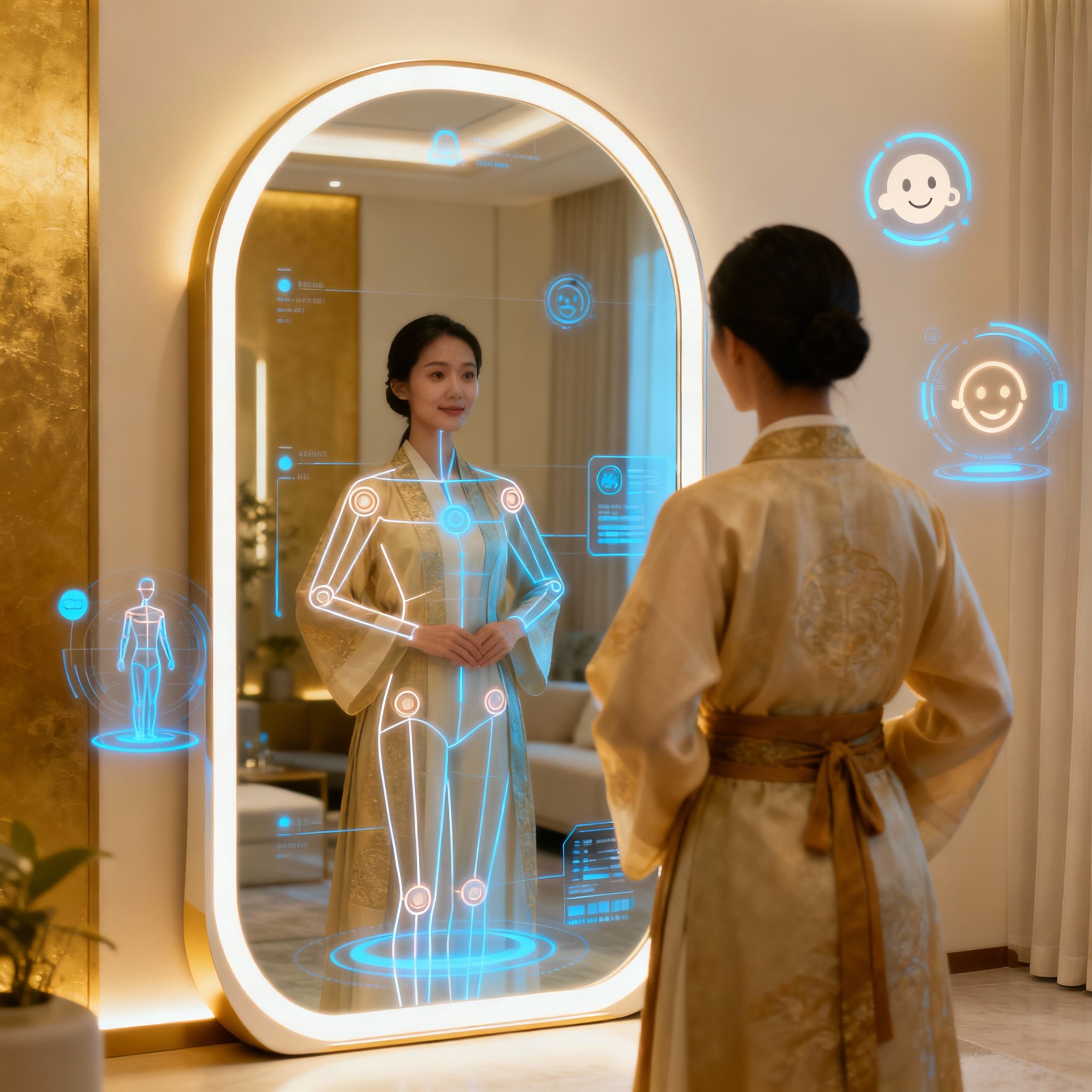
For many users, the value lies in clarity rather than novelty. Below are the most meaningful advantages, presented clearly for quick understanding.
Pros of AI Based Virtual Try-On Dressing Rooms
- Improved fit confidence
Seeing clothing mapped to a body similar to yours reduces blind decision making. You are no longer guessing based on size labels alone. - Reduced return behaviour
When shoppers understand how something may look on them, they are less likely to overbuy or return impulsively. - Personalised visual context
The experience feels more relevant than browsing generic product images. The clothing feels closer to your reality. - Faster decision making
Instead of opening multiple tabs and comparing styles mentally, visual feedback accelerates choices. - Better accessibility for remote shoppers
For users without access to physical stores, the AI fitting room bridges a critical gap. - Encourages style exploration
People are more open to trying new silhouettes when risk feels lower.
Industry data shows that AI virtual fitting rooms are moving beyond experimentation into mainstream adoption. Grand View Research values the global virtual fitting room market at USD 5.57 billion in 2024, projected to reach USD 20.65 billion by 2030 at a 24.6% CAGR.
Limitations of AI Based Virtual Try-On Dressing Room
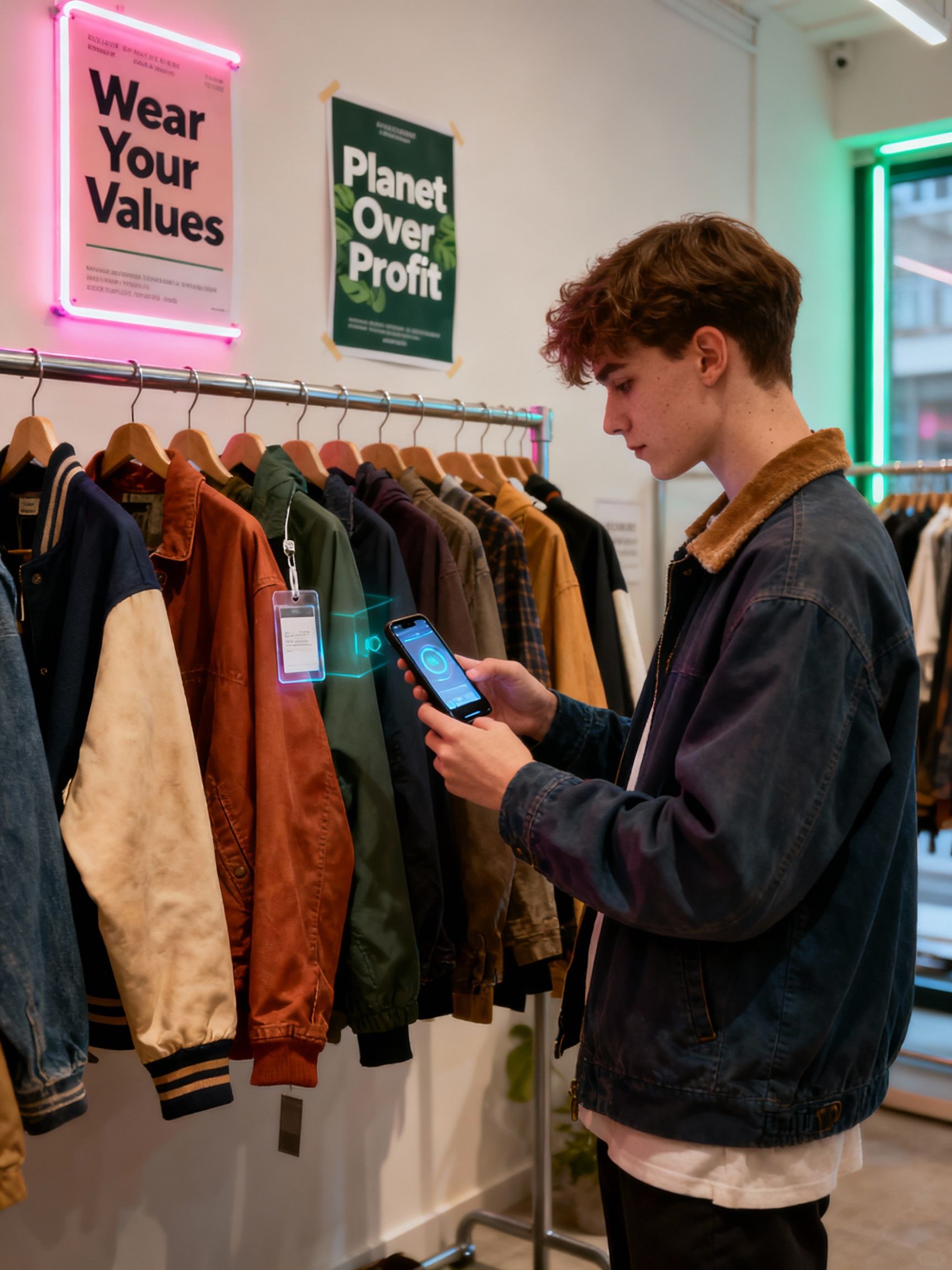
Despite its promise, an AI based virtual try-on dressing room is not a flawless substitute for physical trials. The limitations matter, especially for informed shoppers.
Drawbacks of AI Based Virtual Try-On Dressing Rooms
- No tactile experience
You cannot feel fabric weight, texture, or stretch. Comfort remains an unknown. - Accuracy depends on data quality
Lighting, camera angles, and input accuracy influence outcomes. A slight error can change perception. - Complex garments are harder to simulate
Draped fabrics, layered outfits, or non-standard cuts may not render accurately. - Privacy considerations
Body data and images require responsible handling. Not all platforms communicate this clearly. - Technology learning curve
Some users find setup or calibration confusing, which can interrupt the experience. - Not a full replacement for fitting rooms
It works best as guidance, not final confirmation.
These drawbacks do not negate the value, but they set realistic expectations.
Experience vs Expectation for AI Based Virtual Try-On Dressing Room
Understanding where AI based virtual try-on delivers and where it falls short helps shoppers use it wisely. The table below clarifies this balance.
What Shoppers Expect | What the Experience Delivers |
Exact real life fit | Approximate visual guidance |
Fabric feel and comfort | Visual drape and silhouette |
Perfect size certainty | Reduced but not eliminated doubt |
Universal accuracy | Best results with standard garments |
Effortless setup | Varies by platform and user familiarity |
Replacement for stores | Complement to online shopping |
Should You Adopt an AI Based Virtual Try-On Dressing Room?
The decision to adopt an AI based virtual try-on dressing room is less about technology and more about how you approach online shopping.
If you expect it to replace the in-store trial experience completely, it will likely fall short. But if you use it as a decision support layer, it becomes a genuinely useful tool that reduces uncertainty and improves clarity before purchase.
For shoppers who primarily buy online, the value is immediate. You get a visual sense of how a garment may sit on your body, which helps eliminate blind selection based only on size charts or model images. This alone can reduce hesitation, over-ordering, and unnecessary returns.
It is particularly effective if you:
- Struggle with inconsistent sizing across brands
- Prefer visual confirmation before making a purchase
- Want to experiment with new styles without risk
- Shop frequently from online-first platforms
- Aim to make faster, more confident decisions
However, adoption should come with clear expectations. An AI fitting room cannot tell you how the fabric feels, how comfortable it will be after hours of wear, or how precise the fit will be in real life. These remain physical experiences that no digital layer can fully replicate.
The most practical way to use this technology is to combine it with other signals—size guides, product reviews, and real customer images. When layered together, these inputs create a far more reliable decision-making process than any single tool alone.
Experience Virtual Try On with Glance and Lynk
Most virtual try-on tools work from a product page — you find a garment, tap a button, and see it overlaid on your photo. That is a useful confirmation layer: you have already found the item, and now you are checking how it looks on you.
Glance operates at an earlier stage. It is an intelligent shopping agent — not a virtual try-on tool — that generates complete outfit looks on your actual body before you search for anything. Upload one selfie and five specialised agents read your physical features simultaneously:
- Physical Features Agent: reads your face shape, skin tone, hair colour, and body proportions — every look is built for your actual colouring and proportions
- Weather and Location Agent: reads real-time conditions — the look adapts to your city and today's weather
- Regional Trends Agent: tracks what is trending specifically in your city right now
- Occasions Agent: reads upcoming events relevant to your context
- Personality and Lifestyle Agent: refines recommendations as you engage across sessions
The images you upload or share on your screen are never shared with any third party. They are used only to personalise recommendations and visualise you in AI-generated outfit looks.
The result is not a confirmation of a garment you found. It is a complete styled look generated on your actual body — from 40M+ products across 400+ brands — before you open any app or form a search query. Glance reached 8M+ monthly active users in the US in 2026. Free, opt-in, no subscription.
For AT&T Android customers, Lynk by Glance brings traditional virtual try-on directly to your home screen. Lynk is a floating button that lives on top of any shopping app you are already using. Find a product you want to try — in any app or your photo gallery — tap Lynk, use your selfie, and see yourself in that specific look. Unlike Glance which generates looks proactively, Lynk activates when you find something you want to try on. Both use your selfie — for different stages of the same shopping journey.
Conclusion
AI based virtual try-on dressing rooms represent a thoughtful evolution in online fashion, not a revolution. They solve a real problem, but not completely.
Their strength lies in helping shoppers make more informed decisions, faster and with less doubt. Their weakness lies in the unavoidable gap between digital simulation and physical sensation.
Used wisely, they enhance shopping confidence.
Used blindly, they disappoint expectations.
The future of fashion commerce likely includes AI fitting rooms as a standard layer, not a standalone solution. And when paired with transparent sizing, real product imagery, and clear policies, they can meaningfully improve how people shop online.
The benefit is real.
The limitations are real too.
The value lies in understanding both.
FAQs Related to AI Based Virtual Try-On Dressing Room
1. What AI apps show outfits on my actual body not a model?
Glance is an intelligent shopping agent that generates complete outfit looks on your actual body before you search — from one selfie, across 40M+ products and 400+ brands, with images never shared with any third party. Lynk by Glance, for AT&T Android customers, works differently: it shows you a specific item you've already found on your own body, which is how this differs from AI outfit discovery — one confirms a choice, the other discovers one before you search.
2. What AI try-on clothing apps are using the latest tech innovations?
The most technically advanced AI try-on clothing apps in 2026 split across a few real innovations — see the table below for how Fits, FitRoom, Fashn, and Glance compare directly.
| Innovation | Fits | FitRoom | Fashn | Glance |
| Generative AI body rendering | Yes — OpenAI image model | Yes — proprietary model | Yes — brand-side API | Yes — full outfit, not single item |
| Multi-agent architecture | No | No | No | Yes — 5 specialised agents |
| Proactive delivery (before search) | No | No | No | Yes — lock screen, app, TV |
| Home-screen AI assistant | No | No | No | Yes — Lynk (AT&T Android) |
3. Does using an AI fitting room help reduce online clothing returns?
Yes, in many cases it does. By giving shoppers better visual clarity before checkout, AI fitting rooms can reduce impulse buying and incorrect size selection. This often leads to fewer returns caused by fit or appearance mismatches, benefiting both shoppers and retailers.
4. Are AI based virtual try-on dressing rooms safe in terms of data privacy?
Data safety depends on how the platform handles personal information. AI based virtual try-on dressing rooms may use images or body data, so transparent data usage policies are important. Responsible platforms prioritise secure storage, limited data retention, and clear consent to protect user privacy.
5. Do AI fitting rooms work equally well for all body types?
AI fitting rooms perform best when trained on diverse body data, but accuracy can still vary. Standard garment shapes tend to simulate more reliably than complex or unconventional designs. While the technology is improving, users with non-standard proportions may experience less precise visual results.
Download the Glance app now





Your intelligent
shopping agent.







Your intelligent
shopping agent.