

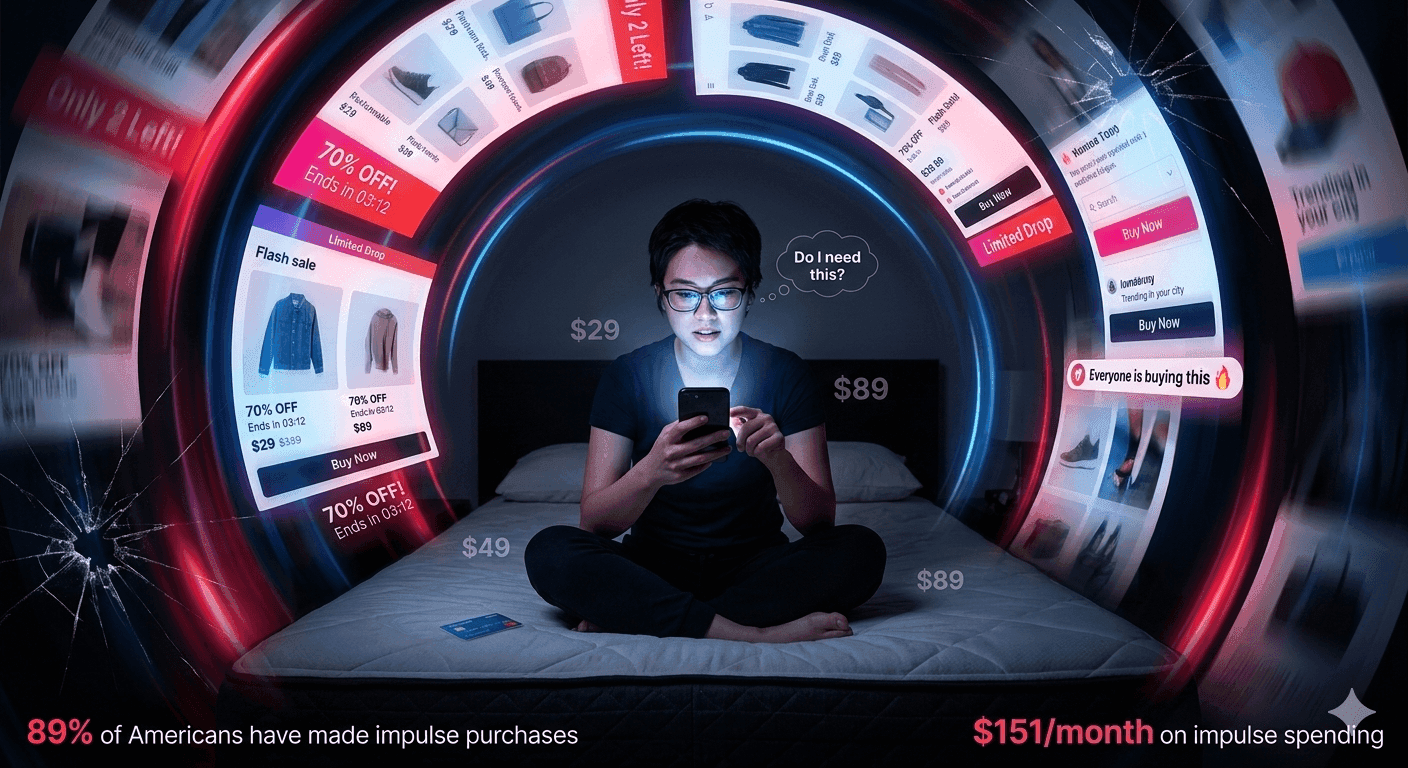
How Brands Are (and Aren't) Preparing for Agentic Commerce
TL;DR
Agentic commerce is changing where demand is created, not just how it is captured. Most brands are not ready — their structures, measurement frameworks, and creative are all optimised for a funnel that starts with a search query. The readiness gap is real and visible in five consistent patterns. But the brands leaning in early are already seeing the advantage of showing up before the search begins. This is Aimee Zmugg's read from the front lines — including what happened at Shoptalk when people saw Glance's intelligent shopping agent for the first time.
I've spent the better part of my career sitting at the intersection of commerce, advertising, and consumer behavior — watching tens of billions of dollars in GMV move through platforms, and more importantly, understanding why they move.
All this to say that I've spent a lot of time thinking about what drives a consumer to click. What makes them convert. What makes them come back. How do you reach first time buyers.
And if there's one thing, I'm increasingly convinced of, it's this: with agentic commerce, we are about to fundamentally change how demand is created, not just how it's captured.
The reality today is that most brands aren't ready for that shift, and they do not know how to operate in this new emerging era of agentic commerce.
We've Optimised for the Wrong Moment
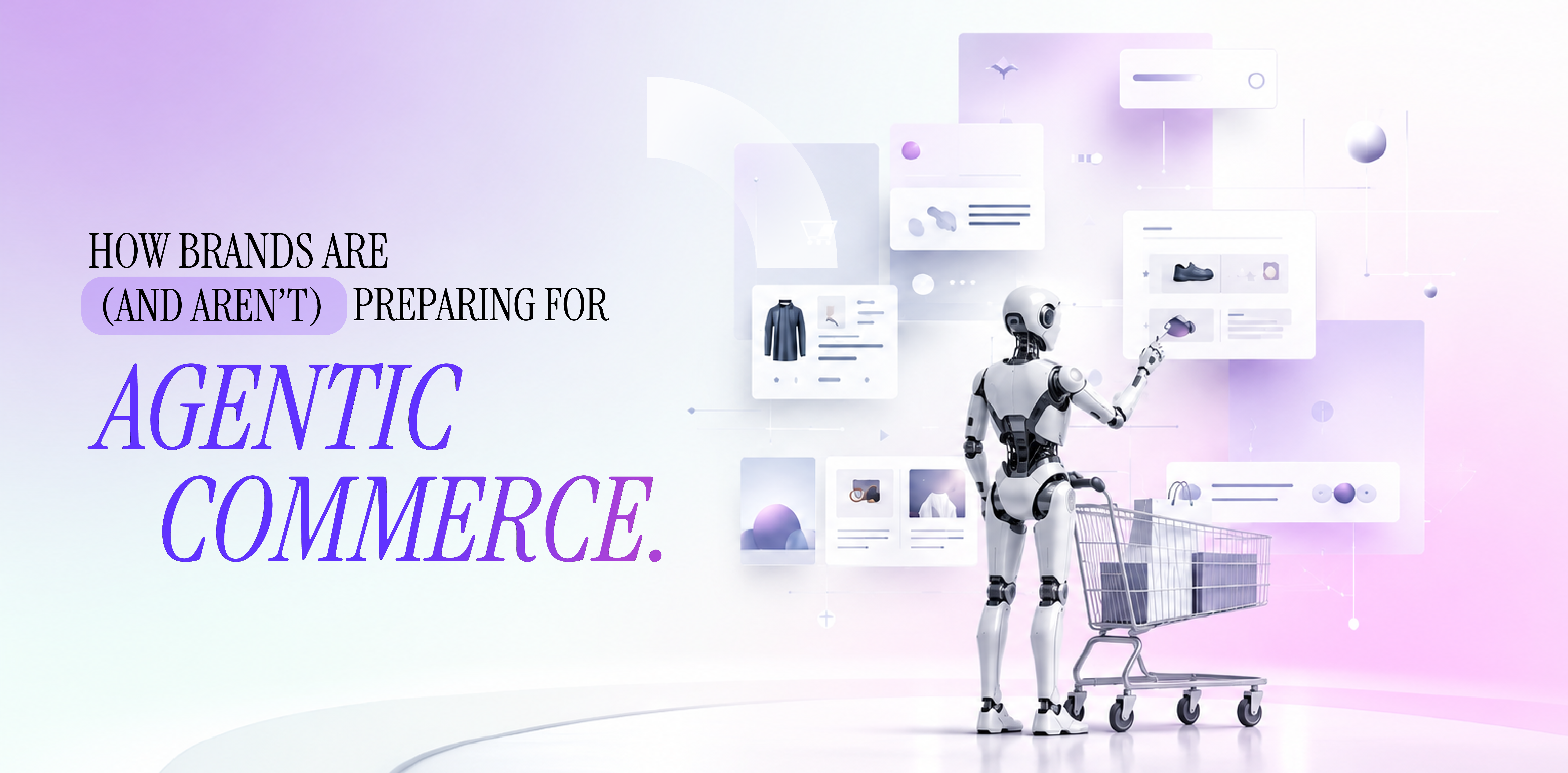
For the last 15+ years, digital commerce has been built around one core assumption: the consumer knows what they want.
Search became the center of the universe. Performance marketing scaled around intent capture. Retail media monetized the bottom of the funnel.
It worked incredibly well, but it also created a ceiling. Because the biggest opportunities in commerce have never been about capturing demand, they've been about creating it.
And today, most brands are still structurally optimised for the former.
Discovery Is the New Battleground
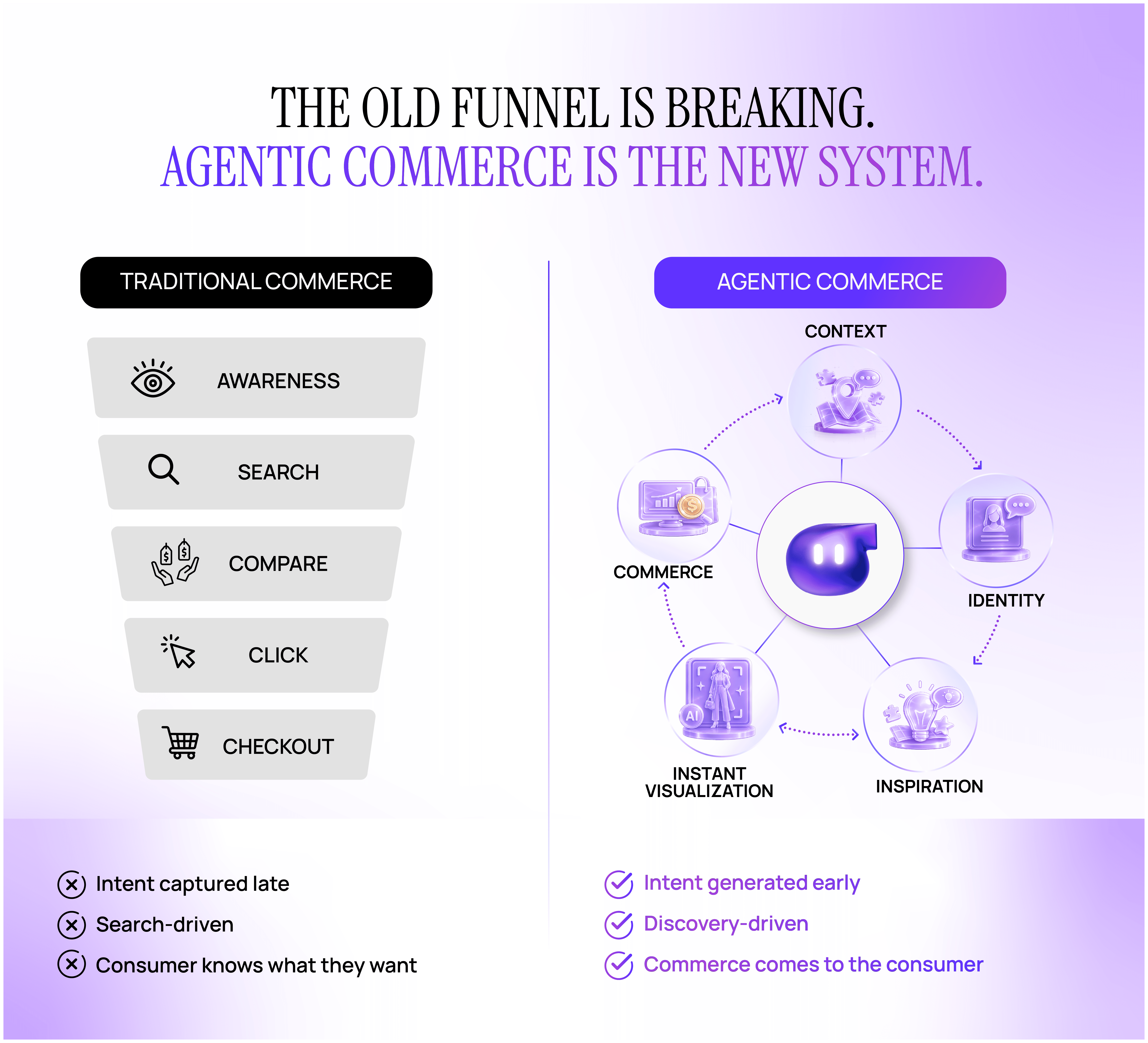
At Shoptalk this year, a consistent theme emerged across conversations with retailers, brands, and tech platforms:
Discovery is overtaking search
- Content and commerce are collapsing into one experience
- AI is becoming the interface, not just another layer
But what was more interesting than what people said was what they reacted to.
The Wow Moment
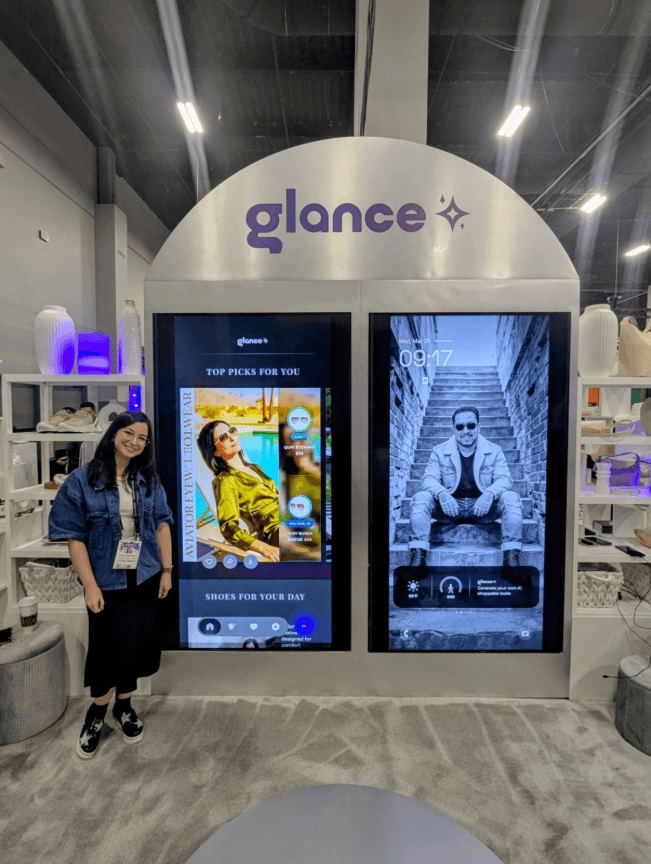
At Shoptalk, when people experienced Glance's AI-driven, visual, personalized shopping agent for the first time — seeing themselves styled instantly, watching content turn into something shoppable in real time — there was always a pause. I now refer to this as "the wow moment" and it never gets old.
Then the same reaction: "Wait… that's me?!" It's usually followed up by a smile, continuous scrolling in the experience, and sometimes a self-deprecating joke about how great they look and that their wife is going to love this picture.
That wow moment matters. Because it represents a shift from searching for products to seeing yourself in them. And that's where traditional commerce models start to break.
What creates the wow moment is the architecture behind it. Glance is an intelligent shopping agent — not a recommendation engine, not a chatbot. It reads your physical features from a selfie, your location, the weather, what is trending in your city, and your upcoming occasions, and generates a complete styled outfit on your actual body before you search for anything. The reaction at Shoptalk — "that's me" — is because it literally is. Every look is visualised on the person seeing it, not a stock model.
Agentic Commerce Changes the Starting Point
There's a lot of noise right now around the use of AI in commerce, but most of it is incremental.
Agentic commerce is different. It's not about helping a consumer refine a search. It's about removing the need for the search in the first place.
Instead of waiting for intent — historically in the form of a query — systems begin to anticipate and generate it, based on context, behavior, and identity.
That changes everything because the entry point has shifted from query to inspiration. The interface becomes visual and dynamic rather than static and text based. And because of this, the journey compresses from a multistep funnel to near instant decisions.
The reality of this big shift is that the moment of influence moves much earlier than brands are currently built to operate in.
The Readiness Gap
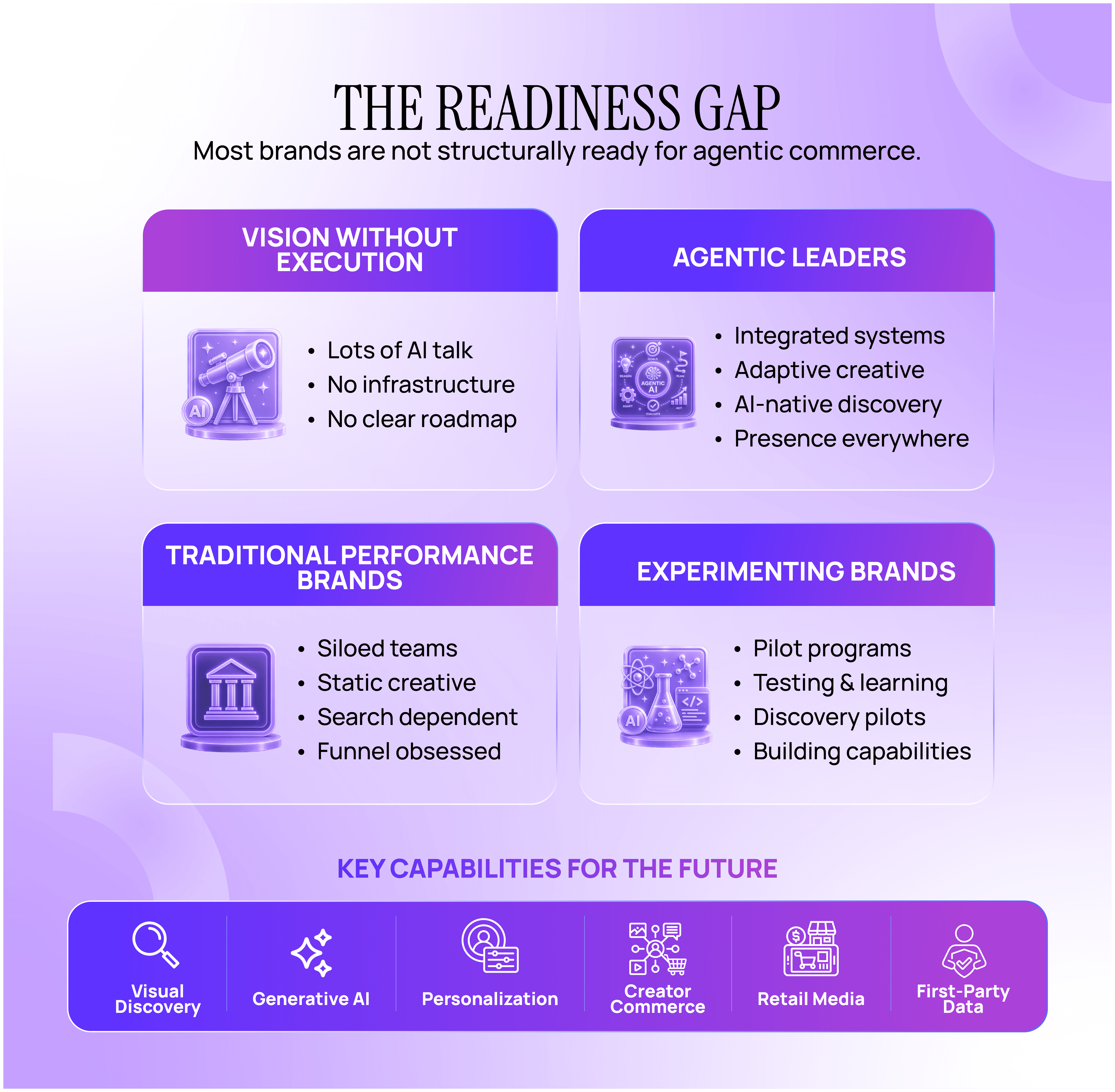
The scale of this shift is not theoretical. The scale of this shift is not theoretical — Adobe Digital Insights reported a 700% surge in generative-AI-driven retail traffic during the 2025 holiday season. The infrastructure is already shifting. Most brand organisations are not.
In conversations with brands and retailers, I see consistent themes and areas they struggle with as they navigate agentic commerce:
- The value prop feels powerful, but hard to operationalize — which makes it harder to turn potential into action across a large company.
- Organizational structures are still siloed and stuck in traditional ways of operating.
- Creative is not built for this environment, so they must lean into their feed.
- Measurement frameworks lag behind the experience — they often ask: how do I measure discovery?
- They don't know where to start.
What Is Working
The brands that are leaning in aren't trying to overhaul everything overnight. They're doing these five things well:
- They start with a focused use case.
- They treat this as a learning loop, not a campaign.
- They think in terms of presence, not just placement.
They show up in areas where discovery is already happening — across mobile, lock screen, and TV.
- They build in layers — balancing owned experiences with new discovery surfaces.
The excitement about the agentic commerce space is real, but it can understandably feel like a lot. Regardless of the complexity, we are seeing a large stable of brands lean into this visual-led discovery layer in a big way.
What's driving these early adopters:
- They know that showing up early to an emerging category pays off in the long run. They want to test and learn now to reduce downstream costs later when competition is stronger.
- They are aggressive and see this as an opportunity to take market share from other brands who can't get over internal silos and hurdles.
- They want to engage with a new type of shopper — one who values exploration, discovery, and intelligent recommendations — because it creates an opportunity to extend their brand into that conversation with an open-minded consumer.
What Comes Next
I joined Glance because I fundamentally believe that we are at an inflection point in how consumers discover and decide. It's not about optimising the funnel. It's about showing up before the funnel exists.
If the last decade was about precision targeting and performance efficiency, the next one will be about relevance at the moment of discovery.
I believe we are moving from a world where consumers go to commerce, to one where commerce comes to them in a far more personal way.
And that's a much bigger shift than most people realize. It's not an optimization. It's a reset.
FAQs
How are brands preparing for agentic commerce?
The brands making the most progress in agentic commerce are doing five things: starting with a focused use case rather than trying to overhaul everything, treating it as a learning loop not a campaign, thinking in terms of presence not just placement, showing up where discovery is already happening across mobile, lock screen, and TV, and building in layers that balance owned experiences with new discovery surfaces. What they share is an orientation toward earlier moments in the consumer journey — before the search query forms, not after.
What is the readiness gap in agentic commerce?
The readiness gap is the distance between where agentic commerce is heading and where most brand organisations are today. Five patterns appear consistently: the value prop is clear but hard to operationalize at scale, org structures are siloed around existing channels, creative has not been built for proactive visual discovery environments, measurement frameworks cannot track discovery-led demand, and most teams do not know where to start. Adobe Digital Insights reported a 700% surge in AI-driven traffic to retail sites during the 2025 holiday season. The infrastructure is already shifting. The brands that close the readiness gap earliest will face the least competition for the new discovery layer.
What should brands do to succeed in agentic commerce?
Start narrower than feels comfortable. Pick one use case — a product category, a season, a specific audience — and treat the first activation as a learning exercise rather than a campaign. The brands succeeding are not those with the biggest AI budgets. They are those who moved first, gathered signals, and iterated. The core shift is strategic: from optimising for the moment a consumer searches, to showing up before the search forms. That requires being present on new surfaces — lock screen, connected TV, brand websites embedded with discovery intelligence — where consumers are before they have expressed intent.
How is discovery replacing search in ecommerce?
For the last 15 years, search was the dominant entry point to commerce — consumers formed intent, typed a query, and platforms competed to capture that intent. Agentic AI is changing the starting point: instead of waiting for a query, intelligent systems read context — physical features, location, weather, occasions, behavioral signals — and surface relevant discovery before any search begins. The Shoptalk theme of 2026 was not "better search." It was that content and commerce are collapsing into one experience, with AI as the interface. Discovery is becoming the new primary surface for demand creation.


Download the Glance app now






Your intelligent
shopping agent.







Your intelligent
shopping agent.