

How the AI Fashion Outfit Generator Fits Today’s AI Fashion
TL;DR
The ai fashion outfit generator has become a core styling tool in the U.S., helping users quickly assemble outfits and reduce fashion guesswork. But as shopping behavior shifts toward mood-led, values-driven decisions, AI fashion is expanding beyond outfit creation alone. This article maps how AI fashion outfit generators work, where they’re widely used in the U.S. market, and how Glance’s AI stylist aligns with this ecosystem by supporting adaptive, behavior-led fashion discovery.
The Rise of the AI Fashion Outfit Generator in Everyday Style Decisions
The ai fashion outfit generator is no longer a niche technology.
It’s now part of how U.S. consumers plan outfits, shop online, and experiment with personal style.
From casual users planning workwear to Gen Z shoppers exploring aesthetics, an AI fashion outfit generator typically helps by:
- Suggesting coordinated outfits
- Visualizing full looks digitally
- Reducing styling anxiety
- Making fashion experimentation accessible
According to Salesforce’s Connected Shoppers Report, 39% of shoppers and over 54% of Gen Z already use AI-driven tools during product discovery, signaling how embedded AI Fashion has become in retail decision-making.
At this stage, the ai fashion outfit generator acts as a styling accelerator.
What an AI Fashion Outfit Generator Typically Does
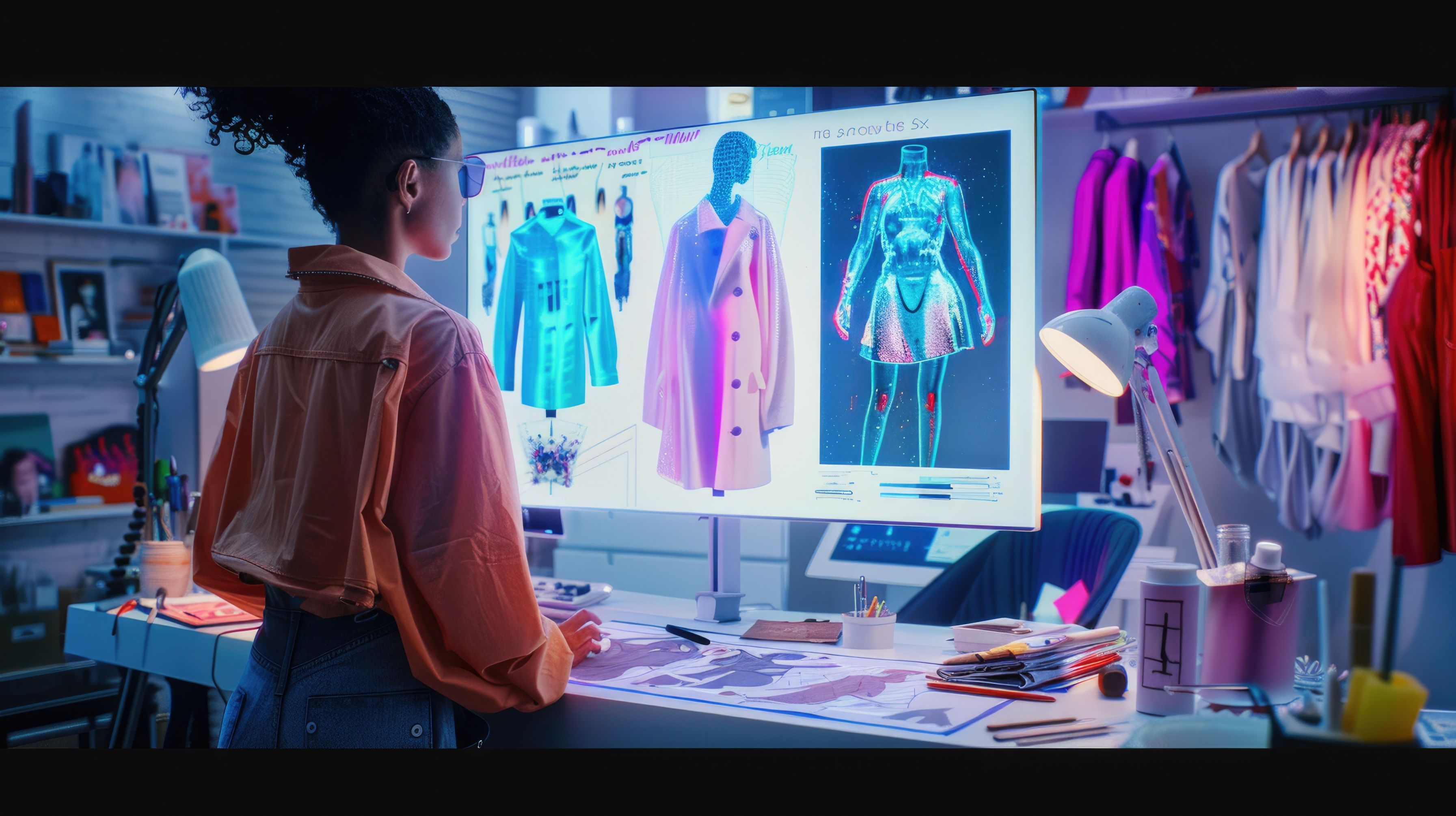
Most AI fashion outfit generator tools in the U.S. market are designed around composition.
Their core functions include:
- Matching tops, bottoms, footwear, and accessories
- Generating outfit combinations based on rules or datasets
- Allowing users to tweak looks visually
- Acting as an ai outfit planner for specific occasions
These tools are particularly effective for:
- Fashion beginners
- Busy professionals
- Users rebuilding wardrobes
- Shoppers lacking confidence in color or silhouette matching
Importantly, this utility is not being replaced.
It’s being built upon.
Popular AI Fashion Outfit Generator Approaches in the U.S. Market
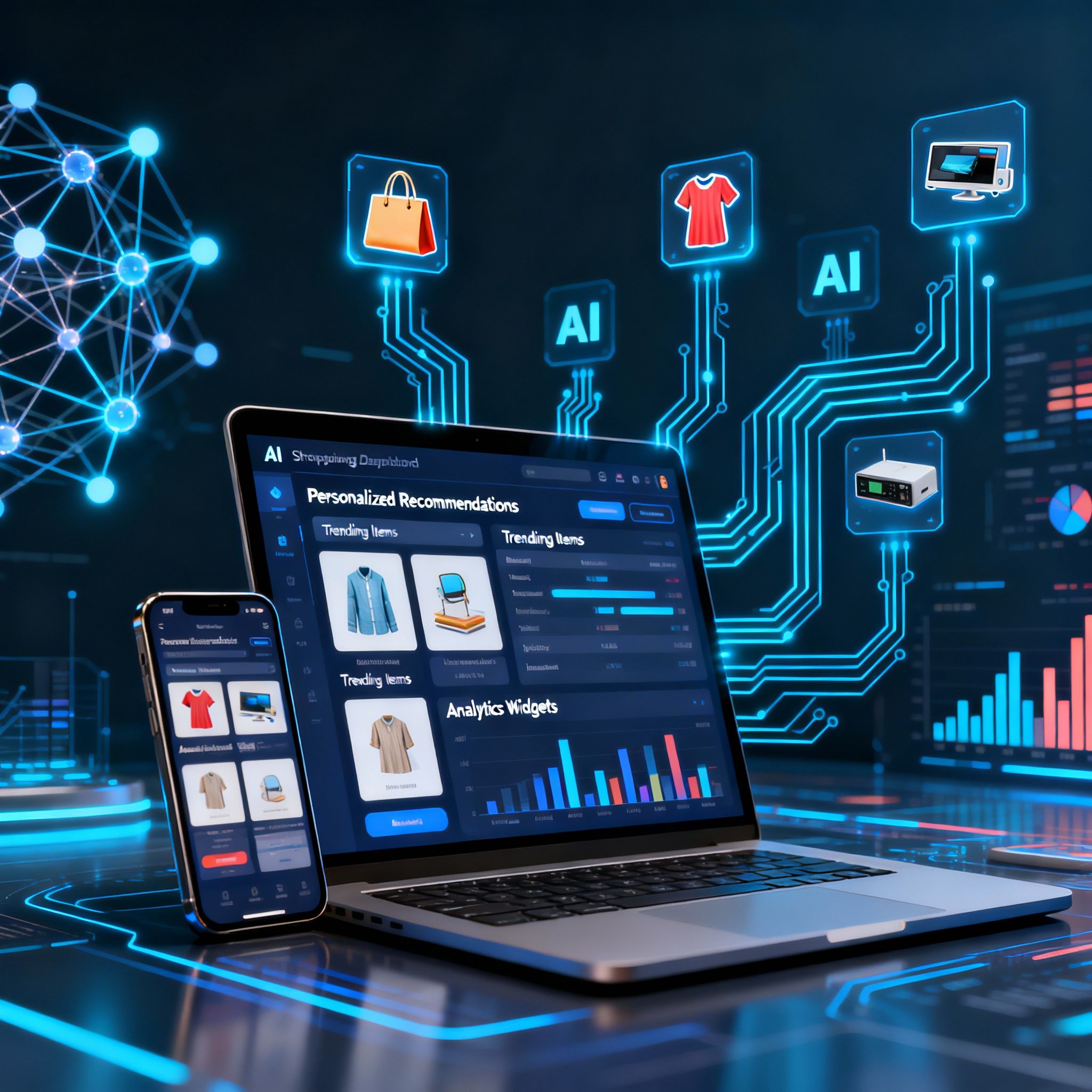
Model Type | How It Works | What It Solves |
Rule-Based Styling | Uses predefined fashion rules | Matching accuracy |
Preference-Based AI | Learns from stated likes/dislikes | Personalization |
Visual Outfit Generation | Builds looks from product catalogs | Visualization |
Each model supports AI Fashion at the styling layer.
But fashion decisions don’t stop once an outfit is generated.
How Shoppers Actually Use AI Fashion Outfit Generators
Real-world usage reveals a key pattern:
People rarely stop after one generated outfit.
Users often:
- Save a look
- Adjust pieces
- Continue browsing
- Look for alternatives that “feel right”
This behavior highlights an important truth about fashion:
Styling is logical. Choosing is emotional.
According to McKinsey’s 2024 State of Fashion report, personalization systems driven by observed behavior now outperform preference-based models in engagement and conversion across U.S. fashion retail.
This insight explains why AI Fashion is expanding beyond outfit generation alone.
Where the AI Fashion Outfit Generator Reaches a Natural Boundary
An ai fashion outfit generator excels at structure, but struggles with:
- Mood shifts
- Time-based intent
- Repetition fatigue
- Contextual relevance
For example:
- The same outfit may feel right one day and wrong the next
- Users browse differently late at night vs. midday
- Style preferences evolve faster than static inputs
This isn’t a failure of the AI fashion outfit generator.
It’s a signal that fashion discovery needs an additional layer.
Enter the AI Stylist: How Glance Aligns With the Outfit Generator Ecosystem
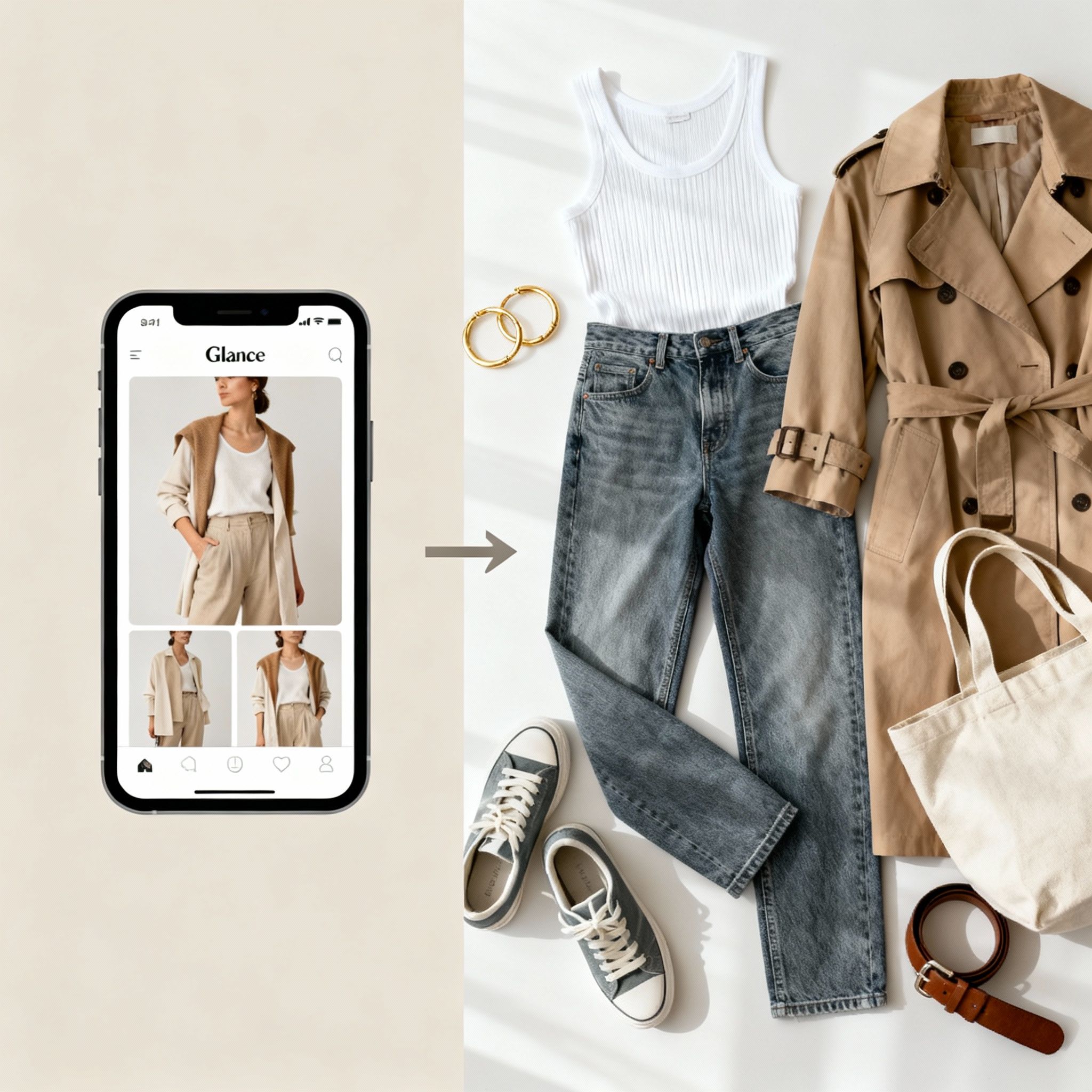
Glance is not an ai fashion outfit generator.
Instead, Glance functions as an AI stylist that supports the discovery environment around outfit creation.
Rather than generating outfits directly, Glance:
- Learns from passive behavioral signals
- Observes browsing rhythm and dwell time
- Adapts to changing interests without prompts
- Surfaces fashion inspiration contextually
This allows Glance to align naturally with how AI Fashion is evolving — without replacing outfit generators.
In simple terms:
- AI fashion outfit generators assemble looks
- Glance’s AI stylist helps users discover what resonates before they assemble
Why This Matters for Gen Z and Modern Fashion Identity
Gen Z shopping behavior is fundamentally different.
They:
- Mix aesthetics freely
- Reject rigid categories
- Expect personalization without effort
- Treat fashion as self-expression
This ties closely to digital identity and fashion, where outfits reflect mood, values, and moment—not fixed labels.
According to Deloitte’s 2024 Digital Media Trends, Gen Z expects digital experiences that feel seamless, adaptive, and intuitive, rather than instructional.
This expectation drives the rise of adaptive fashion systems within AI Fashion.
How AI Fashion Is Evolving as a System — Not a Single Tool
AI Fashion is no longer one product category.
It’s an ecosystem:
- AI fashion outfit generator tools handle styling logic
- AI personalized shopping platforms reduce friction
- AI stylists like Glance interpret behavioral context
Together, they create a fashion journey that feels:
- Less overwhelming
- More intuitive
- More aligned with identity
Search becomes optional.
Discovery becomes ambient.
Conclusion: The AI Fashion Outfit Generator Isn’t Competing — It’s Expanding
The ai fashion outfit generator remains a foundational part of modern fashion tech.
What’s changing is what surrounds it.
As fashion decisions become more emotional, contextual, and identity-driven, AI Fashion tools are specializing:
- Some build outfits
- Some guide discovery
- Some adapt continuously
Glance fits into this evolution as an AI stylist — aligned with the ai fashion outfit generator ecosystem, not positioned against it.
That’s how AI Fashion grows smarter without becoming louder.
FAQs
1. Is an AI fashion outfit generator still useful today?
Yes. It’s a great tool for creating outfit combinations, experimenting with aesthetics, and simplifying styling decisions.
2. How is Glance different from an outfit generator?
Glance doesn’t generate outfits. It learns from behavior to guide discovery—helping users find what aligns with their taste, mood, and timing.
3. Can both tools work together?
Absolutely. Outfit generators help with styling, while Glance enhances discovery. They support different stages of the shopping journey.
4. Does Glance use personal data?
Glance relies on anonymized behavioral signals like scroll patterns and dwell time—not invasive personal information.
5. Is this the future of AI fashion?
Yes. The future isn’t one tool replacing another—it’s specialized AI systems working together to reduce friction and improve relevance.
Download the Glance app now





Your intelligent
shopping agent.







Your intelligent
shopping agent.