

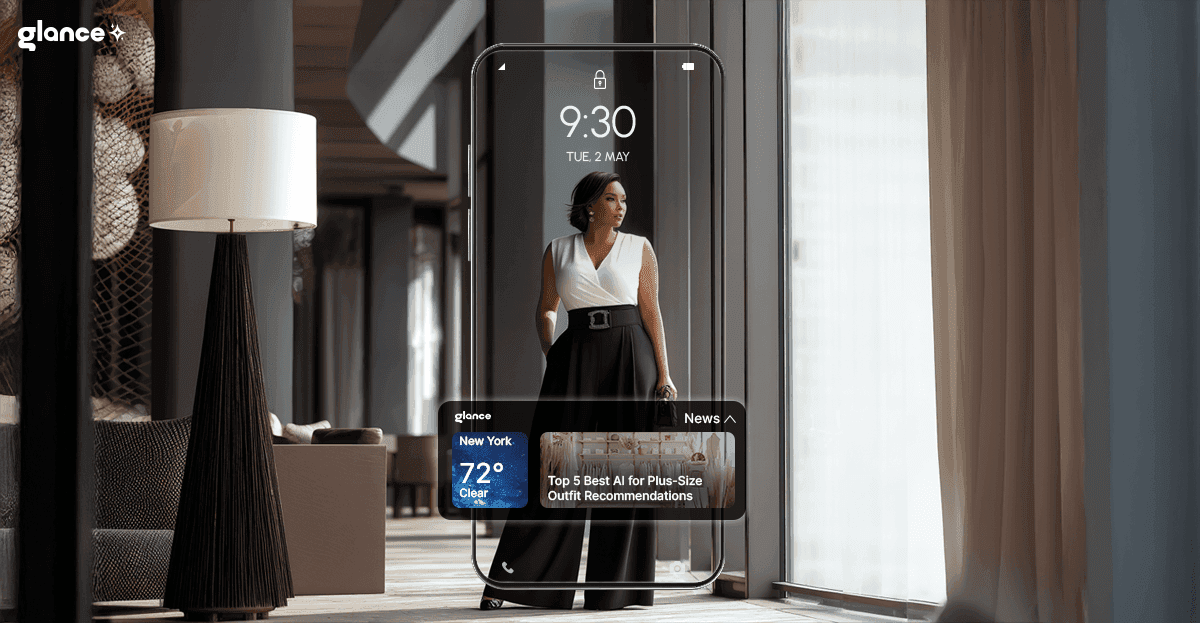
Bye, Boring Fits: Best AI for Plus-Size Outfit Recommendations
TL;DR
Finding the perfect fit shouldn't feel like a chore. In 2026, the best AI for plus-size outfit recommendations has moved beyond basic size filters to understand "Style DNA." By analyzing behavioral signals like scroll depth and dwell time, intelligent shopping agents like Glance are helping plus-size shoppers discover authentic styles that reflect their identity, not just their measurements. It’s time to move from "search-and-stress" to a seamless no-search shopping experience.
When Shopping Feels Exhausting Instead of Fun
Finding clothes that fit well—and feel authentic to your style—can still be frustrating for many plus-size shoppers.
The challenge isn’t simply about availability. It’s about relevance, representation, and personalization.
Despite growing demand for inclusive fashion, many online stores still struggle to provide meaningful recommendations for shoppers outside traditional size ranges. Yet the market itself is massive. Research shows the global plus-size clothing market reached roughly $288 billion in 2023 and continues to grow rapidly.
At the same time, consumers increasingly expect personalization in digital shopping. According to research from McKinsey & Company, 71% of consumers expect companies to deliver personalized interactions, and 76% become frustrated when they don’t receive them.
This is where artificial intelligence enters the conversation.
AI-powered styling tools aim to reduce the friction of shopping by recommending outfits that match your taste, body shape, and lifestyle. But how well do these systems actually work for plus-size shoppers?
To answer that question, we examined some of the best AI for plus-size outfit recommendations available today.
What Is AI Outfit Recommendation Technology?
Before evaluating the best AI for plus-size outfit recommendations, it helps to understand how these systems work.
Most AI styling platforms rely on a combination of technologies:
1. Machine Learning Personalization:
AI systems analyze user behavior—such as browsing history, saved items, and purchase patterns—to predict what styles a shopper may like.
2. Style Preference Modeling:
Algorithms cluster clothing items into style groups (e.g., casual, minimalist, streetwear) and match them with user preferences.
3. Behavioral Analytics
Rather than relying only on surveys, some platforms analyze how users interact with content:
- dwell time
- scroll patterns
- product clicks
- return behavior
This allows AI systems to refine recommendations over time.
4. Inventory Matching
AI engines also evaluate product attributes such as:
- color compatibility
- silhouette
- body shape fit
- seasonal trends
The goal is to assemble outfits that look cohesive rather than random product suggestions.
When executed well, these technologies power the best AI for plus-size outfit recommendations.
Why Plus-Size Fashion is a Unique Challenge for AI
Even the best AI for plus-size outfit recommendations faces structural hurdles that make inclusive styling a "Hard Mode" challenge for developers:
- Limited Data Representation: AI is only as smart as its training data. Historically, fashion datasets were flooded with images of "standard-sized" models. In 2026, brands are finally using Generative AI to create diverse model imagery, but "unlearning" the old biases takes time.
- Inconsistent Sizing Standards: A "Size 20" at one retailer might be a "Size 24" at another. This "Size Chaos" makes it incredibly hard for basic algorithms to suggest accurate fits without deep data-cross-referencing.
- Inventory Bias: You can't recommend what isn't there. Many AI tools are limited by the small plus-size assortments offered by major retailers. If the "inclusive" section only has 50 items while the "standard" has 5,000, the AI’s creative range is severely handicapped.
These challenges explain why the best AI for plus-size outfit recommendations still require improvement.
How We Evaluated the Best AI for Plus-Size Outfit Recommendations
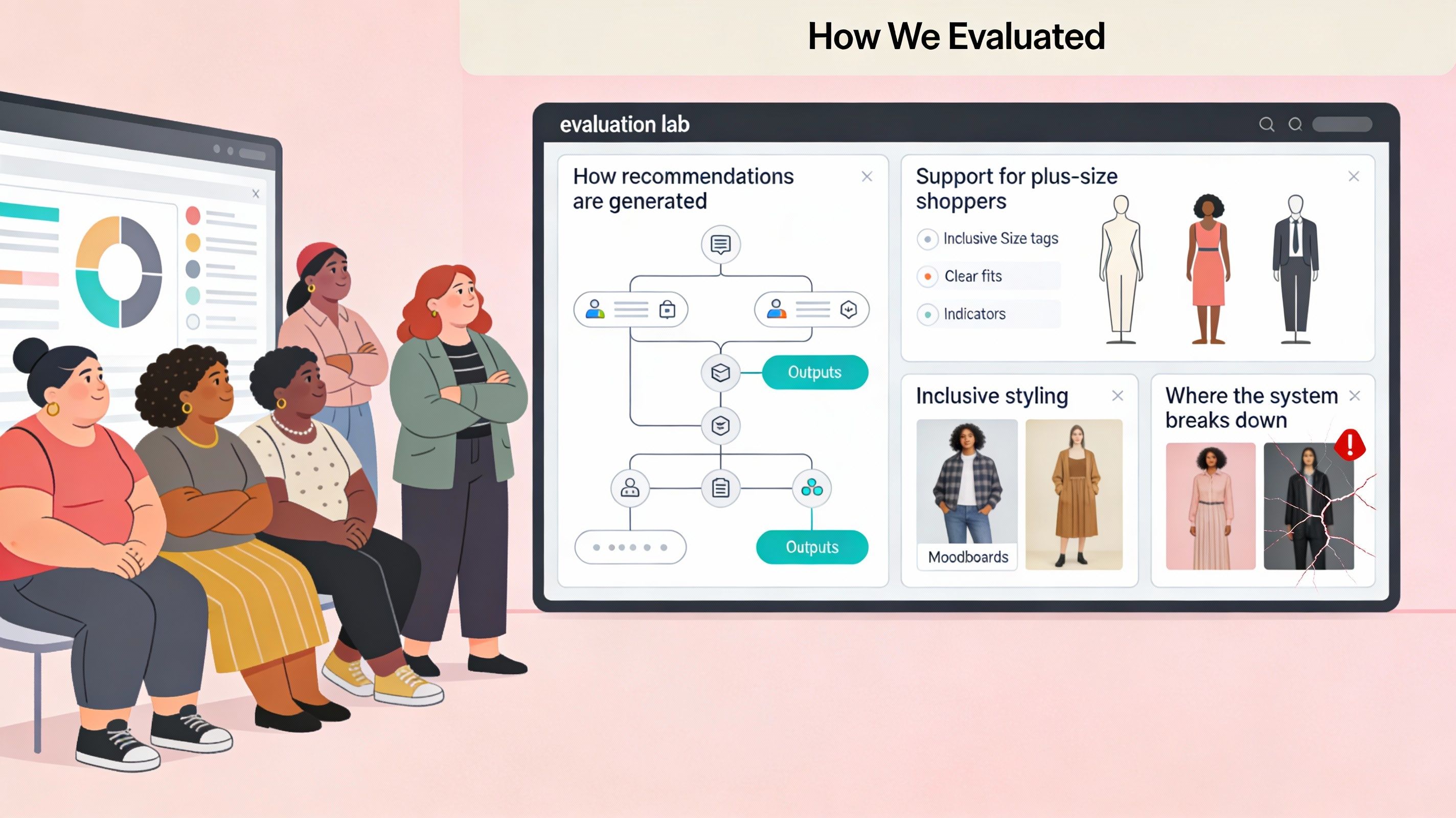
To keep this guide grounded, we evaluated these tools based on four specific metrics:
- Recommendation Engine Logic: Is it based on a static quiz or real-time behavior?
- Plus-Size Sensitivity: Does the AI understand body-specific fit issues (like torso length or arm width)?
- Aesthetic Inclusivity: Does it suggest style, or just "things that fit"?
Failure Threshold: How does the system react when it hits an inventory limit or a sizing discrepancy?
Five Popular AI Styling Tools and Their Impact on Plus-Size Fashion
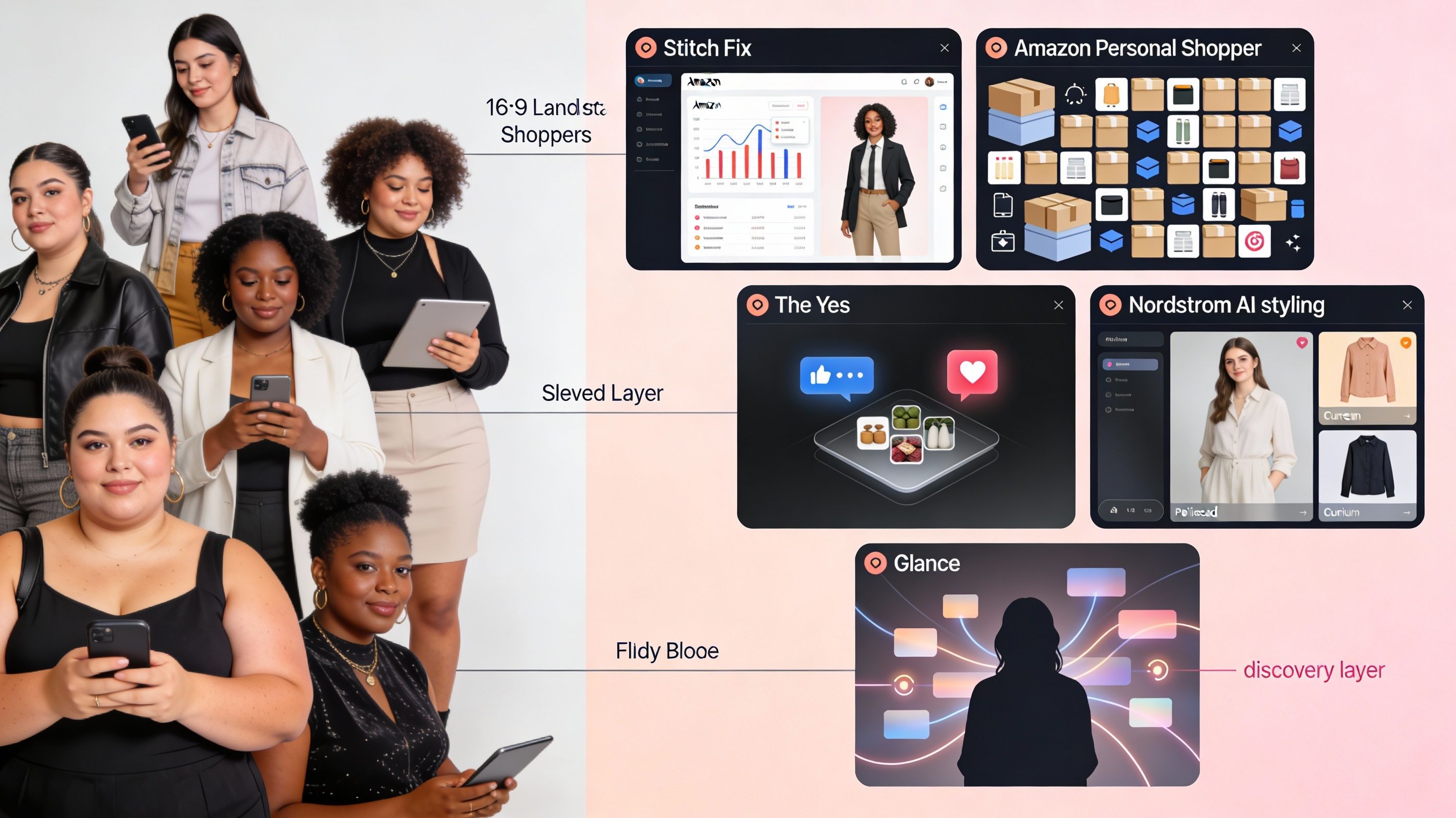
These widely used tools represent the current state of ai plus size fashion.
1. Stitch Fix — Data-Led Styling With Human Guardrails
How it works:
Stitch Fix combines machine learning with human stylists. Users fill out a style profile, including size, fit preferences, lifestyle, and budget. The algorithm suggests pieces, which stylists refine.
Why it helps plus-size shoppers:
- Extended size ranges
- Fit notes from real customer feedback
- Styling context (work, casual, events)
Where it falls short:
- Relies heavily on declared preferences
- Updates slowly when taste or mood changes
- Can feel repetitive over time
This model shows early progress in ai plus size fashion, but it still assumes people can fully describe their style upfront—which many can’t.
2. Amazon Personal Shopper — Scale Over Sensitivity
How it works:
Amazon uses browsing data, past purchases, and ratings to suggest outfits through Prime Wardrobe.
Why it helps:
- Massive inventory
- Convenient try-before-you-buy options
- Easy returns
Limitations:
- Recommendations skew transactional, not emotional
- Styling lacks cohesion
- Treats size as a filter, not an experience
This system optimizes logistics, not identity. For shoppers seeking inclusive styling fashion, that gap is noticeable.
3. The Yes — Algorithmic Personalization Done Right
How it works:
The Yes builds a preference model based on what users like, dislike, and save. It adapts quickly and filters inventory accordingly.
Strengths for plus-size shoppers:
- Learns taste over time
- Reduces irrelevant items
- Improves discovery efficiency
Where it struggles:
- Still inventory-driven
- Limited emotional context
- Styling suggestions can feel fragmented
The Yes comes close to the best AI for plus-size outfit recommendations, but it still prioritizes products over people.
4. Nordstrom’s AI Styling Tools — Polished, But Conservative
How it works:
Nordstrom blends AI recommendations with stylist-curated boards, using purchase history and browsing behavior.
What works:
- Better aesthetic cohesion
- Premium brand access
- Helpful for professional wardrobes
Limitations:
- Smaller plus-size assortment compared to demand
- Less adaptive to Gen Z style shifts
- Slower response to mood changes
This works well for stability—but not for shoppers whose style evolves weekly.
5. Glance: The Intelligent Shopping Agent
Glance takes a different approach by functioning as a behavior-led discovery layer. It doesn't just ask what you want; it observes what you love. By prioritizing micro-signals like dwell time and scroll rhythm, it identifies patterns in your "Style DNA" that you might not even have words for yet.
For the plus-size shopper, this is revolutionary because it moves past "labels." Glance acts as a supportive partner that surfaces discoveries naturally. It aligns with the "Glance It – Shop It" philosophy—enabling a lifestyle where the right styles find you, rather than you having to hunt for them.
Comparison of the Best AI for Plus-Size Outfit Recommendations
Platform | Personalization Method | Strength | Limitation |
Stitch Fix | Quiz + AI + stylists | Strong fit feedback | Slow preference updates |
Amazon | Behavioral data | Huge inventory | Weak styling cohesion |
The Yes | Preference learning | Fast adaptation | Fragmented outfits |
Nordstrom | Hybrid AI + curation | Polished styling | Limited plus-size range |
Glance | Behavioral discovery | Identity-aware discovery | Not full outfit generator |
Each platform represents a different approach to solving the same problem.
What the Best AI for Plus-Size Outfit Recommendations Actually Need to Do
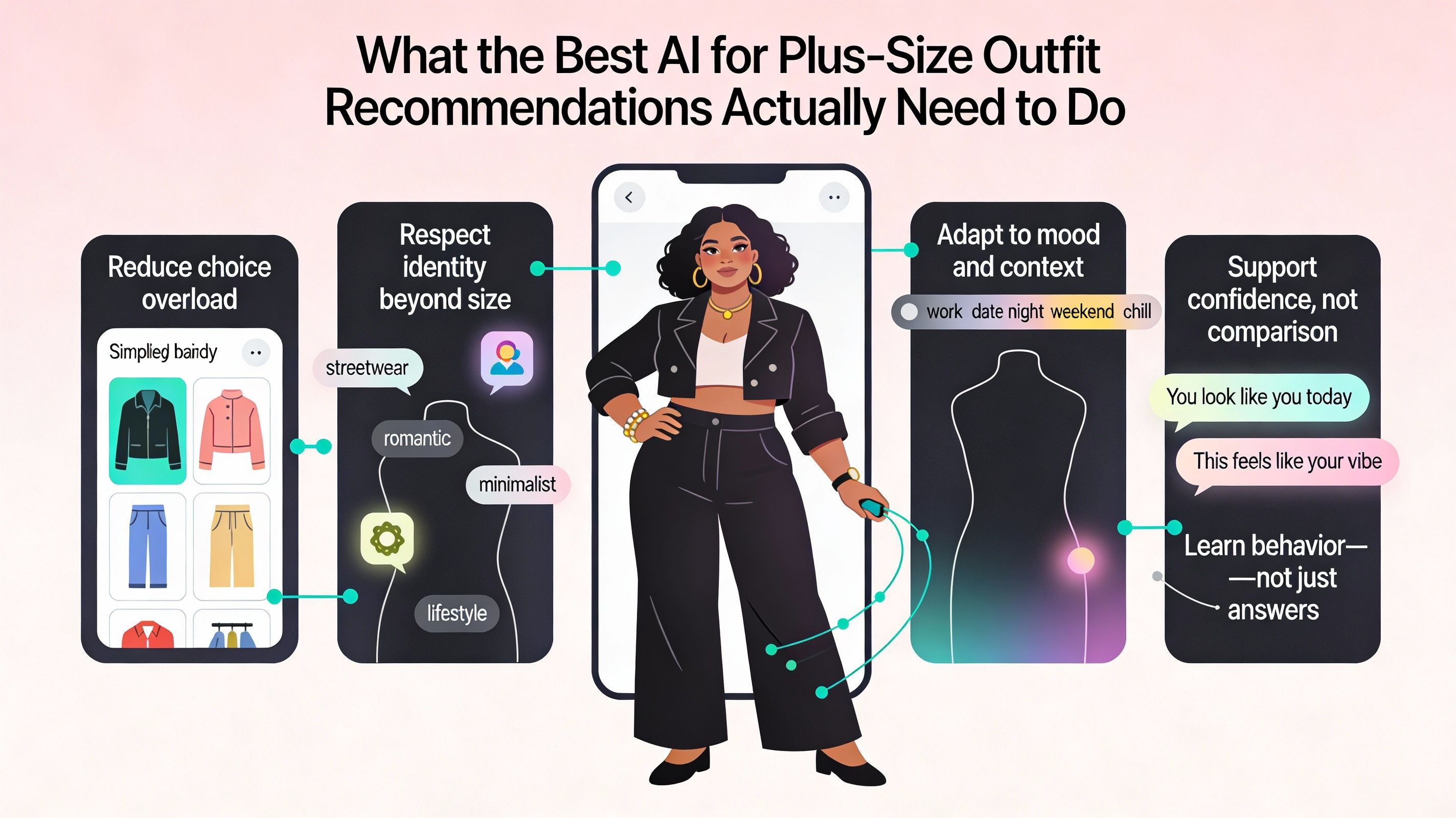
From all five systems, a clear pattern emerges. The best AI for plus-size outfit recommendations must:
- Reduce choice overload
- Respect identity beyond size
- Adapt to mood and context
- Support confidence, not comparison
- Learn behavior—not just answers
According to McKinsey’s personalization research, consumers are 76% more likely to engage when recommendations feel relevant and human—not automated.
That’s the bar.
Why This Matters for Gen Z Plus-Size Shoppers
Gen Z doesn’t shop by rules. They shop by feeling.
They mix aesthetics.
They reject rigid categories.
They expect technology to understand, not instruct.
This is why AI stylist tools that rely only on filters and presets feel outdated. The future of plus-size fashion tech lies in systems that quietly support self-expression while reducing friction.
Conclusion: It’s Not About “Better AI,” It’s About Better Understanding
The best AI for plus-size outfit recommendations in 2026 are those that combine data with context. Whether you prefer the structured curation of Stitch Fix or the fluid, real-time discovery of an agent like Glance, the goal is the same: to restore the joy of fashion.
As technology continues to evolve, we are moving away from rigid categories and toward a future of inclusive fashion discovery. The most successful tools will be those that don't just "see" a size, but truly "understand" a person.
FAQs
- What is the best AI for plus-size outfit recommendations right now?
It depends on your shopping style. Stitch Fix is ideal for those who want a curated box delivered to their door, while The Yes is perfect for fast, daily style updates. If you prefer a supportive, invisible assistant that learns your tastes through your phone's natural interactions, an intelligent agent like Glance is the modern choice for 2026. - How does AI know if a plus-size item will actually fit?
Modern AI utilizes "Body Mapping" and fabric simulation. By analyzing product metadata—such as the stretch percentage of denim or the drape of silk—alongside your digital proportions, the AI can predict with high accuracy how an item from a specific brand will realistically fit your curves before you buy. - Does AI styling help with inclusive fashion?
Yes. AI significantly reduces "inventory bias" by highlighting brands that specifically cater to your measurements. This ensures you only see relevant, available options, eliminating the frustration of falling in love with a style only to realize it doesn't come in your size.
4. How is Glance different from a regular styling app?
Glance isn't a destination app you have to manage; it’s an intelligent
shopping agent. It lives as a supportive layer on your device, using
behavioral signals to surface fashion discoveries naturally. It supports a
"no-search" lifestyle, making sure your next favorite outfit is just a glance
away.
Download the Glance app now




Your intelligent
shopping agent.







Your intelligent
shopping agent.