


Office Outfit Ideas for Every Season That Actually Work
TL;DR
Office dressing is no longer about separate wardrobes for summer, fall, winter, and spring. Your day moves between outdoor weather and indoor temperature, so your outfit needs to adjust with you. The easiest way to get it right is to follow a simple structure. Start with a breathable base. Add one structured piece to keep the look polished. Finish with a light layer you can remove or wear as needed. Build your wardrobe around versatile staples like tailored trousers, dresses, shirts, and blazers.
Getting dressed for work is no longer about summer outfits or winter outfits.
Your day moves through different temperatures. You step out into heat or cold. You walk into an office that feels completely different. Air conditioning, heating, long hours at your desk. The shift is constant.
That is why traditional seasonal dressing feels incomplete today.
You are not dressing for one climate. You are dressing for a moving environment.
Work culture has changed too.
Strict dress codes are fading. Personal style has more space. But expectations around looking put together still exist. You need outfits that feel easy and still look sharp.
For Gen Z professionals, this balance matters even more. You want comfort. You want an expression. You also want to look credible in meetings, presentations, and everyday interactions.
So the goal is simple.
Build outfits that adapt through the day. But before that learn the core formula of office outfits.
Did you know? In the U.S., 41% of workers say they usually wear business casual, 31% wear casual street clothes, 23% wear uniforms, and only 3% wear business professional clothing like suits most days.
The Core Formula Office Outfits: Comfort That Still Looks Professional

Looking polished should not feel restrictive.
Feeling comfortable should not look casual.
The sweet spot sits right in between.
The New Way to Think About Office Outfits
Instead of asking, “Is this formal enough?”
Ask, “Does this feel easy and still look intentional?”
That shift changes everything.
The 3 Layer Outfit Approach
Every strong office outfit today follows a simple structure.
1. A breathable base
This is what you wear closest to your body.
Think cotton shirts, soft tops, light dresses. Pieces that keep you comfortable when you are outside or on the move.
2. A structured piece
This adds polish. It makes the outfit feel work-ready.
Blazers, tailored pants, midi skirts. Even a well-fitted shirt can do the job.
3. A flexible layer
This is your response to AC or indoor chill.
Light jackets, cardigans, or overshirts. Easy to put on. Easy to remove.
Bonus Tip: Fabric Makes a Bigger Difference Than You Think
The same outfit can feel completely different based on fabric.
- Cotton and linen help in warmer months
- Light knits and blends work better in cooler spaces
- Layer-friendly fabrics help you transition indoors and outdoors
So the focus is not just what you wear.
It is how it feels across environments.
So, here are some ideas for outfits season-wise.
Summer Office Outfit Ideas: Staying Cool Outside, Comfortable Inside

Summer workwear is where most people struggle.
It feels hot the moment you step outside. Then you walk into an office that feels cold within minutes.
So the goal is simple.
Keep the base light. Add structure through layers.
What Works in Summer
- Lightweight dresses that do not cling
- Linen or cotton trousers that allow movement
- Sleeveless or short-sleeve tops with clean cuts
- Relaxed shirts that still hold shape
These pieces keep you comfortable when you are commuting or stepping out.
The Layer That Pulls It Together
Even in peak summer, you need a layer.
- Lightweight blazers
- Soft cardigans
- Overshirts
This is what makes the outfit feel complete in a work setting. It also helps once you are inside.
How to Style It
Keep things simple and intentional.
- Pair a breathable dress with a light blazer
- Style a cotton shirt with tailored trousers
- Go for a sleeveless top with a structured skirt
The outfit should feel easy when you move and still look sharp when you sit down at your desk.
Footwear That Makes Sense
- Loafers
- Flats
- Minimal sandals if your workplace allows
Comfort matters here, especially during longer days.
Fall Office Outfits: Where Layering Starts to Work in Your Favor

Fall is one of the easiest seasons to dress for work.
The temperature feels more balanced. Layering becomes natural, not forced.
This is where your wardrobe starts to feel more versatile.
What Works in Fall
- Light knits that are not too heavy
- Long-sleeve shirts and blouses
- Tailored trousers in slightly thicker fabrics
- Midi skirts paired with structured tops
These pieces bring in warmth without making the outfit feel bulky.
Layering Becomes the Focus
This is the season where layering starts to define your look.
- Blazer over a knit top
- Shirt layered with a light jacket
- Dress styled with a cardigan
Each layer adds depth while still being functional.
How to Style It
You can start combining summer and winter pieces here.
- A summer dress with a light jacket
- A button-down with a knit layer on top
- Trousers paired with a structured blazer
The mix creates outfits that feel fresh without needing a full wardrobe switch.
Footwear Shift
- Closed-toe flats
- Loafers
- Low boots as temperatures drop
Footwear starts to feel more structured as the season moves forward.
Winter Office Outfit Ideas: Warm, Sharp, and Easy to Layer

Winter dressing is not about piling on heavy clothes.
It is about building layers that keep you warm outside and comfortable inside.
Offices are usually heated. So you still need flexibility.
What Works in Winter
- Knit tops that sit well under layers
- Wool or thicker trousers that hold structure
- Full-sleeve dresses that feel polished
- Turtlenecks or fitted sweaters for a clean base
These pieces create warmth without making the outfit feel bulky.
Layering That Actually Works
Your outer layers do most of the work in winter.
- Structured coats
- Blazers over knits
- Longline jackets
You can remove heavier layers indoors and still have a complete outfit underneath.
How to Style It
Focus on clean combinations.
- Turtleneck with tailored trousers and a coat
- Knit dress with a blazer layered on top
- Shirt layered under a sweater with structured pants
Each look should feel balanced, not overloaded.
Footwear That Supports the Season
- Closed-toe shoes
- Loafers in thicker materials
- Ankle boots for colder days
Comfort and grip matter more during this time.
Spring Office Outfits: Light, Fresh, and Slightly Unpredictable

Spring sits right between cold and warm.
Some days feel like winter. Others feel like early summer.
So your outfits need flexibility.
What Works in Spring
- Light knits that are easy to layer
- Midi dresses that can work with or without outerwear
- Soft blouses paired with tailored bottoms
- Breathable fabrics with a bit of structure
These pieces adjust well across changing temperatures.
Layering Still Matters
Even when it feels warm, mornings and evenings can be cooler.
- Cardigans
- Lightweight jackets
- Easy blazers
These layers should feel effortless to carry or wear.
How to Style It
Spring is about mixing and easing into lighter dressing.
- Pair a knit top with a flowy skirt
- Style a dress with a soft cardigan
- Wear a blouse with trousers and a light jacket
The outfit should feel relaxed but still intentional.
Color and Feel
This is where your wardrobe can feel lighter.
- Softer tones
- Cleaner combinations
- Less heaviness in fabrics
It reflects the shift in season without changing your entire wardrobe.
Build a Wardrobe That Works All Seasons
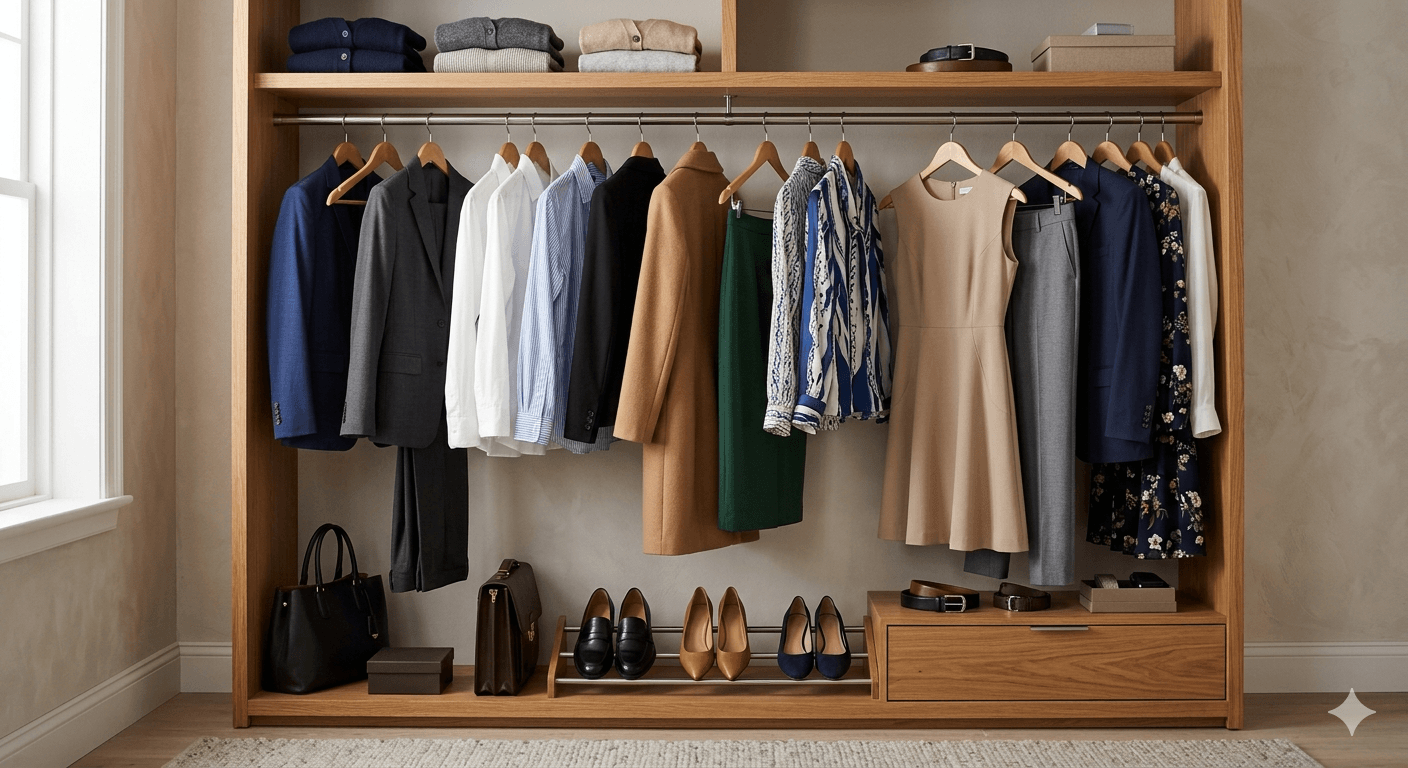
Buying clothes for one season at a time creates clutter.
You end up with pieces that only work for a few months.
A smarter approach is to build a wardrobe that rotates easily across the year.
Start with Core Staples
These are pieces that stay relevant no matter the season.
- Tailored trousers
- Midi skirts
- Button-down shirts
- Simple, structured dresses
- Blazers that are not too heavy
These items form the base of most outfits. You keep reusing them. You just style them differently.
Add Smart Layers
Layers are what make your wardrobe flexible.
- Lightweight blazers for warmer months
- Cardigans for indoor comfort
- Transitional jackets for in-between weather
You are not replacing outfits every season.
You are adjusting them.
Choose Footwear That Adapts
Shoes should work across temperatures and settings.
- Loafers
- Closed-toe flats
- Low heels
They move easily from season to season and still feel work-appropriate.
Think in Combinations, Not Pieces
A good wardrobe is not about having more clothes.
It is about having pieces that work together.
One shirt should go with multiple bottoms.
One blazer should layer over different outfits.
This is how you reduce effort without repeating the same look.
Common Mistakes That Make Office Dressing Harder
Most outfit struggles are not about lack of clothes.
They come from small decisions that do not support your day.
Dressing Only for the Weather Outside
You step out feeling fine.
You reach the office and feel too cold or too warm.
Ignoring indoor temperature is the fastest way to feel uncomfortable through the day.
Skipping Layers
One-piece outfits feel easy in the morning.
They stop working once the temperature shifts.
Without a layer, you lose flexibility.
Choosing Trends Over Function
Some pieces look great but do not hold up during long work hours.
If it restricts movement or needs constant adjustment, it will not work for office wear.
Overcomplicating Outfits
Too many elements can make an outfit feel heavy.
Simple combinations usually look more polished and feel easier to carry.
Buying for One Season Only
Clothes that work for a short time often stay unused later.
This leads to a wardrobe that feels full but not useful.
Quick Office Outfit Formulas You Can Rely On
On busy mornings, you do not need new ideas.
You need combinations that always work.
These outfit formulas are easy to repeat and adapt across seasons.
Everyday Work Look
- Button-down shirt + tailored trousers + loafers
- Add a blazer when needed
Easy Dress Option
- Midi dress + light blazer or cardigan
- Pair with flats or low heels
Smart Casual Office Look
- Structured top + midi skirt + flats
- Add a light jacket for layering
Cooler Day Outfit
- Knit top + trousers + blazer
- Works well for fall and winter
Warm Weather Office Look
- Breathable top + wide-leg pants
- Add a lightweight layer for indoors
Minimal Effort Look
- Shirt dress + simple footwear
- Add a structured layer to elevate
Each of these can shift with fabric, color, or layering.
The base stays the same.
Conclusion
Office style today is not about building separate wardrobes for each season.
It is about creating outfits that move with you.
Your day is not static.
Your outfit should not be either.
When you focus on breathable bases, structured elements, and flexible layers, everything becomes easier.
You spend less time deciding what to wear.
You feel comfortable throughout the day.
You still look put together in every setting.
That is what modern office dressing is about.
FAQs Related to Office Outfit Ideas for Every Season
What is the 3-3-3 rule for clothes?
The 3-3-3 rule is a simple wardrobe strategy where you create multiple outfits using 3 tops, 3 bottoms, and 3 pairs of shoes. It helps reduce decision fatigue and ensures every piece in your wardrobe works together. For office wear, this rule is useful because it allows you to build versatile, professional looks without needing a large closet. By mixing and matching these 9 items, you can create several polished outfits that work across different seasons with small layering adjustments.
What is the 5 5 5 rule for clothing?
The 5 5 5 rule focuses on building a balanced wardrobe using 5 tops, 5 bottoms, and 5 layering or statement pieces. This method is ideal for office dressing because it combines variety with structure. You can rotate outfits easily while maintaining a professional appearance. It also encourages thoughtful shopping, where each item complements the others, making it easier to adapt outfits for changing office temperatures and seasonal shifts.
What should I wear in an office?
What you wear to the office should balance comfort and professionalism while adapting to both indoor and outdoor conditions. Go for breathable base pieces like shirts, blouses, or dresses, paired with structured elements such as tailored trousers, midi skirts, or blazers. Add a light layer like a cardigan or jacket to handle air conditioning. Neutral colors, clean fits, and minimal styling help create a polished look that works across different seasons and office environments.
How to look classy for office?
Looking classy in the office comes down to clean silhouettes, well-fitted clothing, and simple styling. Choose structured pieces like blazers, tailored pants, or midi dresses in neutral tones. Avoid overly busy patterns and focus on quality fabrics that hold their shape. Keep accessories minimal and intentional. A well-layered outfit that fits properly and feels comfortable will always look more refined than something overly styled or trend-heavy.
How to look attractive in office for a female?
Looking attractive in the office is about confidence, fit, and balance. Choose outfits that complement your body shape while maintaining a professional appearance. Well-fitted dresses, tailored trousers, and structured tops create a polished look without feeling restrictive. Soft colors, subtle accessories, and neat grooming enhance your overall presence. The key is to feel comfortable in what you wear, because confidence naturally makes any outfit look more appealing.
Download the Glance app now





Your intelligent
shopping agent.







Your intelligent
shopping agent.