


What Zero Click Shopping Means: How It Is Changing the Way You Buy
TL;DR
Zero click shopping is a shift in ecommerce where users no longer need to actively search, compare, or navigate multiple pages before buying. Instead, AI systems use predictive commerce, behavioral signals, and automated shopping flows to surface or even complete purchases for users. It reduces decision fatigue, shortens the buying journey, and enables product recommendations that are increasingly context aware. While still evolving, it is already visible in auto reorders, voice commerce, and predictive shopping ai systems.
Zero click commerce is shopping where an AI agent predicts what you want, shows it before you search, and completes checkout in the same experience. There is no hunting, no tab-comparing and no re-entering card details. It runs on personal signals, prediction models, multi-agent orchestration and trusted payment rails like PayPal. At Glance, we call it agentic shopping.
You already know the routine: you search, you scroll, you compare, you buy. That sequence is starting to collapse, not because shopping is disappearing, but because searching is. Zero click commerce, also called zero click shopping, isn't a feature or a button. It's a shift in how decisions get made. Instead of you hunting for products, the system anticipates what you need, narrows the options and, with your approval, completes the purchase.
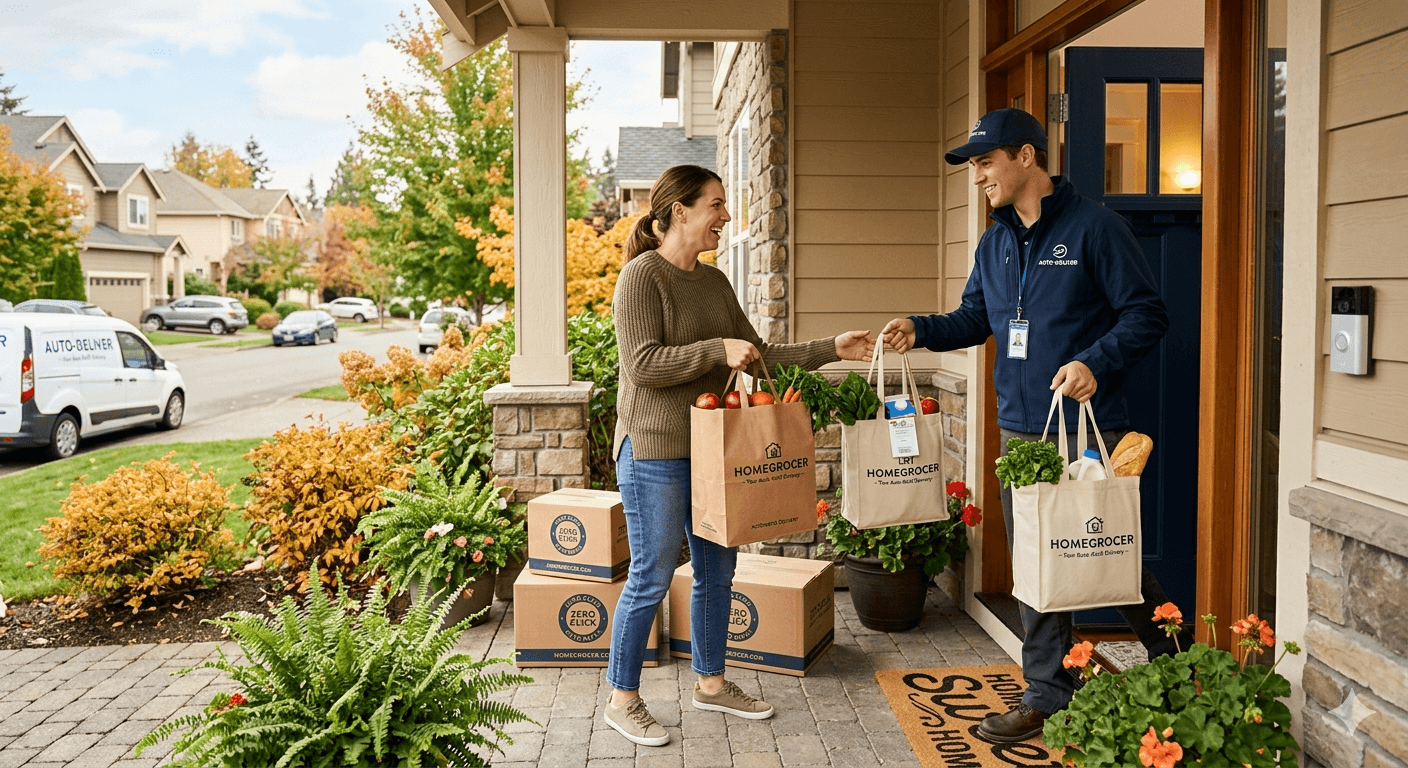
Traditional Shopping vs Zero Click Shopping
Traditional e-commerce assumes you know what you want and will find it. Real shopping rarely starts that way. People don't think "I want product X." They think "I need something that solves this." That gap creates three kinds of friction:
- Decision overload. Too many options create hesitation instead of clarity.
- Comparison fatigue. You jump between tabs, reviews and listings without confidence.
- Delayed intent. You may be ready to buy but still need to validate the choice.
Zero click commerce, also called zero click shopping, targets all three. Amazon's 1-Click ordering, launched in 1997, removed friction at checkout. Zero click goes further, because the agent also handles discovery and decision support before you ever type a query.
| Traditional e-commerce | One-click (e.g., Amazon 1-Click) | Zero click commerce (agentic shopping) | |
| Who starts the journey | You search | You search | The agent surfaces ideas at the moment of inspiration |
| Discovery | Manual browsing and tabs | Manual | Predicted and personal to you |
| Comparison | You | You | The agent explains why it fits |
| Checkout | Multi-step forms | One click on a stored card | Native, inside the experience (e.g., PayPal on Glance) |
| Where it happens | Websites and apps | Retailer site or app | Lock screen, connected TV, voice (Siri), AI surfaces |
| Main friction removed | None | Checkout | Search, decision fatigue and checkout |
Shopping keeps moving online. US retail e-commerce reached $340.2 billion in Q2 2026, or 17.1% of total retail sales, up 12.2% year over year, according to the US Census Bureau. The next shift is from searching to being served.
Can Zero Click Commerce Increase Conversion Rates and Speed Up Purchase Cycles?
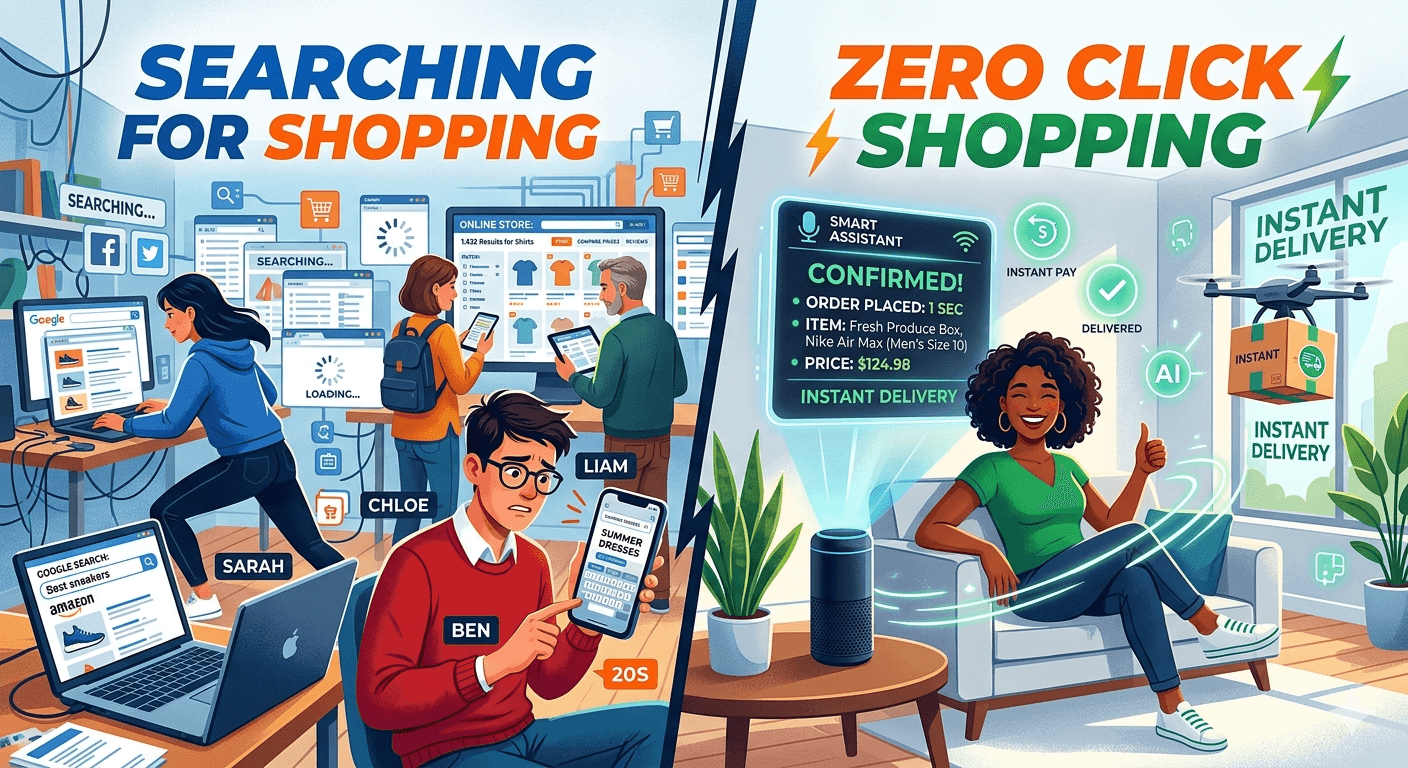
Yes, early evidence points to higher conversion, mainly because zero click commerce removes the steps where shoppers drop off. The evidence is encouraging but not yet causal.
What the data shows
- Adobe: During the 2025 holiday season (November 1 to December 31), AI-referred visits to US retail sites converted 31% better than other traffic, based on over one trillion visits. AI traffic grew 693.4% year over year, and these shoppers were 33% less likely to bounce.
- Salesforce: Retailers that deployed their own AI agents saw 6.2% year-over-year sales growth versus 3.9% for others, a 59% higher growth rate. Salesforce estimates AI and agents influenced 20% of holiday retail sales.
Why it's faster
Most lost sales are friction, not indecision. Baymard Institute's review of 50 studies puts average cart abandonment at 70.22%. Of shoppers who abandon, 17% cite a long or complicated checkout, 18% were forced to create an account and 40% hit surprise extra costs. Native checkout, like PayPal inside Glance, removes the redirect, the form and the account wall.
What we're still learning
These figures are correlations. AI-referred shoppers may simply arrive with higher intent. Trust also matters: in a Gartner survey of 322 US consumers (January 2026), willingness to let AI make purchase decisions topped out at 11%. Consumers want help narrowing choices, not to hand over the decision. That is why Glance keeps you in control of every purchase.
How does Zero Click Commerce Impact Revenue Models and Device Engagement?
Zero click commerce shifts revenue from winning clicks to winning recommendations, and it moves shopping onto the devices people already use all day.
From clicks to outcomes
When the agent completes the purchase, value moves to whoever is trusted at the moment of decision. Four revenue models are emerging:
- Commission or affiliate fees on completed sales.
- Sponsored placements inside AI answers, an area platforms are still testing.
- Retail and commerce media. eMarketer forecasts US retail media spending at $74.4 billion in 2026, up 22.6%.
- Platform and payment partnerships. PayPal's agentic commerce services let merchants connect to multiple AI shopping experiences through a single integration, and Mastercard Agent Connect offers one integration point for merchants, agents and payment providers.
The device is the new storefront
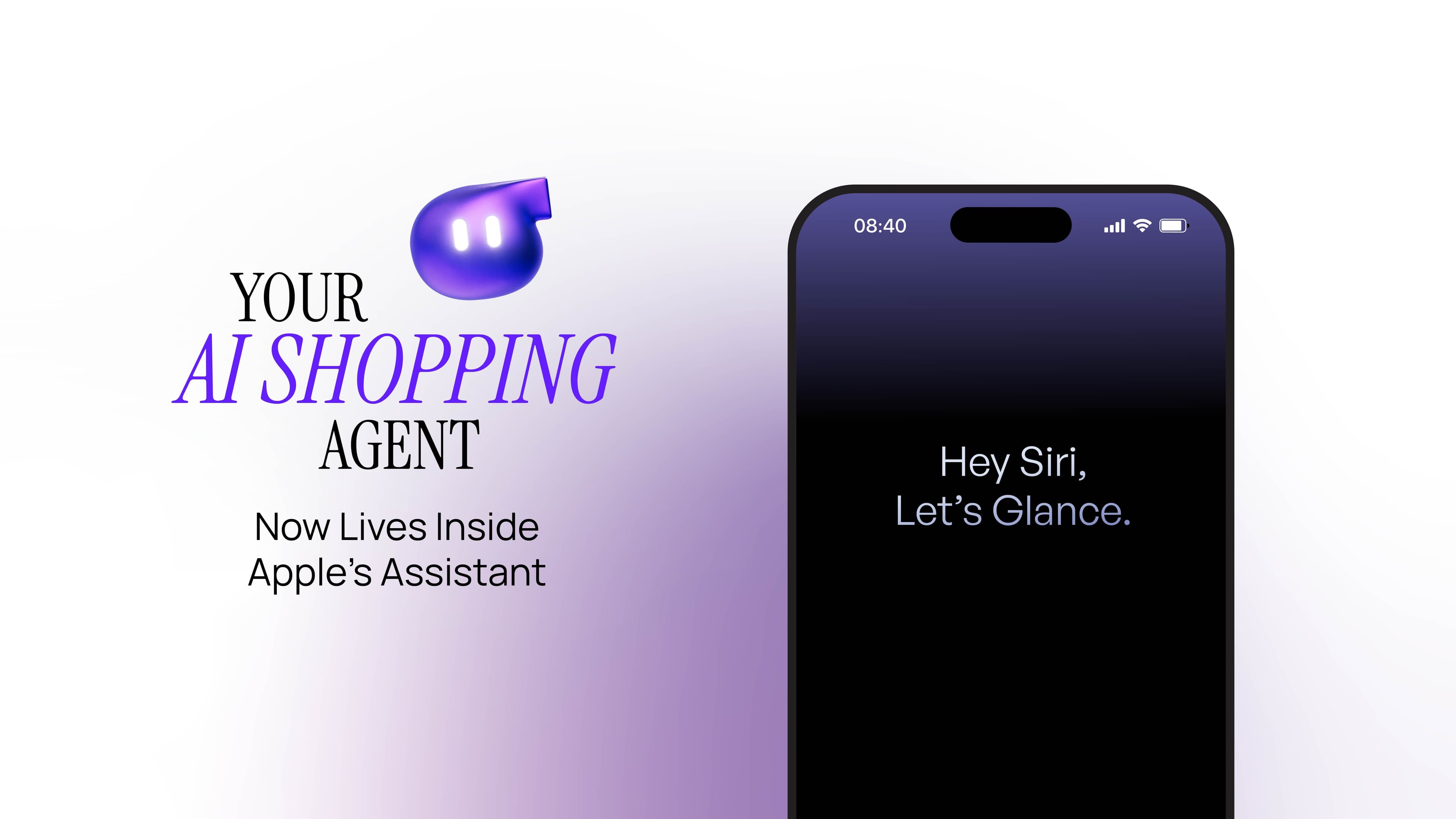
When discovery doesn't need a search bar, the lock screen, the connected TV and the voice assistant become storefronts. Glance is embedded across more than 60 million mobile and CTV devices, through partners including Samsung, Motorola, DirecTV, Google's Android TV and two of the top three US mobile operators. In September 2026, Glance also brought its shopping agent to iPhone and iPad users through Siri.
On engagement, Glance (2026) has about 14 million monthly active users in the US and roughly 75–80% of those users coming back daily.
What is Zero Click Commerce, and How Does AI Enable It?
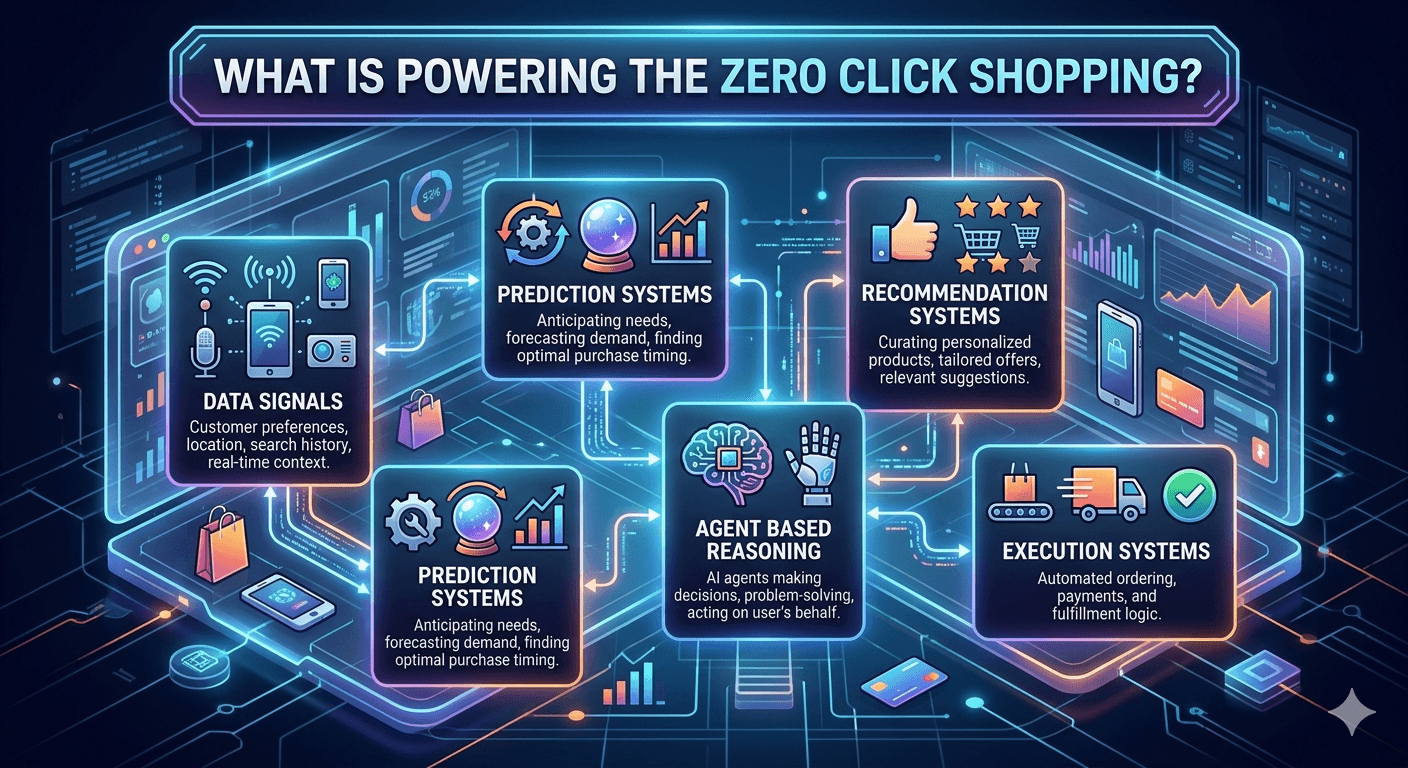
AI enables zero click commerce through six connected layers. Each one removes a manual step between inspiration and purchase.
- Signals. The agent reads context (occasion, location, weather, trends) and preferences, and, if you choose to share a selfie, style attributes for personalized looks.
- Prediction. Intent models anticipate what you will want next. Glance builds this on its [Commerce Context Graph](internal link: Commerce Context Graph explainer), where shopping behavior meets personal context.
- Orchestration. A multi-agent system divides the work: finding products, comparing options, assembling the look and building the cart.
- Connectivity. Open standards let agents reach live catalogs, inventory and carts. Model Context Protocol (MCP) connects agents to tools and data. Google's Universal Commerce Protocol (UCP, January 2026) is designed to work with MCP, A2A and AP2.
- Checkout rails. Payment networks complete the purchase securely. PayPal's agentic commerce services power native checkout in Glance. Mastercard Agent Pay uses Verifiable Intent to confirm a purchase matches the shopper's authorization. Visa Intelligent Commerce Connect accepts agent payments across several protocols through one integration.
- Trust and control. The shopper approves purchases and can see why something was recommended.
The standards landscape is still moving. OpenAI launched Instant Checkout in ChatGPT in September 2025 on the Agentic Commerce Protocol, then in March 2026 shifted focus to product discovery and let merchants use their own checkout. Build on open protocols, not on any single platform's checkout.
How to Experience Almost Zero Click Shopping with Glance
Getting closer to zero click shopping is less about changing how you shop and more about changing who does the hunting. Here's how it works with Glance, your intelligent shopping agent.
- Open Glance and set up your profile. Share your style preferences, size and what you like. Add a selfie if you want looks visualized on you. It's optional, and you stay in control.
- Explore looks curated for your moments. Instead of searching, you see ready-made looks for work, travel or a night out.
- See it on you. Glance generates complete outfits visualized on your own body, not a generic model, so you can judge the fit before you buy.
- Refine as you go. Chat to tweak a look: more casual, a different color, a different shoe. Every interaction teaches Glance your taste.
- Check out without leaving. Glance announced native PayPal checkout on October 15, 2026, so you can pay in the same flow without being redirected to another site. On iPhone and iPad, you can also reach Glance through Siri.
Glance it. Shop it.
Risks, Trust and Control
Convenience is only useful if you stay in charge. Four things matter most:
- Approval. You should confirm a purchase before money moves. Mastercard Agent Pay uses Verifiable Intent to check that a purchase matches what the shopper authorized.
- Transparency. A good agent explains why it recommended something, so you can judge it.
- Privacy. Share only what makes the experience feel personal to you, such as style preferences or an optional selfie, and check each platform's privacy policy.
- Limits of trust. In Gartner's January 2026 survey of 322 US consumers, willingness to let AI make purchase decisions topped out at 11%. Most people want help narrowing choices, not a fully automated purchase. For higher-value or complex purchases, keeping a human in the loop is the right default.
Conclusion
Zero click commerce is the gradual removal of search as the main interface between intent and purchase. Prediction finds what you need, orchestration builds the look, and trusted payment rails complete the order. The change isn't that you click less. It's that you're asked to decide less often, because an intelligent agent decides with you, in the moments that matter.
Glance is leading the era of agentic commerce. Open Glance, share your style, and see what it finds before you search. Glance it. Shop it.
FAQs Related to Zero Click Shopping
1. What is zero click commerce?
Zero click commerce is a way of shopping where AI removes the manual steps between wanting something and owning it. An intelligent shopping agent reads your context, surfaces products before you search, and completes checkout in the same experience on trusted payment rails. At Glance, we call this agentic shopping. Glance it. Shop it.
2. How does AI enable zero click commerce?
AI enables zero click commerce through four layers. Signals capture your context and preferences, and you can add a selfie for style. Prediction models anticipate intent. Multi-agent orchestration finds, compares and builds the cart. Checkout rails such as PayPal's agentic commerce services or Mastercard Agent Pay then complete payment securely with your authorization.
3. Can zero click commerce increase conversion rates?
Early data says yes. Adobe found AI-referred visits to US retail sites converted 31% better than other traffic in the 2025 holidays, and Salesforce found retailers running their own AI agents grew sales 6.2% versus 3.9%. These are correlations, not controlled tests, so merchants should measure lift with holdout groups.
4. Does zero click commerce speed up the purchase cycle?
It shortens the steps where most shoppers drop off. Baymard Institute finds 70.22% of online carts are abandoned, and 17% of shoppers abandon because checkout is too long or complicated. Zero click commerce collapses discovery, comparison and checkout into one flow, though public data on the exact time saved is still limited.
5. How does zero click commerce affect revenue models?
It shifts revenue from clicks toward outcomes. Platforms can earn through commission on completed sales, sponsored placements inside AI answers and retail media. eMarketer forecasts US retail media spending at $74.4 billion in 2026. For brands, the goal moves from winning a click to becoming the recommendation.
6. How does zero click commerce change engagement on phones and TVs?
It moves shopping onto surfaces you already use every day, like the lock screen, connected TV and voice assistants. Instead of opening an app to search, you meet products at the moment of inspiration. Glance is embedded across more than 60 million mobile and CTV devices through partners like Samsung, Motorola and DirecTV.
7. What's the difference between one-click and zero click commerce?
One-click buying, popularized by Amazon's 1-Click, removes checkout steps after you've already found a product. Zero click commerce goes further, because AI also handles discovery and decision support and anticipates what you want before you search. One-click shortens the last mile. Zero click rethinks the whole journey.
8. Is zero click commerce the same as agentic commerce?
They overlap but aren't identical. Agentic commerce is the broader model where AI agents discover, compare and transact on your behalf. Zero click commerce describes the experience that model creates: fewer manual steps between inspiration and purchase. Glance is leading the era of agentic commerce, and zero click shopping is how it feels.
9. Is zero click commerce safe, and who stays in control?
It runs on payment networks you already trust. Mastercard Agent Pay uses Verifiable Intent to confirm purchases match your authorization, and PayPal completes checkout inside Glance without redirecting you. You stay in control: you approve purchases, set your preferences and can see why something was recommended.
10. What data does zero click commerce use, and what about privacy?
It uses signals you choose to share, such as style preferences, past interactions or a selfie for personalized looks, plus context like the occasion. Responsible platforms explain why something was recommended and let you edit or delete preferences. Share only what makes the experience feel personal to you, and check each platform's privacy policy.
11. What is MCP, and how does it fit into zero click commerce?
Model Context Protocol (MCP) is an open standard that lets AI agents connect to external tools and data, such as product catalogs, inventory and carts, through one consistent interface. In zero click commerce, MCP lets an agent query live merchant data and act on it. Google's Universal Commerce Protocol is designed to work alongside MCP, A2A and AP2.
12. How do AI agents talk to each other in agentic commerce?
Through agent-to-agent (A2A) protocols, a shopper's agent can hand tasks to a merchant's or payment provider's agent. For example, it can request real-time stock, then pass an authorized cart to checkout. Standards such as Google's UCP, OpenAI's Agentic Commerce Protocol and Visa Intelligent Commerce Connect reduce one-off integrations.
Download the Glance app now





Your intelligent
shopping agent.






Your intelligent
shopping agent.