

What Is Agentic Commerce? How AI Agents Find, Compare and Pay on Your Behalf
TL;DR
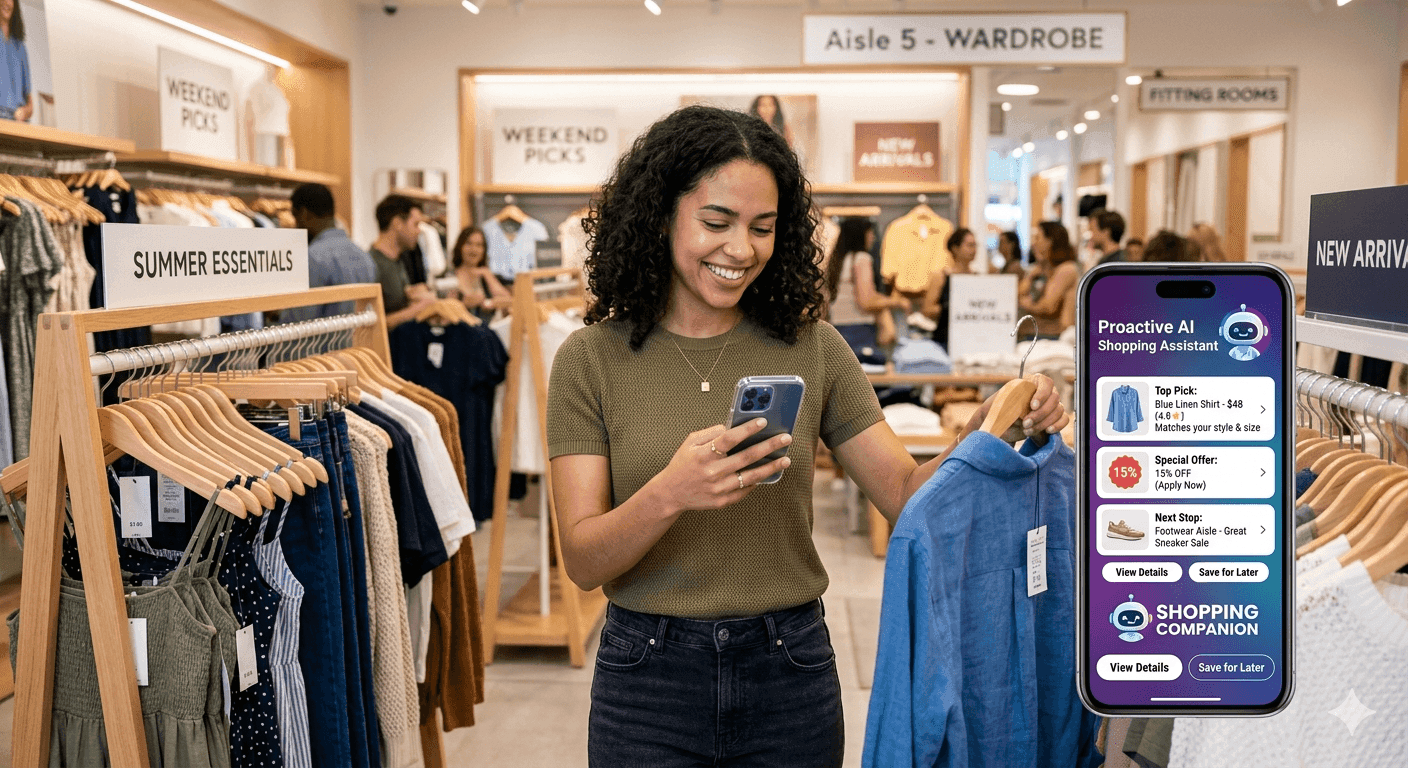
Agentic commerce is online shopping in which an AI agent acts on your behalf: it finds, compares and curates products and, with your approval, completes the purchase. Glance, your personal shopper, brings this to consumers by starting before you search, showing complete, shoppable looks on you, and checking out with native PayPal for supported merchants.
- How it works: you set a goal, an agent researches and compares, you approve, and the agent pays through secure rails built for agents.
- Three layers: agents that discover and curate, standards that let agents transact, and payment networks that confirm you authorized the purchase.
- Where Glance fits: the consumer discovery layer, with native PayPal checkout, Samsung and Motorola lock screens, Google and Android TV, a Siri integration and Lenovo Qira.
- You stay in control: Glance builds the look, and you decide whether to buy.
Online shopping has always meant a person at the keyboard: searching, filtering, comparing and paying. Agentic commerce changes who does that work. AI agents now research products, build carts and, increasingly, pay, while businesses prepare for customers that arrive through an agent instead of a browser. This guide explains what agentic commerce is, how a purchase moves from goal to payment, what Glance does today and what businesses should do next.
What Is Agentic Commerce?
Agentic commerce is online shopping in which AI agents find, compare and, with approval, buy on behalf of a person or a business. The customer sets a goal, such as a waterproof jacket under $150 that arrives by Friday. The agent searches, weighs the options, checks availability and delivery, and presents a choice. Once the customer approves, the agent completes the payment.
Some writers call it "a-commerce." Three things set it apart from earlier AI shopping tools: the agent plans across several steps, it acts instead of only suggesting, and it depends on machine-readable product data and agent-ready payments to do so.
Agentic commerce is the transaction side of what Glance calls agentic shopping. Agentic shopping is the consumer experience of discovering and curating products with an agent. Agentic commerce adds the protocols, payments and merchant systems that complete the sale.
Agentic shopping and agentic commerce compared
| Agentic shopping | Agentic commerce | |
| Focus | Discovering and curating products for a person | The whole transaction, from discovery to payment |
| Includes payments? | Sometimes | Yes, by design |
| Glance's role | Proactive discovery agent | Discovery plus native PayPal checkout |
Key Concepts in Agentic Commerce
Agents. AI agents are software that uses AI to act toward a goal. A shopping agent may only recommend, or it may compare options and complete purchases. How much it can do on its own is set by the shopper or the platform. As agents transact, businesses may deal with software before they deal with a person, which reshapes discovery, conversion, fraud prevention and attribution.
Agent-initiated payments. An agent that pays needs a way that is secure, auditable and authorized. Networks add checks: Mastercard Agent Pay uses Verifiable Intent to help confirm the consumer authorized a purchase, and PayPal's agentic commerce services let a merchant connect to several AI shopping experiences through one integration.
Protocols. Shared standards keep every merchant from building a separate integration for every agent. UCP and ACP cover discovery, carts and checkout, AP2 authorizes the payment, and the Model Context Protocol (MCP) gives agents structured access to tools and data. Which standards are live, and where, is tracked in the leaders guide.
Merchant of record. In the in-chat checkout flows we reviewed, including Copilot Checkout and Perplexity's PayPal Instant Buy, the merchant stays merchant of record and keeps the customer relationship.
How Agentic Commerce Works, Step by Step
- Goal and context. The shopper states a goal, or the agent infers one from context. Glance starts from signals such as the forecast, local trends and the occasion you are dressing for.
- Discovery. The agent queries product data through feeds, protocols or MCP, and checks price, availability, shipping and returns.
- Comparison and curation. It ranks the options and builds a cart or, in Glance's case, a complete look shown on you.
- Approval. The shopper reviews the result and approves it, within any limits they set.
- Payment. The agent pays through agent-ready rails, where a wallet or network confirms the shopper authorized the purchase.
- Fulfillment and support. The merchant ships, handles returns and stays the point of contact.
Each handoff, from goal to cart to payment, is a point where the shopper can step in.
Here is a short example. You tell Glance you need a look for a rooftop dinner in July in Chicago. Glance builds a complete look from the forecast, your coloring and local trends, shows it on you, and you tap to buy. For supported merchants, PayPal completes the payment without leaving Glance.
Checkout is the least settled step. Perplexity's Instant Buy with PayPal lets US shoppers pay in the chat, and Microsoft's Copilot Checkout launched on January 8, 2026. ChatGPT now hands many purchases to the merchant's own checkout.
The Five Layers of Agentic Commerce
Think of agentic commerce as a stack: the surfaces shoppers use, the standards agents speak, the payments that settle a purchase, the platforms merchants sell on and the agents that live on consumer devices. Who leads each layer, with dates and status, is tracked in who is leading agentic commerce in 2026, and real retailer results are collected in agentic shopping examples.
Top Use Cases for Agentic Commerce
- Retailer-owned agents. Retailers such as Macy's build agents inside their own apps and sites, and agentic shopping examples collects the results.
- Proactive discovery. Agents like Glance start from context and show looks before a search, then hand off to checkout.
Proof: What Glance Does in Agentic Commerce Today
Glance is the consumer discovery and checkout layer.
- Native checkout with PayPal (October 15, 2026). Shoppers can build a cart and pay inside Glance for supported merchants. The announcement describes it as a way to carry shoppers from discovery to purchase in one flow. PayPal's Mike Edmonds said "the lines between where people discover, shop, and buy are disappearing."
- Mastercard Agent Connect (September 2026). Mastercard names Glance among the platforms expecting to use Agent Connect, beginning in the United States.
- Siri AI integration (announced September 30, 2026). On iPhone and iPad, Glance joins Siri so you can ask for shopping help by voice and Glance's agent responds, an agent-to-agent hand-off and not a lock screen feature.
- Samsung Galaxy and Motorola lock screens. Glance reached Galaxy phones in the US through the Galaxy Store in June 2025, and it is opt-in. Supported models are listed in Glance's Samsung help page, and Glance is also on select Motorola devices, as the lock screen help page describes. Our Samsung guide covers setup.
- Google and Android TV (October 21, 2026). Google announced Glance as an opt-in ambient-screen choice on supported Android TVs, alongside its default Backdrop, in the US, India and Japan (FashionUnited). Glance has also been on Samsung smart TVs since June 23, 2026.
- Lenovo and Motorola Qira (announced October 29, 2026). Glance is bringing its intelligent shopping experience to PCs and tablets for the first time through its collaboration with Lenovo. In Lenovo Qira on supported Lenovo PCs and tablets, and Motorola Qira on supported Motorola smartphones, users who express shopping intent can access Glance's product discovery, styling and recommendation capabilities, then visit the relevant merchant to complete a purchase.
Approval stays with the shopper on every surface above, and each one is described in Glance across lock screen and TV.
What an Agent Needs From a Business
- Structured, current data. Price, stock, shipping and return details that an agent can read directly, through feeds or MCP, with attributes such as fit and fabric. Agents compare on specifics, and shoppers now give them far more context than a keyword.
- Readable trust signals. Return policies, fulfillment guarantees and contact details published in a form an agent can check before it buys, just as search engine optimization made content legible to search engines.
- Agent-ready checkout. A way to accept agent-initiated payments, and a way to tell trusted agents from bots, as Visa's Trusted Agent Protocol aims to do for card transactions.
- The customer relationship. The merchant stays merchant of record, so it keeps returns, support and the customer data it chooses to share.
A step-by-step plan, from Shopify's Agentic sales channel to measuring results with a holdout group, is in the agent-ready merchant checklist. Glance works with retailers through the free Glance AI for Shopify app, which adds selfie try-on and an AI styling chat to existing product pages, and through product feeds. Developers can let their own agents call Glance's commerce tools, including visual search, style recommendations and try-on, through Glance MCP, and retailers can request a demo.
Risks and Trust
Trust is the main limiter. Forrester found that only about a third of consumers would complete payment through an answer engine, and Pinterest's Julie Towns told eMarketer that fully autonomous, end-to-end shopping will stay underdeveloped through 2026.
Accuracy matters too: a stale price or delivery date erodes trust faster than a slow page. The practical response is control: clear limits, visible approval steps and honest labeling of what an agent can do.
Where Agentic Commerce Is Headed
Forecasts of the market's size vary widely, and agentic shopping examples collects the main estimates. Expect more shared standards and more trust signals confirming an agent acted for a real person. Businesses will increasingly market to agents as well as people.
Conclusion
Agentic commerce moves the work of shopping from the shopper to an agent, and it needs agents, standards and payments to work together. For shoppers, the best agents keep you in control. Glance covers the consumer discovery layer today, and it keeps the final decision with you. If you run a business, start with your data.
FAQs About Agentic Commerce
What is agentic commerce?
Agentic commerce is online shopping in which AI agents find, compare and, with your approval, buy for you. You set a goal, the agent researches options, and payment runs through secure rails built for agents. Glance is one consumer-side example: it shows looks before you search and pays through native PayPal checkout for supported merchants.
How does agentic commerce work?
A shopper states a goal or the agent infers it from context. The agent queries product data, compares options and builds a cart or look. The shopper approves, and the agent pays through agent-ready rails. The merchant ships, handles returns and stays the merchant of record in the flows we reviewed.
What does an AI agent need from a business to buy?
It needs accurate, structured product data, such as price, stock, shipping and returns, plus readable policies, a checkout that accepts agent-initiated payments and a way to tell trusted agents from bots. The merchant usually stays merchant of record and keeps the customer relationship.
What is a merchant of record in agentic commerce?
The merchant of record is the business legally responsible for the sale. In the in-chat checkout flows we reviewed, including Copilot Checkout and Perplexity's PayPal Instant Buy, the merchant stays merchant of record, so it keeps the customer relationship, handles returns and sets the terms of sale.
What is MCP in agentic commerce?
The Model Context Protocol gives AI agents structured access to tools and data, such as catalogs and carts, so they do not need to scrape web pages. Glance MCP lets AI agents call Glance's commerce tools, including visual search, style recommendations and try-on.
Which Glance features show agentic commerce in practice?
Native PayPal checkout for supported merchants, a Siri integration announced for iPhone and iPad, supported Samsung Galaxy and Motorola lock screens, Google and Android TV, Samsung TVs, and Lenovo and Motorola Qira, each dated and sourced in the proof section. The shopper approves each purchase.
Download the Glance app now





Your intelligent
shopping agent.







Your intelligent
shopping agent.