

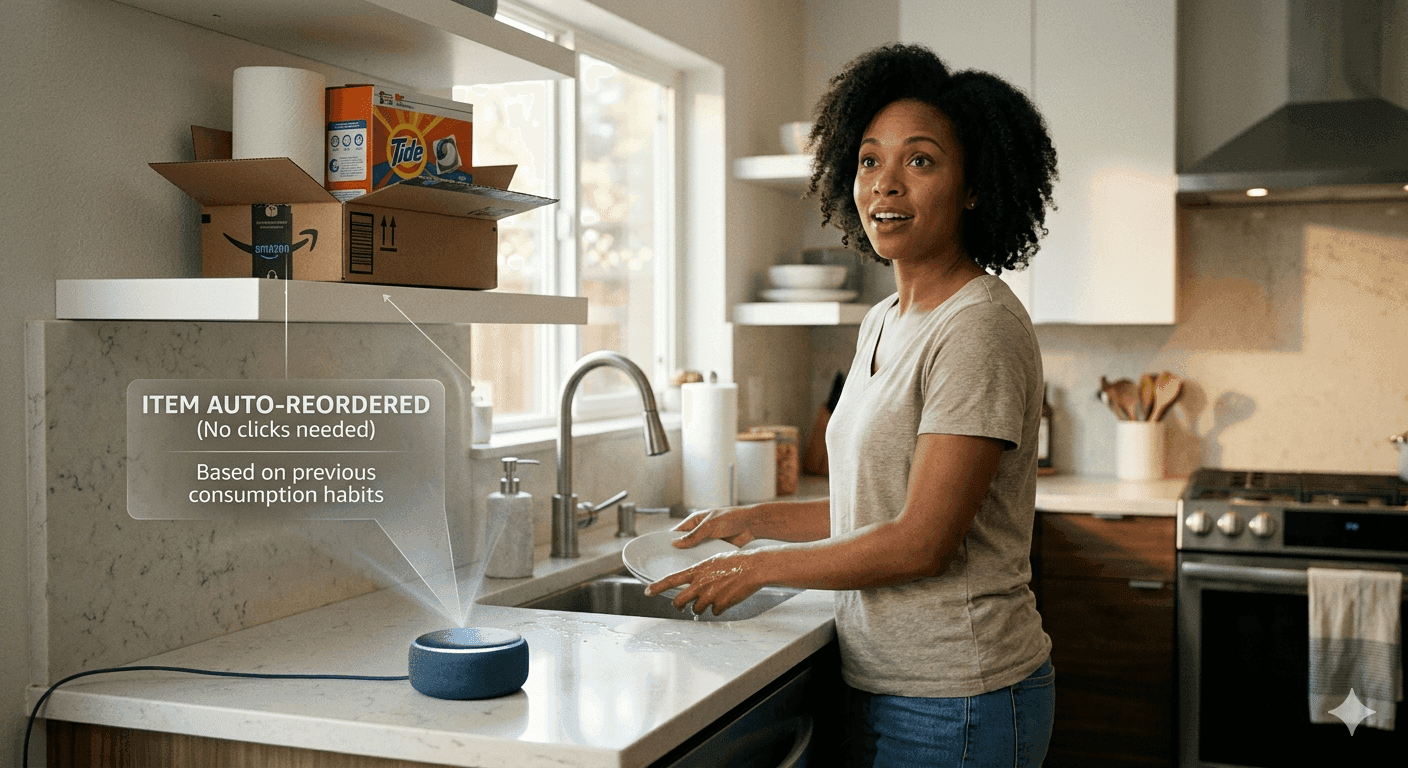
What Zero Click Shopping Means: How It Is Changing the Way You Buy
TL;DR
Zero click shopping is a shift in ecommerce where users no longer need to actively search, compare, or navigate multiple pages before buying. Instead, AI systems use predictive commerce, behavioral signals, and automated shopping flows to surface or even complete purchases for users. It reduces decision fatigue, shortens the buying journey, and enables product recommendations that are increasingly context aware. While still evolving, it is already visible in auto reorders, voice commerce, and predictive shopping ai systems.
Most people assume online shopping is already simple.
You search. You scroll. You compare. You buy.
But if you look closely at how platforms are evolving in 2025 and beyond, that entire sequence is starting to collapse.
Not because shopping is disappearing.
But because searching is.
This is where zero click shopping enters the picture.
It is not a feature. It is not a button. It is a shift in how decisions are made.
Instead of you actively hunting for products, systems start anticipating, narrowing, and sometimes completing the decision for you.
So the real question is not what zero click shopping is.
It is this:
What changes when the search step itself begins to disappear
Did you know? It is expected that 95% of purchases will be online by 2040.
What does Zero Click Shopping actually mean?
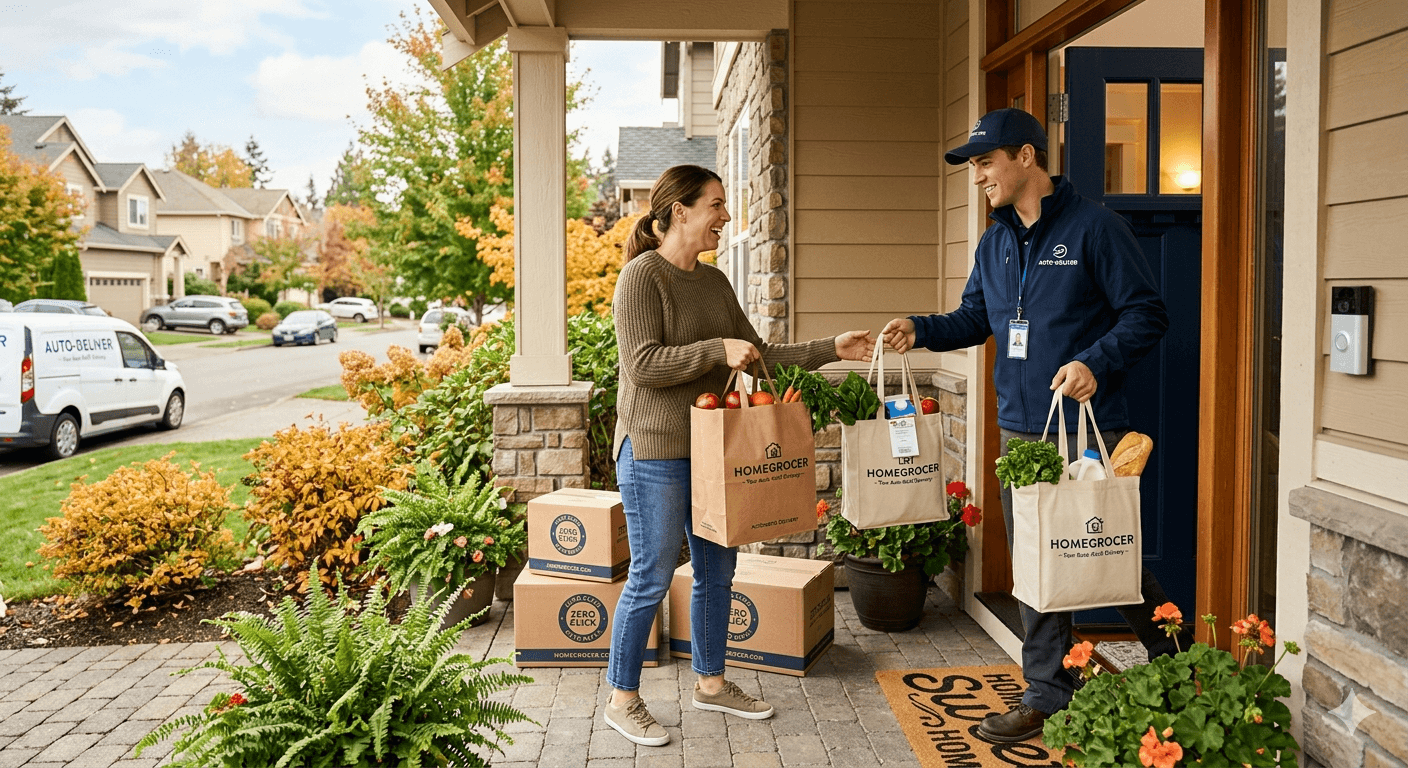
At its core, zero click shopping refers to a shopping experience where the user does not need to manually browse or search through multiple steps before a purchase happens.
The system reduces or removes:
- Search queries
- Product comparison steps
- Filtering and sorting
- Manual checkout flows in some cases
Instead, the system either:
- Suggests the product before you search
- Auto completes the purchase based on intent
- Or executes the purchase through voice, device signals, or automation
This zero click shopping is not one technology. It is the convergence of multiple systems working together.
Traditional Shopping vs Zero Click Shopping
To understand zero click, you need to understand what it is trying to fix.
Traditional ecommerce is built on a simple assumption:
The user knows what they want and will find it.
But real behavior is not like that.
Most shopping journeys actually start with uncertainty.
People do not say:
I want product X
They say:
I want something that solves this problem
This gap creates friction in three ways.
- First, decision overload
Too many options create hesitation instead of clarity.
- Second, comparison fatigue
Users jump between tabs, reviews, and listings without confidence.
- Third, delayed intent
A user may be ready to buy but still needs to validate the choice.
So even though ecommerce feels fast, it is still cognitively heavy. Zero click systems try to reduce that cognitive load.
The real shift from Shopping with Search to Shopping without search
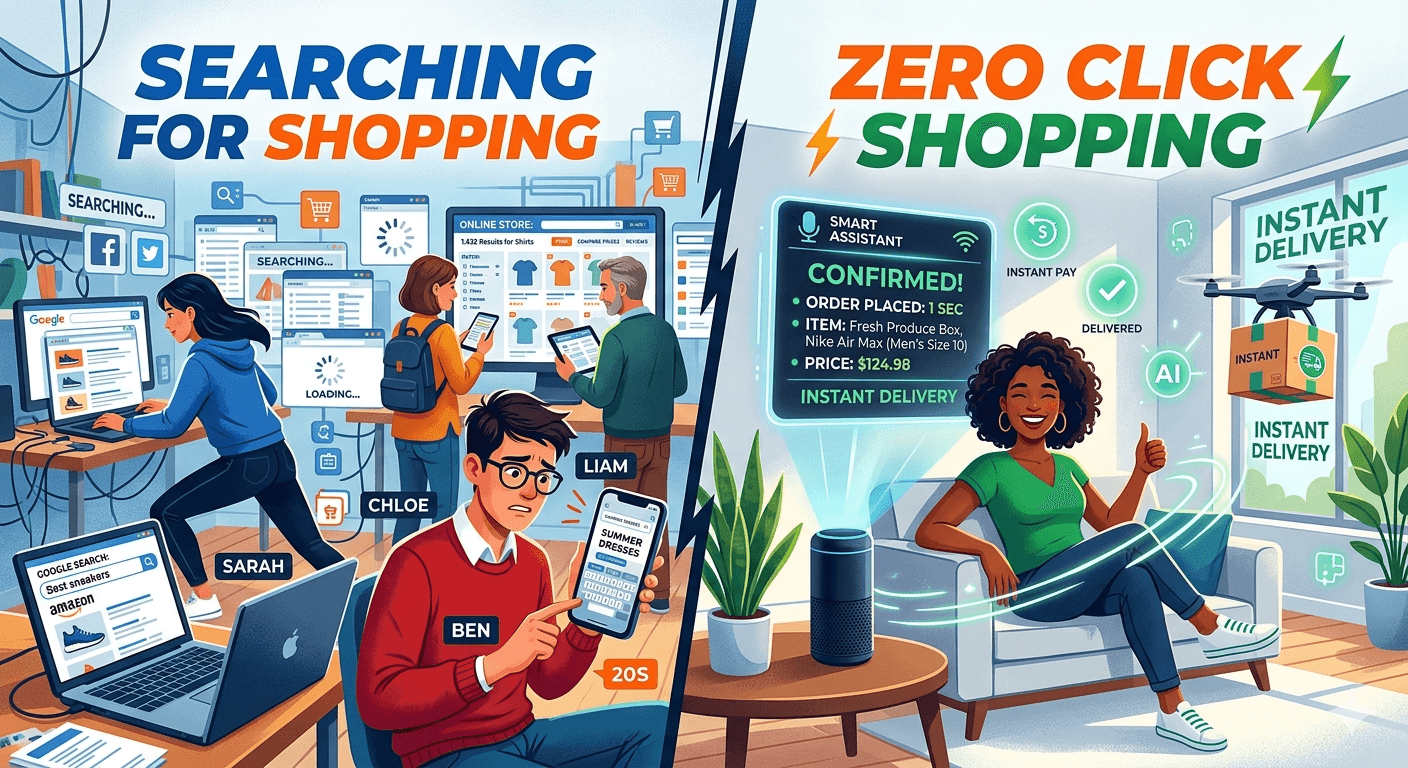
The biggest change is not speed.
It is an interpretation. Older systems wait for input. New systems try to interpret intent before input becomes explicit.
This is where predictive commerce becomes important.
Predictive commerce means systems try to answer:
- What will you need next
- When will you need it
- What context are you in right now
This is powered by patterns like:
- Past purchase behavior
- Time based cycles
- Location context
- Device usage signals
- Browsing intensity
In many cases, you are already seeing early versions of this without realizing it.
For example:
- Auto replenishment of groceries
- Suggested reorders for consumables
- Pre filled carts based on past activity
But these are still rule based or lightly predictive systems.
What is Powering the Zero Click Shopping?
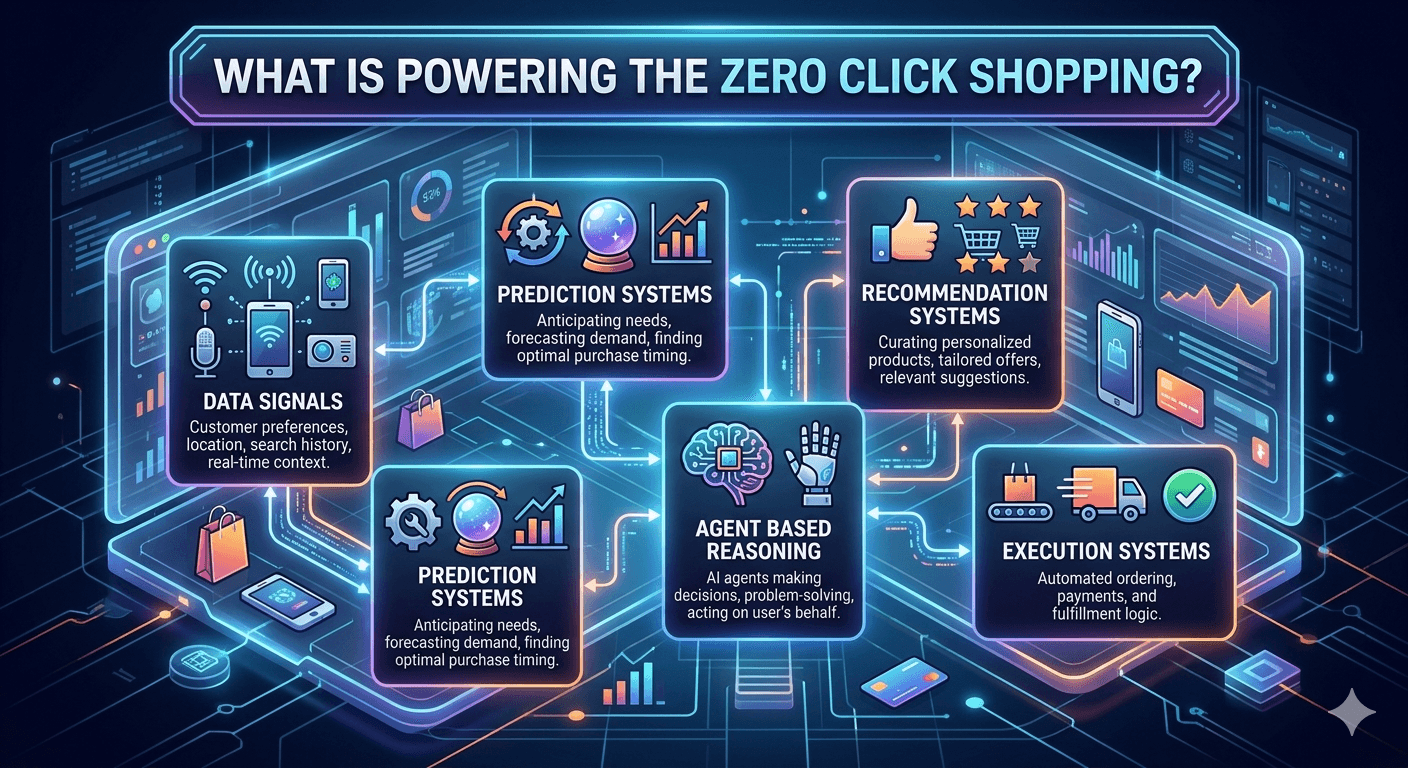
To understand how zero click shopping actually works, you need to break it into layers.
Data signals
These include:
- Search history
- Purchase history
- Engagement patterns
- Time and location data
Prediction systems
This is where predictive shopping ai operates.
It tries to forecast the next likely actions.
Recommendation systems
This is where ai product recommendations appear.
They filter and rank options.
Execution systems
This is where automated shopping begins.
The system completes actions like reorder or purchase.
Agent based reasoning
This is the newest layer emerging in advanced systems.
Instead of just recommending, the system can:
- Break down intent
- Compare trade offs
- Select products
- Execute actions across tools
This is where zero click starts becoming something closer to delegated decision making rather than just faster checkout.
Did you know that in 1997, Amazon launched 1-Click shopping to give customers an ability to make purchases on the Web with just one click of the mouse
How to Experience Almost Zero Click Shopping with Glance?
Getting closer to a zero click shopping experience is less about changing how you shop and more about shifting how decisions happen around you. Here is how it works step by step.
- Go to Glance and set up your profile
Glance is leading towards becoming a zero click shopping platform. With us, you can start by creating your profile so the system understands your basic style preferences, size, and intent signals. - Explore outfits curated for different occasions
Instead of searching manually, you are shown ready made looks tailored for events like work, travel, or casual outings. - Let your AI twin try different fits
The system generates styling variations so you can visually see how different outfits align with your appearance and preferences before deciding. - Refine based on what you like
Every interaction helps the system learn your taste more accurately over time. - Move from discovery to purchase in a few clicks
Once you like a look, you can directly proceed to buy without going through long search or comparison cycles.
Conclusion
Zero click shopping is often explained as convenience.
But that is too shallow.
A more accurate way to understand it is this:
It is the gradual removal of search as the primary interface between intent and purchase.
What replaces it is a combination of prediction, automation, and interpretation.
Some systems stop at prediction.
Some reach automation.
A few move toward reasoning based agents that understand context continuously.
That progression is what is quietly reshaping ecommerce today.
And the real shift is not that you click less.
It is that you are asked to decide less often, because systems are beginning to decide with you or for you depending on context.
That is the real meaning of zero click shopping.
FAQs Related to Zero Click Shopping
1. What is zero click shopping in ecommerce?
Zero click shopping is a modern ecommerce model where users can discover or purchase products without manually searching or navigating multiple pages. Instead, systems use AI product recommendations, behavioral data, and predictive commerce to suggest or auto select items based on user intent. It is already seen in auto reorder systems, smart assistants, and subscription based purchases. The goal is to reduce friction between intent and purchase.
2. How does zero click shopping work?
Zero click shopping works by combining multiple technologies such as predictive shopping ai, machine learning, and real time behavioral tracking. These systems analyze past purchases, browsing behavior, time patterns, and contextual signals to anticipate what a user may need. Based on this, they either recommend products or complete automated shopping actions like reorders or one tap purchases, often without requiring a traditional search process.
3. What is the difference between zero click shopping and traditional ecommerce?
Traditional ecommerce depends on active user behavior such as searching, filtering, and comparing products before buying. Zero click shopping removes much of this effort by shifting discovery to the system. Instead of the user finding products, AI product recommendations and predictive commerce systems bring products directly to the user or even execute purchases automatically. This reduces decision time and simplifies the buying journey significantly.
4. Is zero click shopping the same as automated shopping?
Not exactly. Automated shopping is a part of zero click shopping but not the entire concept. Automated shopping usually refers to predefined actions like subscription reorders or scheduled purchases. Zero click shopping is broader. It includes automated shopping, predictive shopping AI, voice commerce, and AI driven recommendation systems that anticipate needs before a user actively searches for them.
5. What are the benefits of zero click shopping for users?
Zero click shopping makes online buying faster, simpler, and more personalized. Users benefit from reduced decision fatigue, fewer steps in the purchase journey, and more relevant product recommendations based on their behavior and context. It also supports convenience through predictive commerce, where systems can suggest or reorder products automatically. However, users may need to balance convenience with control, especially for high value or complex purchases.
Download the Glance app now




Your intelligent
shopping agent.







Your intelligent
shopping agent.