

4 Technologies Improving Your AR-Powered Shopping Experience
TL;DR
AR powered shopping is moving far beyond virtual try ons. With advances in artificial intelligence, blockchain, 5G connectivity, and cloud computing, the entire retail journey is becoming more immersive, personalized, and trustworthy. AI sharpens recommendations and adapts AR experiences in real time. Blockchain adds transparency and product authenticity. 5G supports smooth, high fidelity AR overlays even in crowded environments. Cloud computing brings large scale processing power that lets retailers offer richer virtual experiences without heavy devices. Glance's AI Twin sits adjacent to this space too — though as this article explains, it's generative AI-based virtual try-on, not AR in the technical sense.
Augmented Reality (AR) is no longer a futuristic concept. Today, it’s reshaping the way we shop, blending digital content with our physical world to create immersive, interactive, and personalized experiences. From trying on outfits virtually to visualizing furniture in your living room, AR is redefining convenience and engagement in retail.
But what powers this revolution? It’s a combination of cutting-edge technologies working behind the scenes to make AR-powered shopping experience seamless, secure, and smart. In this blog, we explore the four key technologies improving your AR shopping experience and how they are changing the way consumers interact with brands.
What Is AR-Powered Shopping?
AR-powered shopping uses augmented reality to overlay digital elements on the real world, giving users a more interactive experience. Instead of relying on imagination or static images, shoppers can see products in real-time, test functionality, or experiment with style, all from their smartphone, tablet, or AR-enabled device.
Applications of AR in retail range across multiple sectors with recommendable adaptation rate:
AR retail applications span several sectors, though real, verifiable adoption-rate data by sector is harder to come by than the marketing claims suggest. What's actually citable: Gartner projects 80% of retail brands will use AR for customer engagement by 2025, and fashion-specific AR adoption is growing 20–28% annually, per Research and Markets, the fastest of any retail category tracked. Fashion (virtual try-ons) and furniture (home-space visualization) remain the two most common use cases in practice; grocery and automotive AR exist but are considerably earlier-stage.
Top Technologies Improving Your AR-Powered Shopping Experience
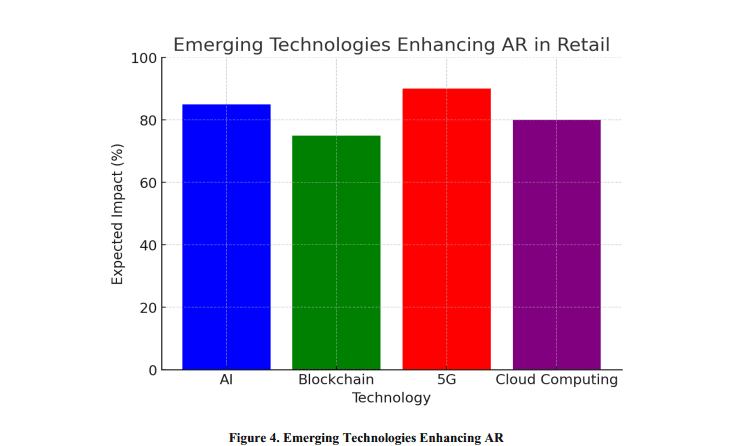
Image Source: ITM Web of Conferences
1. Artificial Intelligence (AI): Personalized Shopping at Its Best

AI is the backbone of personalized AR-powered shopping experience. It analyzes user behavior, preferences, and past purchases to offer tailored product suggestions.
- Recommendation Engines: AI identifies what users are likely to love, highlighting complementary products in real time.
- Visual Recognition: Combined with AR, AI can detect objects in a user’s environment, overlaying relevant products instantly.
- Interactive Assistance: AI chatbots or virtual assistants guide users through AR shopping, offering tips, answering questions, and suggesting variations.
By understanding each shopper individually, AI ensures AR-powered shopping experience feel intuitive, relevant, and highly engaging. For instance, a virtual try-on session for shoes could automatically recommend matching accessories or alternate color options based on AI insights.
2. Blockchain: Ensuring Transparency and Trust

Blockchain technology addresses one of the biggest concerns in eCommerce: trust. For AR-powered shopping, blockchain ensures that product authenticity, purchase records, and supply chain data are transparent and secure.
- Product Authenticity: Buyers can verify that a luxury item is genuine, even when exploring it virtually in AR.
- Secure Transactions: Blockchain ensures safe payments for AR-driven purchases, reducing fraud risks.
- Immutable Records: Every transaction, from AR trials to completed purchases, can be recorded and stored securely, creating trust for both retailers and consumers.
Incorporating blockchain into AR retail strengthens consumer confidence, especially for high-value items. LVMH, Prada, and Cartier founded the Aura Blockchain Consortium, built with Microsoft and ConsenSys, specifically to let shoppers verify a luxury item's authenticity and history on-chain — a real, named example of this making digital try-ons feel as credible as in-store experiences, not just a theoretical benefit.
3. 5G Technology: Speed and Seamless Connectivity
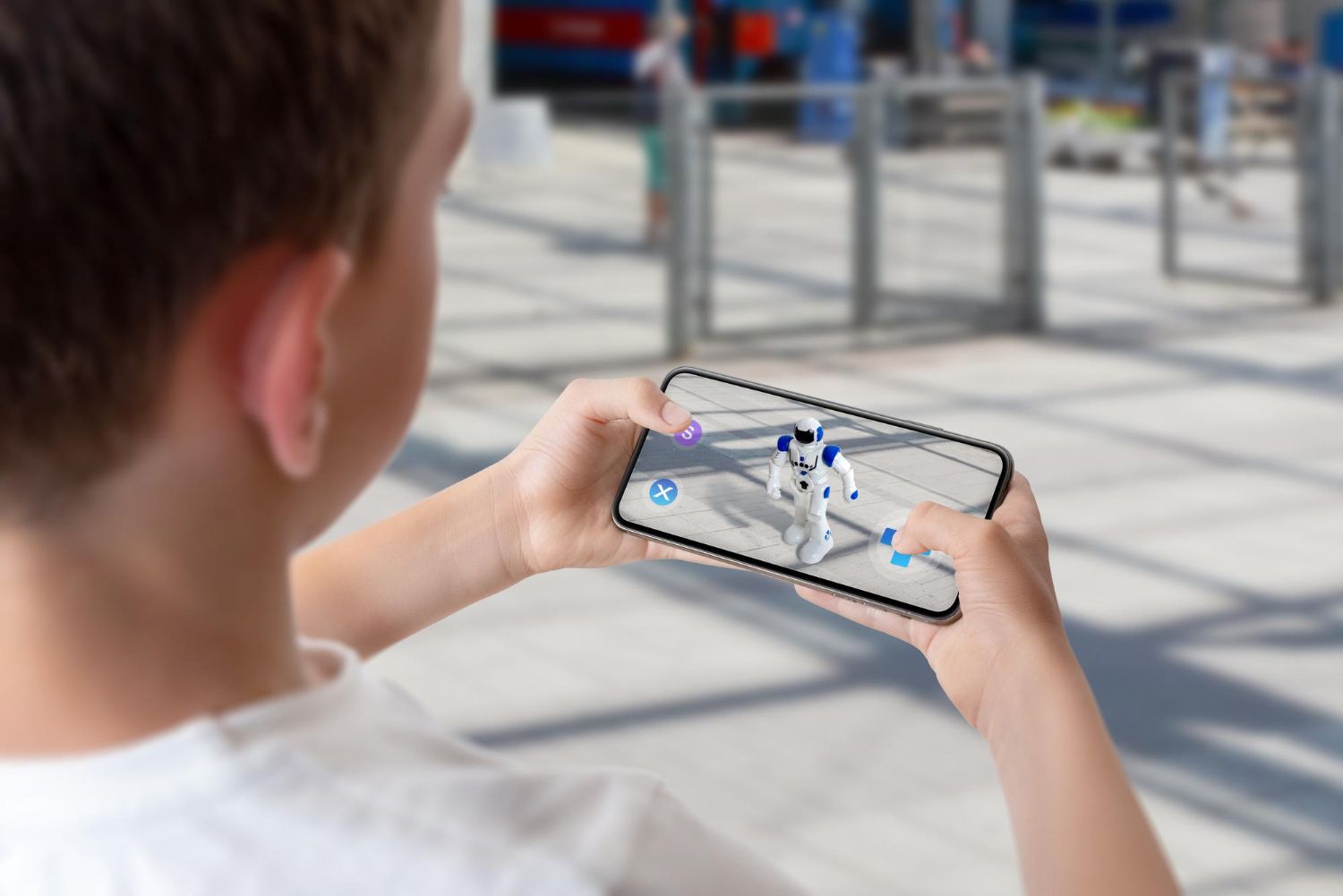
High-speed, low-latency networks like 5G are crucial for delivering immersive AR-powered shopping experience. Slow or laggy connections can ruin the magic of AR, but 5G ensures smooth, real-time interaction.
- Real-Time Rendering: 5G allows complex 3D models and virtual try-ons to load instantly, making AR fluid and lifelike.
- Multi-User Experiences: Families or friends can share AR sessions simultaneously, comparing styles or collaborating on purchases.
- Cloud-AR Streaming: Heavy AR content can be streamed from cloud servers instead of local devices, maintaining high-quality visuals without performance issues.
With 5G, AR-powered shopping becomes more immediate and interactive, replicating the in-store experience from home without compromise.
4. Cloud Computing: Scalable and Flexible AR

Cloud computing provides the storage, processing power, and scalability necessary for AR applications to reach large audiences.
- Data Storage and Management: AR-powered shopping experience often involves massive 3D models and interactive assets; the cloud efficiently stores and manages this data.
- Processing Power: Rendering complex AR environments in real time requires significant computation, which cloud servers provide seamlessly.
- Cross-Device Accessibility: Cloud AR allows users to switch between devices—smartphones, tablets, or AR glasses—without losing their session progress.
By combining cloud computing with AR, retailers can deliver consistent, high-quality experiences to thousands or millions of users simultaneously.
The Combined Impact: What Happens When These Four Technologies Work Together
When AI, blockchain, 5G, and cloud computing converge, AR-powered shopping experience becomes far more than a novelty. The experience is:
- Immersive: Realistic virtual overlays let you interact with products like never before.
- Personalized: AI-driven recommendations ensure every session is tailored to your taste.
- Secure: Blockchain safeguards authenticity, payments, and records.
- Seamless: 5G and cloud computing enable smooth, fast, and accessible experiences on any device.
The result is a retail environment that delights users, drives engagement, and builds trust, turning AR from a futuristic tool into a practical, everyday shopping companion.
Conclusion
Worth a clear distinction here, though: Glance's AI Twin isn't AR in the technical sense described above — there's no live camera overlay or real-time spatial tracking involved. It's generative AI-based virtual try-on: you upload a selfie once, and the system generates a new, photorealistic image of you in an outfit, rather than overlaying a digital object onto a live video feed. That's a meaningfully different — and increasingly preferred — approach, since it doesn't depend on live camera hardware or suffer from the drift, jitter, and misalignment that real-time AR overlays are prone to as a user moves. Of the four technologies above, AI and cloud computing are the ones Glance's own AI Twin actually depends on — generating and serving a realistic styled image at scale — while blockchain-style authenticity verification isn't currently part of how Glance's try-on works.
FAQs
1. What is AR-powered shopping, exactly?
AR-powered shopping overlays digital elements — a product, a piece of furniture, a virtual outfit — onto the real world through a smartphone, tablet, or AR-enabled device, using the device's live camera feed. It lets shoppers see how something looks or fits before buying, without physically trying it or visiting a store.
2. Do I need special hardware, like AR glasses, to use AR shopping?
No. Most AR shopping today runs through a standard smartphone or tablet camera — no dedicated AR glasses or headset required. Dedicated AR hardware exists and is improving, but it remains a small share of how people actually use AR shopping features in 2026.
3. How does blockchain actually help with AR shopping?
Blockchain gives a product a verifiable digital record — who made it, when, and its ownership history — which matters most for high-value items where counterfeiting is a real risk. LVMH, Prada, and Cartier's Aura Blockchain Consortium is a real, live example of this applied at scale across major luxury brands.
4. What role does 5G play in AR shopping specifically?
5G's low latency is what keeps AR overlays smooth and responsive as a shopper moves their camera — without it, 3D models and virtual try-ons can lag or stutter, which breaks the experience. 5G also enables cloud-AR streaming, where the heavy rendering happens on a server rather than the device itself.
5. Is AR shopping actually growing, or is it still a niche feature?
It's growing meaningfully, not just a novelty. Gartner projects 80% of retail brands will use AR for customer engagement by 2025, and fashion-specific AR adoption is growing 20–28% annually according to Research and Markets — among the fastest-growing use cases in retail technology.
6. Is AI-powered virtual try-on, like Glance's AI Twin, the same as AR?
No, and the distinction matters. AR overlays a digital object onto a live camera feed in real time, requiring spatial tracking that can drift or misalign as you move. AI-powered virtual try-on works differently: it generates a new, photorealistic image of you from a single uploaded photo, with no live camera or real-time tracking involved. Glance's AI Twin falls into this second category — a related but technically distinct approach from the AR technologies described above.
Download the Glance app now





Your intelligent
shopping agent.







Your intelligent
shopping agent.