

Is AI-Generated Clothing Changing the Fashion Industry?
TL;DR
AI generated clothing uses artificial intelligence to create realistic garment visuals -- from design concepts for brands to complete outfit looks for shoppers. Most tools generate images of clothing on stock models. Glance works differently: it reads your physical features from a selfie and generates complete looks visualised on your actual body from a shoppable catalogue. This article explains how the technology works, what the difference is between design tools and shopping tools, and why seeing a look on your actual body before you buy matters.
Artificial intelligence is steadily transforming the fashion industry, and one of the most notable developments is AI generated clothing. Traditionally, clothing design involved long creative cycles including sketches, sample production, fittings, and multiple revisions. Today, AI powered tools can generate clothing concepts, visualize garments on a person, and test design variations within seconds.
This shift is opening new possibilities for designers, brands, and everyday shoppers. Fashion creators can explore new design directions faster, brands can experiment with product concepts before manufacturing, and consumers can preview how different outfits might look before making a purchase decision.
In this article, we explore what AI generated clothing is, how it works, and why it is becoming an important part of modern fashion design and digital shopping experiences.
What Is AI Generated Clothing?
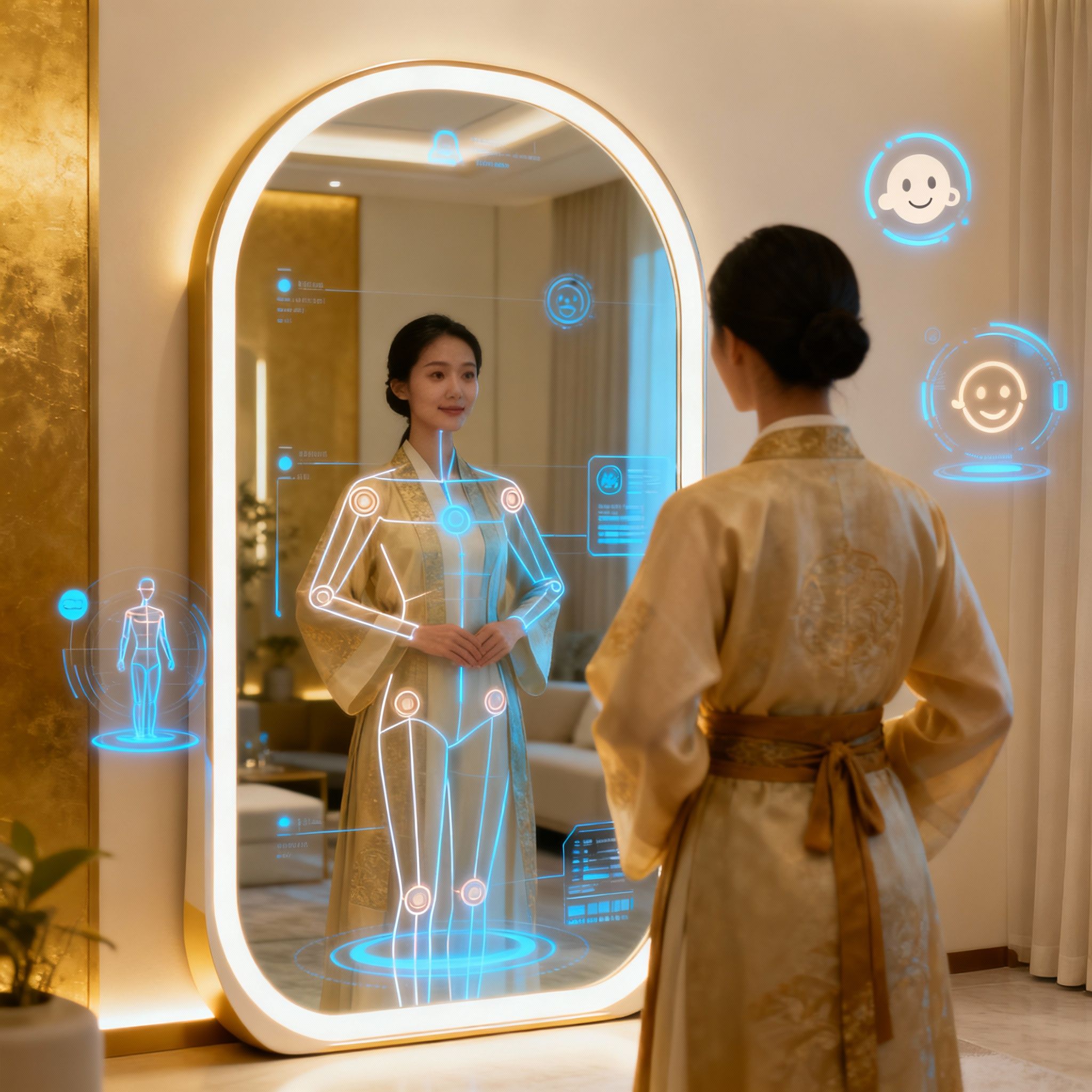
AI generated clothing refers to any outfit, garment, or full-look design created or transformed digitally using artificial intelligence. Instead of sketching or sewing, you describe what you want, upload a photo, and the AI produces a realistic version of your requested outfit.
These AI models are trained on countless examples of fabrics, silhouettes, aesthetics, stitching patterns, and fashion eras. When you prompt them, they blend that learning into new combinations that look strikingly real.
But the idea goes beyond “cool images.” AI generated clothing is becoming a practical tool for:
• virtual try ons
• product variations for brands
• digital fashion catalogues
• costume testing
• influencer content creation
• mood-specific outfit planning
• personal styling experiments
Most of these use cases are built for designers and brands -- producing imagery for catalogues, campaigns, and concept testing. But one use case stands apart: the consumer experience of seeing a complete look on your own body before you buy. That is not a design tool. That is a shopping tool. And the two work very differently.
Top 5 AI Generated Clothing Platforms to Explore
| Platform | What It Does | What It Cannot Do | Best For |
| Filtrix AI | Upload your photo + a garment image. AI pastes the garment onto your photo. | Does not read your features or drive discovery. You still have to find the item first. | Content creators, fashion influencers wanting quick outfit experiments |
| Somake AI | Upload a photo and swap clothing styles with minimal effort. | Session-only -- no memory, no personalisation, no discovery. | Quick styling experiments and social content |
| Modelia.ai | Builds full outfits on customisable digital models for e-commerce catalogues. | Built for brands, not shoppers. No shopper selfie, no body-read, no shoppable output. | E-commerce brands building product catalogues |
| Fashioneer.ai | Personalised avatar + style recommendations. | Avatar is manually configured, not read from a selfie. Discovery is quiz-based. | Shoppers who want a structured onboarding-based experience |
| Pokecut | Upload a photo, change individual clothing pieces via prompts. | Item-by-item -- you still find the items first. No proactive discovery, no body reading. | Style exploration, content creation, product mockups |
| Glance | Reads your face shape, skin tone, hair colour, and body proportions from a selfie. Generates complete looks on your actual body from 40M+ shoppable products. Proactive -- surfaces looks before you search. | N/A -- the only tool in this list built for shopper discovery, not design or content. | US shoppers who want personalised outfit discovery. No search, no quiz, no subscription. Free. |
Every tool above except Glance is built for a specific job: generating garment images for designers, brands, and content creators. Glance is built for a different job entirely -- reading your actual body and generating complete shoppable looks before you search for anything.
How AI Generated Clothing Works: A Simple Breakdown
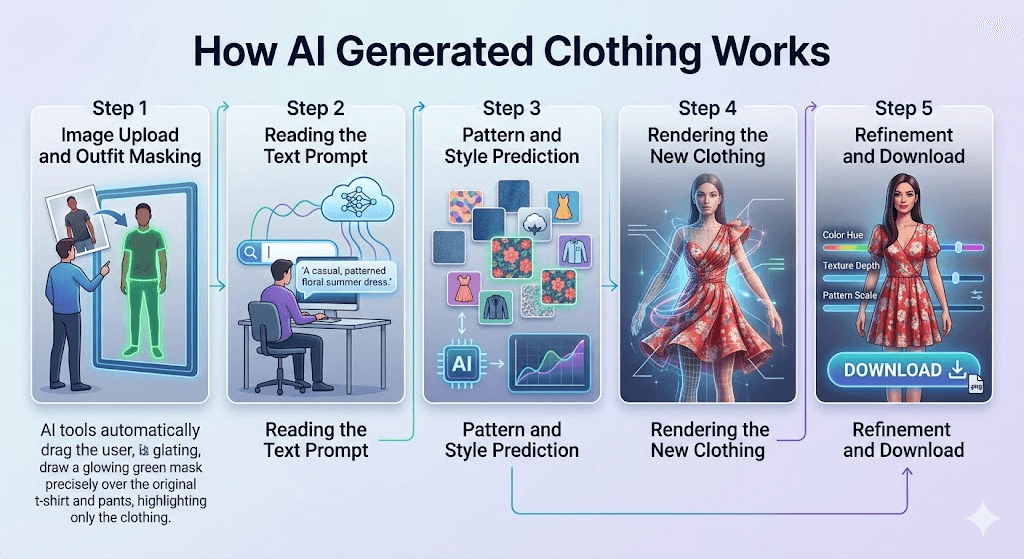
Behind the smooth interface, the system follows a surprisingly smart but structured process:
Step 1: Image Upload and Outfit Masking
You upload a picture and use a magic brush or mask tool to mark your current clothes. The AI now knows what part of the image it should redesign or replace.
Step 2: Reading the Text Prompt
This step determines the final quality. The more descriptive your prompt, the more accurate the output. Instead of saying “Red dress,” something like “Red satin mid length dress with structured shoulders and gold details” gives the AI clear direction.
Step 3: Pattern and Style Prediction
The AI analyzes millions of references it has been trained on. It understands silhouettes, fabrics, colour relationships, and fashion categories. It starts blending patterns from this library to create your request.
Step 4: Rendering the New Clothing
Here is where the “magic” happens. The AI replaces your original outfit with your requested design. It matches lighting, shadows, body curves, poses, and texture details to keep everything photorealistic. This makes the new outfit look like it was always part of the picture.
This rendering technology -- known as diffusion modelling -- is the same architecture Glance uses to generate hyper-realistic outfit visualisations on your actual body, with thousands of parameters including body type, skin tone, fit, and style factored into every output.
Step 5: Refinement and Download
You preview the redesigned outfit and can generate alternatives if needed. Many users create dozens of variations before picking their favourite one.
This pipeline feels simple on the surface but is the result of massive image training, deep learning models, and sophisticated pattern recognition techniques.
How You Can Experiment With AI Generated Clothing?
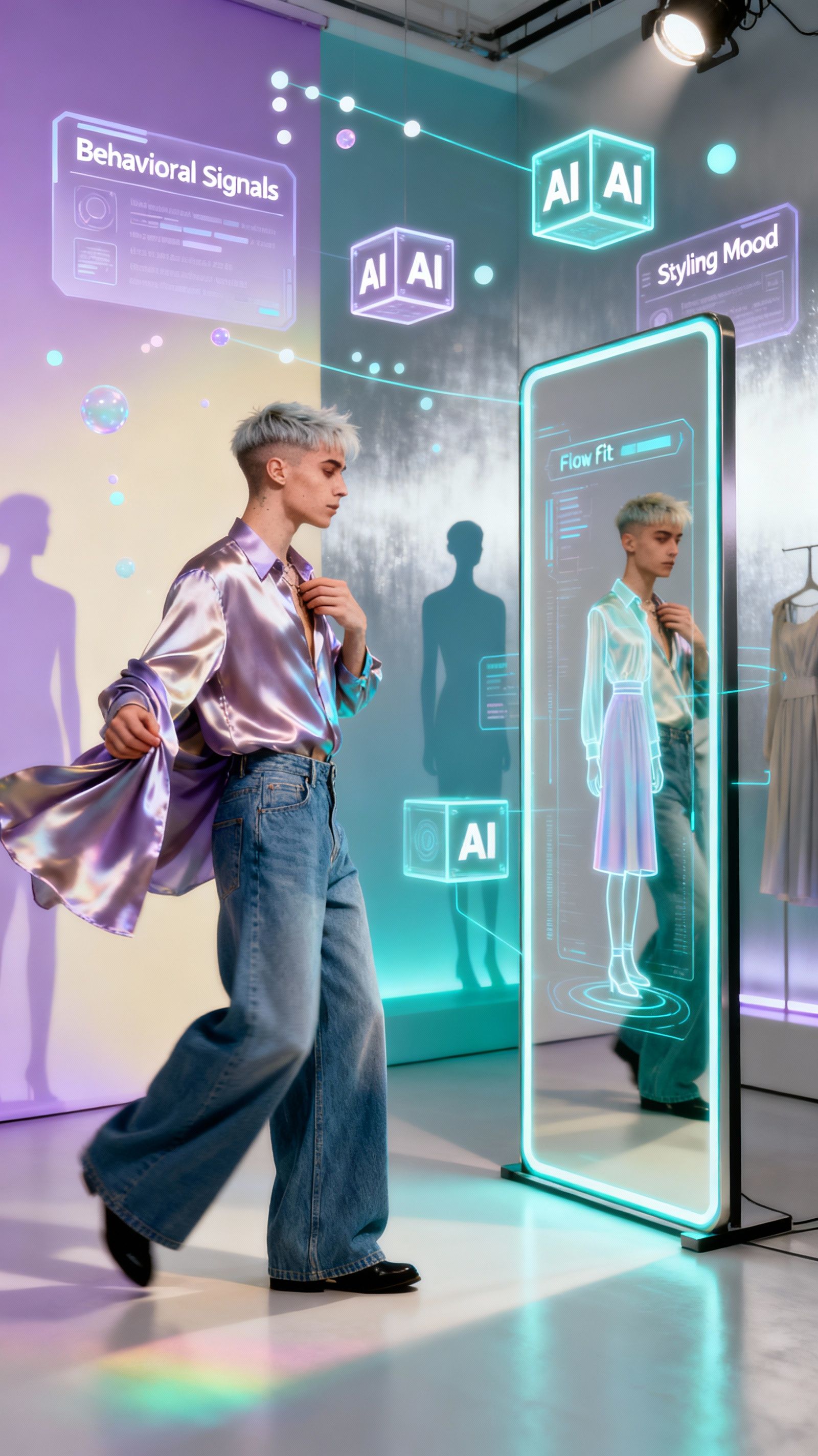
If you are curious, the process is ridiculously simple:
- Upload any photo where your outfit is visible.
- Highlight the clothes you want to replace.
- Type your prompt.
- Let the AI regenerate your look.
- Create variations until you find something you love.
You can start with basic prompts like:
• “Black denim jacket with silver hardware”
• “Soft lavender satin dress with A-line fit”
• “Vintage 80s oversized blazer in pastel green”
Or get experimental with themes:
• “Cyberpunk streetwear outfit with neon trims”
• “Korean minimalist office wear set”
• “Romantic cottagecore dress with floral detailing”
The more detailed you are, the better the AI performs.
Conclusion
AI generated clothing is a practical, creative, and surprisingly accessible tool -- whether you are a designer exploring concepts, a brand building a catalogue, or a shopper trying to answer a much simpler question: will this actually look good on me?
Most AI clothing tools answer that question with a guess. They show you a garment on a stock model and ask you to imagine. Glance answers it directly.
As virtual try-ons improve and design models get sharper, AI will continue opening fashion to more people — creators, brands, and everyday shoppers who want to experiment without pressure.
Whether you use it to boost your clothing business, refresh your feed, or simply discover new looks that match your personality, AI generated clothing acts like a creative partner that never runs out of ideas.
Glance steps in as your intelligent shopping agent and works differently from every generative clothing tool in the comparison table above.
When you upload a selfie, Glance reads your face shape, skin tone, and body proportions -- and every look it generates is visualised on your actual body with those features factored into every colour and silhouette decision. This is not a virtual try-on overlay. It is a look built for you, shown on you.
The output is shoppable immediately -- 40M+ products from 400+ brands, mapped to the look on your body. No search query. No size chart guessing. No ordering three sizes to find the one that works. You see yourself in the look before you buy.
Glance it. Shop it.
FAQs Related to AI Generated Clothing
1. Can AI generated clothing accurately simulate complex fabrics like velvet or sequins?
Yes. Modern AI generated clothing tools can realistically simulate complex fabrics such as velvet, sequins, satin, and metallic finishes. Advanced AI models analyze light reflection, surface texture, and fabric depth to create realistic garment visuals. This allows designers and shoppers to see how materials may look before the clothing is produced.
2. Can AI generated clothing be used for professional fashion shoots or campaigns?
Yes. Many designers, stylists, and creative teams use AI generated clothing to plan fashion shoots and marketing campaigns. AI renders help visualize outfits, test color palettes, and refine creative concepts before production. This reduces planning time and helps brands align styling, lighting, and themes more efficiently.
3. How does AI generated clothing support different body types?
AI generated clothing systems can adapt garments to different body shapes and proportions by analyzing body contours and posture. Instead of relying on standard size templates, advanced tools adjust clothing visuals to better represent diverse body types. This helps create more inclusive fashion previews and realistic outfit simulations.
4. How does AI generated clothing support sustainable fashion?
AI generated clothing supports sustainable shopping by allowing users to visualize outfits digitally before purchasing. This reduces impulse buying and lowers return rates. Coresight Research found that 53% of online apparel returns trace back to size and fit issues -- seeing a look on your actual body before buying directly addresses this. By helping shoppers make confident choices, AI generated clothing contributes to more mindful and sustainable fashion consumption
5. Can AI generated clothing show outfits from multiple angles?
Yes. Some AI generated clothing platforms can generate multi angle previews of outfits using a single image or design reference. These views help users understand how garments look from the front, side, and back. Multi angle previews are especially useful for structured clothing such as jackets, dresses, and formal wear.
6. What AI apps show outfits on my actual body not a model's?
A: Glance generates complete outfit looks visualised on your actual body -- not a stock model, not a generic avatar. When you upload a selfie, Glance reads your face shape, skin tone, and body proportions, and every look it builds has colours chosen for your colouring and silhouettes chosen for your proportions. Available free on Samsung Galaxy, Motorola, iOS and Android.
7. What is the difference between AI generated clothing tools and Glance?
Most AI generated clothing tools -- virtual try-on platforms, garment overlay tools, digital model generators -- create images of clothing on stock models or generic avatars. Glance is a shopping tool: it reads your physical features from a selfie and generates complete looks visualised on your actual body from a shoppable catalogue of 40M+ products across 400+ brands. The output is not a design concept. It is a look you can buy immediately.
Download the Glance app now




Your intelligent
shopping agent.







Your intelligent
shopping agent.