

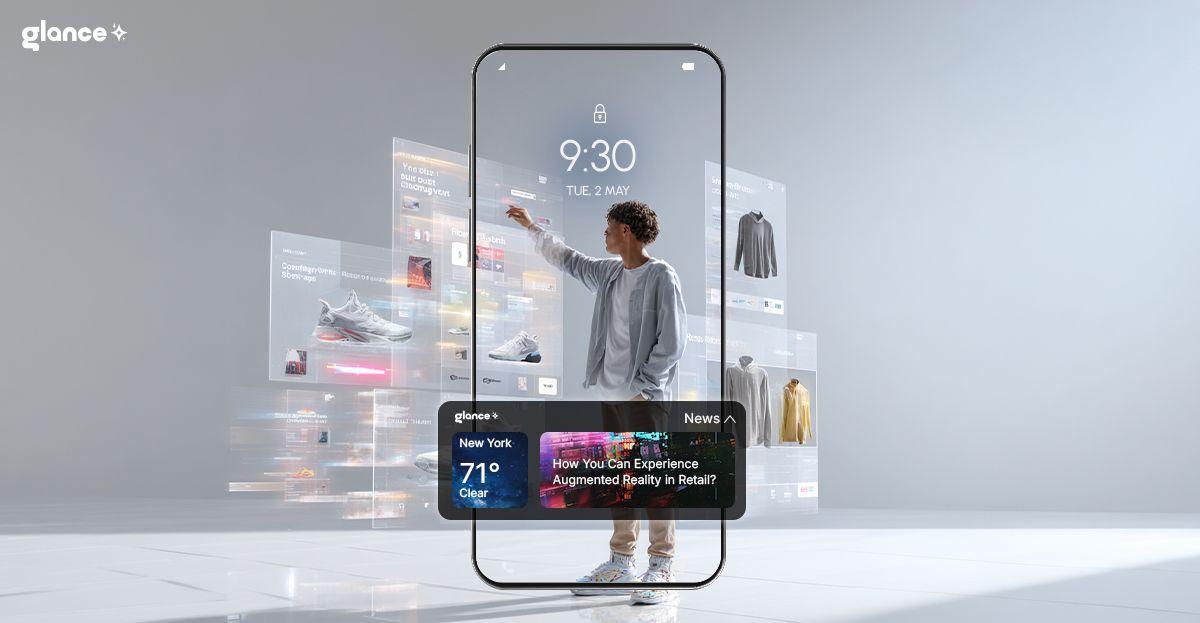
How You Can Experience Augmented Reality in Retail Through Shopping Apps ?
TL;DR
Augmented reality in retail now lives mostly in your phone, not just in stores — apps from Walmart, Target, IKEA, Home Depot, Ulta Beauty, and Wayfair let you place furniture, test makeup, and preview home decor before you buy. Think with Google reports more than 90% of American shoppers already use or are willing to use AR for shopping, and 98% of those who've tried it say it helped them decide better. Grand View Research projects the global AR-in-retail market will reach $105.87 billion by 2033. Unlike the app-based tools covered here, in-store AR mirror technology requires walking into a specific store with installed hardware — a distinction explored fully in AI Magic Mirror (link pending confirmed URL), alongside exactly where to find it and how the mechanics actually work.
Artificial intelligence tools like ChatGPT, Gemini, and Perplexity are brilliant at helping you think, search, and express ideas. But augmented reality in retail feels very different — it doesn't just answer a question, it shows you the answer sitting in your own living room. Point your phone at an empty corner and a sofa appears there. Swipe through ten lipstick shades without touching a single tester. This guide walks you through exactly how AR shopping apps work today, and which ones are worth having on your phone.
What Does Augmented Reality in Retail Mean?
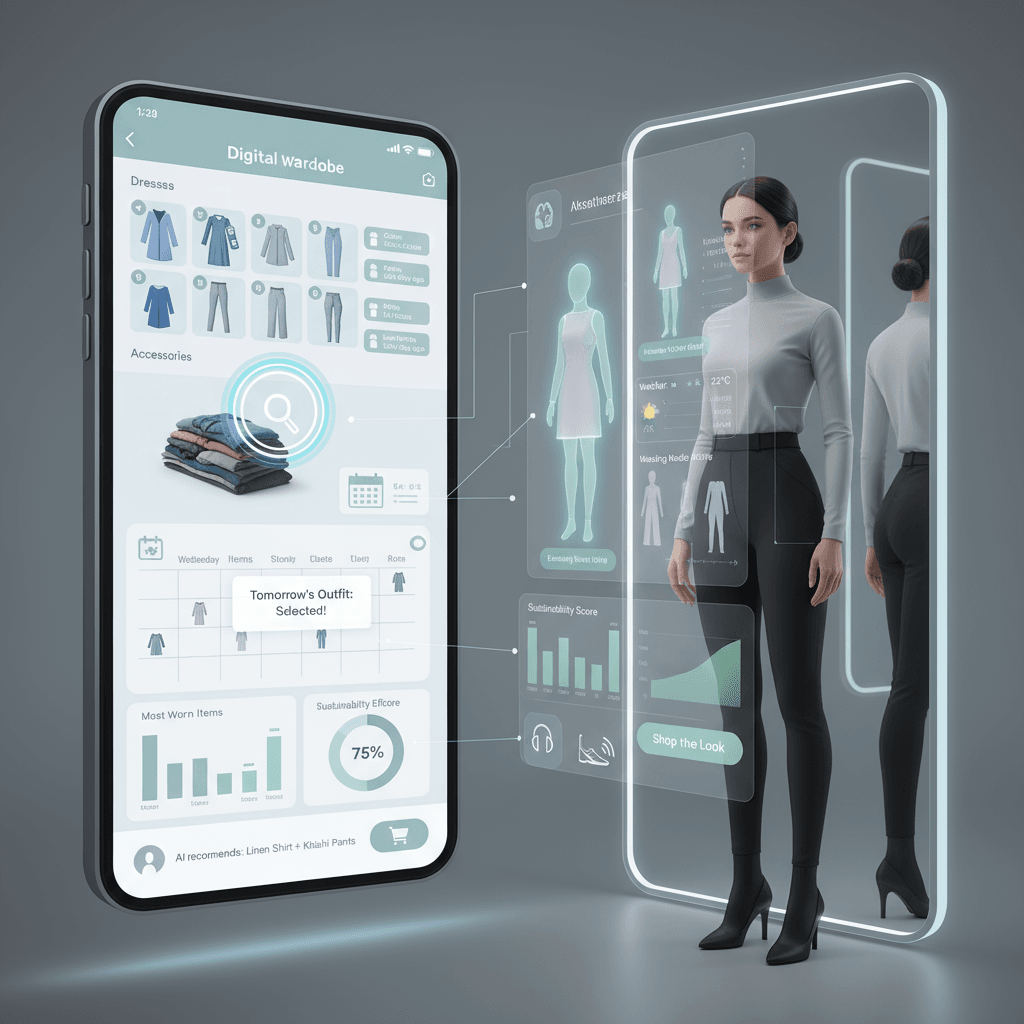
Augmented reality in retail means using digital visuals on top of the real world to help you see products more clearly before you buy them. It works through apps and cameras that project items onto your body or your home environment.
Imagine pointing your phone at your living room and watching a sofa drop perfectly into the corner. Or trying ten lipstick shades in seconds with zero mess. That's augmented reality in retail — it makes decisions easier, faster, and more personalized than traditional browsing.
Think with Google reports that more than 90% of American shoppers already use or are willing to use AR for shopping, and 98% of those who've tried AR say it helped them make better purchase decisions.
Experience Augmented Reality in Retail Through Apps
Here are the most practical and widely used app-based AR retail experiences today.
Walmart — Walmart's app makes furniture shopping surprisingly easy. Scan sofas, coffee tables, or televisions and instantly place them inside your room, at accurate scale and matched to real inventory colors.
Target — Target's app lets you preview home decor, appliances, and storage items in your real space. Point your camera at your wall and a lamp appears where you plan to place it.
IKEA — IKEA's app brings its catalog to life with full-scale AR placement. Drop wardrobes, beds, tables, or lighting pieces into your room with high accuracy, showing textures, materials, and proportions before you buy a single item.
Home Depot — Home Depot's app focuses on DIY essentials: preview paint colors on your own walls, place power tools on your workbench, or test lighting fixtures in your ceiling space.
Ulta Beauty — Ulta's app uses AR for beauty decisions — virtually try lipsticks, foundations, blush, or eye products with shades adjusting to your skin tone.
Wayfair — Wayfair's app lets you preview furniture, decor, and large appliances in full scale, useful for understanding spacing or color harmony before you order.
Comparison Table — All AR Retail Experiences at a Glance
| Retailer | AR Feature Type | City/Location | In-Store or App |
| Walmart | Furniture placement | Nationwide (app) | App |
| Target | Home decor placement | Nationwide (app) | App |
| IKEA | Full-scale furniture AR | Nationwide (app) | App |
| Home Depot | Paint/tools/lighting preview | Nationwide (app) | App |
| Ulta Beauty | Makeup shade try-on | Nationwide (app) | App |
| Wayfair | Furniture/decor placement | Nationwide (app) | App |
| Saks Fifth Avenue | AR outfit mirror | NYC Fifth Avenue flagship | In-store |
| Nike | AR sneaker mirror | Williamsburg, NY + expanding | In-store |
| Tommy Hilfiger | RFID-enabled AR mirror | NYC + Los Angeles | In-store |
| Anthropologie | AR outfit/print mixing mirror | NYC, Chicago, Los Angeles | In-store |
| Sephora | AR beauty mirror | Times Square NYC + national | In-store |
| Uniqlo | Smart mirror fitting room | NYC, San Francisco | In-store |
| H&M | AI-enabled virtual mirror | NYC, Los Angeles | In-store |
| Gucci | Premium AR footwear/accessories mirror | Beverly Hills, NYC | In-store |
Each of the eight in-store locations above gets its own deeper treatment in AI Magic Mirror— including exactly how the mirror technology works, where it falls short, and a direct side-by-side against Glance.
Benefits of Augmented Reality in Retail
Grand View Research projects the global augmented reality in retail market to reach $105.87 billion by 2033, growing at a 32.4% CAGR between 2025 and 2033. This surge reflects how quickly shoppers and brands are adopting AR as a core part of the buying experience, not just a novelty.
Experiencing AR makes its value instantly clear. It cuts hesitation. It reduces confusion. For fashion, it removes the intimidation of guessing. For beauty, it removes hygiene concerns around testers. For furniture, it removes measurement mistakes. For electronics, it removes scale confusion.
Experience AR Like Experience at Home with Glance, the Intelligent Shopping Agent
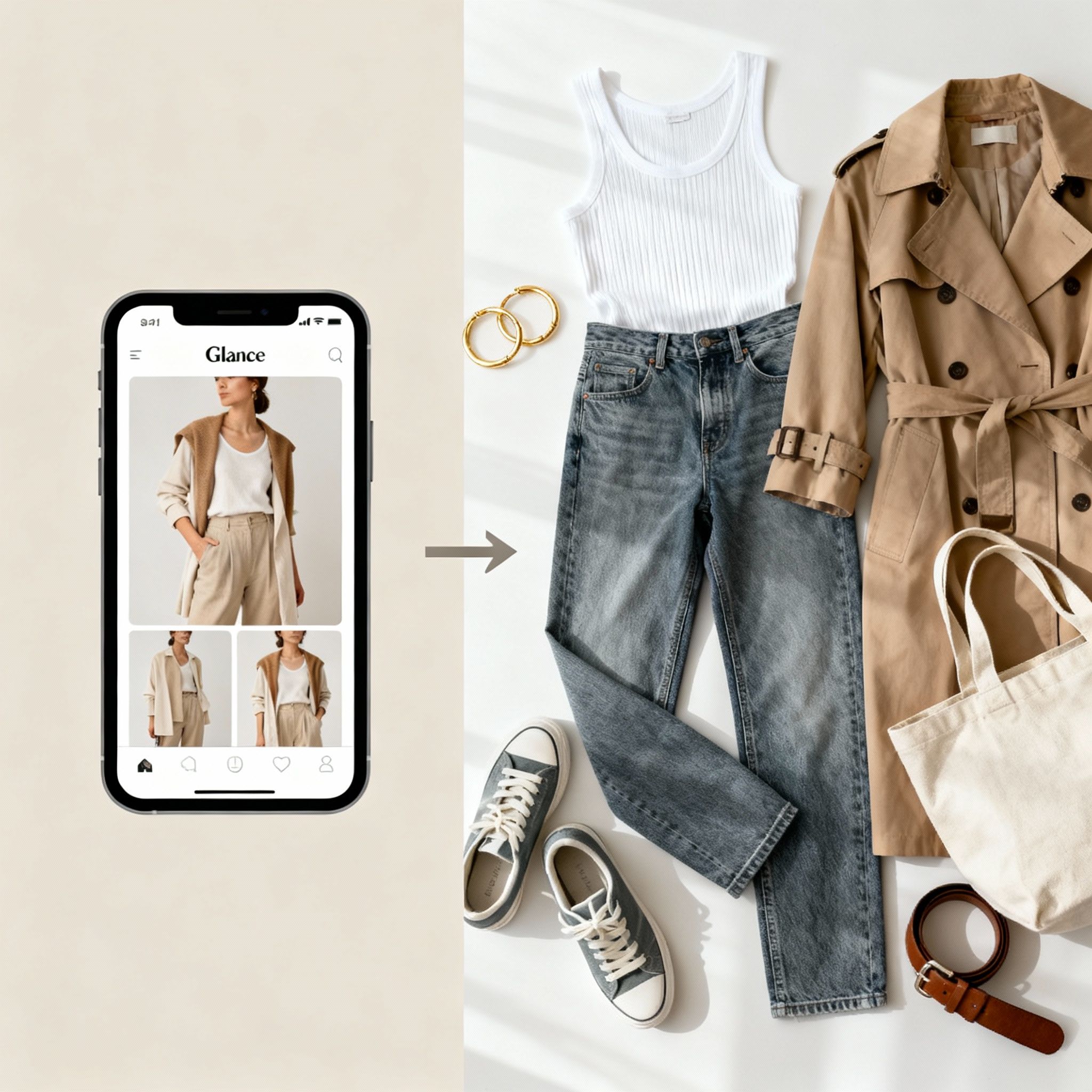
Glance is an intelligent shopping agent — not an AR mirror or virtual try-on tool. It reads your physical features, live weather, regional trends, and upcoming occasions to build a complete, styled outfit look on your AI Twin — before you've even searched for anything.
Why Glance isn't a virtual try-on or AR mirror experience comes down to that timing: every AR tool above activates when you engage with it, while Glance's look is already waiting.
This works because Glance reads five signals simultaneously — your physical features, live weather, regional trends, upcoming occasions, and behavioural patterns — to build a complete look visualised on your actual body, not a generic model.
You see your potential outfits before you decide. You experiment with your style. You shop with clarity and confidence.
Conclusion
Augmented reality in retail is reshaping how people explore products — whether through an app at home or, for in-store mirror technology specifically, at one of the flagship locations covered in our dedicated guide. AR is opening the door to a more personalized, confident shopping experience, wherever you engage with it.
FAQs Related to Augmented Reality in Retail
How does retail use augmented reality?
Retail uses augmented reality to help shoppers visualize products before buying — clothes, furniture, makeup, or home decor. Stores and apps let you try items virtually, compare sizes, and see how products look in your home. AR reduces returns, improves confidence, and makes shopping more interactive.
2. What does AR stand for in retail?
AR stands for augmented reality — a layer of digital information added on top of the real world. Retailers use it to show how furniture looks in your living room or how a lipstick shade appears on your skin tone, usually through mobile apps.
3. How does Zara use augmented reality?
Zara uses AR through in-app experiences and in-store displays that project virtual models wearing the latest collection. Pointing your phone at markers in-store or on packaging shows outfits styled in real time, without trying anything on.
4. How is IKEA using augmented reality?
IKEA uses its IKEA Place app to drop true-scale 3D furniture models into your home using your phone camera, showing size, color match, and room layout before you order — reducing returns and guesswork.
5. How does Coca-Cola use augmented reality?
Coca-Cola uses AR mainly for interactive marketing — scanning packaging or signage unlocks animations, games, or brand storytelling, often tied to loyalty programs or limited-edition campaigns.
Download the Glance app now





Your intelligent
shopping agent.







Your intelligent
shopping agent.