

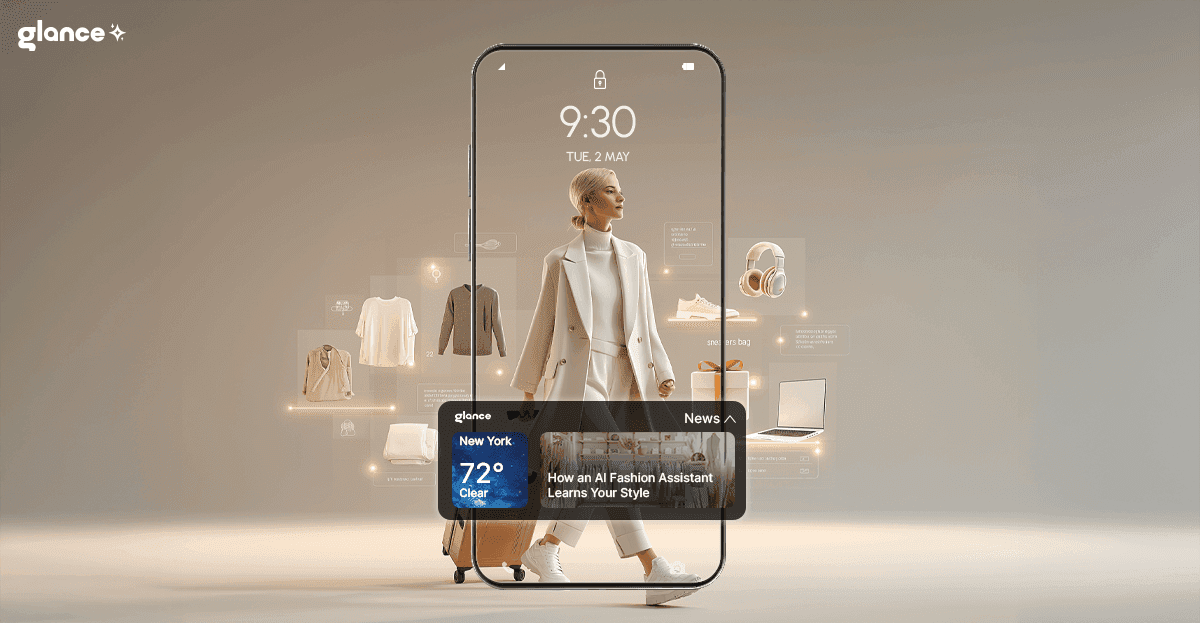
AI Fashion Assistant: How It Learns Your Style in Real Time
TL;DR
- AI fashion assistants are shifting from static recommendations to behavior-driven intelligence
- Micro-actions like scroll speed, dwell time, and browsing flow define your style profile
- Modern systems adapt in real time, not after manual inputs
- Personalization is moving from segments to individual-level learning
- Glance represents this shift through continuous behavioral learning and real-time matching
Introduction
An AI fashion assistant is no longer just a tool that suggests outfits based on past purchases or basic preferences. In 2026, it’s expected to understand how you behave, not just what you select.
Every scroll, pause, and revisit tells a story about your taste. These micro-decisions, often invisible to you, are now the foundation of how modern AI systems interpret personal style.
The real shift is simple. Fashion discovery is moving from static recommendation engines to dynamic systems that learn continuously. This is where the next generation of AI fashion assistants is being defined.
What Is an AI Fashion Assistant Today
An AI fashion assistant is a system that helps users discover clothing, outfits, and styling ideas using machine learning and behavioral data.
Earlier versions relied on:
- Style quizzes
- Purchase history
- Basic filters like color or category
Now, the model has changed.
Modern assistants analyze:
- Real-time browsing behavior
- Interaction patterns
- Context, like time, mood, and device
This shift turns the assistant from a suggestion tool into a decision-support system.
Why Behavior Matters More Than Preferences
Most platforms still operate like a catalog. They match similar items based on tags or past choices.
That approach misses one thing. Intent.
Two users can click on the same jacket for completely different reasons. One is exploring. The other is ready to buy.
Behavioral signals solve this gap.
Key Behavioral Signals
| Signal | What It Reveals |
| Dwell time | Level of interest and emotional pull |
| Scroll speed | Browsing vs decision mode |
| Time of day | Context, casual vs occasion-driven |
| Browsing sequence | How a look is forming |
| Device behavior | Intent differences across mobile and desktop |
These signals create a more accurate picture than declared preferences.
This is where AI moves closer to interpreting intent, not just actions.
From Static Profiles to Dynamic Style Intelligence
Traditional personalization groups users into segments. Think categories like casual, formal, or sporty.
That model is outdated.
Modern systems build dynamic profiles that evolve constantly.
Instead of asking who you are, they observe how you behave over time.
This includes:
- Short-term signals like the current browsing session
- Long-term patterns across weeks and months
- Context shifts based on season, trends, or lifestyle
The result is a living model of your style, not a fixed persona.
How Real-Time Learning Changes Fashion Discovery
Here’s the thing. Timing matters as much as taste.
A strong AI fashion assistant adapts instantly.
Examples:
- Late-night browsing surfaces relaxed, comfort-first looks
- Pre-event searches prioritize occasion wear
- Seasonal changes shift recommendations automatically
This reduces friction.
Users no longer need to search, filter, or refine repeatedly. The system anticipates what fits the moment.
Where Glance Fits in This Evolution
Most AI fashion assistants still react after you act.
Glance moves earlier in the process.
It interprets behavior as it happens and updates recommendations in real time.
What this means in practice:
- No dependency on manual inputs or style quizzes
- Continuous learning from micro-interactions
- Matching style with live, purchasable inventory
- Context-aware recommendations based on timing and behavior
The system operates less like a tool and more like an adaptive layer between the user and the shopping ecosystem.
The Business Shift Behind AI Fashion Assistants
This isn’t just a product shift. It’s a market shift.
- 71 percent of US consumers expect personalized experiences
- AI-driven personalization can increase conversion rates significantly
- Retailers investing in adaptive systems are outperforming static platforms
The implication is clear.
Personalization is no longer optional. But basic personalization is no longer enough, either.
Challenges AI Fashion Assistants Must Solve
As these systems grow more advanced, expectations also rise.
Key Concerns
Privacy
Users want personalization without intrusive tracking
Bias
Systems must represent diverse body types, tones, and styles
Transparency
Users need clarity on how recommendations are generated
The next generation of AI fashion assistants will be judged not just on accuracy, but on trust.
The Future of AI Fashion Assistants
Fashion discovery is entering a new phase.
The focus is shifting from more options to better decisions.
The assistants who win will:
- Understand intent in real time
- Adapt continuously without manual input
- Balance personalization with privacy
- Connect inspiration directly to purchase
This is where platforms like Glance are positioning themselves, at the intersection of behavior, context, and commerce.
Conclusion
An AI fashion assistant today is not defined by what it recommends, but by how it learns.
The move from static profiles to real-time behavioral intelligence is changing how users discover, evaluate, and buy fashion.
As systems become more adaptive, the gap between browsing and decision-making will continue to shrink.
The future of fashion is not just personalized. It is responsive, contextual, and continuously evolving.
FAQs About AI Fashion Assistant
What is an AI fashion assistant?
An AI fashion assistant is a system that recommends outfits and products using machine learning. Modern versions analyze real-time behavior like scrolling, dwell time, and browsing patterns to understand user intent and deliver personalized suggestions.
How does an AI fashion assistant learn your style?
It learns through behavioral signals such as what you pause on, how you scroll, and what you revisit. These micro-actions help the system understand preferences without relying on manual inputs.
Are AI fashion assistants accurate?
Accuracy depends on how well the system uses real-time data. Behavior-driven assistants are more accurate than static ones because they adapt continuously rather than relying solely on past data.
Do AI fashion assistants use personal data?
Most modern systems rely on anonymized behavioral signals rather than sensitive personal data. This includes interaction patterns rather than identity-level information.
What makes a good AI fashion assistant?
A strong assistant adapts in real time, understands context, and connects recommendations to available products. It should reduce effort while improving decision quality.
Download the Glance app now




Your intelligent
shopping agent.







Your intelligent
shopping agent.