

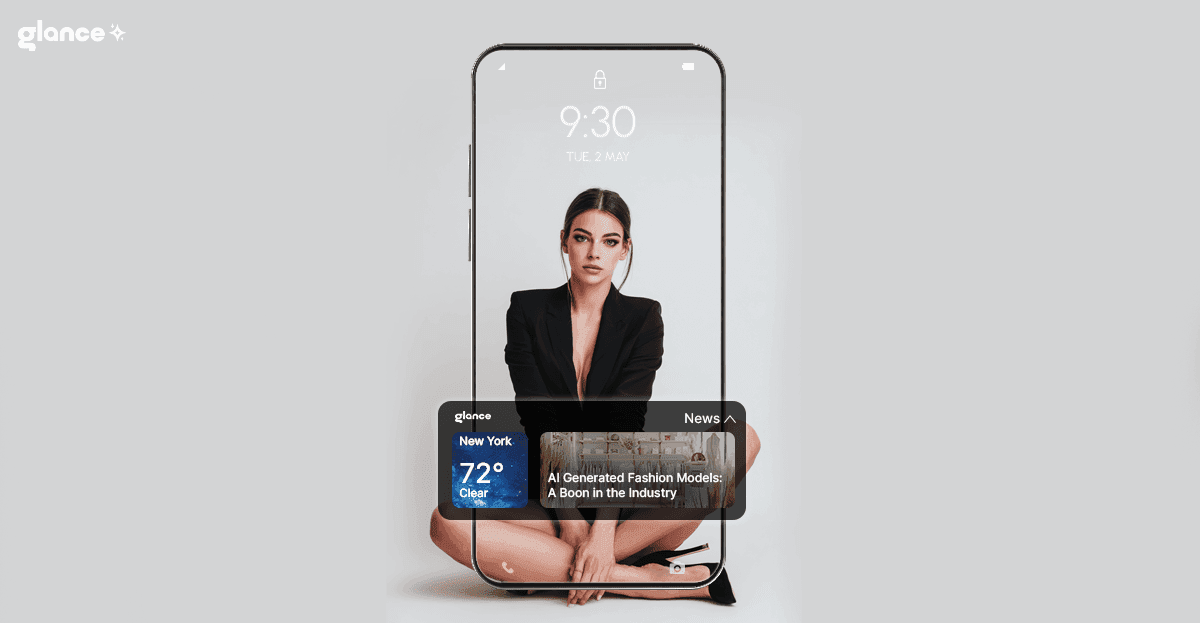
AI Fashion Models: A Boon in the Industry
TL;DR
AI generated fashion models are transforming how brands create catalogues, product shoots, and online campaigns. They remove the need for traditional photoshoots, speed up content production, cut costs, and help brands show inclusive body types at scale. Platforms like ZMO.ai, Botika, Style3D AI, Modelia, Lalaland.ai, and Glance make it easy to build photorealistic virtual models for fashion branding, ecommerce, and digital try-ons.
Fashion has always been a visual-first world. Whether you're selling a single handmade bracelet or running a global apparel brand, your success depends on how well your product is presented. Traditionally, this meant hiring models, conducting photoshoots, renting studios, arranging lighting, makeup, styling and post-production. For small businesses, this cost was often out of reach. Even established brands struggled with time, scaling and consistent output.
This is exactly where AI generated fashion models step in, transforming the industry with speed, affordability and unlimited creative possibilities. What once required thousands of dollars and weeks of planning can now be achieved in minutes. And the results look astonishingly real.
Did you know? Generative AI models dominate with 45-50% market share, powering over 1 million daily designs from couture to streetwear, achieving up to 95% manufacturing feasibility for specialized tools.
Importance of AI Generated Fashion Models
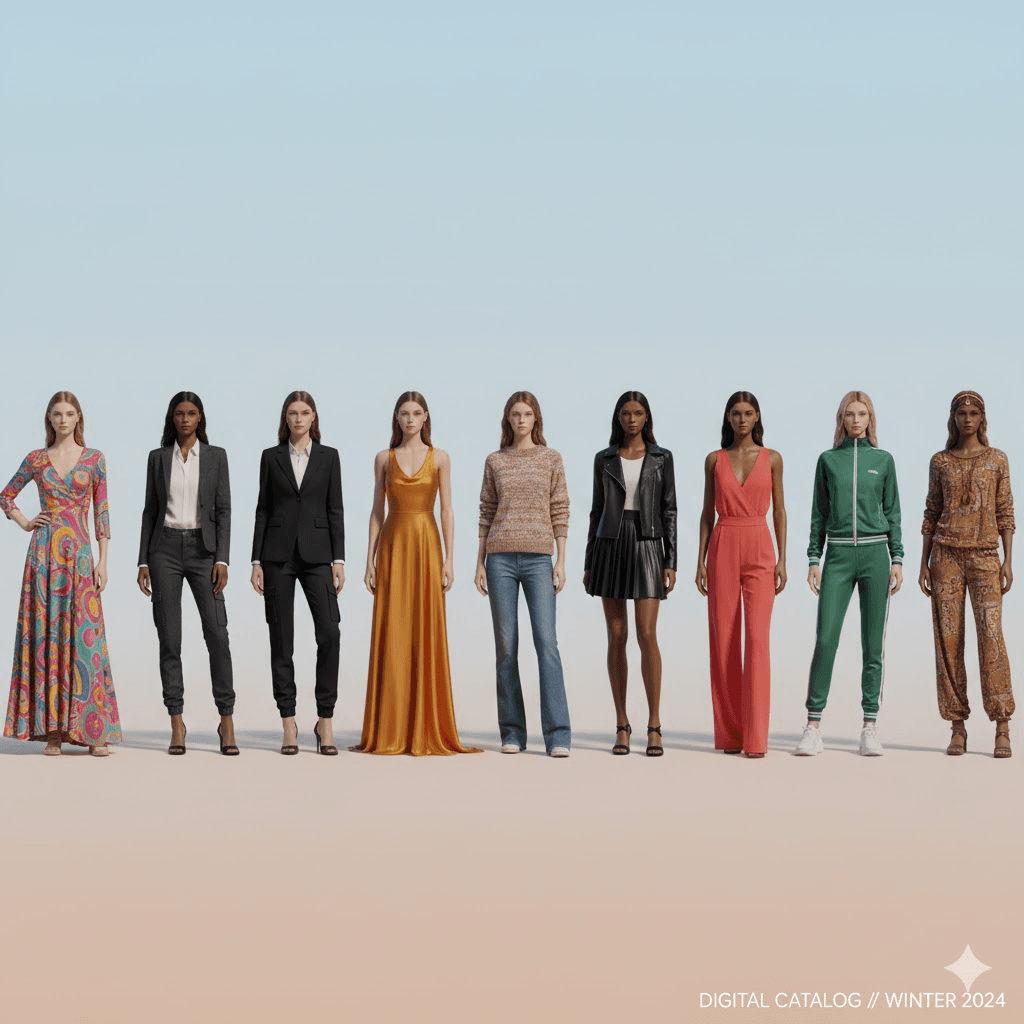
Every business that sells something wearable eventually needs models. Clothing, jewellery, shoes, bags, belts, watches, even scarves need to be shown on a person to build trust. The model drives the first impression, defines the brand’s personality and helps consumers imagine how the item will look on them.
But traditional modelling has limitations:
• High production cost
• Long timelines
• Dependency on weather, location and crew
• Limited variations in looks and body types
• Repetitive shoots for every new color, size, or seasonal drop
Now imagine eliminating these barriers and producing:
• Unlimited models
• Unlimited looks
• At any time
• In any setting
• In any pose
• Without reshoots
This is exactly what AI generated fashion models deliver. They create the perfect blend of realism and flexibility, allowing businesses to scale imagery the same way they scale their inventory.
& you know what? AI-generated fashion models forecasts growth from USD 1.47 billion in 2025 to USD 5 billion by 2035, at a CAGR of 13.1%, driven by e-commerce applications
But how to generate AI fashion models? Let’s learn!
Steps to Generate AI Fashion Models
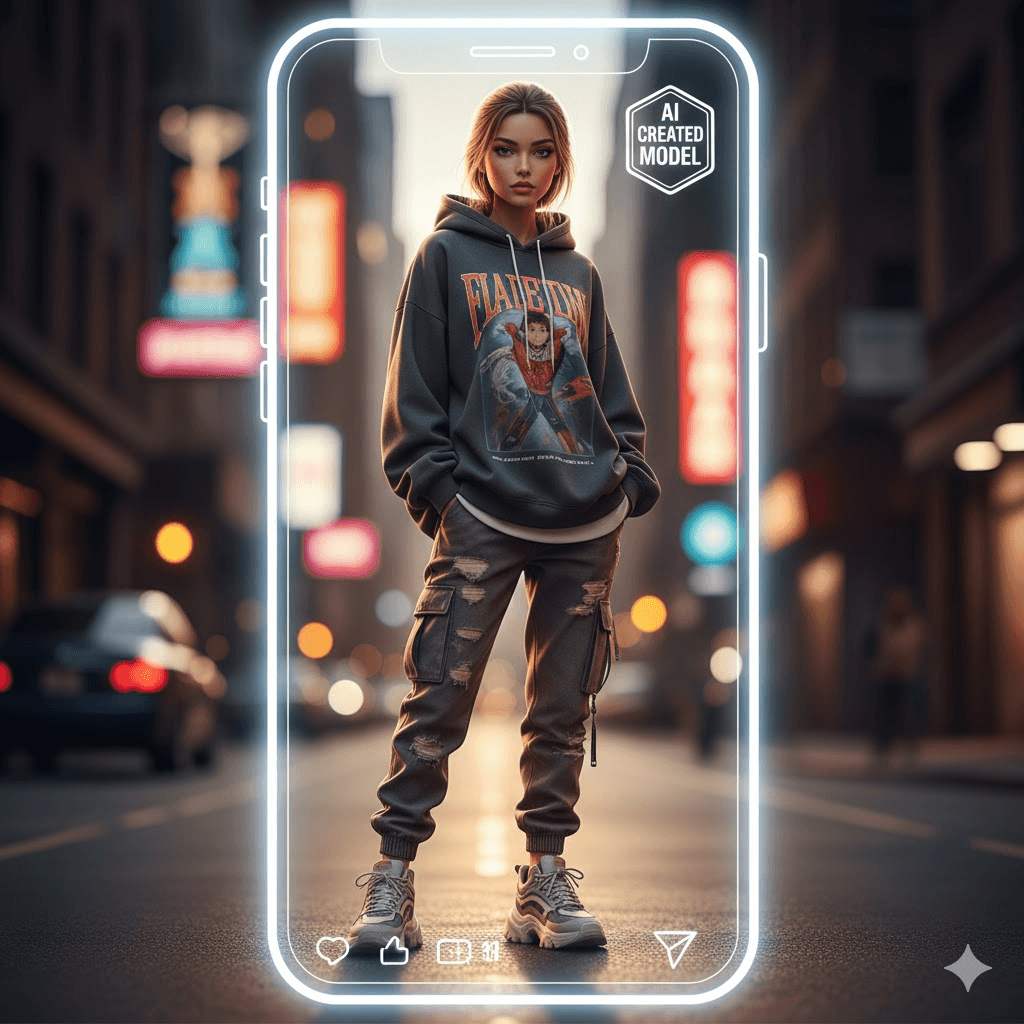
Despite the futuristic feel, generating AI fashion models is surprisingly simple. The platforms do the heavy lifting; you only provide inputs like the style, model type, outfit, mood, pose or scene.
The process usually follows this workflow:
Step 1: Upload or describe your model
You can:
• upload a photo
• upload a clothing item
• describe the look you want
AI takes this input and constructs a photorealistic model based on your instructions.
Step 2: Choose the outfit or item you want to showcase
For clothing businesses, this means:
• shirts
• sarees
• lehengas
• jackets
• streetwear
• luxury fashion
For accessories, you can highlight:
• jewellery
• handbags
• belts
• watches
• eyewear
AI places the item realistically on the model’s body with correct drape, lighting and texture.
Step 3: Generate poses, scenes, and brand looks
Here is where AI shines. You can generate:
• Studio photos
• Lifestyle shots
• Runway-inspired frames
• Minimalist catalog backgrounds
• Outdoor scenes
• Social media-ready portraits
All these variations come without hiring extra models or paying for different shoot locations.
Step 4: Download and use instantly
Your AI generated fashion models can be downloaded in high resolution for web, catalogue, and ads.
The entire process takes minutes, not days.
Top Generative AI Platforms to Create Fashion Models
If you're planning to use AI for modelling, here are the platforms currently admired for accuracy, realism, and ease of use:
Platform Name | What It Does | Best For | Key Strengths | Who Commonly Uses It |
Generates highly realistic AI fashion models and full product shoots using uploaded clothing images. | Ecommerce brands needing fast, high-volume model photos. | Photorealistic skin and fabric rendering, strong catalog automation, quick bulk output. | Apparel brands, jewellery stores, footwear companies. | |
Specializes in AI virtual models for product catalogues with strong pose control and apparel draping accuracy. | Brands looking for studio-style product images. | Crisp lighting, clean backgrounds, consistent catalog look, inclusive body types. | D2C brands, Amazon sellers, boutique designers. | |
Offers 3D garment visualization with AI-powered virtual models for realistic drape simulation. | Fashion houses and manufacturers need true-to-fabric 3D previews. | Highly accurate cloth physics, 3D fit viewing, design-to-showcase workflow. | Designers, production teams, fashion manufacturers. | |
Creates customizable AI-generated models tailored to brand aesthetics and demographic needs. | Brands who want signature, recurring AI models. | Brand-personalizable faces, wide ethnicity range, strong lifestyle imagery. | Mid-size brands, lifestyle labels, social-first businesses. | |
Glance (Optional for Personnel Use) | Creates AI fashion models that resemble real people; enables virtual try-ons and clothing swaps. | Influencers and creators who want AI twins. | Personal digital twin creation, outfit testing, hyper-realistic poses. | Influencers, small fashion brands, content creators. |
How to Use AI Fashion Models for Your Brand
Once you have your models generated, the real advantage begins. Brands use them across multiple touchpoints to strengthen visibility, credibility and engagement.
1. Branding Online
AI models help brands establish a consistent aesthetic. You can:
• create campaign photos
• build social media lookbooks
• develop thematic shoots
• maintain uniform lighting and color grading
This consistency makes even small brands look premium and well funded.
2. Showcasing Catalogues
This is the most common use. AI models can display your entire product catalog across:
• ecommerce listings
• Pinterest pins
• Instagram shop
• TikTok product showcases
• WhatsApp business catalogues
And because you can generate multiple poses and body types, your catalog instantly becomes more inclusive and more visually engaging.
3. Experimenting With Creative Concepts
Since AI removes physical constraints, you can test:
• futuristic fashion
• vintage fashion
• street luxury
• festival edits
• minimalist catalog sets
No need for elaborate setups. Just change the prompt.
Create AI Fashion Models That Look Like You- Your Personnel AI
This is where the game truly levels up. With Glance, you can create AI fashion models that look exactly like your digital twin. It’s like having your own personal modelling studio available every day. Through it:
- You don’t have to wear every outfit.
- You can model unlimited looks.
- You can share the looks on social media.
- You can also buy the fits you love the most.
What AI Fashion Models Still Can’t Capture?
- Mood-driven style shifts
- Lifestyle rhythms (workdays, weekends, seasons)
- Energy signals (slow scrolls vs. skip-scrolls)
- Emerging micro-trends before they go mainstream
- Contextual interpretation: Why this item now?
- Identity expression beyond appearance
Conclusion
AI generated fashion models are not replacing creativity. They’re expanding it. They offer an affordable, scalable, high-speed way to showcase products, build brands, and create visually rich content. From small boutiques to major fashion houses, everyone is beginning to rely on them because they unlock something priceless convenience without compromise.
If you’re a business owner, creator or fashion professional, this is the moment to adopt the shift before it becomes the industry default.
FAQs Related to AI Generated Fashion Models
1. What are AI generated fashion models?
AI generated fashion models are digital models created using generative AI to showcase clothing, jewelry, accessories, or full fashion campaigns. They look photorealistic, pose naturally, and mimic real studio lighting. Many brands use them to avoid costly photoshoots or to show more diverse body types. These models can be created from scratch or built to look like your target audience, depending on the platform you use.
2. How do I create AI fashion models for my brand?
You can create AI generated fashion models through platforms like ZMO.ai, Botika, Lalaland.ai, or Style3D AI. Most tools simply ask you to upload a product image, choose the model style or body type, and generate photos in seconds. Some tools even let you customize skin tone, poses, backgrounds, and outfits. If you want the model to resemble you, platforms like Glance offer AI-twin-based generation that matches your features and style preferences.
3. Are AI generated fashion models realistic enough for ecommerce?
Yes. Modern AI platforms are trained on high-resolution datasets, so the output often looks studio-grade. This makes them suitable for ecommerce listings, catalogs, Shopify storefronts, and digital ads. Some brands report improved clickthrough rates because AI models can display consistent poses and lighting, which helps products look more professional. If your audience needs ultra-real visual detail, choose tools like ZMO.ai or Style3D AI that offer 4K outputs.
4. Can I use AI generated models for branding and social media campaigns?
Absolutely. Many brands now run Instagram, Facebook, and TikTok campaigns entirely with AI models because they can match different moods, aesthetics, and trends instantly. You can generate lifestyle backgrounds, seasonal vibes, or themed shoots without organizing real locations or stylists. Influencers even use AI models of themselves to test looks before posting. The key is to ensure the visuals match your brand identity and don’t feel overly synthetic.
5. Do AI generated models work for small businesses or only big fashion brands?
AI generated models work for both. Small businesses benefit the most because they can skip expensive studio shoots and still look premium. AI helps them create model images for new arrivals, catalogs, or Etsy listings with almost no budget. Larger brands use AI models to scale campaigns, show inclusive fits, or test visual concepts before manufacturing. As long as the tool supports your visual style, AI modeling can fit into nearly any business workflow.
Download the Glance app now




Your intelligent
shopping agent.







Your intelligent
shopping agent.