


Old Money Fashion Style: 9 Essential Spring Looks for Men
TL;DR
The old money fashion style focuses on timeless clothing, subtle luxury, and refined simplicity. This guide explores 9 spring outfits inspired by classic American prep and quiet luxury, showing how modern men can adopt the old money fashion style through quality fabrics, neutral colors, and effortless tailoring.
The Quiet Confidence of Heritage
What if dressing well wasn’t about wearing the loudest brands—but about wearing the right clothes that quietly signal confidence, heritage, and taste?
In recent years, the old money fashion style has moved from niche fashion circles into mainstream culture. Instead of flashy logos and trend-driven outfits, the aesthetic emphasizes timeless tailoring, neutral colors, and quality fabrics that age well over time. According to research analyzing Google search behavior, interest in terms like “old money style,” “stealth wealth,” and “quiet luxury” has surged dramatically, with searches for “old money style” rising by more than 568% in a single year.
Fashion experts link this shift to a broader cultural change. After years dominated by fast fashion and logo-heavy branding, many consumers now prefer clothing that feels refined, durable, and understated. The old money fashion style reflects this mindset—prioritizing craftsmanship and longevity over short-lived trends.
For men in the United States, spring is the ideal season to explore this aesthetic. Lightweight tailoring, breathable fabrics, and classic Ivy League silhouettes make it easier than ever to adopt the old money fashion style in ways that feel practical, modern, and effortless.
Below are nine old money fashion style ideas for men this spring—each inspired by heritage American fashion, coastal prep culture, and quiet luxury.
What Defines Old Money Fashion Style?
The old money fashion style is rooted in understated elegance. Historically associated with elite American families, Ivy League universities, and country club culture, the look focuses on timeless pieces rather than seasonal trends.
Unlike influencer-driven fashion, this aesthetic revolves around subtle signals of quality—clean tailoring, natural fabrics, and muted color palettes.
| Element | Description | Example |
| Timeless tailoring | Structured but relaxed fit | Blazers, chinos |
| Neutral colors | Soft, elegant tones | Navy, cream, beige |
| Premium fabrics | Natural materials | Linen, cotton, wool |
| Minimal branding | No visible logos | Heritage clothing |
These principles make the old money fashion style particularly suited to spring wardrobes, where breathable fabrics and light layering dominate.
9 Old Money Fashion Style Ideas for Men This Spring
1. Linen Shirt with Tailored Chinos
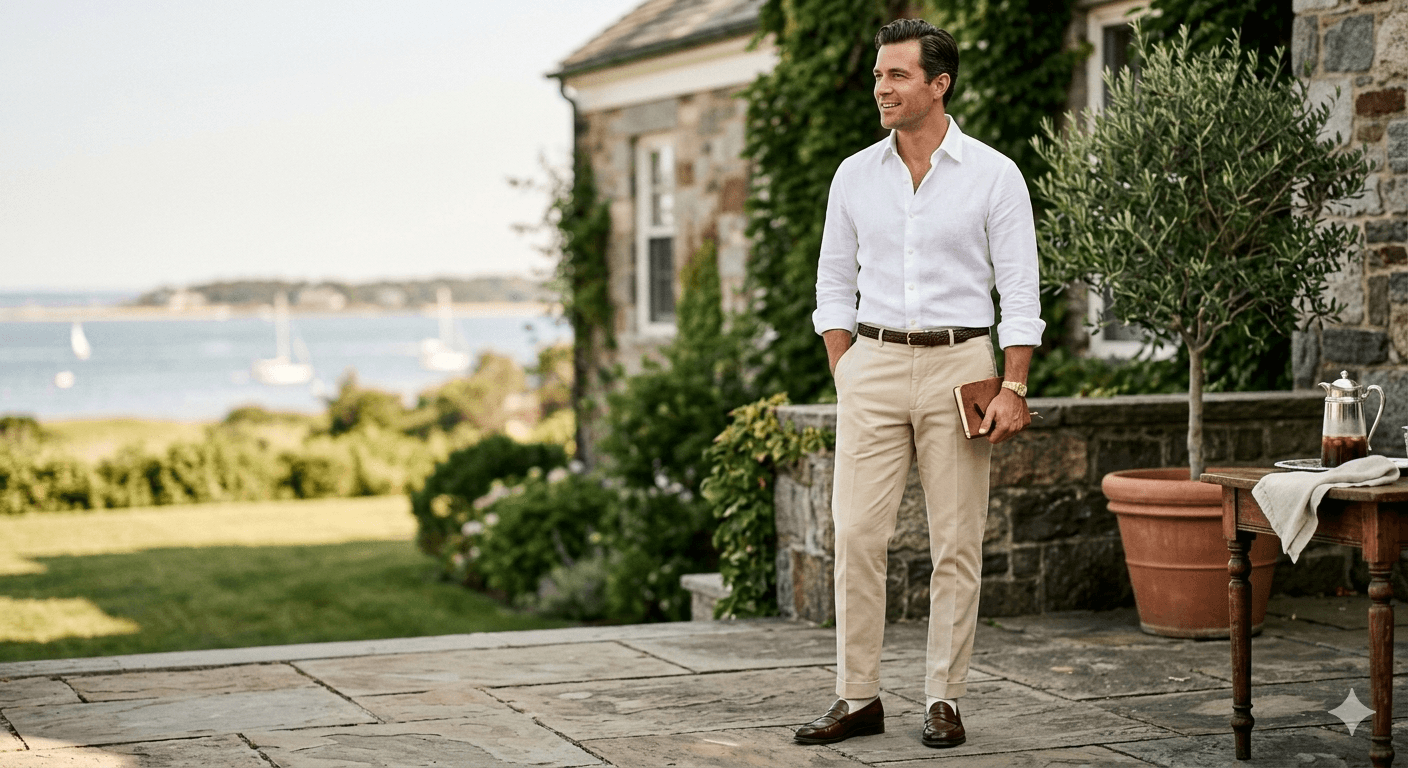
Few outfits represent the old money fashion style more clearly than a crisp linen shirt paired with tailored chinos. This look captures the relaxed elegance associated with coastal American wealth—from the Hamptons to Nantucket.
Linen shirts are popular in warm weather because they allow airflow while maintaining structure. When combined with beige or sand-colored chinos, the result is an outfit that feels polished without appearing overdressed.
This outfit works particularly well for spring weekends, brunch outings, and casual travel days. The key is simplicity: neutral colors, high-quality fabric, and classic footwear like brown loafers.
| Item | Styling Tip |
| Linen shirt | White or pale blue |
| Chinos | Beige or light khaki |
| Shoes | Leather loafers |
| Accessories | Minimal leather belt |
2. Navy Blazer with Oxford Shirt
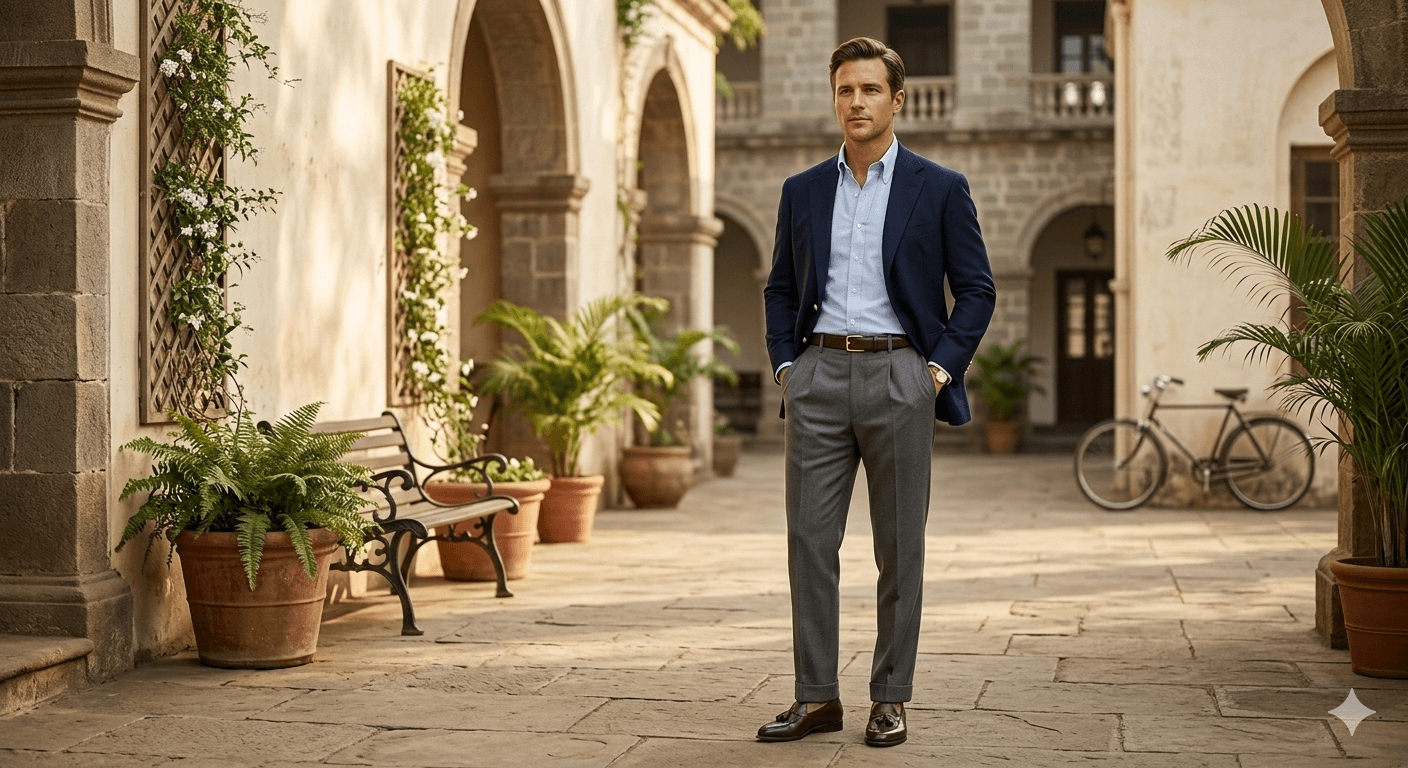
The navy blazer is perhaps the most iconic garment in the old money fashion style. It has deep roots in Ivy League fashion, where students traditionally wore blazers with tailored trousers for both formal and semi-casual occasions.
In spring, pairing a navy blazer with a light Oxford shirt creates a clean, structured look suitable for dinners, meetings, or casual office settings.
The strength of this outfit lies in its versatility. It works just as well with chinos as it does with wool trousers, making it a foundational element of the old money fashion style wardrobe.
| Item | Styling Tip |
| Navy blazer | Structured but lightweight |
| Oxford shirt | Light blue or white |
| Pants | Khaki chinos |
| Shoes | Penny loafers |
3. Cable Knit Sweater Over a Collared Shirt

Layering is an essential technique in the old money fashion style, especially during transitional seasons like spring.
A lightweight cable knit sweater worn over a collared shirt is a classic Ivy League look that blends comfort and sophistication. This style became popular on American college campuses during the mid-20th century and remains a staple in preppy wardrobes.
The combination of textured knitwear and crisp shirts creates visual depth while maintaining a polished appearance.
This outfit works well for:
- Spring evenings
- Campus environments
- Casual office settings
4. Polo Shirt with Pleated Trousers
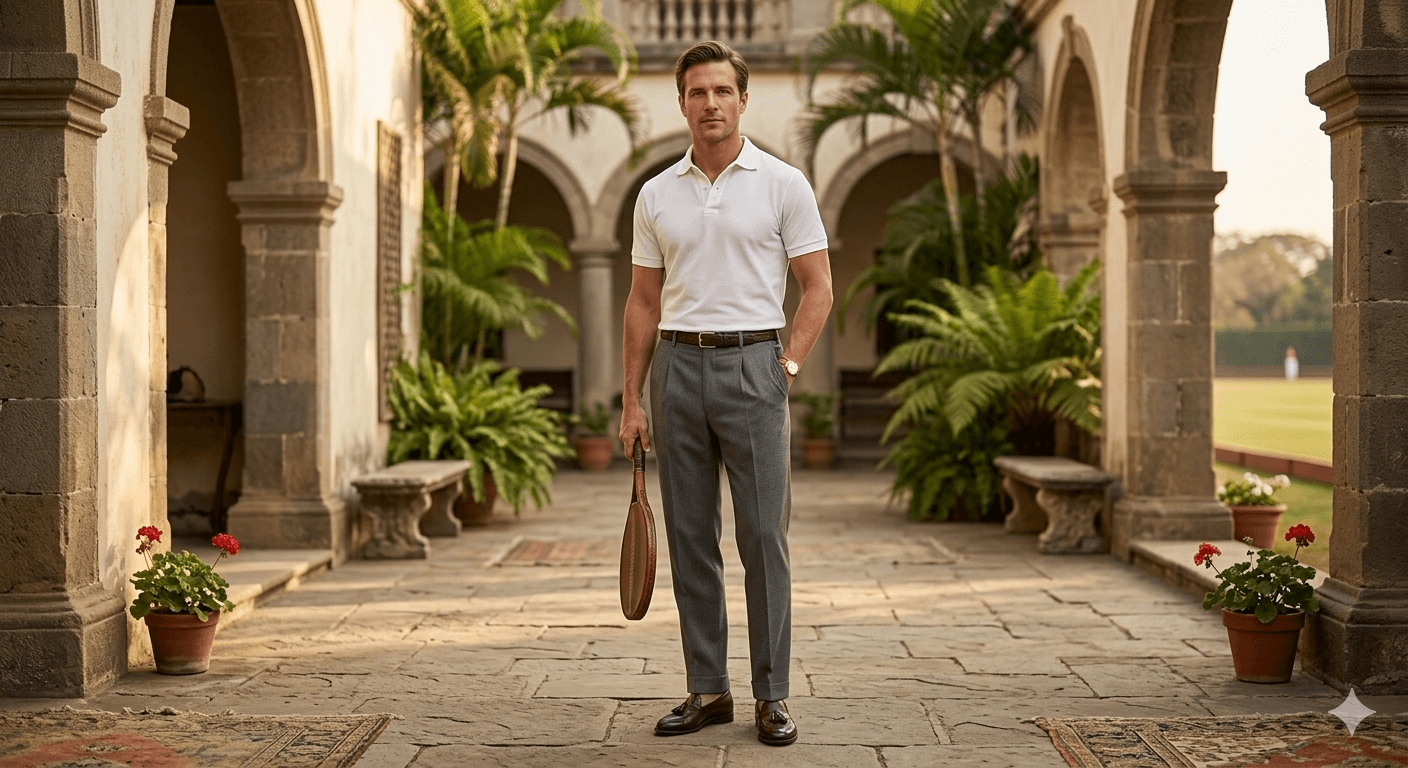
Another defining feature of the old money fashion style is the connection to leisure sports such as tennis, polo, and golf.
The polo shirt originated as athletic wear but eventually became a staple of elite casual fashion. When paired with pleated trousers, it strikes the perfect balance between relaxed and refined.
Choose neutral colors like navy, white, or soft green to maintain the subtle elegance that defines the old money fashion style.
5. Seersucker Suit
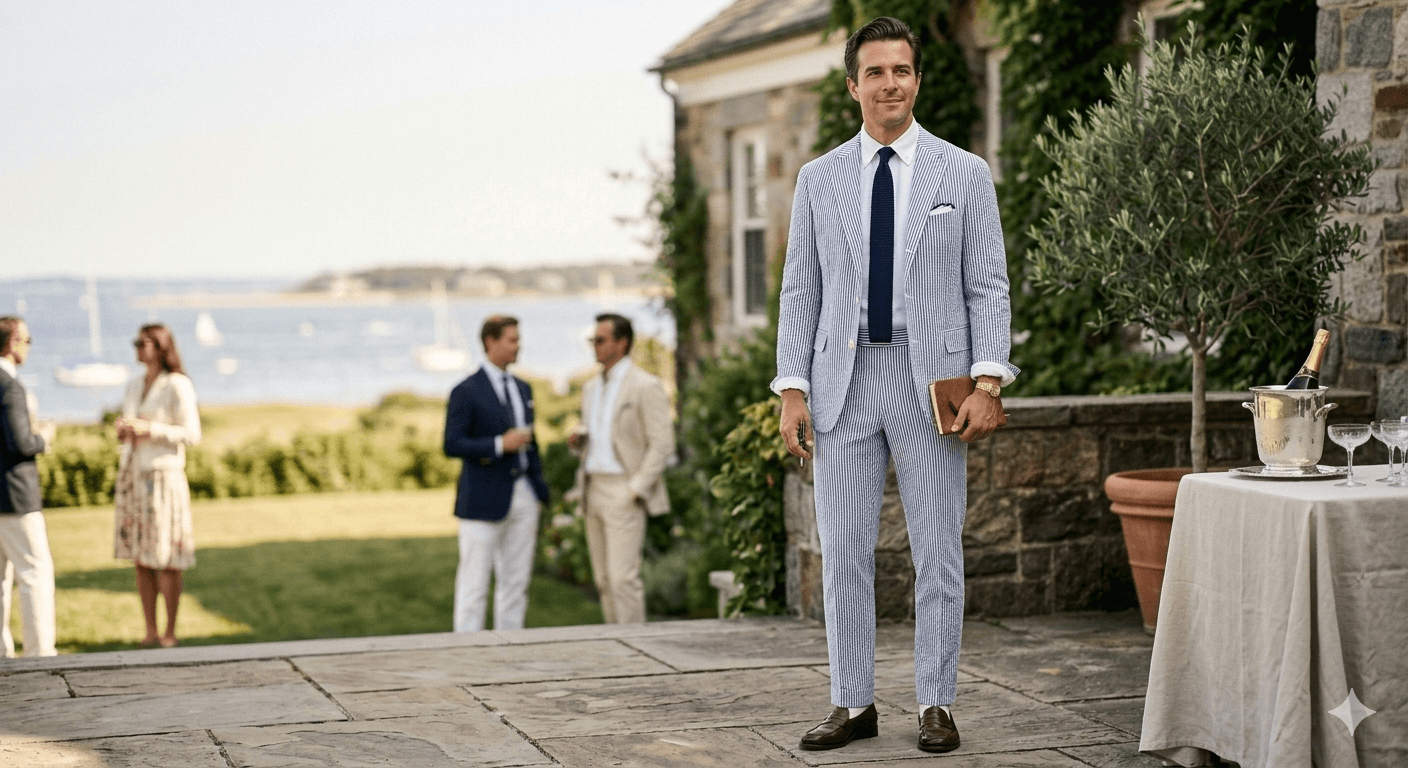
Few garments are more closely tied to American spring fashion than the seersucker suit.
Originally popular in Southern states like South Carolina and Georgia, seersucker became associated with warm-weather formalwear due to its lightweight, puckered cotton fabric.
In the old money fashion style, the seersucker suit represents classic American heritage. Its subtle stripes and breathable texture make it ideal for outdoor events, spring weddings, and garden parties.
| Item | Styling Tip |
| Seersucker jacket | Light blue stripe |
| Trousers | Matching set |
| Shirt | Crisp white cotton |
| Shoes | Brown loafers |
6. Lightweight Cardigan with Tailored Pants
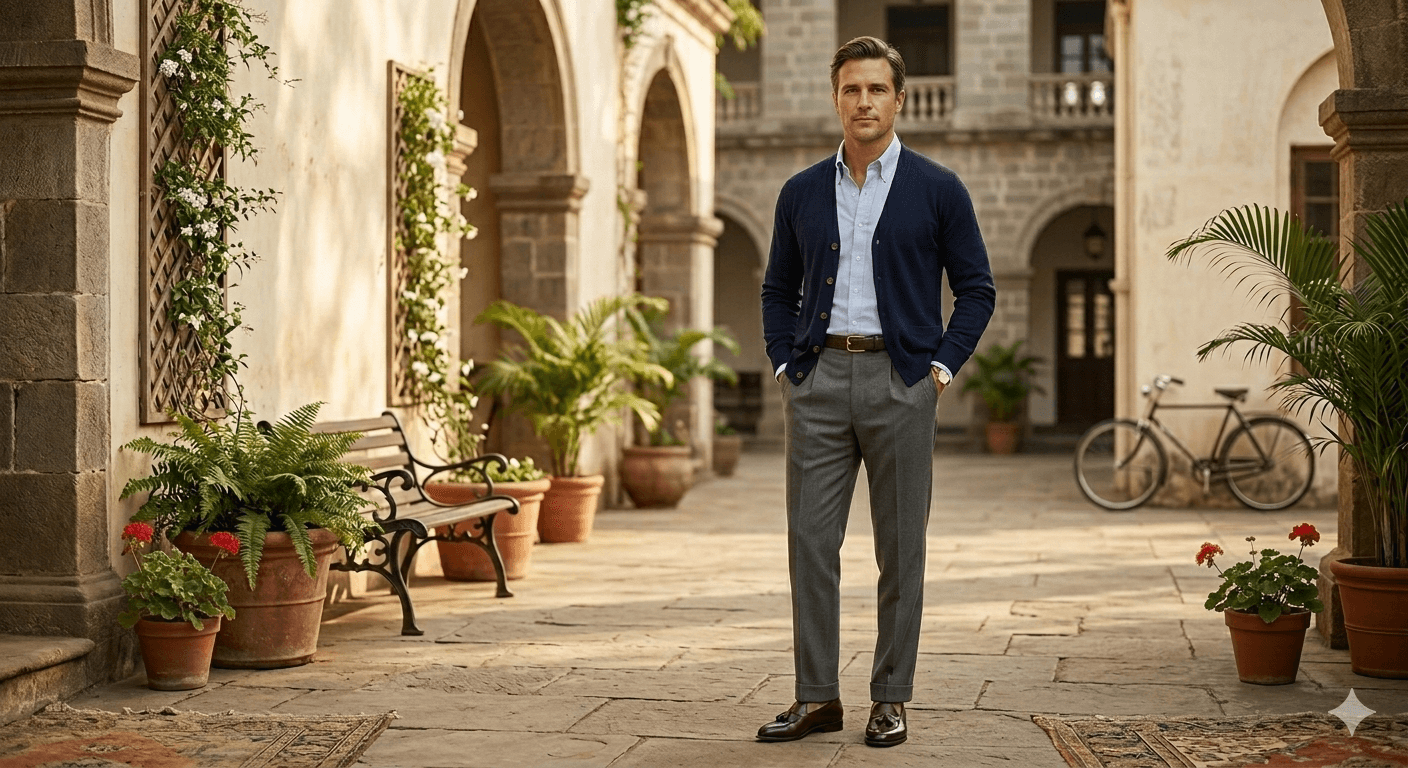
The cardigan has quietly become one of the most versatile garments in the old money fashion style wardrobe.
Unlike hoodies or modern streetwear layers, cardigans convey maturity and sophistication while still offering comfort.
When paired with tailored trousers and a simple button-down shirt, the look becomes ideal for travel days, relaxed work environments, or spring coffee outings.
Soft fabrics such as merino wool or cotton blends help maintain breathability.
7. Breton Stripe Shirt with White Trousers
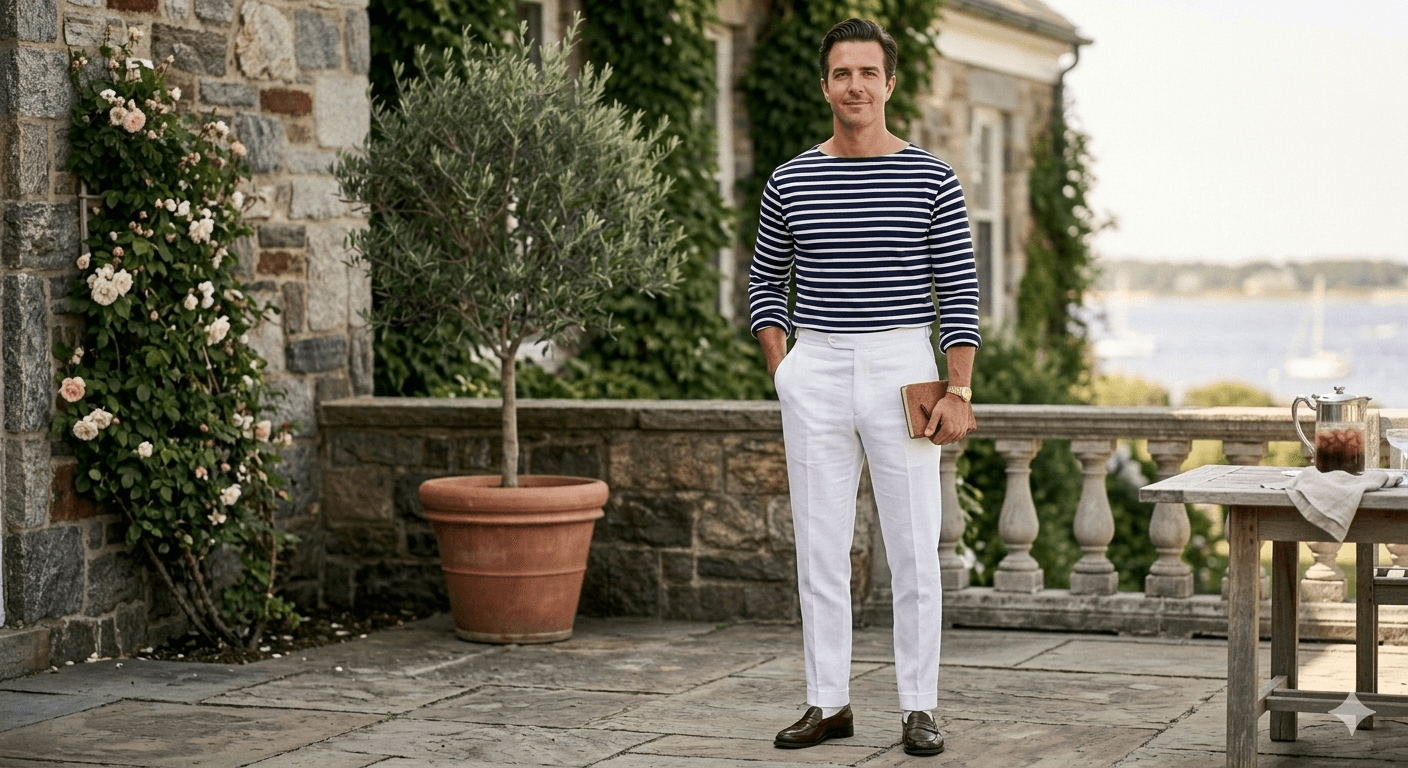
Though the Breton stripe shirt originated in French naval uniforms, it later became a staple in coastal American fashion.
Today it plays a subtle role in the old money fashion style, especially for men spending spring weekends near the coast or traveling.
The stripes add visual interest without disrupting the minimalist philosophy of the aesthetic.
Pairing the shirt with white or cream trousers keeps the outfit clean and timeless.
8. Neutral Summer Suit with Loafers

For formal spring occasions, the old money fashion style often leans toward neutral suits made from breathable fabrics like linen or lightweight wool.
These suits typically come in shades of beige, sand, or light gray. Instead of formal dress shoes, loafers are often preferred for a more relaxed yet sophisticated appearance.
This combination works especially well for:
- Spring weddings
- Outdoor events
- Business dinners
9. Rugby Shirt with Tailored Shorts

The final example of old money fashion style is a sporty but refined look inspired by Ivy League athletic culture.
Rugby shirts—originally worn in collegiate sports—have long been part of preppy wardrobes. When paired with tailored shorts and boat shoes, they create an outfit that feels both youthful and polished.
This style is particularly common in coastal American towns during spring and summer.
Why Old Money Fashion Style Is Trending Again
The renewed interest in the old money fashion style is closely linked to the rise of “quiet luxury,” a fashion movement emphasizing craftsmanship, minimalism, and subtle elegance.
Research shows that online searches related to quiet luxury and stealth wealth aesthetics have grown significantly, reflecting a cultural shift away from logo-heavy fashion.
Social media has amplified the trend even further. Millions of posts under hashtags like #OldMoneyAesthetic showcases outfits inspired by heritage brands, Ivy League fashion, and timeless tailoring.
Platforms that deliver personalized visual content—such as Glance—also play a role in spreading these aesthetics. Instead of actively searching for style inspiration, users can discover curated fashion ideas instantly on their phone screens, helping trends like the old money fashion style travel quickly across digital audiences.
Building an Old Money Wardrobe
Adopting the old money fashion style doesn’t require expensive luxury brands. Instead, focus on a few foundational principles:
| Principle | Explanation |
| Invest in quality fabrics | Linen, cotton, wool |
| Stick to neutral colors | Navy, beige, cream |
| Avoid visible logos | Keep branding subtle |
| Prioritize tailoring | Fit matters more than labels |
The goal of the old money fashion style is not to appear wealthy, but to look refined and intentional.
Final Thoughts
The old money fashion style is less about status and more about philosophy. It values longevity over trends, craftsmanship over branding, and quiet confidence over attention.
In a fashion world increasingly driven by rapid trends and social media hype, this aesthetic offers something different: timeless elegance.
For men looking to build a wardrobe that feels effortless yet sophisticated, the old money fashion style remains one of the most enduring—and practical—approaches to dressing well.
FAQs About Old Money Fashion Style
1. How can men achieve old money fashion style without buying expensive brands?
You can achieve the old money fashion style by focusing on fit, fabric quality, and neutral colors rather than luxury labels. Choose timeless pieces like chinos, Oxford shirts, loafers, and navy blazers. Thrift stores and mid-range brands often offer classic styles that replicate the aesthetic affordably.
2. What clothing pieces are essential to start an old money fashion style wardrobe?
To build an old money fashion style wardrobe, start with versatile basics like a navy blazer, white Oxford shirt, tailored chinos, loafers, and lightweight sweaters. These timeless pieces form the foundation of classic American prep style and work across casual and semi-formal spring outfits.
3. Why do some outfits look fake or forced when trying old money fashion style?
Many outfits fail because people focus on trends rather than authenticity. The old money fashion style prioritizes understated elegance—neutral colors, quality fabrics, and relaxed tailoring. Avoid loud logos, overly trendy items, or tight fits that contradict the effortless nature of the style.
4. Can old money fashion style work for everyday casual wear?
Yes, the old money fashion style adapts well to everyday wear. Simple outfits like linen shirts with chinos, polo shirts with tailored trousers, or lightweight sweaters over collared shirts offer comfort while maintaining the polished, understated look associated with the aesthetic.
5. What colors define old money fashion style for men?
The old money fashion style typically uses neutral and heritage colors such as navy, beige, cream, olive, and light blue. These colors create a timeless wardrobe that allows pieces to mix easily while maintaining the subtle, refined appearance associated with classic American fashion.
6. Is old money fashion style suitable for spring weather in the U.S.?
Yes, the old money fashion style works particularly well in spring because it emphasizes breathable fabrics like linen, cotton, and lightweight wool. These materials provide comfort while maintaining the structured, sophisticated look typical of classic American prep fashion.
7. How do modern fashion platforms influence old money fashion style trends?
Modern discovery platforms like Glance help users explore curated fashion inspiration instantly. By surfacing outfits, seasonal looks, and style ideas visually, these platforms accelerate the spread of aesthetics like the old money fashion style across digital audiences.
Download the Glance app now






Your intelligent
shopping agent.







Your intelligent
shopping agent.