

8 AI Fashion Trends 2026 That Are Changing Fashion Forever
TL;DR
If you think AI in fashion is just about chatbots recommending outfits — you're about to be genuinely surprised. The top AI fashion trends 2026 go much deeper: fabrics that react to your mood, AI agents that shop for you, and design engines that build entire collections overnight. These eight trends aren't concepts being tested in a lab somewhere — they're happening right now, reshaping how fashion is made, discovered, and worn. Whether you're a dedicated trend-follower or just someone who wants to dress better without the effort, this one's worth your full attention. Keep reading.
Fashion in 2026 isn't waiting for anyone to catch up. AI is no longer a background tool quietly powering recommendations — it's now embedded in how clothes are designed, how trends are predicted, and how shoppers discover styles that actually suit them. The gap between what technology can do for fashion and what most shoppers know about is wider than ever — and this guide closes it.
The numbers back this up: The AI in fashion market size is expected to see exponential growth in the next few years. It will grow to $9.45 billion in 2030 at a compound annual growth rate (CAGR) of 39.8%. That is not a slow shift — it is a complete industry reinvention.
From multimodal AI agents to self-learning style fusion, these are the eight top AI fashion trends 2026 that are defining the year — and setting up everything that comes after it.
Top AI Fashion Trends 2026
1. Multimodal AI Agents
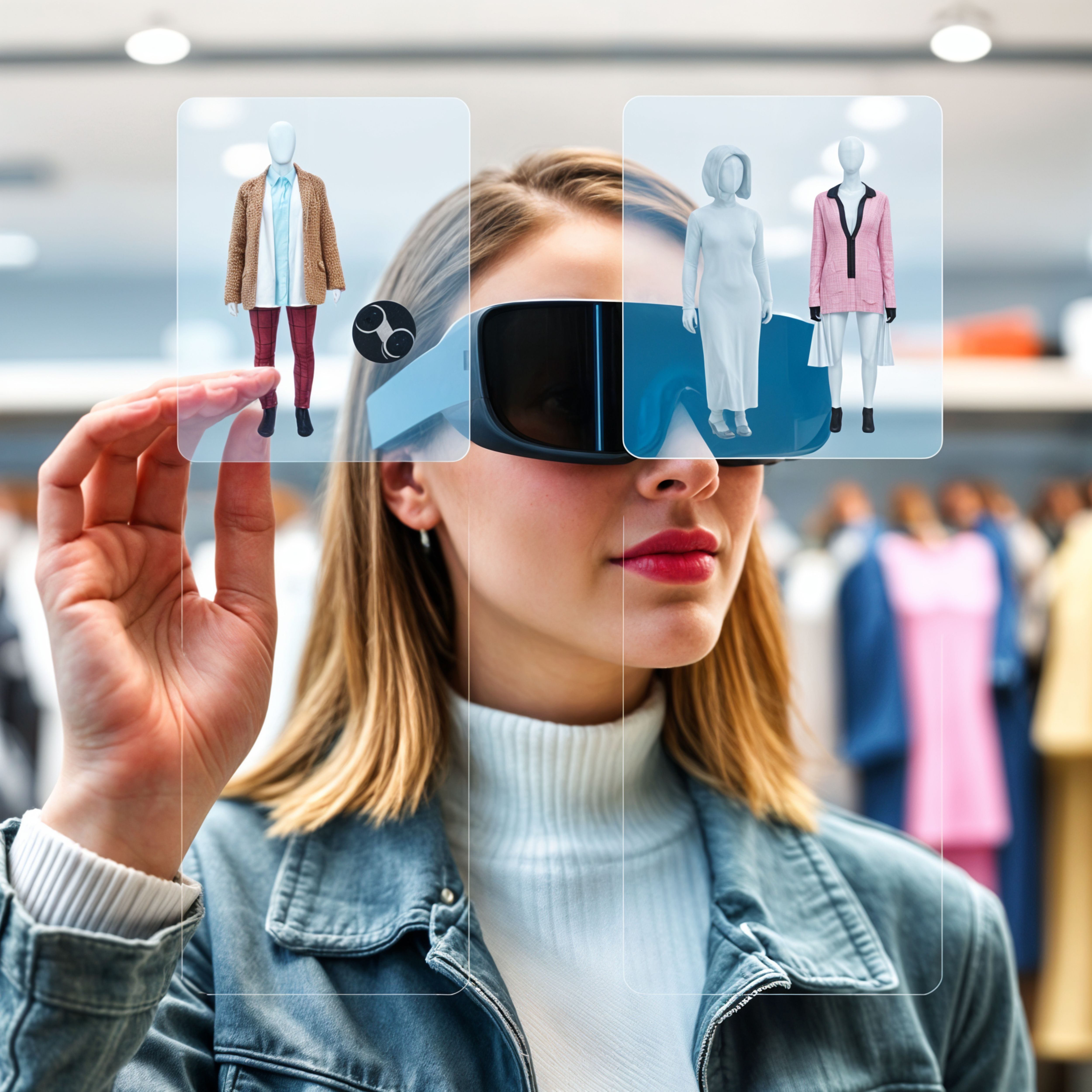
Multimodal AI agents are the next step in smart shopping, combining vision, voice, and gesture recognition to provide instant style guidance. They understand your surroundings and personal wardrobe, offering real-time recommendations tailored to your taste. This trend is a standout among the top AI fashion trends 2026, especially for tech-savvy young shoppers.
- Detects color clashes or trend gaps in real time.
- Pulls from your wardrobe and global trend data for spot-on advice.
- Perfect for Gen-Z shoppers needing quick confidence boosts.
2. Reactive Smart Textiles
Reactive smart textiles are nano-embedded fabrics that respond to your mood, body heat, or environment. They can shift colors, textures, or brightness, creating garments that feel alive and adaptive. As part of the top AI fashion trends 2026, these textiles blend futuristic tech with sustainable style for daily fashion innovation.
- Jackets shift colors from calm blues to fiery reds.
- Textures, opacity, and luminescence adjust dynamically.
- Encourages sustainable style with multifunctional garments.
Stat: The AI-driven smart textiles market is projected to grow from USD 2.41 billion in 2025 to USD 5.56 billion by 2030, at a CAGR of 18.2%.
3. Enterprise AI Design Engines
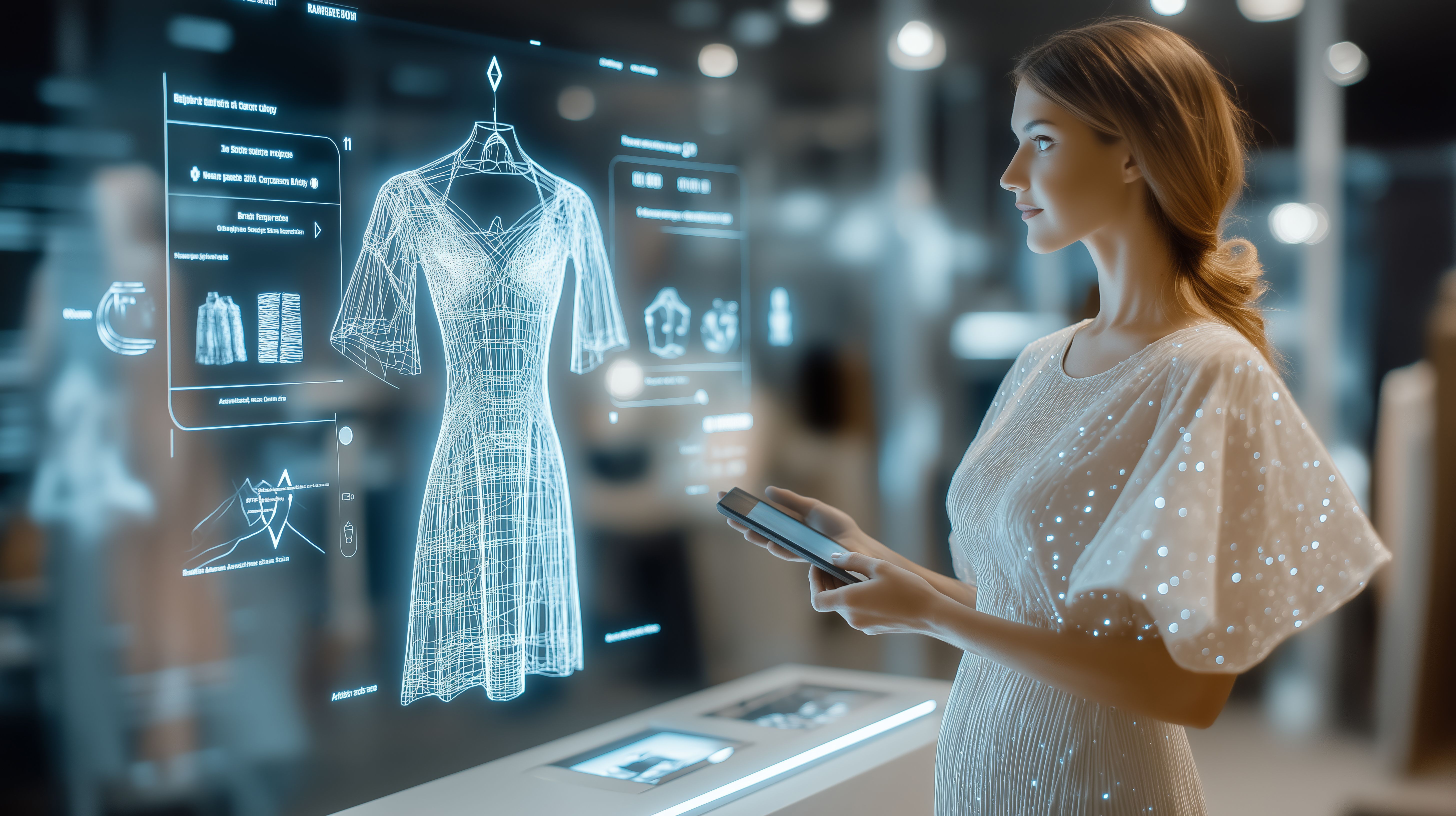
Enterprise AI design engines are tools brands use to design clothes faster and get sizing right before anything is made. For shoppers, this means fewer fit issues, better quality, and trends reaching stores quicker. That’s why this sits high among the top AI fashion trends 2026.
Instead of guessing what might work, brands test designs digitally to see how they look, fit, and move. The result is clothes that feel more thought-through and less hit-or-miss when you try them on.
- Entire collections can be designed and refined overnight, so trends drop faster.
- Past sizing and fit data helps reduce awkward fits and returns.
- Smaller brands can create premium-looking designs without premium prices.
4. Crowd-Sourced AI Kits
Crowd-sourced AI kits empower fans to participate in fashion creation. Users submit ideas, and AI refines them into ready-to-manufacture designs. This collaborative approach reflects one of the most exciting top AI fashion trends 2026, combining creativity, community, and AI-powered precision.
- Community votes decide which designs make it to market.
- Builds engagement and brand loyalty among trend-conscious shoppers.
- For example, Brand PUMA and Manchester City launched an AI tool called PUMA AI Creator that lets fans design kit concepts with text prompts and customisation tools. Fans submit their designs and then a shortlist is created
5. AI Virtual Prototype Libraries
Virtual prototype libraries allow brands to test and refine designs digitally at scale. They generate thousands of variations from a single sketch and predict fit and wear across diverse body types. Among the top AI fashion trends 2026, these libraries reduce waste and speed up innovation, making fashion smarter and more sustainable.
- Generate thousands of variations from one sketch.
- Predict fit, wear, and market response across 1,000+ body types.
- Supports sustainable “what-if” testing for modular and climate-adaptive fashion.
6. Agentic Shopping Curation
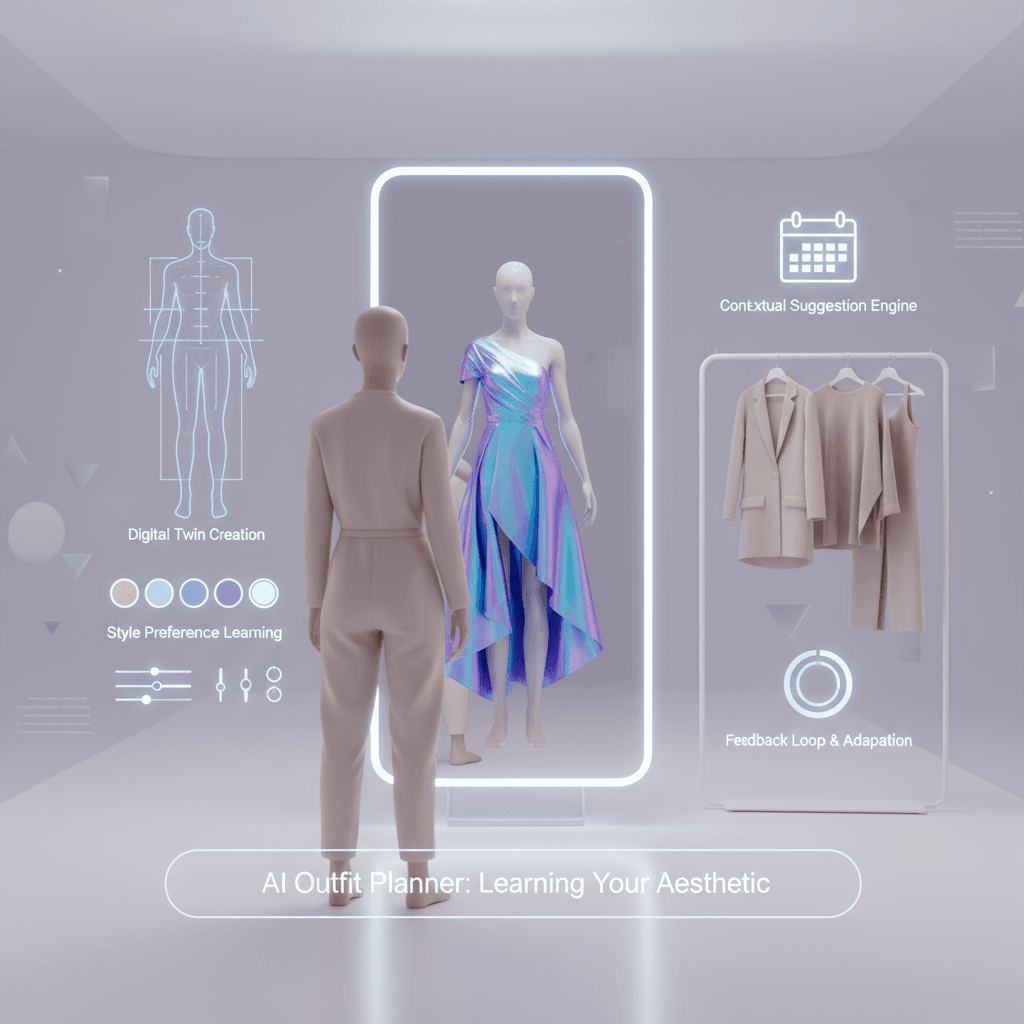
Agentic AI curation transforms the shopping experience by autonomously selecting outfits across platforms. It considers lifestyle, events, and preferences to create fully curated wardrobes. As one of the most practical top AI fashion trends 2026, it saves time while keeping your style on point.
- Predicts stockouts, bundles items, and handles returns automatically.
- Turns endless browsing into effortless style wins.
- Glance AI Twins curate event-ready looks while tracking sustainability, perfect for budget trend-followers.
Glance is one of the sharpest examples of this trend in action. Its AI Twin builds a personalized digital version of you — factoring in body type, skin tone, and style preferences — and delivers editorial-style curated outfits that feel less like recommendations and more like a stylist who actually knows you.
Every swipe, save, or skip teaches the system more, making each recommendation smarter than the last. It connects directly to shoppable inventory across 400+ global brands including Levi's, Tommy Hilfiger, and Old Navy, turning inspiration into purchase in a single tap.
7. Agentic Supply Chain Orchestrators
Sustainability in 2026 goes beyond tracking impact. It is about using AI to actively reshape how fashion is produced and delivered. Agentic supply chain orchestrators work like a virtual COO, making smart decisions around cost, speed, and carbon footprint. That is why they stand out among the top AI fashion trends 2026 as brands move toward cleaner, more efficient operations.
Instead of giving each garment a digital twin, fashion now gives the entire supply chain an AI brain. One that balances sustainability, affordability, and availability in real time for modern shoppers.
- Continuously scans demand signals, social buzz, weather disruptions, and trade policies to reroute sourcing and shipping before issues hit.
- Automatically shifts production to lower-impact regions or nearshoring hubs, reducing overstock and unsold inventory that often becomes waste.
- Supports eco-sourcing at scale, resonating with value-driven, size-inclusive, comfort-first, and WFH-heavy audiences who care about both fit and footprint.
Among the top AI fashion trends 2026, this trend directly impacts prices, availability, and sustainability.
8. Self-Learning Style Fusion
Self-learning style fusion blends runway trends with individual style inputs, creating unique, evolving outfits. AI continuously adapts to user feedback, producing personalized hybrid aesthetics. This trend represents the cutting edge of the top AI fashion trends 2026, appealing to young shoppers seeking individuality.
- Evolves daily from user feedback.
- Creates unique aesthetic blends like “Shenzhen maximalism meets Paris minimal.”
- Sparks niche communities and hyper-personalized fashion experiences.
Glance applies this thinking at scale — learning from how users engage with styles across the app to serve looks that feel increasingly personal with every session.
Conclusion: AI Isn't the Future of Fashion — It's the Present
The top AI fashion trends 2026 aren't things to watch from a distance. They're already shaping what lands in stores, what gets recommended to you, and how the clothes you buy are made. The brands investing in these technologies are pulling ahead — and the shoppers who understand them are dressing better for it.
Whether it's a jacket that adapts to your mood, an AI agent that builds your wardrobe while you sleep, or a discovery platform like Glance that learns your style before you've fully figured it out yourself — fashion in 2026 is more personal, more efficient, and more exciting than it's ever been.
These eight trends are just the beginning. The smarter you shop, the better fashion gets.
FAQs related to Top AI Fashion Trends 2026
1. What are the Top AI fashion trends 2026?
The top AI fashion trends 2026 include multimodal AI agents, reactive smart textiles, agentic shopping curation, AI virtual prototype libraries, enterprise AI design engines, crowd-sourced AI kits, agentic supply chain orchestrators, and self-learning style fusion. Together, these trends focus on faster fashion cycles, better fit, personalization, and more sustainable shopping experiences.
2. Can AI garments change color or texture?
Yes. AI-powered garments use nano-embedded fabrics that respond to body heat, mood, light, or weather. These materials can shift color, texture, or brightness in real time, allowing one garment to adapt to different looks, conditions, and occasions without needing multiple outfits.
3. Are the Top AI fashion trends 2026 sustainable?
Yes, the Top AI fashion trends 2026 are designed to reduce waste and overproduction. AI helps brands forecast demand accurately, test designs digitally, optimize supply chains, and produce only what is likely to sell. This supports circular fashion and lowers environmental impact.
4. How does AI help predict fashion trends?
AI predicts fashion trends by analyzing large volumes of data from social media, search behavior, sales patterns, and global style movements. It identifies emerging signals early, helping brands launch relevant designs faster and allowing shoppers to discover trends before they go mainstream.
5. What is self-learning style fusion?
Self-learning style fusion uses AI to combine runway trends with personal style data, such as preferences and images. The system evolves over time based on feedback, creating unique, constantly updating outfit recommendations that reflect both global fashion and individual identity.
6. How is AI making fashion more affordable for everyday shoppers?
Enterprise AI design engines and virtual prototype libraries are reducing production costs significantly — especially sampling and fit-testing expenses that traditionally added to retail prices. As more brands, including smaller labels, adopt these tools, better quality at more accessible price points becomes increasingly achievable.
Download the Glance app now




Your intelligent
shopping agent.







Your intelligent
shopping agent.