

7 Benefits of AI in Fashion for Everyday U.S. Shoppers in 2026
TL;DR
In 2026, the benefits of AI in fashion have shifted from experimental gimmicks to essential "Agentic" tools. With U.S. return rates hitting a crisis point of 30-40%, AI agents like Glance are stepping in to solve the "Search vs. Discovery" gap, leading to 25% more value per purchase and a 15% reduction in retail waste.
When Fashion Started Feeling Like Homework
In 2026, shopping is no longer a search; it’s a conversation. For years, "online shopping" was synonymous with "digital labor." You sifted through thousands of mismatched results, balanced 15 open browser tabs, and ultimately gambled on a purchase that had a 40% chance of being returned. Today, that friction has vanished.
The real benefits of AI in shopping aren't found in flashy avatars or chatbots that repeat your questions. They are found in the rise of Agentic AI intelligent systems that act as a silent filter between you and the $8 trillion global e-commerce marketplace. 51% of U.S. shoppers are now willing to let AI handle the entire shopping process — including making the final purchase — once their preferences are set, per Adyen's own 2026 US Retail Report.
We are entering the era of No Search Shopping, where the "homework" of being a consumer is finally being automated.
1. Erasing Choice Overload (The "No Search" Revolution)
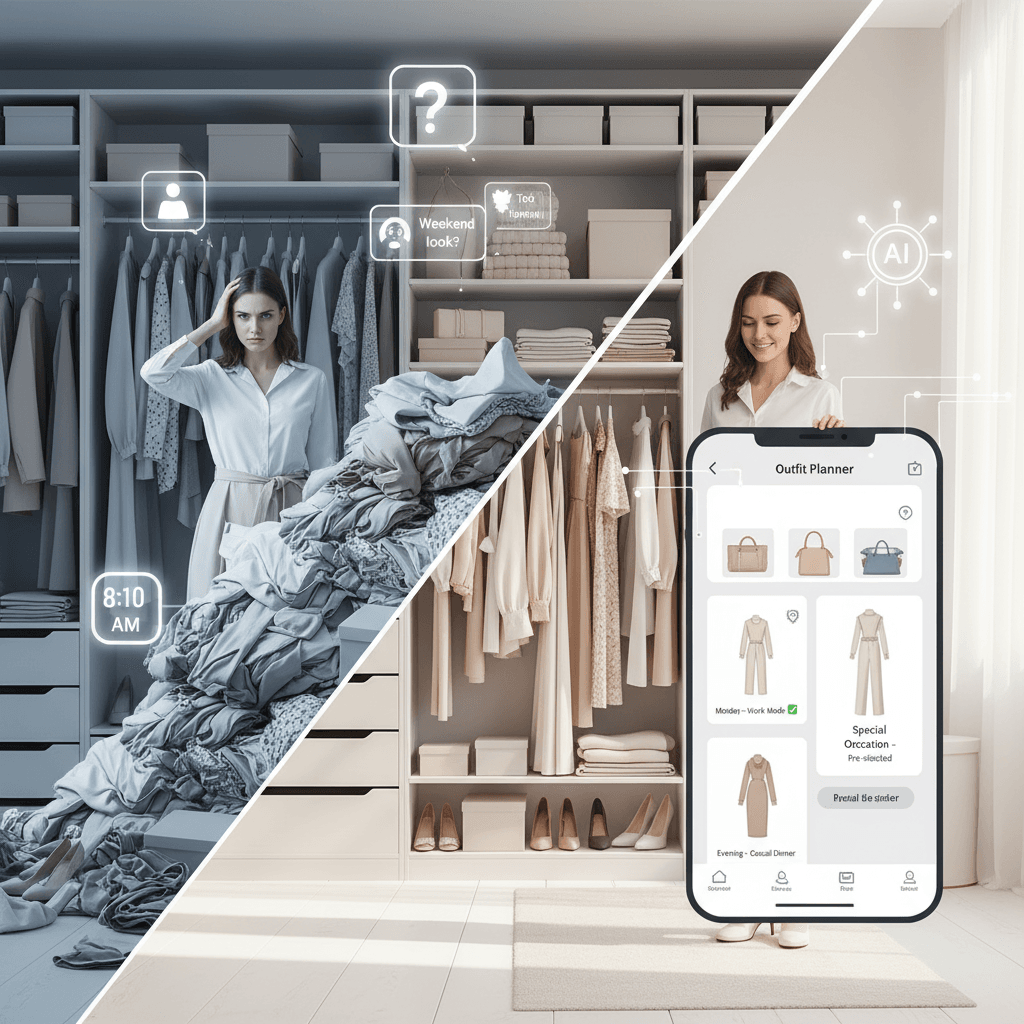
One of the most immediate benefits of AI in fashion is the death of the search bar. In 2026, we have moved to No Search Shopping.
- The Data: According to Harris Poll research, three out of four U.S. consumers (76%) report that an unsuccessful search resulted in a lost sale for the retail website, with 48% purchasing the item elsewhere.
- The AI Solution: Instead of showing you 500 "blue shirts," an agent uses Behavioral Intelligence to show you the one blue shirt that matches your existing wardrobe, your typical price point, and your upcoming calendar events.
- Case Study: Amazon has used AI to personalize homepage recommendations for logged-in users for years, tailoring what's shown based on individual shopping activity rather than generic best-sellers.
2. Fit Confidence Improves Without More Try-Ons
Fit anxiety is one of the most ignored problems in fashion.
Recent studies show that the average return rate for online apparel orders is between 20.8% and 24.4% in the US, with some brands experiencing rates as high as 40%.
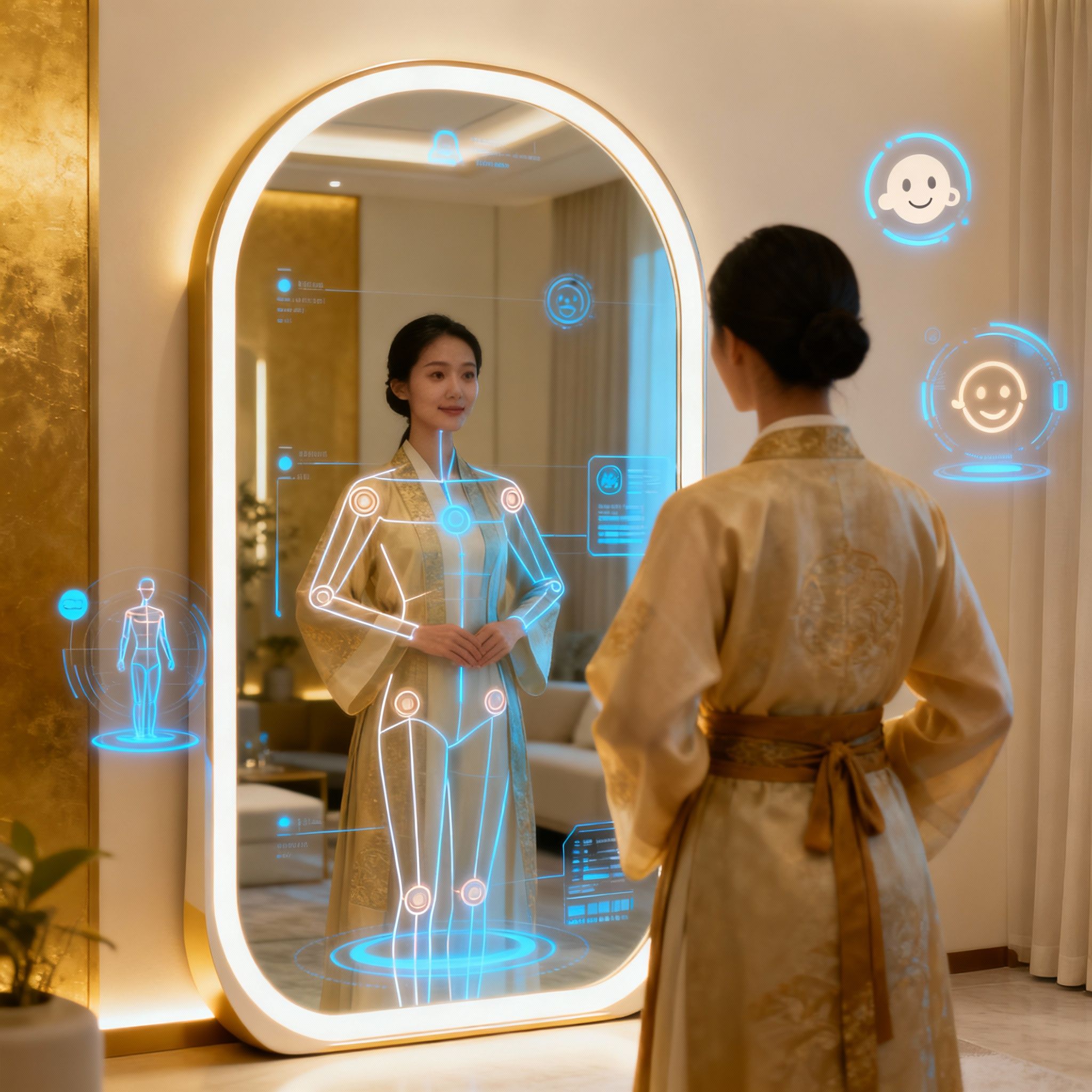
This is where AI magic mirror tools and sizing intelligence come in, and why fit prediction remains one of the strongest benefits of AI in fashion for online shoppers.
An AI magic mirror doesn’t just show how something looks—it predicts how it behaves on different body types using data patterns.
This is a major benefit of AI in fashion because:
- Fewer returns mean less waste
- Shoppers feel more confident buying online
- Fit becomes predictive, not trial-and-error
3. Democratizing Style for the "Fashion-Neutral"
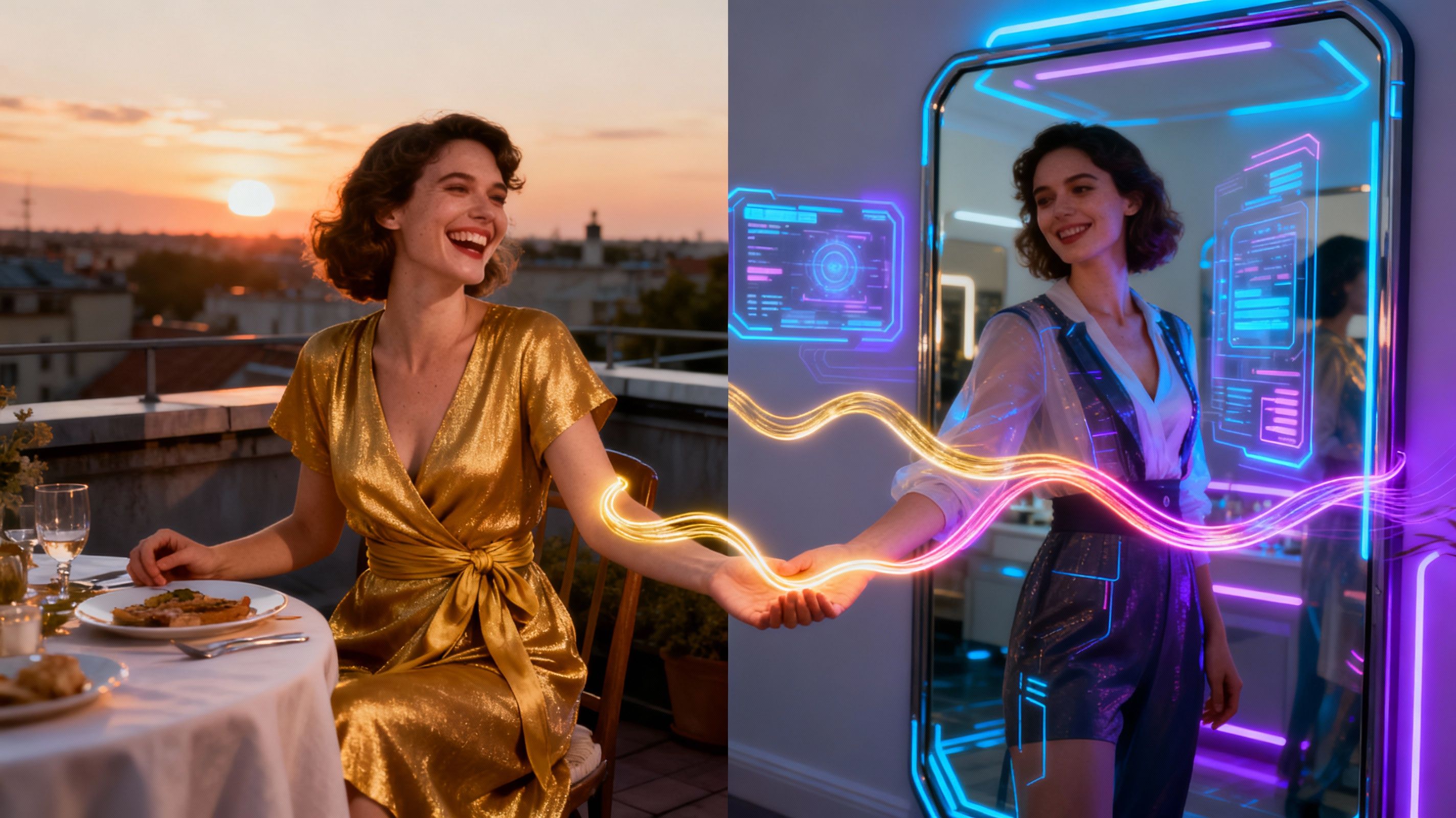
One overlooked benefit of AI in fashion is accessibility.
You don’t need to:
- Know silhouettes
- Follow trends
- Understand color theory
AI learns from behavior, not vocabulary.
This is especially helpful for:
- Fashion beginners
- Professionals building work wardrobes
- People re-entering fashion after lifestyle changes
In other words, how to use AI in fashion doesn’t require expertise. You just browse naturally.
4. Practical Sustainability (Not Performative)
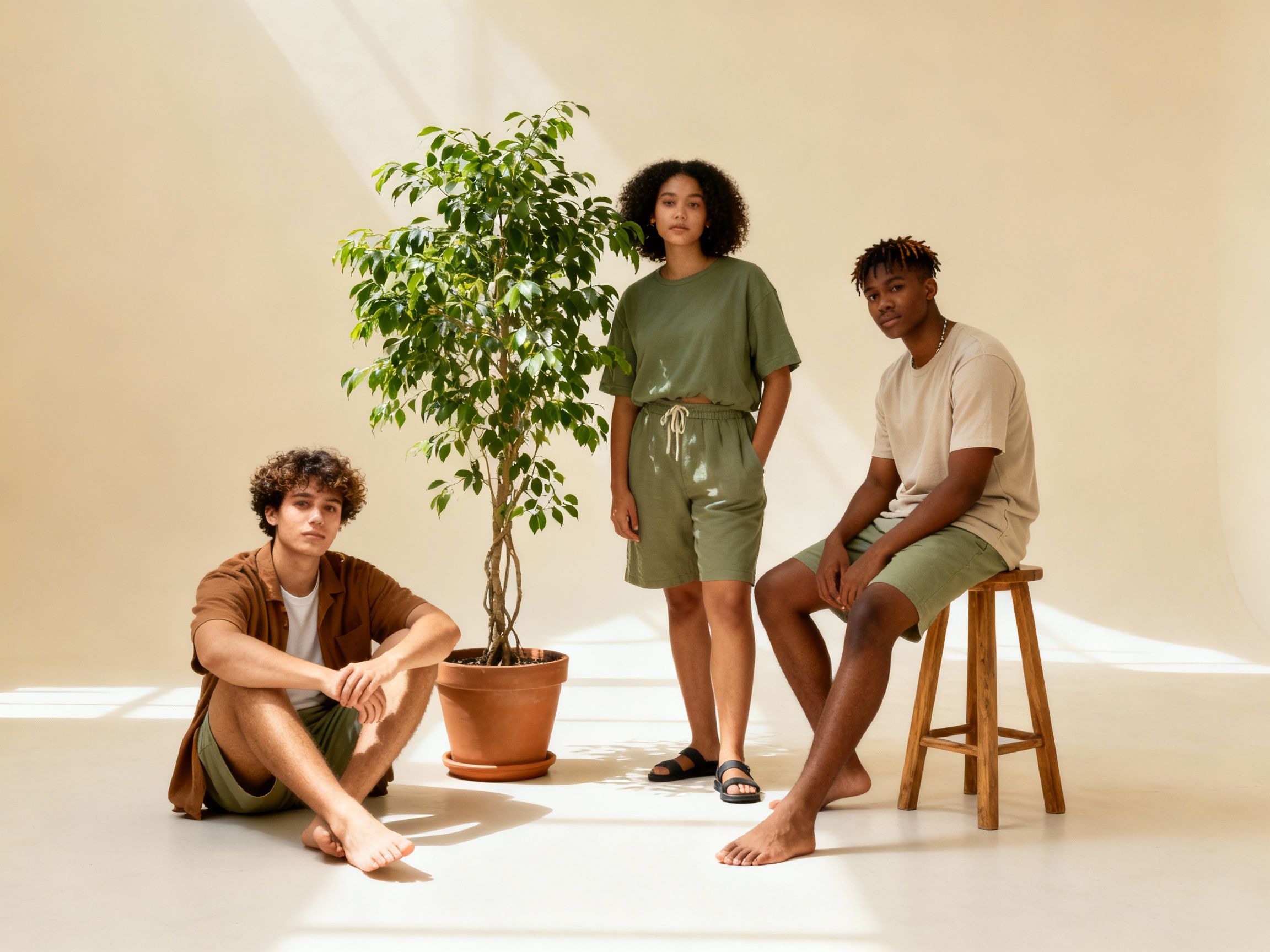
Sustainability sounds good—but shopping sustainably is hard.
A survey by McKinsey found that 67% of consumers consider the use of sustainable materials to be an important purchasing factor whereas another report by McKinsey’s State of Fashion 2024, say consumers increasingly care about sustainability, but real purchasing decisions are still shaped by price, convenience, and practicality, creating a gap between intent and action.
AI helps by:
- Promoting rewearable pieces
- Highlighting versatile items
- Reducing impulse buys
This is where generative AI in fashion supports smarter production and smarter purchasing—not just greener marketing.
5. AI Generated Fashion Models Improve Representation
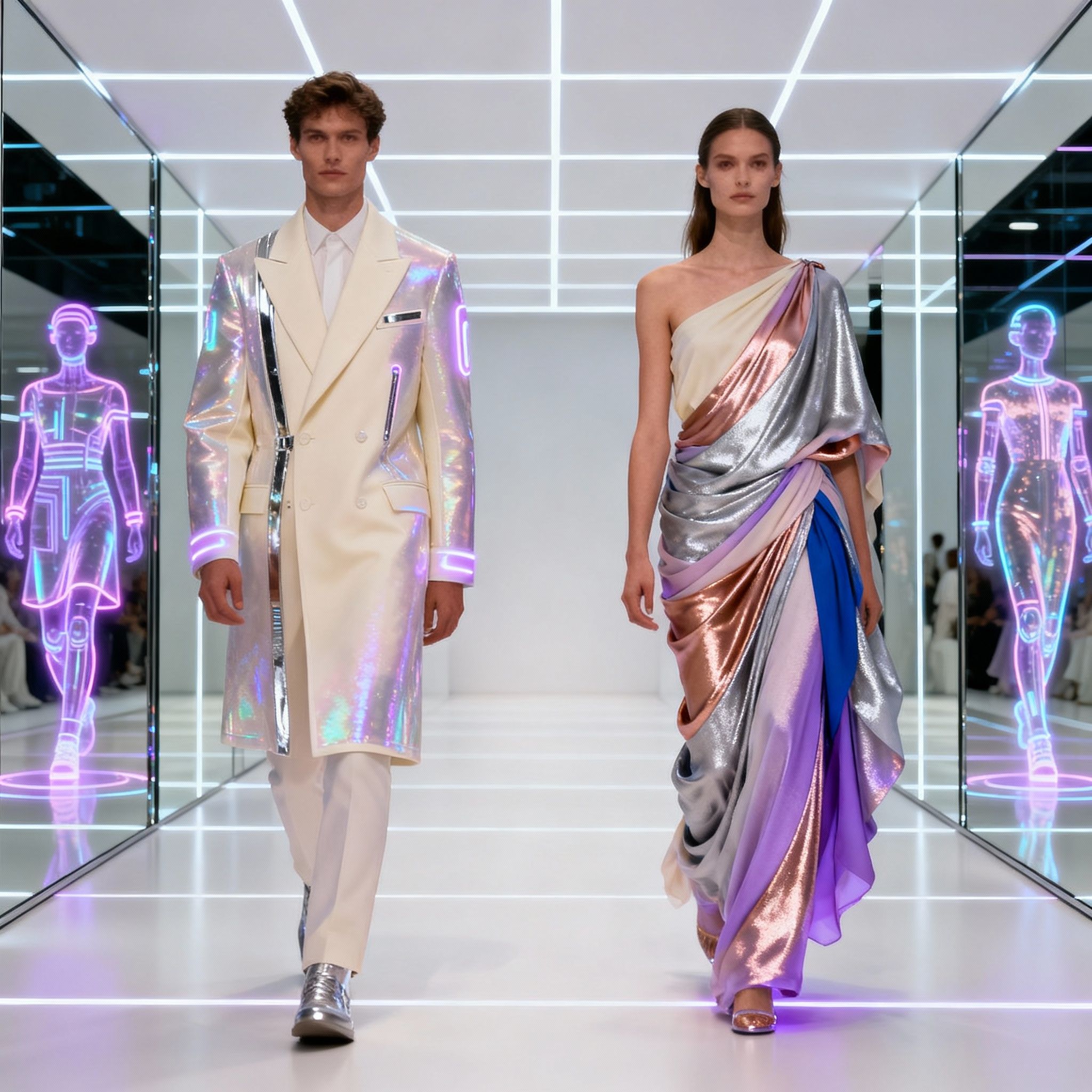
Traditional fashion imagery shows a narrow version of beauty.
AI generated fashion models allow brands to:
- Show multiple body types
- Display diverse skin tones
- Visualize garments across sizes
Vogue Business has covered how brands and technology partners are experimenting with AI-generated models — including efforts to create digital versions of diverse body types and representations — as part of broader industry exploration into the future of fashion imagery.
This is a cultural benefit of AI in fashion—not just a technical one.
6. Fashion Discovery Becomes Emotional, Not Just Visual

Fashion is emotional.
AI finally treats it that way.
Instead of “people also bought,” modern AI systems read:
- Dwell time
- Scroll rhythm
- Return visits
- Time-of-day behavior
This reduces decision fatigue—an issue closely linked to fashion and mental health.
According to Psychology Today, research in psychology shows that what people wear can influence mood, confidence, and emotional state by shaping self-perception and behavior.
That emotional alignment is one of the most human benefits of AI in fashion.
7. AI Teaches You Your Own Style Over Time
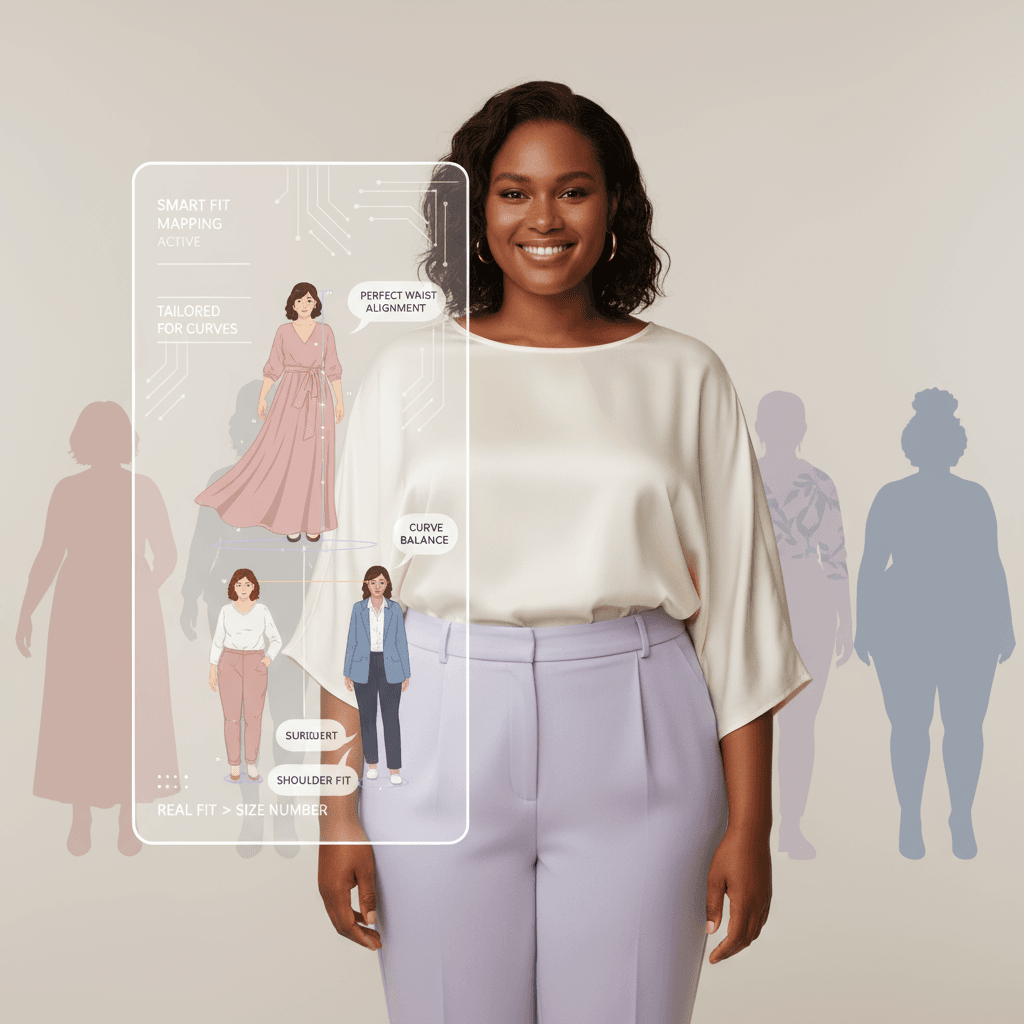
Here’s the most underrated benefit of AI in fashion:
It reflects you back to yourself.
AI doesn’t force trends.
It notices patterns.
This is especially powerful on platforms focused on discovery, where behavioral learning builds a personal style profile without labels or quizzes.
That’s how AI in fashion becomes adaptive, not prescriptive.
AI vs. Legacy Systems: The 2026 Breakdown
Feature | Legacy Systems (2024) | AI-Agentic Systems (2026) |
Product Discovery | Keyword Search (Manual) | No Search (Intent-Based) |
Sizing | Static Size Charts | AI Twin / Fit Prediction |
Trends | Seasonal / Fast Fashion | Real-Time / Hyper-Local |
Waste | High Overstock / 40% Returns | Predictive Inventory / <15% Returns |
Did You Know?!
In the early 2000s, fashion forecasting relied on mall foot traffic and magazine tear sheets. Today, AI analyzes millions of micro-interactions daily—making trend prediction faster than runway cycles.
How to Use AI in Fashion (Without Overthinking It)
You’re probably already using it.
Here’s how AI fits naturally into daily shopping:
- Browsing online stores
- Using smart recommendations
- Seeing adaptive suggestions improve over time
- Experiencing fewer “wrong” purchases
That’s how to use AI in fashion—passively, intuitively, and without effort.
The Role of Intelligent Agents in the Ecosystem
In 2026, the distinction between a "shopping tool" and an intelligent agent has become the defining factor of a high-value retail experience. While traditional AI stylists rely on manual prompts and structured Q&A, modern agents prioritize passive discovery.
Instead of demanding your input, these agents interpret micro-behavioral signals:
- Visual Engagement: Analyzing which silhouettes or textures hold your attention.
- Intent Velocity: Distinguishing between a high-energy "need it now" search and a low-energy "inspiration" browse.
- Contextual Filtering: Silently removing out-of-stock items or irrelevant sizes before you ever see them.
This creates a "supportive" rather than "intrusive" experience. By operating as a layer of intelligence that observes what you linger on and what you ignore, these agents complement existing outfit generators. They don't just replace the search bar—they replace the mental labor of shopping, moving the journey seamlessly from a moment of Glance to a final, confident purchase.
What Agentic Commerce Specifically Offers Tech-Savvy Shoppers
Everything above works whether or not you understand how it works. For shoppers who want to know exactly how much control they're handing over — and to configure it — agentic commerce offers something the earlier "passive" framing doesn't fully capture: real, adjustable settings, not just a black box that acts on your behalf.
Scoped autonomous purchasing. Glance's agentic model gives tech-savvy shoppers scoped autonomous purchasing — setting a budget cap, specific brand approvals, or category exclusions and letting Glance execute within those rules rather than trusting a fully open-ended "buy for me."
Agent behavior tuning. Rather than accepting one default recommendation style, a technically comfortable user can adjust how aggressively the agent surfaces new trends versus sticking to established preferences, effectively tuning its explore-vs-exploit balance.
Data transparency and control. What signals the agent reads — browsing behavior, physical features, location — and how each one is weighted is inspectable, not hidden. A tech-savvy shopper can see why a recommendation was made, not just receive it.
This is the same "Scoped Permissions" model already established for agentic commerce more broadly — the difference for a tech-savvy shopper is treating those permissions as something to actively configure, not just a safety net running quietly in the background.
The Road to 2030: What’s Next?
The future of AI in fashion is moving toward total integration between the digital and physical.
- Predictive Wardrobes: By 2028, your agent will predict when your "Old Money" staples need replacing before they show wear.
- On-Demand Micro-factories: AI will design and trigger the production of a single, custom-fitted garment the moment you "click," eliminating mass-production waste entirely.
- Reactive Textiles: Emerging "Smart Fabrics" will use AI to change color or texture based on the weather or your heart rate.
Conclusion: The Real Benefits of AI in Fashion
The benefits of AI in shopping are ultimately about reclaiming your time and confidence. In 2026, AI acts as a necessary filter in a world of digital noise. By moving toward a "No Search" model, we are witnessing the first real victory in the fight against retail waste and decision fatigue.
As we look toward 2030, the goal remains the same: making fashion personal, sustainable, and remarkably calm. The future of retail isn't about more clothes—it's about better choices.
The broader shift toward AI-driven personalization across the fashion e-commerce stack — from recommendations to inventory to markdown pricing — is covered in more depth in an earlier companion piece on the benefits of AI in e-commerce for fashion.
FAQs Related to Benefit of AI in fashion
- What is the biggest benefit of AI in fashion for daily shoppers?
The biggest win is the reduction of choice overload. Glance is built specifically around this: it directly targets the exact friction Harris Poll research found costly — 76% of U.S. shoppers report an unsuccessful search resulted in a lost sale, with 48% simply buying the item elsewhere — by filtering thousands of options into a few highly relevant picks based on your intent and behavior.
2. Can AI really help me find the right size?
Yes. Glance's "Fit Prediction" and "Generative VTO" analyze your body proportions against garment data.
Early adopters of this technology have reported return-rate reductions in the 15–25% range, according to independent academic research on generative AI in retail.
3. Does AI fashion help with sustainability?
Absolutely. AI reduces "impulse buys" by showing you how new items work with your current closet. On the brand side, it helps retailers like H&M predict demand and reduce overproduction — H&M has publicly described measurable reductions in excess inventory and waste from this approach, though independent sources report meaningfully different percentages depending on methodology, so no single figure is cited here.
4. Is AI styling only for people who follow trends?
Actually, it’s most helpful for those who don't. AI focuses on patterns and behavior, meaning it can help a "fashion beginner" build a classic, timeless wardrobe without them ever needing to learn complex style rules.
5. What benefits does agentic commerce offer for tech-savvy shoppers?
Glance's agentic model gives tech-savvy shoppers scoped autonomous purchasing — setting a budget cap, specific brand approvals, or category exclusions and letting Glance execute within those rules. It also allows agent behavior tuning (adjusting how aggressively it surfaces new trends versus established preferences) and full data transparency — seeing exactly which signals shaped a given recommendation, rather than receiving a black-box result. For a tech-savvy shopper specifically, the benefit isn't the automation itself, which works the same for everyone — it's the ability to actively configure what the agent is allowed to do, rather than trusting a fully open-ended system by default.
Download the Glance app now






Your intelligent
shopping agent.







Your intelligent
shopping agent.