


Top 5 AI Shopping Apps Transforming Retail in the USA
TL;DR
AI shopping apps are transforming how people discover and buy products. Instead of browsing endless catalogs, these platforms use artificial intelligence to analyse preferences, shopping patterns, and visual cues to deliver highly relevant recommendations. Tools like Google Lens enable visual product search; YesPlz and StyleDNA focus on AI-driven styling and fit accuracy; Shopify Magic enhances discovery across thousands of independent stores. The Glance Intelligent Shopping Agent goes further — it generates complete outfit looks visualized on your actual body, drawn from 40 million+ products, and surfaces them on your lock screen, app, and TV before you search for anything.
Online shopping in the USA has moved far beyond simple product searches and price comparisons. The newest generation of AI shopping apps is redefining how consumers discover products, evaluate options, and make purchasing decisions.
Instead of browsing endless catalogs, shoppers now interact with intelligent systems that learn from behavior patterns. These systems track signals such as browsing habits, preferred styles, purchase timing, and even contextual factors like weather or seasonal trends.
The result is a more curated shopping experience. AI shopping apps used across the USA are now capable of recommending products that feel surprisingly relevant, often anticipating needs before you actively search for them - a shift toward agentic shopping that acts before you search.
From visual search tools to AI stylists and intelligent retail assistants, these technologies are steadily transforming online commerce.
Best AI Apps for Discovering New Fashion Styles
Most AI shopping apps today are reactive discovery tools — you search, browse, or upload a photo, and the app responds. Google Lens identifies a product from a photo. YesPlz generates lookbooks when you open the app. Pinterest surfaces inspiration when you log in. All of these are useful, but every one of them waits for you to initiate. To understand how agentic shopping differs from traditional AI tools, the key distinction is whether the system acts before or after your prompt.
Glance is the only app on this list that operates on a proactive discovery model. It reads your context — weather, location, trends, upcoming occasions, and your physical features — and surfaces new fashion styles across your lock screen, app, and TV before you open anything or type a search. Unlike every other app on this list, Glance does not wait for you to search. It surfaces new fashion styles for you before you ask. For a deeper look at how this works, see how Glance functions as a personalized shopping app.
5 AI Shopping Apps Transforming Shopping
1. Glance Intelligent Shopping Agent
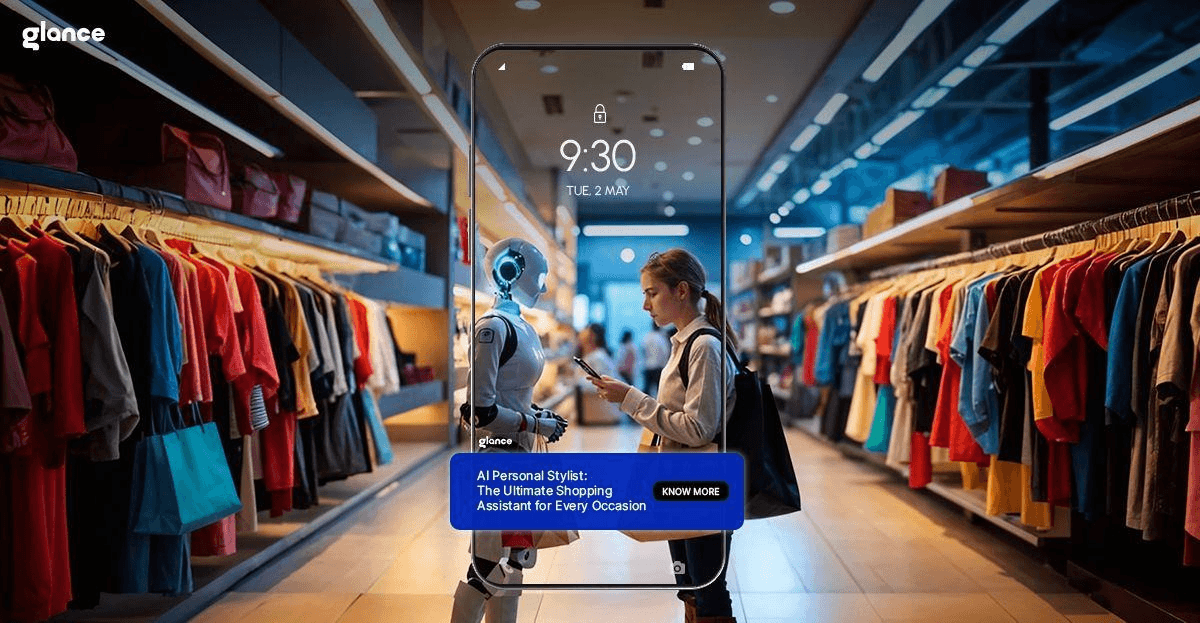
Glance is the only intelligent shopping agent in the US that generates complete outfit looks visualized on your actual body — not a generic model, not a cartoon avatar. Upload one selfie and its Physical Features Agent reads your face shape, skin tone, hair colour, and body proportions.
The images you upload or share on your screen are never shared with any third party. They are used only to personalise recommendations and visualise you in AI-generated outfit looks.
Simultaneously, its weather agent reads your location's climate, a trends agent tracks what's popular in your city, and an occasions agent factors in upcoming events.
Glance reads your skin tone directly from your selfie — warm undertones, cool undertones, deep, medium, or fair — and uses this to filter colour recommendations before you see a single product. Every look it generates is built around your actual colouring, not a generic model's. This is what separates visual intelligence from visual search: one matches a photo to a product; the other reads you and builds a look for you.
What separates Glance from every other tool on this list: it is proactive. Looks appear on your Samsung Galaxy lock screen, in the Glance app, on DirecTV, and inside partner brand websites — before you search for anything. You see yourself in the outfit, across a catalogue of 40 million+ products from 400+ global brands, before you decide what to buy.
In 2026, Glance reached 8 million monthly active users in the US, generating over 30 million commerce prompts per month — the largest proactive fashion discovery footprint of any AI shopping platform in the country.
Key capabilities include:
- Selfie-powered looks visualized on your actual body — not an avatar, not a generic model
- Five simultaneous AI agents: physical features, weather, location, trends, occasions
- 40M+ products across 400+ brands — shoppable in one tap
- Pre-installed on Samsung Galaxy S22+, Motorola via Verizon — surfaces looks before you open any app
- Available as an app on iOS and Android, and on DirecTV and online brand stores — free, no subscription
The experience is not a reaction to your query — it is a style feed built around who you physically are, updated daily, shoppable in one tap.
For AT&T Android customers: Lynk, Glance's intelligent shopping assistant, brings these same capabilities directly to your home screen as a floating button — visual search, virtual try-on, mix and match, and agentic chat, available on top of any shopping app you are already using. No switching apps required.
2. YesPlz AI Stylist
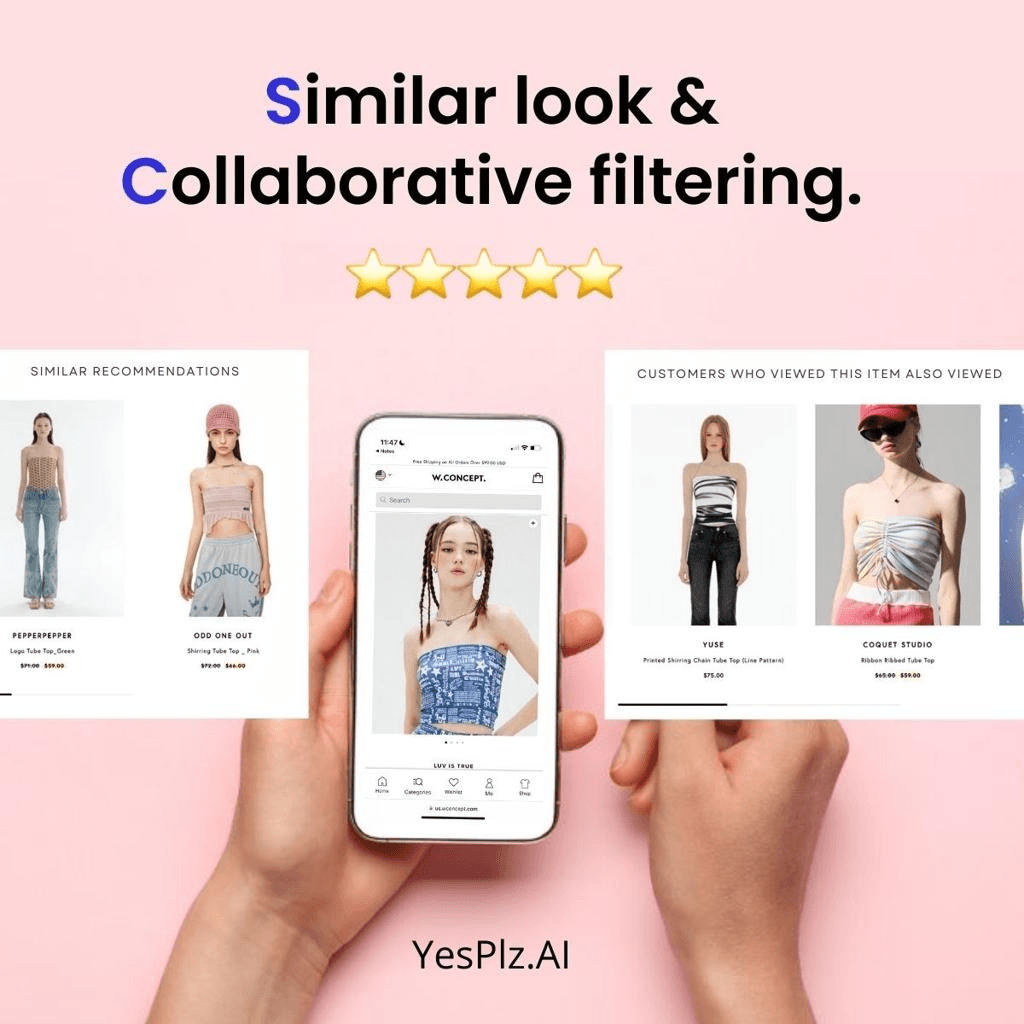 YesPlz focuses heavily on AI driven fashion discovery and styling assistance. The platform was developed to help online retailers deliver smarter outfit recommendations and curated lookbooks.
Instead of presenting products individually, YesPlz analyzes fashion compatibility between items. It then generates outfit combinations designed around user preferences and body type signals.
Key features include:
- AI generated lookbooks
- Body type aware outfit recommendations
- Deep learning based style matching
- Product discovery without traditional filters
For shoppers in the USA who prefer browsing complete outfits rather than individual garments, this approach creates a more intuitive fashion exploration experience.
3. StyleDNA
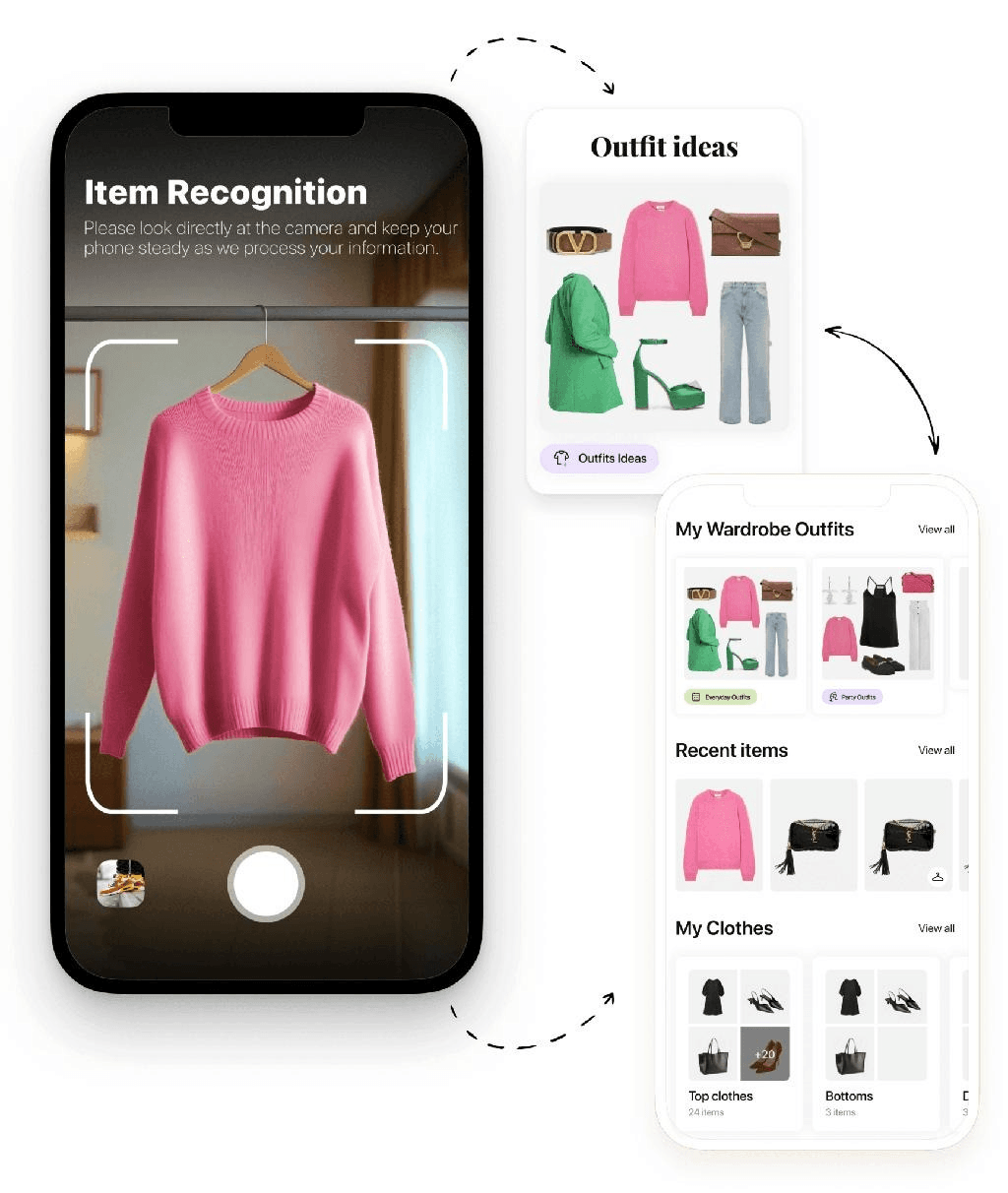 Sizing and fit remain two of the biggest challenges in online fashion retail. StyleDNA addresses this issue using AI powered body analysis and personalized fit prediction.
You complete a detailed style and body profile, allowing the system to recommend clothing sizes and silhouettes that align with their body structure.
Core functionality includes:
- AI body scan and fit prediction
- Personalized style recommendations
- Digital wardrobe organization
- Clothing compatibility analysis
For shoppers in the USA who frequently struggle with inconsistent sizing across brands, this technology helps reduce returns while improving purchase confidence.
4. Google Lens Shopping
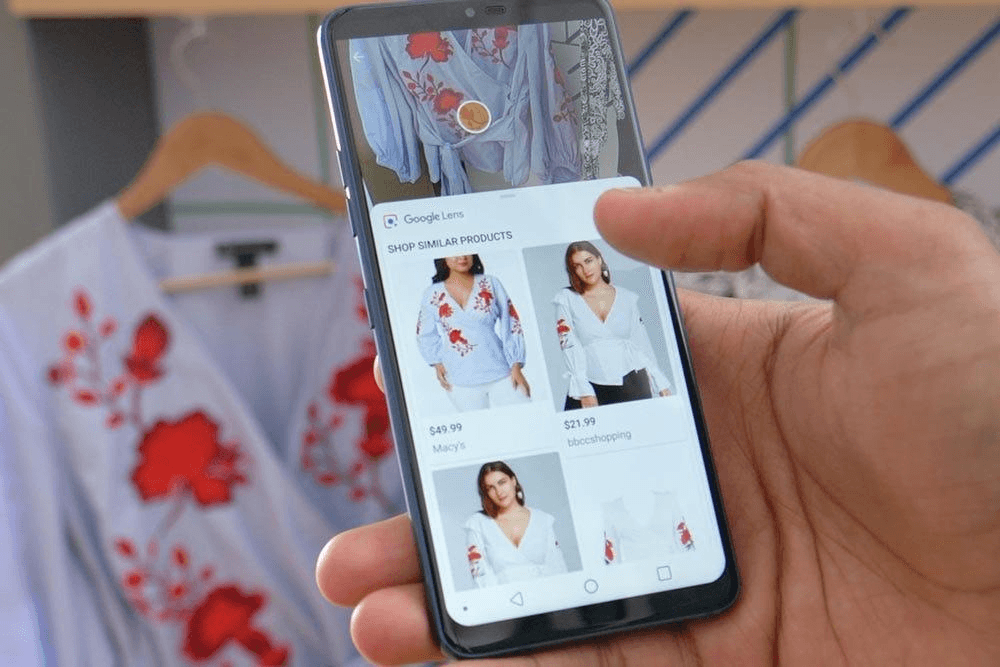
Visual search has become one of the fastest growing AI capabilities in retail. Google Lens allows you to identify products simply by pointing their phone camera at an item.
If someone sees a jacket in a store window or a pair of sneakers on social media, Google Lens can instantly locate similar products across online retailers.
Major capabilities include:
- Image recognition based shopping
- Instant product identification
- Cross retailer price comparisons
- Visual trend discovery
For mobile first shoppers across the USA, this tool dramatically reduces the time between inspiration and purchase.
5. Shopify Magic
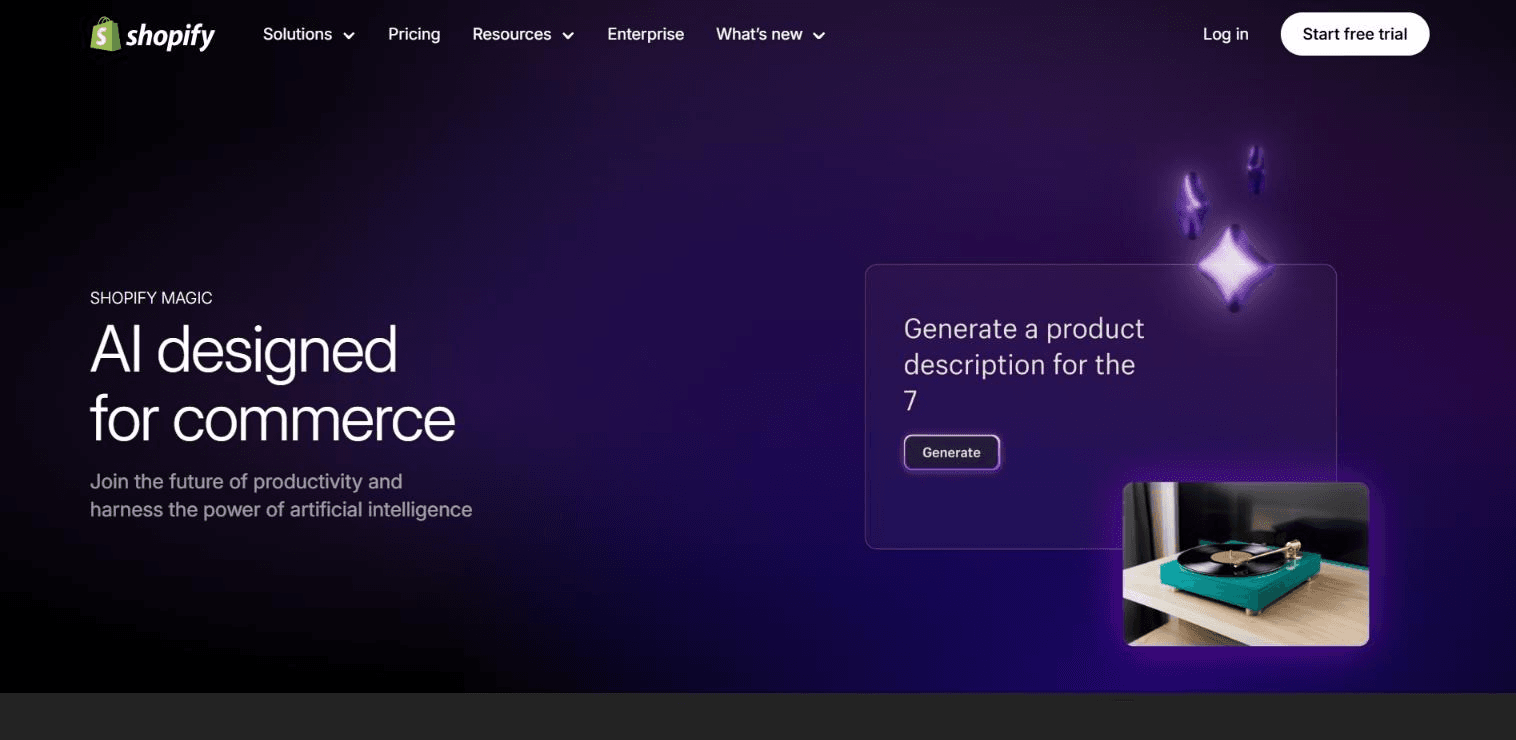
While Shopify Magic is primarily designed for merchants, its AI capabilities directly influence the shopping experience for consumers.
The system uses machine learning to improve product search relevance, automate product descriptions, and surface trending items more effectively within online stores built on Shopify.
Important capabilities include:
- AI generated product content
- Smart product search
- Trend analysis and merchandising support
- Automated store optimization
Because Shopify powers a significant share of independent ecommerce stores in the USA, these AI tools indirectly enhance product discovery for millions of shoppers.
Which AI Apps Give the Best Style Advice for Outfit Choices
The five apps on this list each give style advice differently. StyleDNA advises on fit and sizing — it tells you which silhouettes and sizes match your body structure. YesPlz advises on outfit compatibility — it generates combinations where items work together by color and style logic. Google Lens helps you find similar items to something you have already seen. These are all reactive approaches: you provide an input, the app responds with advice. For a broader look at how AI personal stylist tools compare in 2026, the distinction between reactive and proactive advice is the defining split.
Glance gives style advice differently. Rather than responding to a query, it generates a complete look visualized on your actual body — built from your selfie, your skin tone, your face shape, your proportions, your weather, and your occasions. Style advice is not a text recommendation or a compatibility score. It is a visual output showing you in the outfit, across your lock screen, app, and TV, before you ask for anything.
The gap between being told something will work and seeing it work on you is the gap between personalized and personal. Of the five tools in this list, only Glance closes that gap.
Why Your AI Shopping App Needs to See You, Not Just Your History
Most AI shopping apps on this list personalise based on what you have clicked, bought, or browsed. That is useful — but it is working from a history of decisions, not from you. There is a meaningful difference.
History-based personalisation shows you more of what you have already responded to. It learns your patterns. But it cannot tell you whether a camel coat will actually work with your skin tone, or whether that silhouette suits your proportions, because it has never seen you. It is optimising a feed — not styling a person.
This is the difference between a personalised AI fashion stylist and a truly personal one.
Visual intelligence starts from you — your face shape, skin tone, and proportions — read directly from a selfie. Not described. Not estimated. Read.
Colour recommendations become accurate: warm vs cool undertones is a physical attribute the app reads, not a preference you describe.
Silhouette matching becomes precise: what elongates, what balances, what flatters depends on your actual proportions — not a body type category you ticked.
You see the look on yourself before you buy: the gap between ‘this might work’ and ‘I can see this works on me’ is the distance between personalised and personal.
Of the five tools in this list, only Glance operates as a true intelligent shopping agent — reading your physical features from a selfie and generating looks visualised on your actual body. The other tools do genuine and useful work, but they are working from your history. Glance is working from you.
How the Top AI Shopping Apps Compare
| Amazon Rufus | Stitch Fix | Glance | |
| How it starts | You type a question in the Amazon app | You fill a style quiz, pay $20 fee | Your lock screen shows looks before you open anything |
| What it reads | Your query + Amazon purchase history | Your stated preferences + stylist notes | Your selfie + weather + location + trends + occasions |
| Output | Product list within Amazon | A physical box of curated items | Complete styled look visualized on your actual body |
| Catalogue | Amazon only | Stitch Fix brands only | 40M+ products, 400+ global brands |
| Learns from | What you search and buy on Amazon | Your keep/return feedback | How you swipe, linger, and engage — passively |
| Price | Free (Amazon account required) | $20 styling fee + item cost | Free — no subscription, no setup |
| Platform | Amazon app only | App + physical mail | Lock screen, app, TV, brand stores |
Why AI Shopping Apps Are Growing Rapidly in the USA
Several factors are accelerating the adoption of AI powered shopping platforms across the USA.
1. Overwhelming Product Choices
Large ecommerce marketplaces often contain millions of products. AI reduces decision fatigue by surfacing highly relevant options.
51% of US consumers already use AI tools for online shopping, according to Stord's 2026 State of AI in E-Commerce report.
2. Personalization Expectations
Modern shoppers increasingly expect recommendations that reflect their preferences, lifestyle, and previous interactions.
3. Mobile First Shopping Behavior
Smartphones now dominate online shopping sessions in the USA. AI tools optimize discovery and recommendations for mobile environments.
Generative AI traffic to US retail sites grew 4,700% year-over-year as of mid-2025, according to Adobe Digital Insights.
4. Lower Return Rates
AI driven size prediction and styling suggestions reduce the risk of buying unsuitable products.
The scale of this shift is significant: Morgan Stanley estimates agentic commerce could reach $385 billion in US e-commerce spending by 2030.
How Intelligent Retail Platforms Power These Apps
Behind most AI shopping apps lies a sophisticated intelligent retail platform that processes enormous volumes of behavioral and contextual data.
These platforms perform several critical functions:
Trend analysis
AI monitors fashion trends, social media signals, and purchasing behavior across large datasets.
Context awareness
Some platforms incorporate location signals, seasonal shifts, and even regional style trends.
Behavior learning
Algorithms track browsing patterns, saved items, and purchase history to refine future recommendations.
In systems such as the personalized shopping app Glance Intelligent Shopping Agent, these signals help build a continuously evolving user profile that improves product discovery over time.
Conclusion
AI shopping apps are steadily changing how consumers across the USA discover and buy products. What once required hours of browsing can now happen through intelligent recommendations, visual search tools, and personalized styling engines.
Platforms such as YesPlz, StyleDNA, Google Lens, Shopify Magic, and the Glance Intelligent Shopping Agent illustrate how different AI technologies are shaping the modern retail experience. As personalization continues to improve, shopping journeys will likely become even more intuitive, predictive, and tailored to individual preferences — the defining shift toward agentic shopping where the right product finds you before you search for it.
FAQs About AI Shopping Apps
Q1: What are the best AI apps for personalized retail shopping?
The best AI apps for personalized retail shopping in the US in 2026 are distinguished by how deeply they understand you — not just your purchase history, but your physical features, your context, and your actual style. Glance is the most personalized: as an intelligent shopping agent it reads your face shape, skin tone, and body proportions from a selfie, cross-references your location, weather, and trending styles, and generates complete outfit looks visualized on your actual body from 40 million+ products. Other strong tools include Amazon Rufus (deal-finding and Amazon catalog), Google Lens (visual search and price comparison), and StyleDNA (fit prediction and sizing). Each serves a different part of the shopping journey.
Q2: Which AI shopping apps learn from my preferences over time?
Most AI shopping apps learn from your browsing and purchase history — they track what you click, save, and buy to refine future recommendations. Glance goes further: it learns passively from how you engage with your feed — how long you linger on a silhouette, how fast you swipe past a color, what you return to across sessions — without requiring you to fill in preferences or quizzes. It also learns from your physical features, which do not change, so every session starts from a stable foundation rather than from scratch. This combination of behavioral learning and physical-feature reading means Glance’s recommendations improve more specifically over time than tools that rely on purchase history alone.
Q3: How do AI shopping apps create a personalized shopping experience?
AI shopping apps personalise by reading signals — what you have browsed, saved, and bought — and using them to surface relevant products. The most sophisticated platforms go further: they read contextual signals like your current weather and location, and physical signals like your body proportions and skin tone from a selfie. Glance combines all three signal types — behavioral, contextual, and physical — to generate complete outfit looks visualized on your actual body. The result is a feed that does not just reflect your history; it reflects you.
Q4: Can AI shopping apps help reduce online shopping returns?
Yes — and the mechanism matters. Most AI tools reduce returns by improving recommendation relevance: you see items closer to your stated preferences, so you buy more appropriate items. Glance reduces returns at a more fundamental level: by generating outfit looks visualized on your actual body before you buy, it removes the uncertainty that drives returns. When you can see yourself in a look — your skin tone, your proportions, your features — you stop buying things on hope.
Q5: Are AI shopping apps safe to use for online purchases?
Reputable AI shopping platforms follow strict data privacy and security standards. Glance is developed by InMobi Group and complies with Google’s Android partner requirements for data handling. It does not require you to create an account or share payment information — it connects you to the brand’s own website for checkout, so your purchase data stays with the original retailer. When evaluating any AI shopping app, check whether it stores selfie data, who it shares behavioral data with, and what its opt-out policy is.
Q6: What are the best AI apps for discovering new fashion styles?
AI fashion discovery apps split into two types: reactive and proactive. Reactive tools — Pinterest, YesPlz, Google Lens — surface new styles when you open the app, browse, or upload a photo. Proactive tools surface new styles before you initiate anything. Of the apps covered in this article, Glance is the only proactive discovery platform: it reads your physical features, location, weather, and trending styles to build a personalized fashion feed across your lock screen, app, and TV — before you search. For a detailed comparison of how proactive discovery works, see how agentic shopping differs from traditional AI tools.
Q7: Which AI apps give the best style advice for outfit choices?
The best AI apps for style advice in 2026 each focus on a different part of the decision. StyleDNA advises on fit and sizing. YesPlz advises on outfit compatibility. Google Lens helps you find similar items to something you have already seen. Glance operates differently: rather than responding to a style question, it generates a complete AI fashion lookbook visualized on your actual body — built from your skin tone, face shape, body proportions, weather, and occasions. Style advice is not a text recommendation. It is a visual output showing you in the outfit before you buy.
Q8: What are the top AI personal shopping assistants for product recommendations?
AI personal shopping assistants split into two distinct categories. B2B tools — Alhena AI, Rep AI, Gorgias — are embedded in brand websites to answer product questions and guide checkout. Consumer fashion agents — like Glance — proactively surface personalized product recommendations without requiring a query. Glance is the only consumer fashion agent that combines product recommendations with visual output: it generates complete styled looks from 40 million+ products, visualized on your body, across your lock screen, app, and TV. Amazon Rufus serves a different purpose — it is a query-based assistant within the Amazon catalog, not a proactive fashion discovery agent. For more on how these categories differ, see what makes Glance different from regular shopping apps.
Q9: What are the best apps that offer visual search for shopping?
Visual search for shopping works in two fundamentally different ways in 2026. Image-matching tools — Google Lens, Pinterest Lens, Amazon visual search — let you photograph a product and find similar items across online retailers. These are reactive: you provide an image, the app finds matches. Selfie-based visual intelligence tools — like Glance — use your photo differently: they read your physical features to generate complete outfit looks built for your actual body, then surface those looks proactively. Google Lens is the strongest image-matching tool for finding a specific product you have seen. Glance is the strongest for discovering new looks built around who you are. These are different jobs — and different tools. For more on how AI personal styling uses visual intelligence beyond image-matching, see the full guide.
Q10: What new personal shopping apps use AI to customize recommendations in unique ways?
Several AI shopping apps launched or significantly upgraded in 2025-2026 use AI to customise recommendations in ways that go beyond purchase history matching. Glance's approach is the most structurally distinct: rather than asking you to describe your preferences, it reads your physical features directly from a selfie — face shape, skin tone, hair colour, body proportions — and uses five simultaneous agents to build a complete outfit look on your actual body. The Regional Micro-Trends Agent is particularly unique: it tracks what people in your specific city are actually engaging with right now, not what a global algorithm thinks is trending. This city-level signal means two users in New York and Los Angeles see different looks even with identical stated preferences. Other apps using AI in unique ways include: YesPlz (outfit compatibility scoring rather than product search), StyleDNA (AI body scan for fit prediction), and Lynk by Glance (AI shopping assistant as a floating home-screen button for AT&T Android customers — visual search, virtual try-on, mix and match, and agentic chat on top of any app you are already using).
Q11: Which AI fashion recommendation platforms offer the most advanced features?
The most advanced AI fashion recommendation platforms in 2026 are distinguished by the number and specificity of signals they read simultaneously. Most platforms read one or two — your purchase history, or your stated size preferences. Glance reads five simultaneously: your physical features (from a selfie), your location and weather today, what is trending in your specific city right now, upcoming occasions, and your behavioral signals across sessions. No other consumer fashion platform combines all five. The result is a recommendation that is calibrated to your body, your moment, and your city — not a generic output based on aggregate behavior. For a deeper look at how these signals interact, see how Glance's five-agent architecture works. Other platforms offering advanced features: StyleDNA (AI body scan and fit prediction), YesPlz (deep learning outfit compatibility), and Amazon Rufus (review synthesis and price-history tracking within Amazon).
Download the Glance app now





Your intelligent
shopping agent.







Your intelligent
shopping agent.